


Last updated: 4 November 2026 · By Naijatipsland Editorial Team · Editorial policy
Nigeria has one of the most entrepreneurial populations in the world, with tens of millions of micro, small and medium businesses. Starting is rarely the hard part. Staying in business, getting registered properly, handling licences and tax, and growing beyond the first customers is where most people struggle.
This hub gathers every Naijatipsland guide on starting and running a business in Nigeria, from choosing an idea with real demand to CAC registration, product certification, banking, tax and marketing. Each guide uses current information from the Corporate Affairs Commission, NAFDAC, SON and the tax authorities, and is dated so you can see when it was last reviewed. Fees change, so confirm current charges on the official portal before paying.
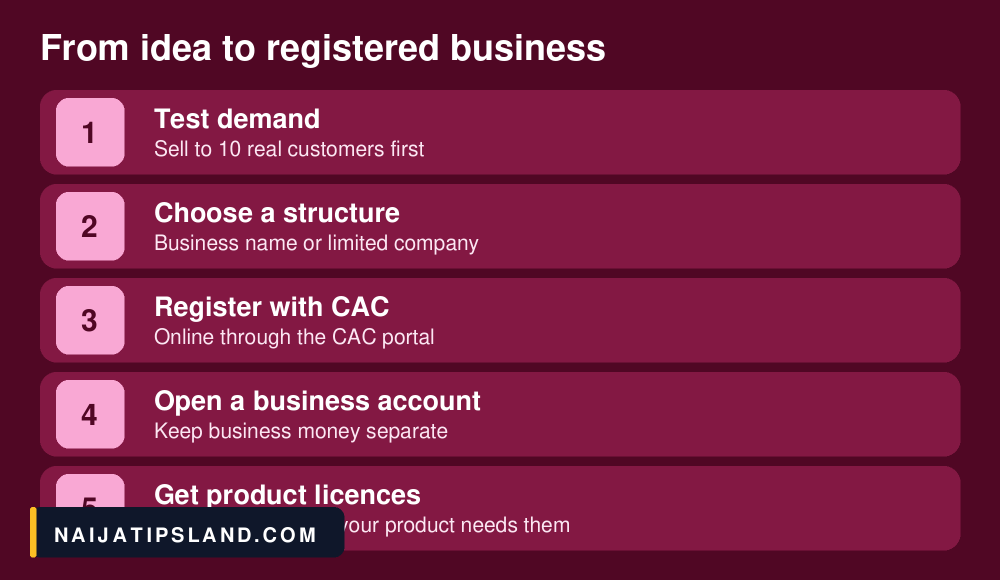
The short version: test your idea with real customers before spending heavily, register with CAC once you are trading regularly, keep business money in a separate account, and check whether your product needs NAFDAC or SON approval before you sell it widely.
Start here: business ideas that work in Nigeria
These guides look at businesses with steady demand in Nigeria, with honest start-up costs, likely margins and the risks. If you want to earn mainly online, see our separate online income hub.
- 10 Small Businesses That Succeed in Nigeria and Why (2026): Ten kinds of small business that keep succeeding in Nigeria, from food and agribusiness to POS, repairs and services, with what they need, risks, MSME data and how to start.
- Profitable Businesses Nigerians Can Start From Home (2026): Capital, Profit and How to Start: 14 profitable businesses Nigerians can start from home in 2026, with start-up capital in naira, equipment, CAC and NAFDAC rules, and WhatsApp marketing tips.
- Poultry Farming in Nigeria (2026): Start-Up Cost, Feed and Profit: Poultry farming in Nigeria in 2026: broilers vs layers, start-up cost ranges, feed and chick prices, Newcastle and bird flu risks, and how to plan your budget.
- How to Start a Provision Store in Nigeria (2026): Capital, Suppliers and Profit: How to start a provision store in Nigeria in 2026: capital, location, what to stock, suppliers, pricing, credit control, records and registration.
- How to Start a POS Business in a Rural Area in Nigeria (2026 Guide): How to start a POS business in a rural area of Nigeria in 2026 under the CBN agent banking rules: limits, single-principal rule, setup steps, risks, fraud safety and a realistic income outlook.
Registering your business
The Companies and Allied Matters Act 2020 sets out the main business structures. Most small traders start with a business name, while anyone planning to raise investment, bid for contracts or limit personal liability should consider a limited company.
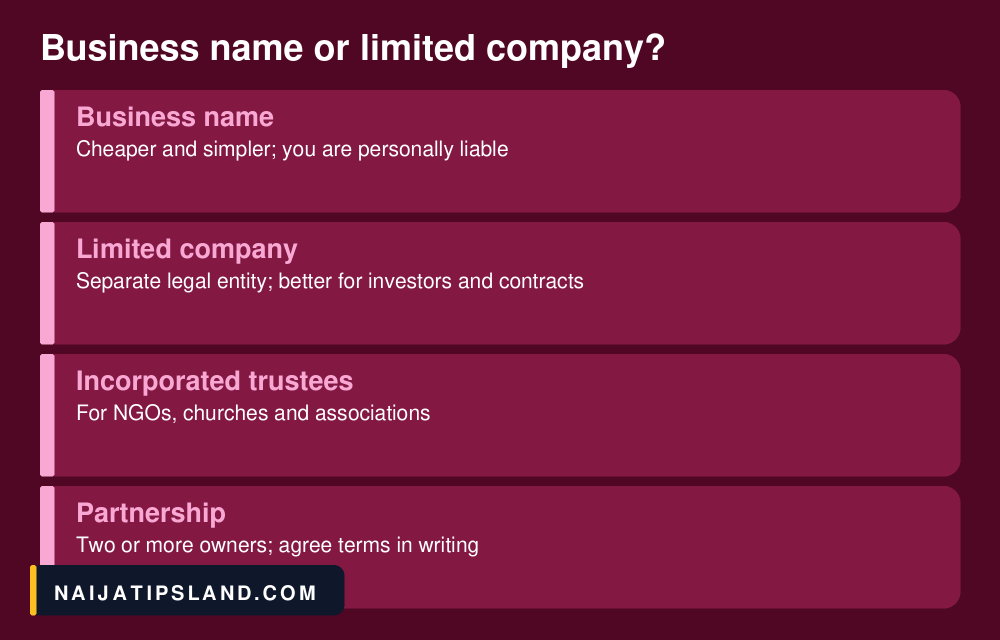
- 7 Main Types of Business Structures in Nigeria: How to Choose Under CAMA 2020: The 7 main business structures in Nigeria under CAMA 2020, with capital rules, costs, tax basics and how to choose between a business name, company, partnership, cooperative or franchise.
- How to Register a Business Name in Nigeria: CAC Guide for 2026: Register a business name with CAC step by step: documents, 2026 fees including the new AI service charge, timeline and common mistakes.
- How to Register a Limited Company With CAC in Nigeria (2026): How to register a limited company with CAC in Nigeria in 2026: requirements, share capital, steps, fees, annual returns and the July 2026 strike-off notice.
- How to Open a Business Bank Account in Nigeria (2026): Documents by Business Type: How to open a business bank account in Nigeria in 2026: documents for business names and limited companies, KYC checks, SCUML, timelines and tips.
Licences, certification and protecting your brand
Food, drinks, cosmetics and many manufactured goods need regulatory approval before they can be sold widely or stocked by supermarkets. A registered trademark stops competitors copying your brand name or logo.
- NAFDAC Registration Step by Step for Small Food and Cosmetic Businesses (2026): NAFDAC registration step by step for small food and cosmetic businesses in Nigeria: documents, label, inspection, lab tests, fees, timelines and renewal.
- SON Certification in Nigeria (2026): MANCAP, SONCAP and When You Need It: SON certification in Nigeria explained: MANCAP vs SONCAP, who needs it, how to apply, 60-day process, three-year validity and SON fees by business size.
- How to Register a Trademark in Nigeria (2026): Steps, Timeline and Costs: How to register a trademark in Nigeria in 2026: search, classes, filing, publication, the two-month opposition period, timelines, costs and renewal.
Tax and compliance
Registered businesses have filing duties, including annual returns with CAC and, depending on turnover, VAT and company income tax. Small companies can benefit from exemptions, but they still need to file.
- VAT in Nigeria 2026: Rate, Registration, Filing and Penalties: VAT in Nigeria 2026: the 7.5% rate, who must register, filing by the 21st, zero-rated vs exempt, input VAT claims and reported penalties.
- Personal Income Tax in Nigeria 2026: New Bands and What Employees Pay: Nigeria personal income tax 2026: the N800,000 tax-free band, 15% to 25% rates, rent relief, PAYE steps and worked examples for employees.
Marketing and growth
Once you are registered, growth depends on reaching customers consistently. These guides cover digital advertising rules, selling online and lessons from Nigerian founders who scaled.
- Digital Advertising in Nigeria: What Works and What the Rules Say (2026): Where Nigeria's digital advertising is heading, the metrics that matter, practical steps for small businesses and the ARCON and consumer rules.
- Where to Sell Online in Nigeria in 2026: Marketplaces, Social Commerce and Your Own Store: Where to sell online in Nigeria in 2026: marketplaces, classifieds, social commerce and your own store, what to compare, seller basics and buyer safety.
- Nigerian Entrepreneurs Worth Learning From: Lessons for Builders (2026): Profiles of Nigerian entrepreneurs worth learning from in 2026, from Aliko Dangote and Tony Elumelu to the founders of Paystack, Flutterwave and Moniepoint, with the lessons each offers.
- 7 Inspiring Nigerian Startups and What Founders Can Learn (2026): Seven Nigerian startups that grew into major companies, Paystack, Flutterwave, Moniepoint, OPay, Interswitch, Kuda and PiggyVest, with milestones, valuation estimates and lessons for founders.
- iDICE’s $170.6 Million Fund: What It Means for Nigerian Startups in 2026: What the $170.6 million iDICE Fund of Funds means for Nigerian startups in 2026: how it works, who manages it, the Growth Lab and debt funds, and what founders should do.
Mistakes and risks to avoid
Most small businesses fail for predictable reasons: no real demand, cash-flow problems, mixing personal and business money, and fraud. Learn from others’ mistakes before they become yours.
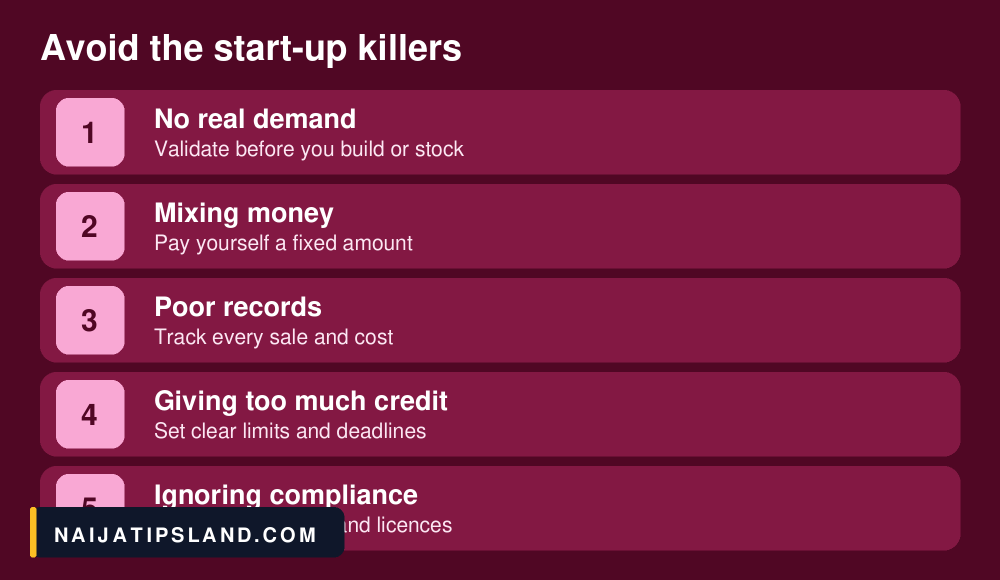
- Common Entrepreneurship Mistakes That Kill Startups in Nigeria (2026): The common mistakes that kill Nigerian startups and small businesses, from building what nobody wants to running out of cash, with failure research and a practical checklist to avoid them.
- How to Avoid POS Agent Fraud in Nigeria: 2026 Safety Guide: How to avoid POS agent fraud in Nigeria: common scams, the CBN's agent banking limits and rules, red flags, and what to do if you are scammed.
- Recruitment Scams in Nigeria (2026): Red Flags and How to Report: Recruitment scams in Nigeria in 2026: real government warnings, common fee and impersonation tricks, how to verify a vacancy and how to report a scam.
Your first 90 days in business
Most successful small businesses in Nigeria start small and grow from real sales rather than big launches. A simple 90-day plan keeps you focused on what matters early on.
| Days | Focus | Goal |
|---|---|---|
| 1 to 30 | Test demand | Sell to your first 10 to 20 customers, even informally, and write down what they ask for |
| 31 to 60 | Set up properly | Register with CAC, open a business account, set simple prices and start keeping records |
| 61 to 90 | Grow carefully | Reinvest profit, add one marketing channel such as WhatsApp Business or Instagram, and review your numbers weekly |
Where Nigerian small businesses find support
Several public and private bodies support small businesses in Nigeria with training, loans or grants, including the Small and Medium Enterprises Development Agency of Nigeria (SMEDAN), the Bank of Industry and state schemes such as the Lagos State Employment Trust Fund. Each has its own eligibility rules and application windows, so apply only through their official websites. Be cautious of anyone charging a fee to ‘process’ a government grant or loan, which is a common scam.
Industry associations, market unions and local business groups can also help with supplier contacts, pricing information and advice. Many Naijatipsland members share their experience in the forum, so it is worth asking there before you make a big purchase or sign a supplier contract.
Frequently Asked Questions
How much does it cost to register a business in Nigeria?
Business name registration is the cheapest option, while a limited company costs more and depends on share capital. CAC fees change, so check the current fees in our registration guides and on the CAC portal before you pay.
Should I register a business name or a limited company?
A business name suits sole traders and small family businesses. A limited company gives you a separate legal identity and limited liability, and it is usually expected by investors, banks and larger clients.
Do I need NAFDAC registration to sell food or cosmetics?
Most packaged food, drinks, cosmetics and similar regulated products need NAFDAC registration before they can be sold widely or stocked by supermarkets. Our step-by-step guide explains the process for small businesses.
What business can I start in Nigeria with small capital?
Options include food vending, POS agency, provision stores, home-based services and online businesses. The right choice depends on your location, skills and capital. See our ideas guides for honest start-up costs.
Do small businesses pay tax in Nigeria?
Yes, registered businesses must file returns, although small companies below the government’s turnover threshold can be exempt from company income tax. Check our VAT and tax guides and confirm with the tax authority.
Explore our other guide hubs
- 2027 Nigeria Election Hub: Dates, Timetable, Candidates and Latest News
- Make Money Online in Nigeria: The Complete 2026 Hub (Freelancing, Content, Digital Products and Getting Paid)
- Learn Tech Skills in Nigeria: The Complete 2026 Hub (Coding, AI, Cybersecurity and Digital Skills)
- Japa Guide 2026: The Complete Hub for Nigerians Moving Abroad (Visas, Jobs, Study, Costs and Scams)
- Diaspora Money Guide 2026: The Complete Hub for Nigerians Abroad (Sending Money, Banking and Investing Back Home)
- Personal Finance in Nigeria: The Complete 2026 Hub (Saving, Investing, Tax, Banking and Avoiding Scams)
How we keep this hub updated
Registration fees, regulatory steps and tax rules change regularly. We review these guides and add new ones based on members’ questions. Running a business already? Share what worked for you in the comments below.
Join the discussion
Have you tried this, or do you have a question we did not answer? 1 reader has already shared their view. Naijatipsland members help each other with real, first-hand experience.








Running a small business or about to start one? Tell us what you sell and the biggest challenge you face, whether registration, NAFDAC, suppliers or getting customers. – Ade