
How to Start a Catering and Small Chops Business in Nigeria (2026): Startup Costs, Pricing, Equipment and Getting Clients

Last updated: 12 November 2026 · By Naijatipsland Editorial Team · Editorial policy
Every weekend in Nigeria there is a wedding, a naming ceremony, a burial, a birthday or an office end-of-year party, and almost every one of them needs food. That steady demand is why catering, and small chops in particular, remains one of the most dependable food businesses you can start in 2026, at home or with a small team. It is also why so many people start, underprice, and quietly give up within a few months.
This guide walks you through the whole thing in plain terms: choosing your lane, what it really costs to start, the equipment you need, how to price per pack, tray and plate, the health rules that apply, and how to land your first paying clients. I have written it for readers in Nigeria and for diaspora readers who want to fund or run a business back home.
Is catering still profitable in 2026?
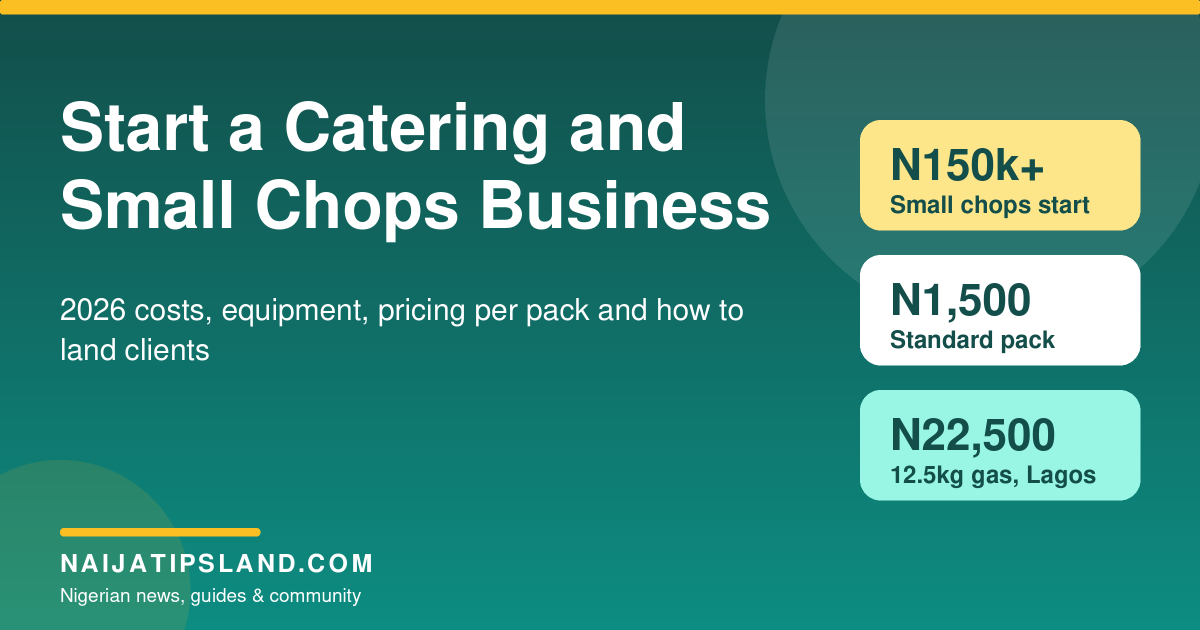
Yes, if you price properly. Ingredient and fuel costs rose again this year. Cooking gas, which every caterer depends on, was reported at about ₦1,800 per kilogram in Lagos and Ogun in early November 2026, or about ₦22,500 for a 12.5kg refill, after depot prices jumped by roughly 30%. Across the country, a 12.5kg refill ranged from about ₦15,000 to ₦23,750 depending on the state. A 25-litre keg of vegetable oil sold for roughly ₦65,000 to ₦95,000 in October market surveys.
Those costs squeeze anyone who sets prices once and forgets them. But clients who book caterers for owambe events are rarely shopping on price alone. They are paying for food that tastes good, arrives on time and does not embarrass them in front of guests. That is where a small, reliable operator can win.
Choose your lane first
Catering covers several different businesses. Pick one to start with, then expand once you have regular bookings.
- Small chops and finger food: puff-puff, samosa, spring rolls, peppered gizzard, chicken or beef skewers and fish rolls. Lowest startup cost, easiest to sell in packs and trays, and in demand for parties, seminars and offices.
- Party and event catering: jollof and fried rice, proteins, salads, moi moi and swallow with soups, served per plate or in coolers. Higher revenue per booking, but more equipment, more staff and more risk.
- Office and corporate lunch packs: daily or weekly packs for small companies, schools and banks. Steady income if you are reliable, but clients expect consistency and invoices.
- Specialities: grills and asun, shawarma, cakes and pastries, or zobo and other drinks. These pair well with small chops.
If you are unsure, start with small chops. It needs the least money, it teaches you costing and logistics, and it gets you into events where planners will notice you for bigger jobs. If you would rather sell snacks to shops and offices than serve events, see our guide to the best Nigerian snacks to make and sell from home.
How much does it cost to start?
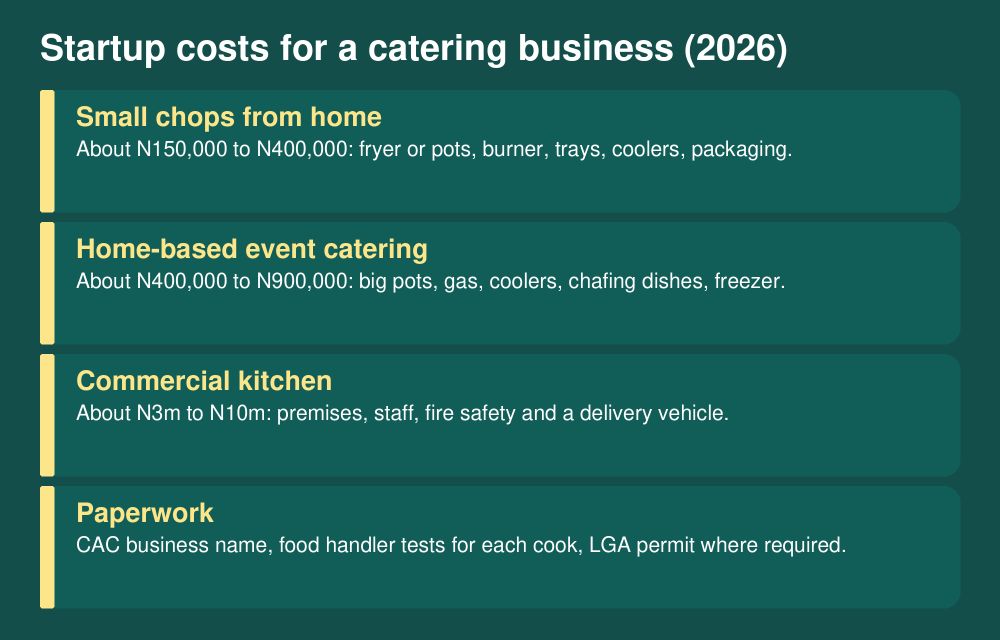
Nigerian guides published this year put a home-based small chops business at roughly ₦150,000 to ₦400,000 to set up, a home-based event caterer at ₦400,000 to ₦900,000, and a commercial kitchen with staff and a vehicle at ₦3 million to ₦10 million. Some people start smaller still, with a deep pot, a burner and a few trays, and grow from WhatsApp orders.
A typical home small chops setup looks like this (2026 price ranges, which vary by city and brand):
- Deep fryer or heavy frying pots, strainers and utensils: ₦30,000 to ₦80,000
- Gas burner and a cylinder (if you do not already have one): ₦40,000 to ₦120,000
- Mixing bowls, rolling pins, a cutting board, kitchen scale and trays: ₦20,000 to ₦50,000
- Coolers or food warmers to keep orders hot: ₦30,000 to ₦100,000
- First stock of packaging (foil packs, paper boxes, branded stickers): ₦10,000 to ₦30,000
- Aprons, hairnets, gloves and cleaning supplies: ₦10,000 to ₦30,000
- Food handler tests and business name registration: see the rules section below
For full event catering, add large pots, an industrial or multi-burner cooker, chafing dishes, a deep freezer and a fridge, serving dishes, and a budget for hiring a van and servers per event. Most caterers hire chafing dishes, plates and transport for each event until bookings justify buying them.
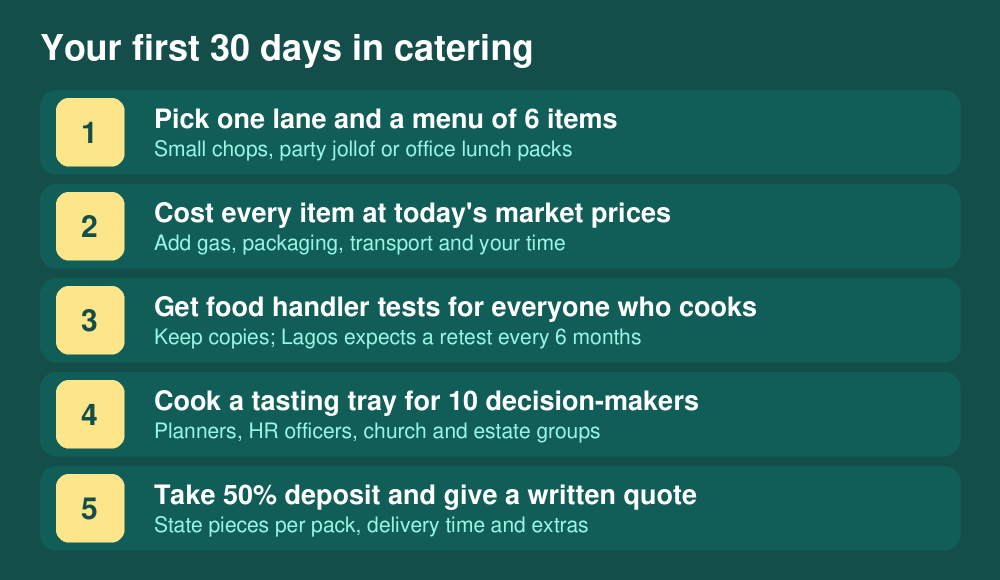
You do not need to fund ingredients for every event from your own pocket. Standard practice is to collect a deposit, often 50% or more, when the client books, and to use that to buy ingredients.
How to price small chops and plates
Pricing is where most new caterers go wrong. The method is simple, but you have to do it honestly every time.
- Cost each item at today’s market prices. Work out what one samosa, one spring roll, ten puff-puff or one skewer costs you in ingredients.
- Add the hidden costs. Gas, oil you throw away, packaging, transport to the venue, helpers for the day (often ₦5,000 to ₦15,000 per person per event) and a share of equipment wear.
- Add your margin. Many caterers aim for 30% to 50% on top of full cost. Small chops trays can carry higher margins because ingredients are cheap relative to the price.
- Check against the market. If your price is far below what others in your city charge, you have probably missed a cost.
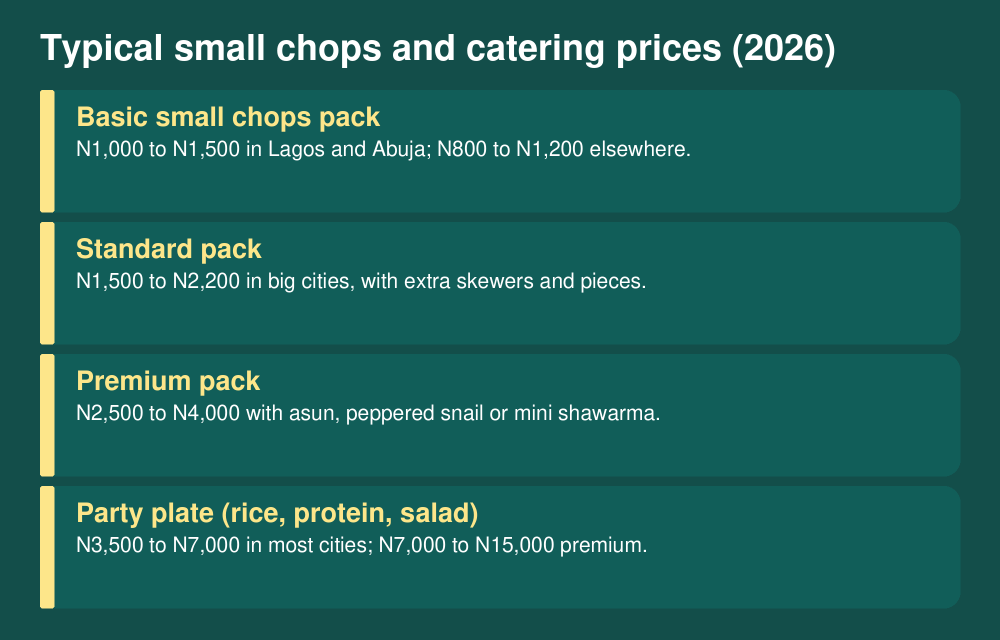
For reference, 2026 Nigerian price guides put a basic small chops pack at about ₦1,000 to ₦1,500 in Lagos and Abuja, a standard pack at ₦1,500 to ₦2,200, and premium packs with asun, peppered snail or mini shawarma at ₦2,500 to ₦4,000. In other cities, packs tend to be a few hundred naira cheaper. A standard party plate of rice, protein and salad typically sells for ₦3,500 to ₦7,000, and ₦7,000 to ₦15,000 for premium menus or Lagos and Abuja events. Trays of around 50 assorted pieces are commonly sold for ₦15,000 to ₦35,000 depending on positioning.
Always quote the number of pieces in each pack. Clients compare headline prices, but a ₦1,500 pack with six pieces is better value than a ₦1,200 pack with four, and saying so in writing builds trust. If you also cook rice dishes, our party jollof cost per plate calculator shows how to cost a pot.
Rules and paperwork
You can start small at home, but if you want corporate clients, weddings at hotels or regular contracts, get the basics right from the beginning.
- Business name registration with CAC. Corporate clients often ask for a registered name and a business account before they pay. You can register online on the Corporate Affairs Commission portal; check the current fee there before you pay anyone.
- Food handler certificates. In Lagos, any business whose staff prepare, serve or package food is expected to have each food handler tested and certified fit. The Lagos State Environmental Protection Agency’s hospitality checklist describes the test as being done every six months. Tests are done at government hospitals, primary health centres or accredited laboratories, and usually cover stool, urine, sputum, Hepatitis B and typhoid (Widal). Ask your local government’s environmental health office which facilities it accepts, and never buy a certificate without actually being tested.
- Local government permits. If you run from a fixed kitchen address, some LGAs expect a trade permit or premises registration. Requirements differ by state and council, so confirm before your first big event.
- NAFDAC. Fresh food cooked for a specific event generally does not need NAFDAC product registration. That changes if you start selling packaged, labelled products on shop shelves, such as bottled zobo or branded chin-chin. Our NAFDAC registration guide for small food businesses explains that process.
- Hygiene basics. Hairnets, gloves, clean water, separate boards for raw meat, and a rule that anyone who is unwell stays away from food. One case of food poisoning at an event can end a young catering business.
How to get your first clients
Referrals drive this business. One good tray at a naming ceremony can turn into three bookings the following month, so your first job is to get your food in front of the people who book caterers.
- Do a tasting tray. Cook a small tray for ten people who influence bookings: event planners, church and mosque women’s groups, estate associations, HR and admin officers at nearby companies, and school proprietors.
- Use WhatsApp properly. Post clear photos and short videos of real orders on your status, with prices and how to order. Keep a catalogue in WhatsApp Business with your packs, minimum orders and delivery areas.
- Partner with planners and venues. Event planners and hall owners recommend vendors they trust. Offer them reliability: arrive early, bring enough, and leave the venue clean.
- Go after recurring orders. Offices, schools and churches that order small chops for meetings every month are worth more than one big wedding a year.
- Collect reviews. After each event, ask the client for a short voice note or message you can share, with their permission.
Nigerian food founders featured in the press this year describe the same path: starting with very little, selling to neighbours through WhatsApp, then breaking through at a community fair or a single well-run event that led to corporate and private catering.
Mistakes that sink new caterers
- Underpricing to win the first bookings. If you only win because you are cheapest, you will attract clients who leave the moment someone undercuts you, and you will work at a loss.
- No deposit, no written quote. Always agree the menu, guest numbers, pieces per pack, delivery time and price in writing, and take a deposit before you shop.
- Quoting weeks ahead without a price-review clause. Gas and oil prices can move sharply within a month. For events booked far ahead, say the price holds for a set period or include a fair adjustment clause.
- Running out of food. Ask how many guests are really expected, not how many were invited, and prepare a margin.
- Late delivery. Plan transport, traffic and set-up time. Being early is part of the product.
From small chops to full catering
Once you have regular small chops orders, add one main dish at a time, such as party jollof or fried rice with chicken, and test it at smaller events before selling it at weddings. Track your profit per event in a simple notebook or spreadsheet. When you are hiring the same equipment every weekend, it may be time to buy it. If you later want to add delivery, our guide to starting a food delivery business in Nigeria covers riders and costs, and our start a business in Nigeria hub brings together registration, tax and funding.
Frequently asked questions
How much do I need to start a small chops business in Nigeria?
Many home-based small chops businesses start with roughly ₦150,000 to ₦400,000 for basic equipment, packaging and first stock, and some start with less using equipment they already own. Full event catering from home typically needs ₦400,000 to ₦900,000.
How much should I charge for a pack of small chops?
In 2026, a standard pack sells for about ₦1,500 to ₦2,200 in Lagos and Abuja and a few hundred naira less in other cities. Work out your own full cost per pack first, including gas, packaging and transport, then add your margin, and state the number of pieces in writing.
Do I need NAFDAC registration to sell small chops?
Generally not for fresh food cooked for events. You will need NAFDAC registration if you sell packaged, labelled food products through shops. You should still get food handler tests for everyone who cooks or serves, and check your state and local government rules.
Can I run a catering business from home?
Yes, many Nigerian caterers do, especially at the start. Keep the kitchen clean and organised, keep raw and cooked food apart, and check whether your local government expects a permit for food businesses.
Sources
- Legit.ng: Cooking gas prices rise, Dangote and depots announce new rates (8 November 2026)
- Legit.ng: Cooking gas prices across states (6 November 2026)
- Skillnaija: How to start a catering business in Nigeria (2026)
- Elite Planners: Small chops price list 2026
- Pryme: Lagos food handlers’ certificate, who needs it (October 2026)
- Nairametrics: Lagos food prices in October 2026
- New Telegraph: Swoop programme for Lagos food entrepreneurs (November 2026)
- Corporate Affairs Commission (CAC)
Join the discussion
Have you tried this, or do you have a question we did not answer? 1 reader has already shared their view. Naijatipsland members help each other with real, first-hand experience.









Editor’s note: small chops and catering can grow from a home kitchen, but most new caterers fail on pricing, not cooking. Cost every item at today’s market prices, include gas and transport, and never start an event without a deposit. – Ade