
Best Business Ideas for Nigerians Living in the UK (2026): Low-Cost Options, Rules and Funding

Last updated: 5 November 2026 · By Naijatipsland Editorial Team · Editorial policy
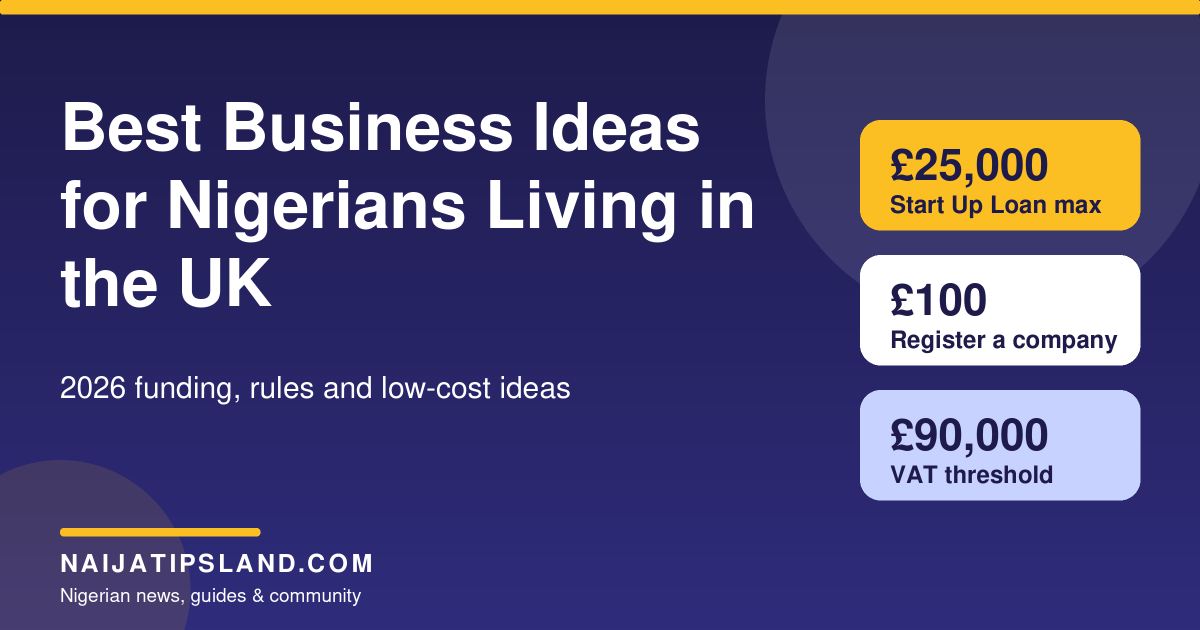
Many Nigerians in the UK want more than a salary: a business that brings in extra income, builds something for the family, or connects the UK with Nigeria. The good news is that the UK makes it easy to start small. You can register as a sole trader with HMRC for free, set up a limited company online for £100, and apply for a government-backed Start Up Loan. The harder part is picking an idea that fits your visa, your time, your money and your skills. This guide lays out the best business ideas for Nigerians living in the UK in 2026, the rules that matter, how to fund and register, and the mistakes to avoid.
Important first: your immigration status decides whether you may run a business. Some visas restrict or ban self-employment, while British citizens, people with indefinite leave to remain and certain visa holders can usually trade freely. Check your visa conditions on GOV.UK or with a regulated adviser before you register or accept payment. This guide is general information, not legal, tax or immigration advice.
The numbers every UK founder should know
These figures come from official GOV.UK pages as of November 2026. Rules change, so confirm them before you act.
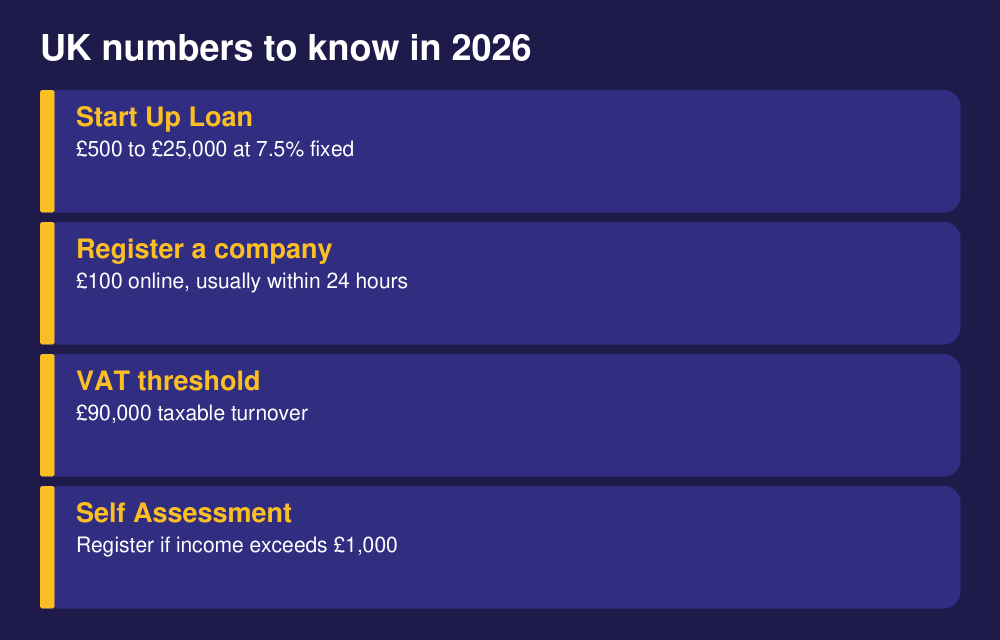
The Start Up Loans scheme offers £500 to £25,000 at a fixed 7.5 percent a year, repaid over one to five years, with no application fee and no early repayment fee, plus up to 12 months of free mentoring. You must be 18 or over and live in the UK, and the business must have been trading for less than five years. Registering a limited company online costs £100 and is usually done within 24 hours (£124 by post). The VAT registration threshold is £90,000 of taxable turnover in 12 months. As a sole trader you must register for Self Assessment if your income from self-employment goes over £1,000 in a tax year. For 2026 to 2027, Class 4 National Insurance is 6 percent on profits between £12,570 and £50,270 and 2 percent above that, and Class 2 is £3.65 a week with a small profits threshold of £7,105.
Best business ideas for Nigerians in the UK
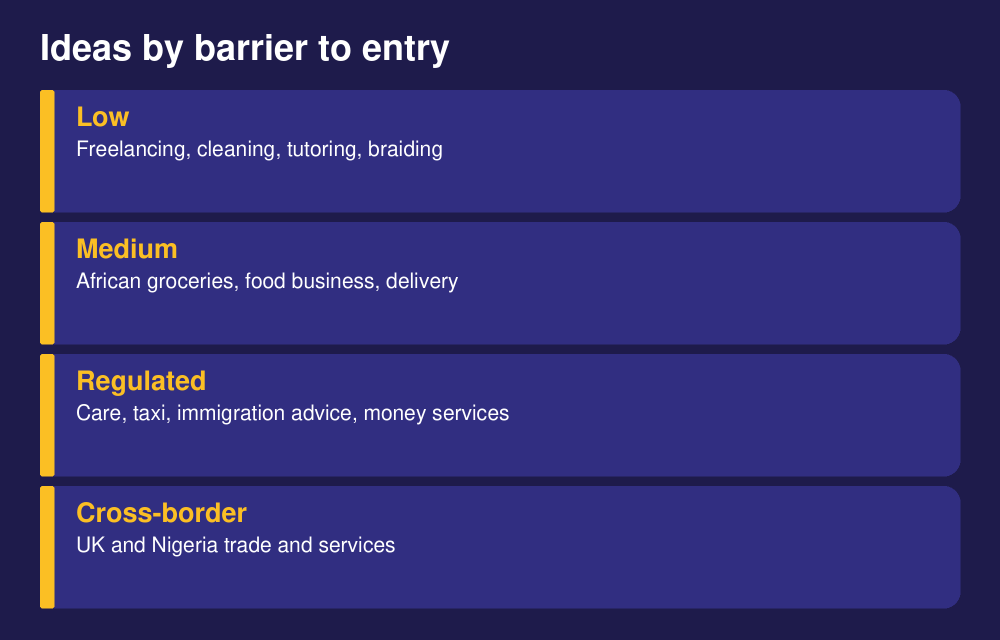
The ideas below suit people who already know the Nigerian community in the UK, but they also serve wider customers. I group them by how hard they are to start.
Low-barrier ideas (start part-time with little money)
Freelance services. Bookkeeping, virtual assistance, social media management, web design, CV writing, tax return preparation and video editing can be started from a laptop. You still need to register as self-employed and keep records. Charge for outcomes, not just hours.
Cleaning and home services. Domestic and commercial cleaning, removals, handyman work and laundry have steady demand. You will need public liability insurance and, for staff, to follow employment and right-to-work rules.
Beauty, hair and fashion. Braiding, makeup, tailoring, wig sales and Ankara-inspired fashion do well, especially when you sell online. Check local council rules if you operate from premises and make sure products and ingredients comply with UK labelling and safety rules.
Tutoring and coaching. Maths, English, exam preparation or career coaching can be done online. You may need an enhanced DBS check for work with children.
Food and retail
African grocery store or online shop. Many Nigerians in the UK want garri, egusi, ogbono, palm oil, stockfish and suya spice. An online store keeps rent low. You must follow UK food labelling and import rules, and you need your suppliers’ paperwork. Food importing has rules on origin, labelling and inspection, so check GOV.UK before ordering.
Home-based food business. Jollof, small chops, cakes and meal prep can start from a home kitchen, but you must register your food business with your local council before you start trading, usually at least 28 days beforehand, and expect a food hygiene inspection and a rating. Level 2 food hygiene training is strongly advised.
Catering and events. Weddings, naming ceremonies and parties are big in the Nigerian community. Add decor, DJ, photography or cake services for higher margins, but hire reliable help for busy weekends.
Logistics and delivery
Courier, last-mile delivery and errand services connect to online shopping growth. Parcel delivery for platforms may need a vehicle, insurance and, in some cases, self-employed status that matches your visa. Another route is a freight or cargo service to Nigeria, which needs reliable partners, clear customs paperwork and insurance. Beware of anyone who asks you to carry unknown parcels; that is a common scam and can lead to criminal charges.
Care, health and regulated services
Healthcare staffing, home care for older adults and supported living can be profitable but are regulated. In England, personal care services usually need registration with the Care Quality Commission, and you need qualified managers, policies and insurance. This is not a side hustle. Immigration advice is also regulated: you must be registered with the Office of the Immigration Services Commissioner (OISC) or be a qualified solicitor or barrister. Private hire taxi businesses need licences from your licensing authority (in London, Transport for London).
Property and money services
Rent-to-rent and property sourcing can work, but landlords must follow licensing, safety and tenancy rules, and mistakes are expensive. Avoid any scheme that promises guaranteed returns. Remittance and currency exchange are regulated by the FCA, so do not start a money transfer service without authorisation. If you only want to send money home, compare providers in our guide to cheapest money transfer apps for Nigerians in the UK.
Businesses that link the UK and Nigeria
Selling UK-made or UK-bought goods to Nigeria, running a shopping-and-shipping service, building software for Nigerian customers or training Nigerians remotely all use your UK base and Nigerian knowledge. Test with a small pilot, keep clear contracts and consider the exchange-rate risk when you price. If you also want to invest back home, read how Nigerians in the diaspora can invest in Nigeria safely and our diaspora money guide.
Which idea suits you? A quick test
Score each idea from one to five on these questions: Can I start with the money I have? Do I already have a skill or contacts? Can I do it alongside my job? Does my visa allow it? Is there a licence I must get first? The best first business usually scores high on the first four and needs no licence. Then check your finances: our UK cost of living guide for Nigerians can help you budget while you build.
How to set up in the UK: five steps
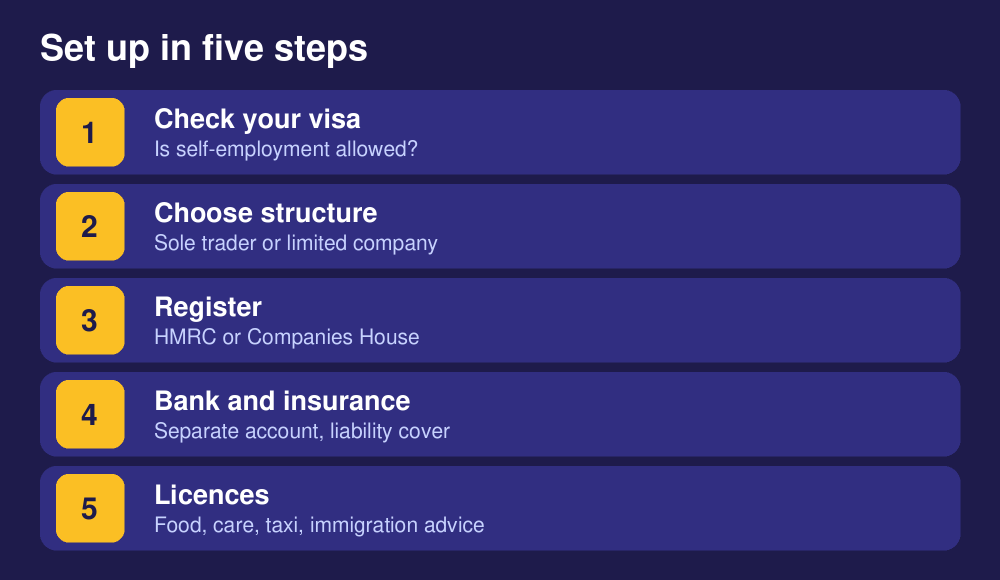
1. Confirm you can work for yourself. Check your visa conditions. If you are on a work or student visa, do not assume self-employment is allowed.
2. Choose a structure. GOV.UK says a sole trader is the simplest to set up and keep records for, but you are personally liable for debts. A limited company is a separate legal entity with more reporting duties. You can switch later, and moving from sole trader to limited company is usually easier than the reverse.
3. Register. Sole traders register for Self Assessment with HMRC if income exceeds £1,000. Limited companies register with Companies House before trading, name rules apply, and you must appoint at least one director.
4. Open a business bank account and get insurance. Even sole traders benefit from separate accounts, and public liability or professional indemnity cover is often required by customers.
5. Get licences and registrations. Food, care, taxi and immigration advice each have their own regulators. Check before you advertise.
If you want to start a more ambitious business: the Innovator Founder visa
If you are coming to the UK or switching into a business route, the Innovator Founder visa requires an innovative, viable and scalable new business endorsed by an approved body. GOV.UK lists a fee of £1,357 per person from outside the UK (£1,693 to switch in the UK), plus £1,000 for the endorsement and £500 for each endorsing-body meeting, and the healthcare surcharge. It is not for a standard shop or cleaning company.
Common mistakes to avoid
Do not start trading without checking your visa. Do not mix personal and business money. Do not ignore tax deadlines: a Self Assessment return is due after the tax year ends and late filing brings penalties. Do not pay upfront for “guaranteed” contracts, grants or visas. Do not sign a lease for premises before you have tested demand online or at a market stall. And do not skip insurance. If you need work in the meantime, see our guide to UK recruitment agencies for Nigerians.
Frequently asked questions
What is the best business for a Nigerian in the UK with little money?
Freelance services, cleaning, tutoring, braiding or a small online shop are common low-cost starts. Pick one you already have skills for and test with a few paying customers before you spend on equipment or premises.
Can I run a business in the UK on a work visa?
It depends on your visa. Many work and student visas limit or prohibit self-employment. Check your conditions on GOV.UK or ask a regulated adviser before you register or take payments.
How much does it cost to register a company in the UK?
Registering a limited company online with Companies House costs £100 and is usually completed within 24 hours. Registering as a sole trader with HMRC is free.
Can I get a government loan to start a business?
Start Up Loans offer £500 to £25,000 at a fixed 7.5 percent a year over one to five years, with free mentoring. It is an unsecured personal loan subject to a credit check, so only borrow what you can repay.
Do I need to charge VAT?
You must register for VAT if your taxable turnover goes over £90,000 in 12 months, or you expect to pass it in the next 30 days. You can register voluntarily earlier.
Is an African food business a good idea?
Demand is steady, but margins depend on supply costs and shelf life. Register with your council, follow food labelling and hygiene rules, and start with a small range to learn what sells.
Can I run a business in both the UK and Nigeria?
Yes, but you will need clear contracts, a way to move money legally and tax advice on where profits are taxable. Start small and keep records of everything.
Sources and notes: GOV.UK pages on Start Up Loans, setting up a business, registering a company, VAT registration, self-employed National Insurance rates and the Innovator Founder visa (checked November 2026); NaijaUKConnect list of service business ideas for Nigerians in the UK. Figures are for general guidance and not legal, tax or immigration advice.
Join the discussion
Have you tried this, or do you have a question we did not answer? 1 reader has already shared their view. Naijatipsland members help each other with real, first-hand experience.







Ade here. From the UK side, the cheapest way to test a business is to sell to three paying customers before registering anything fancy. But check your visa conditions first, because some visas do not allow self-employment. Which of these ideas would you try, and what would you need to start? Share below. General information, not legal or tax advice. – Ade Adeniyi