
Profitable Businesses Nigerians Can Start From Home (2026): Capital, Profit and How to Start

Last updated: 3 November 2026 · By Naijatipsland Editorial Team · Editorial policy
Checked 3 November 2026. With prices rising faster than salaries, more Nigerians are turning a room, a kitchen or a phone into a second source of income. A home business keeps your costs low because you are not paying shop rent, and many of the best options can start with less than ₦100,000. This guide covers 14 realistic home-based businesses in Nigeria, both offline and online, with the start-up capital reported in 2026, the equipment you need, the licences that apply, and how to find customers on WhatsApp and Instagram.
If you are looking only for internet-based ideas, see our guide to 7 types of online businesses for Nigerian entrepreneurs. This article focuses on what you can run from where you live, with real costs.
How to read the figures in this guide
The naira amounts below are ranges taken from 2026 business guides and price listings published by Kuda, Moniepoint, WithinNigeria, NigerianQueries and others. They are starting points, not quotes. Prices for flour, oil, gas, feed and fabric change month to month, and costs in Lagos and Abuja are usually higher than in smaller cities. Profit depends on how well you price, how much you waste and how many customers you keep, so treat any earnings figure as a guide only.
14 profitable businesses you can start from home
1. Small chops and snacks
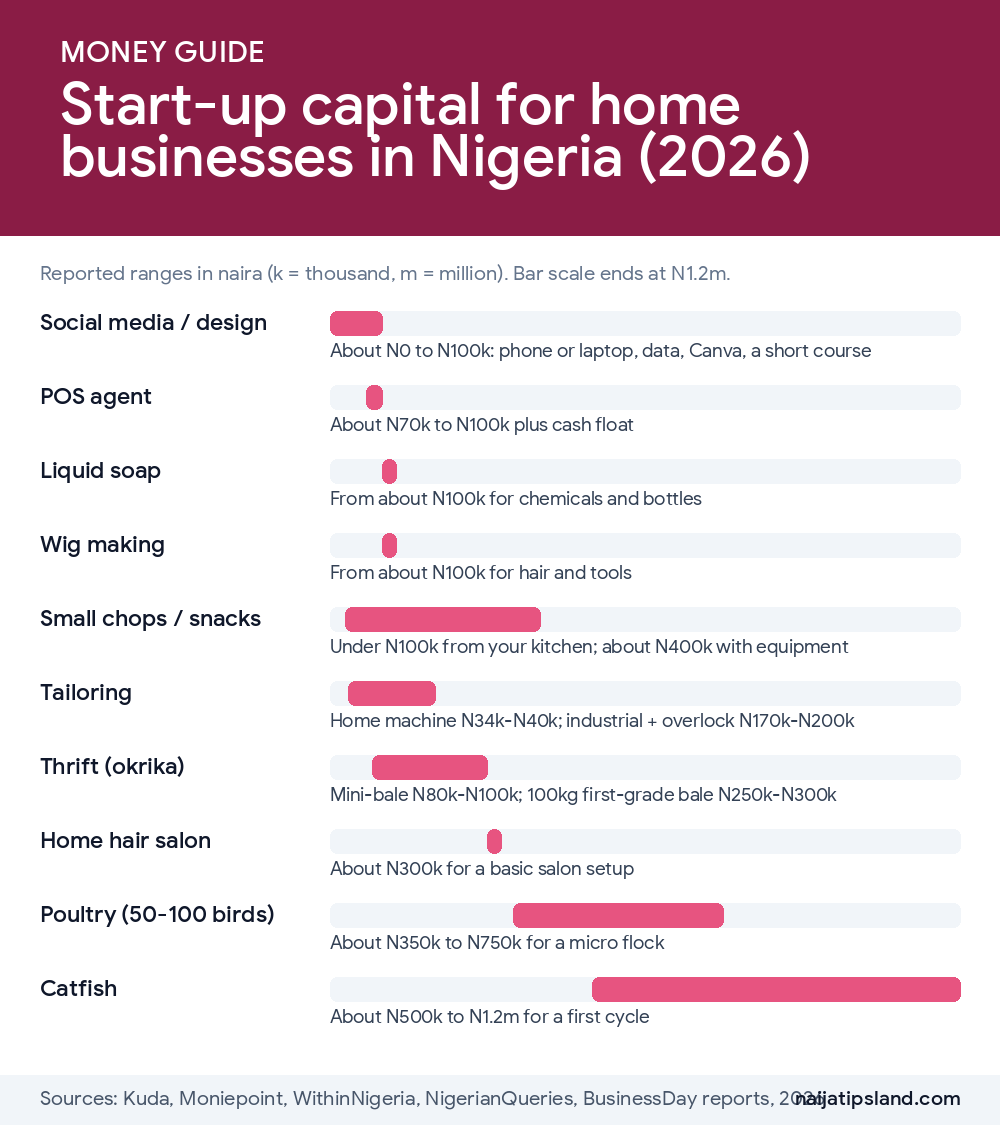
Puff-puff, spring rolls, samosas, chicken and peppered gizzard are always in demand for birthdays, office events and church programmes. A 2026 WithinNigeria guide says a basic setup from a home kitchen can cost well under ₦100,000, while Moniepoint’s budget for a fuller snack business (equipment, ingredients, packaging, a stall and marketing) comes to about ₦400,000. You need a deep fryer or heavy pot, gas, trays, packs and branded stickers. Price per pack so it covers ingredients, gas, packaging, delivery and your time, not just the flour and oil.
2. Baking: cakes, bread, chin chin and meat pies
Baking pays well around festive seasons and weddings. Start with what your existing oven can handle, take orders before you buy more equipment, and keep a cost sheet for every recipe. Packaged items such as chin chin or cookies sold in shops need NAFDAC registration, which we explain below.
3. Tailoring and fashion design
A good tailor never lacks customers, especially for Ankara and aso ebi. NigerianQueries’ 2026 price list puts domestic Butterfly and Two Lion machines at about ₦32,000 to ₦40,000, industrial straight machines at about ₦75,000 to ₦90,000 and overlock machines at about ₦95,000 to ₦110,000. You can start with one domestic machine and add an industrial and overlock machine when orders grow.
4. Laundry and ironing service
Busy workers and students in estates and around campuses pay for washing, ironing and folding. Start with ironing only, which needs little more than a good iron, a board, hangers and nylon covers, then add washing once you have regular customers. Offer pick-up and delivery on fixed days and charge per item or per bag.
5. Home lessons and tutoring
Parents pay for help with primary school work, WAEC, NECO, JAMB and languages. You can tutor in pupils’ homes, from your own sitting room or online. Platforms such as Tuteria list tutoring jobs in Nigeria, which is a useful way to see what parents in your area are paying. Your main costs are transport, data and teaching materials.
6. Hair braiding, wig making and nails
Kuda’s 2026 guide puts wig making at ₦100,000 and above for hair and tools, and a basic salon setup at about ₦300,000. A home stylist can start with less by braiding and fixing wigs in a clean corner of the house and doing home service. Build a portfolio of real clients’ photos on Instagram and TikTok.
7. Liquid soap and cleaning products
Liquid soap, bleach and air freshener sell steadily to households, offices and schools. Kuda estimates about ₦100,000 to start, covering chemicals, bottles and labels. Learn from a reputable trainer, wear gloves and goggles, store chemicals away from children and food, and remember that NAFDAC regulates soaps and detergents.
8. POS agent business
A POS point in a busy street or estate can earn steady commissions. WithinNigeria puts the start-up at roughly ₦70,000 to ₦100,000 plus your cash float, and Moniepoint’s blog lists its terminal cost at ₦21,500 (caution fee, logistics and insurance). The rules have tightened, though. Under CBN agent banking rules, from 1 April 2026 each agent can work with only one bank or fintech (the single-principal rule), terminals must be geo-tagged to the registered address, and an agent’s daily cash-out is capped at ₦1.2 million while customers are limited to ₦100,000 a day. So you can run POS from your gate or shop front, but you cannot carry the terminal around town. Our guide to starting a POS business covers the details.
9. Poultry farming
Backyard poultry works if you have space and your landlord and neighbours agree. Our poultry farming in Nigeria guide reports a micro flock of 50 to 100 birds at about ₦350,000 to ₦750,000, with a 500-bird broiler setup at roughly ₦1.3 million to ₦2.5 million. Start small, vaccinate on schedule and line up buyers before festive seasons.
10. Catfish farming
Catfish can be raised in tarpaulin or concrete tanks in a backyard. Moniepoint’s 2026 budget for a small fish farm is about ₦500,000, and a BusinessDay estimate cited in 2026 puts running costs for 500 catfish at about ₦1.2 million per five-month cycle. Retail prices in Lagos and Abuja were reported at about ₦2,650 to ₦4,400 per kg in early 2026. Water supply, feed cost and losses decide your profit.
11. Thrift (okrika) reselling
Thrift clothing sells well online and at estate pop-ups because it is cheaper than new clothes. Moniepoint cites a 100 kg first-grade bale in Lagos at about ₦250,000 to ₦300,000, and WithinNigeria says mini-bales start at about ₦80,000 to ₦100,000. Sorting well, washing, ironing and taking good photos let you sell top pieces at two to three times their cost. Bale quality varies, so buy from sellers who let you see a sample.
12. Social media management
Many small businesses want someone to post, reply to messages and run simple adverts. You need a smartphone or laptop, data and design tools such as Canva. Start by managing one or two pages for a modest monthly fee, then raise prices as you build results you can show.
13. Graphic design
Flyers, logos, menus, price lists and wedding invitations are needed every week. Learn the basics through free or low-cost courses (see our list of affordable tech courses for beginners), build a portfolio, and offer packages to churches, schools and small shops near you.
14. Food delivery and soup in bulk
Busy families and single workers buy pots of soup, stew and frozen meals every week. Cook in bulk on fixed days, sell in labelled bowls, and deliver within your area. This works well alongside small chops because you use the same kitchen and customers.
For more ideas, including businesses that need a shop, see 10 small businesses that actually succeed in Nigeria and our wider list of side hustle ideas for Nigerians in 2026.
Quick comparison: capital, equipment and margins
| Business | Reported start-up capital | Key equipment | Margin notes |
|---|---|---|---|
| Small chops | Under ₦100,000 to about ₦400,000 | Fryer or pot, gas, trays, packs | Good on event orders; watch oil and gas prices |
| Tailoring | ₦32,000 to ₦200,000 (machines) | Domestic, industrial and overlock machines | Mostly labour; fast-turnaround jobs pay more |
| POS agent | ₦70,000 to ₦100,000 plus float | Terminal, phone, table and umbrella | Commission per transaction; location is everything |
| Liquid soap | From about ₦100,000 | Chemicals, buckets, bottles, labels | Better on bulk sales to offices and schools |
| Wig making | From about ₦100,000 | Hair, wig cap, tools, mannequin head | Custom units and revamps earn more |
| Thrift reselling | ₦80,000 to ₦300,000 per bale | Bale, iron, hangers, good phone camera | Top pieces at two to three times cost (reported) |
| Poultry | ₦350,000 to ₦750,000 (50 to 100 birds) | Pen, feeders, drinkers, vaccines | Feed is the biggest cost; losses hurt margins |
| Catfish | About ₦500,000 to ₦1.2 million | Tanks, water, feed, fingerlings | Five-month cycle; price per kg decides profit |
| Social media or design | About ₦0 to ₦100,000 | Phone or laptop, data, Canva | High margin; income depends on clients kept |
Licences and registrations you may need
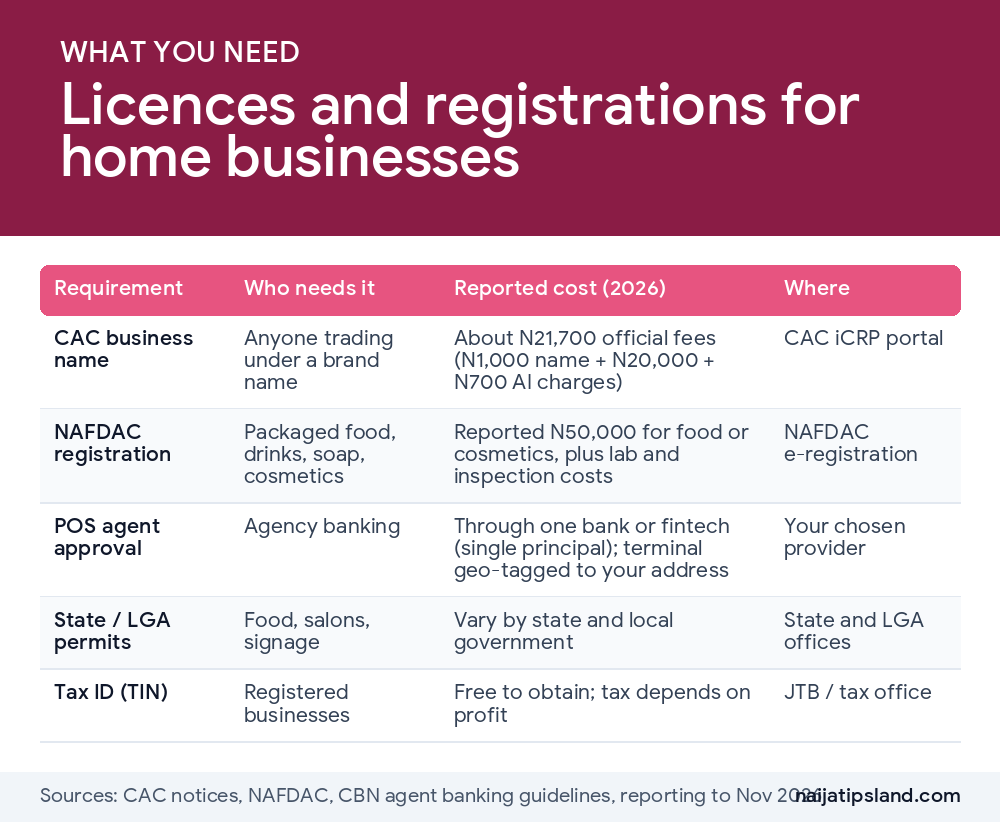
Most home businesses start informally, but registering protects your brand and helps you open a business bank account, get POS from banks and supply bigger customers.
- CAC business name: official fees are reported at about ₦21,700 (₦1,000 name reservation, ₦20,000 registration and the AI service charges the CAC added from 1 April 2026). Follow our step-by-step guide to registering a business name with CAC.
- NAFDAC: needed for packaged food, drinks, soaps, detergents and cosmetics sold in shops or across states. Registration fees of about ₦50,000 for food or cosmetics are widely reported, plus lab tests and an inspection. See NAFDAC registration step by step for small businesses.
- POS: you register as an agent through one bank or fintech, which handles the CBN requirements.
- State and local permits: some states and local governments charge for signage, food handling or business premises. Ask at your LGA office.
- Tax: profit from a business is taxable income. Read our guide to personal income tax in Nigeria in 2026.
How to market a home business on WhatsApp and Instagram
- Use WhatsApp Business, not your personal WhatsApp. Set up a catalogue with prices, quick replies, a short greeting and your opening hours.
- Post on Status every day. Show the work in progress, the finished product and delivery, not only flyers.
- Use real photos. Natural light and a clean background sell better than stock images.
- Ask happy customers for a short review or a photo you can share with their permission.
- Join estate, church, school and alumni groups and follow each group’s rules about adverts.
- Run small, targeted Instagram or Facebook adverts only after organic posts show which products people want.
- Accept transfers and card payments and always send a receipt. Our guide on where to sell online in Nigeria compares marketplaces and online stores.
Common mistakes to avoid
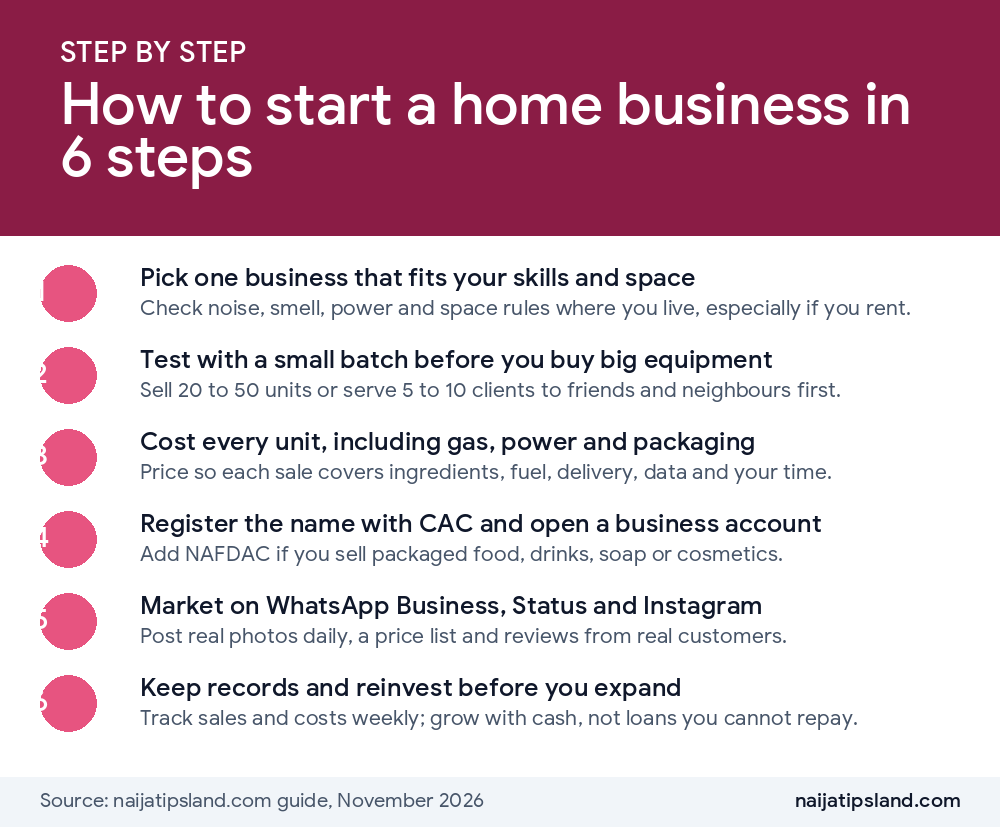
- Underpricing. Many beginners forget gas, power, data, transport and packaging. Cost every unit before you set a price.
- Buying big equipment too early. Test demand with what you have first.
- Mixing business and personal money. Open a separate account so you can see whether you are making a profit.
- Ignoring your tenancy agreement. Some landlords and estates forbid trading, livestock or signage. Ask first.
- Cutting corners on hygiene and safety. One food-poisoning complaint or chemical accident can end your business.
- Giving too much credit. Friends and family can sink a small business if they do not pay.
- Paying for “business starter packs” from strangers online. Check trainers’ reviews, ask for a physical address and never pay large sums upfront to people you cannot verify.
If you work in government, note that the rules on private business are stricter for public officers. Read our guide to side hustles for civil servants before you start.
Frequently asked questions
What is the cheapest business to start from home in Nigeria?
Service businesses such as tutoring, social media management, graphic design and ironing cost the least, because you mainly need skills, a phone and data. Small chops can also start for under ₦100,000 if you already have a kitchen.
Do I need to register my home business with CAC?
It is not required to start selling to friends and neighbours, but registering a business name (about ₦21,700 in official fees in 2026) protects your name and lets you open a business account and work with bigger clients.
Do I need NAFDAC to sell food from home?
Freshly made food sold directly to customers, such as small chops for a party, is usually not registered with NAFDAC. Packaged products with a shelf life sold in shops or supermarkets, such as chin chin, juice, soap or cream, need NAFDAC registration.
Can I run a POS business from my house?
Yes, if your house faces a busy road or estate and you register through one provider. Since 2026 your terminal must be geo-tagged to that registered address, so you cannot move it around.
Which home business makes the most money?
There is no single answer. Farming and tailoring can bring large orders but need more capital and time, while digital services have high margins but depend on keeping clients. Choose based on your skills, space and how much you can afford to lose.
Disclaimer: this guide is general information based on business guides, price lists, CAC and NAFDAC information and CBN agent banking rules available on 3 November 2026. Start-up costs and prices vary by location and change often, and nothing here is financial or legal advice. Confirm current fees with the relevant agency and get local quotes before you invest.
Join the discussion
Have you tried this, or do you have a question we did not answer? 1 reader has already shared their view. Naijatipsland members help each other with real, first-hand experience.









Editor’s note: before you buy any big equipment, test demand with a small batch sold to neighbours and friends, and cost every unit including gas, packaging and delivery. Most home businesses fail on underpricing, not on lack of customers.