Last updated: 14 October 2026. Rules for IDs, remittances and elections change, so check official sources. This is general information. We replaced an earlier generic piece with practical guidance for Nigerians abroad.
Living outside Nigeria does not mean you stop caring about what happens at home. But distance makes it easier to be fooled by rumours, pressured by emotional appeals and caught out by scams. Here is how to stay informed and safe.
1. Build a reliable news diet
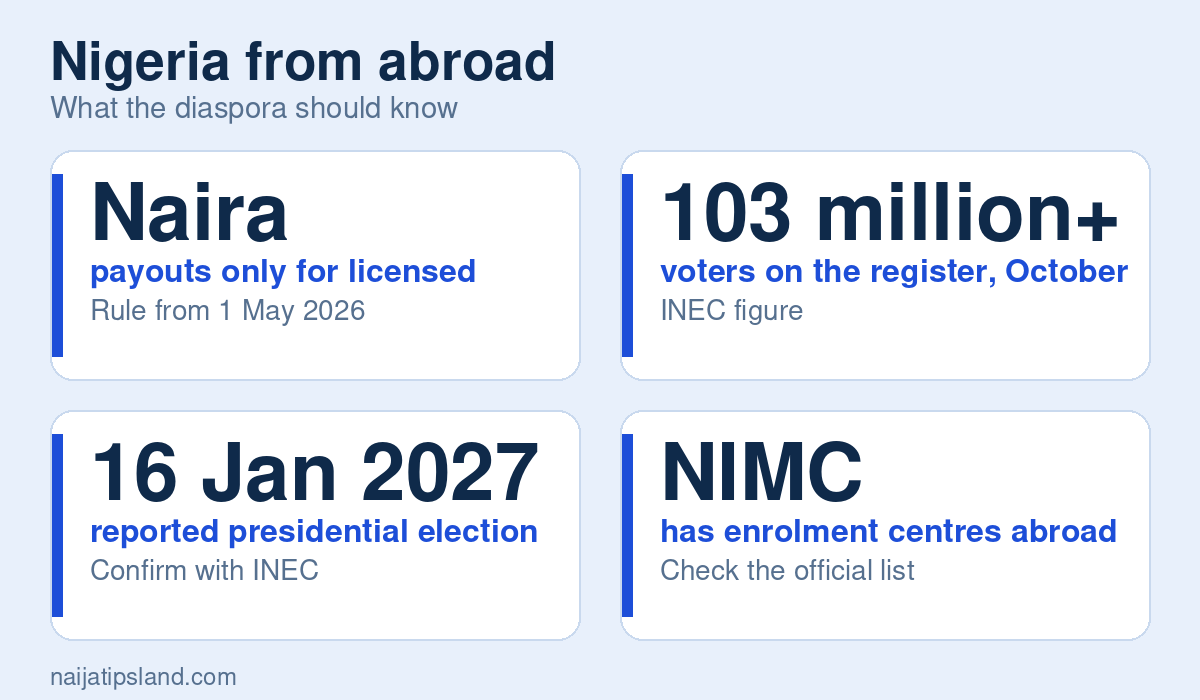
- Choose a few reliable Nigerian outlets, plus one international source, and use different owners and viewpoints.
- Go to primary sources for facts: INEC for elections, the NBS for statistics, the CBN for monetary policy and the NCC for telecoms.
- Follow Nigerian fact-checkers such as Dubawa, Africa Check, FactCheckHub and CableCheck before you share viral claims on family and community chats.
- Be careful in diaspora WhatsApp groups, where rumours travel quickly. Do not forward anything you have not checked. See our guides on how to follow the news, fake news and verifying news.
2. Follow the elections
Can you vote from abroad? Not in 2027. Read can Nigerians abroad vote in 2027 for the rules and how to vote if you travel home.
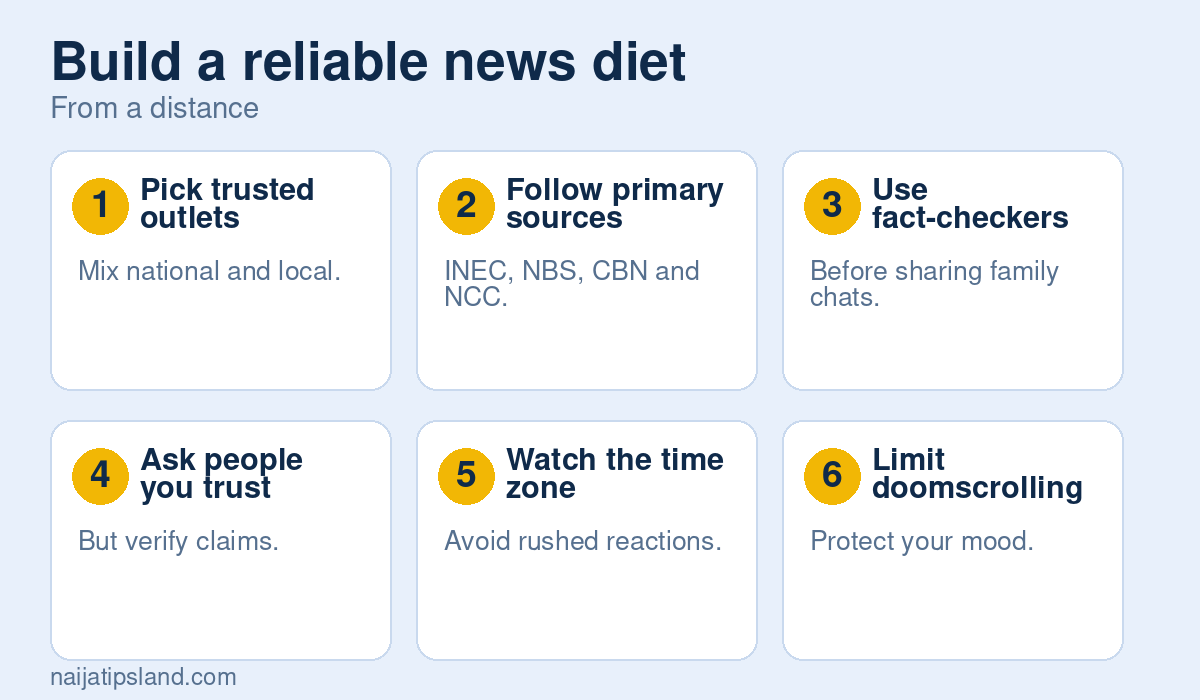
The 2027 general elections are reported for 16 January (presidential and National Assembly) and 6 February (governorship and state assemblies). INEC said the voter register passed 103 million in October 2026 and that PVC collection began on 9 October. Check INEC’s official channels for what applies to people outside the country. Our 2027 election hub and guides on voter registration and political parties can help you follow developments. Be especially careful with deepfakes and fake notices.
3. Sending money home
Since 1 May 2026, licensed international money transfer operators must pay out remittances in naira, under CBN rules. Nigeria received $21.8 billion in remittances in 2025, and costs of sending money to sub-Saharan Africa averaged about 8.46% of a $200 transfer in late 2025, according to the World Bank. Compare fees and exchange rates, use licensed channels and avoid informal routes that can freeze or lose your money. See our guide to sending money to Nigeria.
4. IDs and documents
- NIN: NIMC has enrolment centres in a number of countries and has said it wants to capture Nigerians in the diaspora. Check NIMC’s official list. See our guide on digital identity.
- BVN and bank accounts: keep your details up to date and protect them.
- Passport and consular services: use official embassy and immigration websites and avoid agents who promise shortcuts.
- SIM and phone numbers: if you keep a Nigerian number, make sure it stays registered. See SIM registration and replacement.
5. Property, family and business back home
- Verify before you pay. Fraudsters target diaspora buyers with fake land deals, fake agents and forged documents. Check titles with a lawyer you trust and visit or send a trusted representative.
- Use written agreements, and pay through traceable channels.
- Registering a business: see business structures and how to register a business name.
- Investments: beware of Ponzi schemes and fake crypto offers. See internet scams.

6. Scams that target Nigerians abroad
- Calls or messages claiming a relative is in trouble and needs money urgently. Verify through another family member first.
- Fake “NIN update” or “PVC registration” links.
- Fake business partners who ask for deposits.
- Cloned voices of relatives created with AI.
7. Staying connected without burning out
Set a routine, talk to people on the ground and focus on what you can do, such as supporting a project, mentoring or investing carefully. Take breaks from distressing news.
Learn more about the country
Read our data guides on the economy, the cost of living, the minimum wage and internet penetration.
Reliable Ways to Follow Nigeria From Abroad
- Use a few established outlets and the official pages of agencies such as INEC, the NBS and the CBN.
- Join verified community groups, but treat forwarded messages with caution.
- Check time zones before you rely on live events, and use recorded briefings when you cannot watch.
Scams That Target the Diaspora
- Land and property sales: fake sellers, forged documents and “urgent” discounts. Verify ownership and use a lawyer on the ground.
- Fake fundraisers using illness, death or emergencies, which are common after high-profile news. Confirm through the family or official channels.
- Investment offers promising dollar returns. See our guides on passive income and internet scams.
Money and Documents
When you send money home, use regulated channels and keep records. See our guide on sending money to Nigeria safely. Keep your NIN, passport and tax details up to date, and see digital identity for how NIN and BVN work.
Staying Connected Without Burnout
Constant bad news can wear you down. Set a daily limit, choose positive and practical sources as well and stay involved through local projects and community groups.
Banking from abroad (updated 31 October 2026)
Keeping a Nigerian account makes it easier to support family and manage affairs at home. Many banks now accept remote applications from non-resident Nigerians. See how to open a Nigerian bank account from abroad, which compares GTBank, UBA, FirstBank and Zenith.
Sending money home from the UK (updated 31 October 2026)
Supporting family at home is a core part of diaspora life. Our UK to Nigeria money transfer comparison explains how to find the cheapest safe option.
Frequently Asked Questions
How can I check news from Nigeria?
Compare several reliable outlets, check primary sources and use fact-checkers before sharing.
What is the safest way to send money to Nigeria?
Use a licensed operator or bank, compare fees and exchange rates and keep receipts.
How do I protect family at home from scams?
Share simple rules: never give OTPs, verify urgent requests with a call, and do not pay for jobs or admissions.