


TL;DR:
- Nigerian internet users face significant challenges in distinguishing real news from viral misinformation, especially on social media platforms.
- To stay reliably informed, they should use verified news apps, follow official channels, and verify stories through multiple trusted sources before sharing.
Sorting real news from viral rumors is one of the biggest challenges facing Nigerian internet users today. Young Nigerian internet users typically rely on digital platforms, including social media, for news, which dramatically increases their exposure to misinformation risks. One false story shared in a WhatsApp group can spread to thousands of people within minutes, causing panic, financial loss, or even social conflict. This guide gives you a clear, practical workflow to follow Nigerian news confidently, choose reliable sources, and verify what you read before you share it.
Table of Contents
- Getting ready: What you need to follow Nigerian news
- Step-by-step: The best workflow for following Nigerian news
- How to spot and verify fake news in Nigeria
- Common mistakes: What to avoid when following Nigerian news online
- Our take: Why curation and verification matter more than speed
- Get more value from trusted Nigerian news sources
- Frequently asked questions
Key Takeaways
| Point | Details |
|---|---|
| Prioritize trusted sources | Relying on 3-5 reputable Nigerian outlets keeps you accurately informed and reduces scam risk. |
| Verify before sharing | Cross-check major news stories with multiple outlets, especially during elections or crises. |
| Use digital tools smartly | Leverage apps, aggregators, and alerts — but never depend solely on social media. |
| Watch for misinformation | Look out for sensational headlines, anonymous sources, and double-check facts to avoid spreading fake news. |
Getting ready: What you need to follow Nigerian news
Now that you see why reliable news matters, here is how to set up everything you need to get started.
The foundation is simple. You need a smartphone, a stable data connection, and accounts on the right platforms where credible Nigerian news is distributed. Without these basics in place, even the best intentions to stay informed will fall apart quickly.
91% of English-speaking Nigerians access news through digital media, yet that same digital exposure creates vulnerabilities to misinformation and online scams. The solution is not to consume less news. It is to consume smarter news from verified outlets.
Essential tools and platforms
Here is a breakdown of what you need and where to find it:
| Tool/Platform | Purpose | Examples |
|---|---|---|
| News apps | Direct access to outlet content | Channels TV, Punch, Vanguard, The Nation |
| WhatsApp channels | Real-time alerts from outlets | Official WhatsApp channels of major outlets |
| Social media pages | Discovery and trending topics | Twitter/X, Facebook pages of news outlets |
| News aggregators | Broad coverage in one place | Google News (Nigeria filter), SmartNews |
| Email newsletters | Curated daily summaries | Stears, TechCabal newsletters |
Setting up your tools takes less than 30 minutes. Download two or three news apps from reputable outlets. Follow their official social media pages and join their WhatsApp channels. Enable notifications so you receive breaking news alerts as they happen.
Here is what you should have ready before you start your daily news routine:
- A reliable news aggregator app installed on your phone
- Notifications turned on for at least two trusted Nigerian outlets
- Official WhatsApp channel links saved from verified sources only
- A bookmark folder in your browser for quick access to credible sites
- A secondary account or separate list on social media dedicated to news
There are many ways to stay updated with Nigerian current affairs, and combining multiple formats gives you the broadest, most balanced picture. You can also review trusted platforms in Nigeria for additional context on choosing quality digital services.
Pro Tip: Turn on breaking news notifications for your top two outlets. This way, you get real-time updates without having to constantly refresh feeds, and you can verify the story on a second source immediately after.
Step-by-step: The best workflow for following Nigerian news
Once you have your tools set up, here is the workflow that will keep you reliably informed.
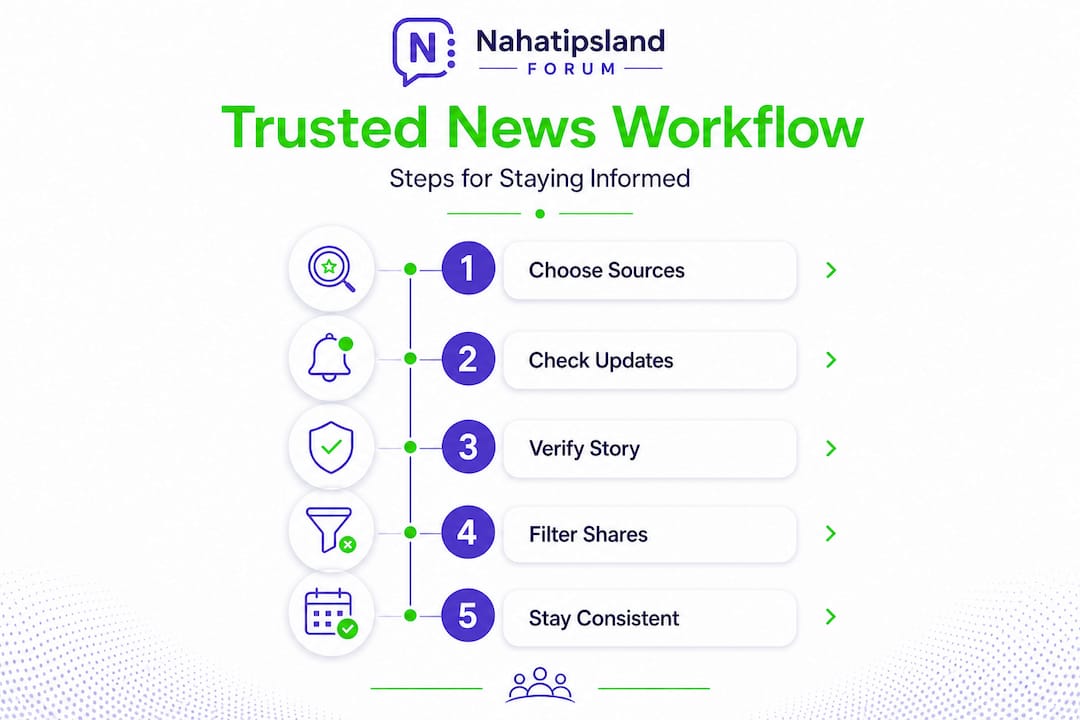
A consistent daily routine is what separates people who stay genuinely informed from those who simply react to whatever goes viral. A reliable workflow for Nigerian internet users involves picking 3 to 5 trusted Nigerian outlets, following their apps, WhatsApp channels, or alerts, using an aggregator for broader discovery, and cross-checking any major claims before sharing.
Your daily news workflow
Choose 3 to 5 trusted Nigerian news sources. Stick to outlets with editorial standards, named reporters, and a track record of issuing corrections. Examples include Punch, Channels TV, Vanguard, Premium Times, and The Guardian Nigeria.
Follow their official channels. Subscribe to their mobile apps, join their verified WhatsApp channels, and follow their official social media pages. Avoid copycat accounts that mimic real outlet names.
Use an aggregator for broader discovery. Apps like Google News, set to Nigeria, pull together stories from multiple outlets simultaneously. This gives you a wider picture without having to manually visit each site.
Check big-breaking stories on at least two sources. Political news, security alerts, and economic announcements carry the highest misinformation risk. If one outlet reports a sensational claim, look for independent confirmation before reacting or sharing.
Schedule fixed times to check news. Morning, afternoon, and evening check-ins work well. Checking at set times reduces the urge to scroll constantly, which can distort your perception of events.
Comparing source types
| Source type | Reliability | Best use case | Misinformation risk |
|---|---|---|---|
| Established news apps | High | Core daily updates | Low |
| WhatsApp channels (official) | Medium-High | Breaking alerts | Medium |
| Social media timelines | Medium | Discovery only | High |
| Anonymous blogs | Low | Avoid for facts | Very high |
| Email newsletters (verified) | High | Analysis and summaries | Low |
If you want to explore alternatives for popular Nigerian community forums, you can check Naijagist.com alternatives, Naijanetwork.com alternatives, and Naijafans.com alternatives for platforms that combine community interaction with more curated news sharing.
Pro Tip: Bookmark one news aggregator as your homepage or browser start page. Checking it at a fixed time each morning, rather than during random scrolling sessions, keeps you informed without triggering doom-scrolling behavior.
How to spot and verify fake news in Nigeria
Even with great sources, fake news can creep in. Here is how to protect yourself.
Nigeria has one of the most active online communities in Africa, which also makes it a prime target for coordinated disinformation. Fake news is not always obvious. It often looks like real news, uses official-sounding language, and spreads through trusted contacts.
“Disinformation campaigns target key moments like elections and protests.”
That quote reflects a documented pattern. During election seasons, in the lead-up to protests, and after major security incidents, fake stories spike sharply. Knowing the red flags keeps you ahead of the problem.
How to verify a story before sharing it
- Search the headline on two separate reputable outlets. If only one blog or anonymous page is carrying the story, that is a serious warning sign.
- Check the publication date. Old stories are regularly recycled during crises to create false urgency.
- Look at the URL carefully. Fake news sites often use URLs that closely mimic real outlets, for example “punchheadlines.com” instead of “punchng.com.”
- Reverse image search photos. Tools like Google Images or TinEye can show you if a photo has been taken out of context.
- Check if credible fact-checking organizations have addressed it. Dubawa and AFP Fact Check Africa specifically cover Nigerian stories.
Red flags that signal fake news
- Sensational or shocking headlines designed to trigger emotional reactions before you read further
- No named author or journalist credited to the story
- Spelling and grammar errors throughout the article body
- Unverified statistics with no source link or attribution
- Anonymous sources only, with phrases like “a source revealed” as the entire basis of a claim
- Outdated photos or video presented as current events
- Extreme political bias with no counterpoint or balance
- Pressure to share immediately, especially in WhatsApp messages urging you to forward before a deadline
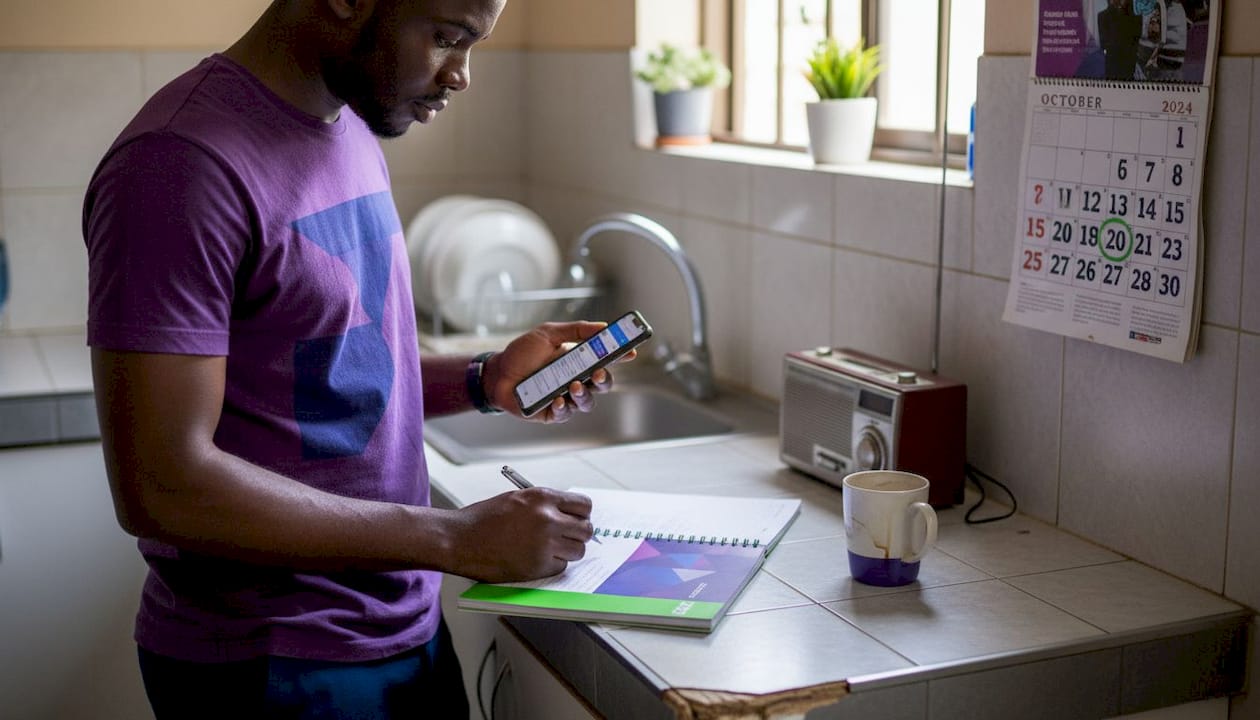
Learning to recognize fake news is a skill you build gradually. If you ever encounter a story that seems important enough to be real, you can also use proper channels and reporting news tips to alert credible journalists who can investigate.
Common mistakes: What to avoid when following Nigerian news online
Being aware of common missteps can save you a lot of stress. Let’s cover the big ones.
Even people who mean to stay well-informed regularly fall into traps that distort their understanding of what is actually happening. These mistakes are easy to make because the online news environment is designed to capture your attention, not always your accuracy.
Young Nigerian internet users are particularly vulnerable to online scams and misinformation precisely because they spend the most time on digital platforms and consume the most news online. Higher consumption without critical habits means higher exposure to false content.
Most common mistakes Nigerian news followers make
- Trusting viral posts without verification. A post getting thousands of shares does not mean it is true. Viral spread is a measure of emotional engagement, not accuracy.
- Following only one news source. No single outlet covers everything without blind spots. Relying on one source creates a skewed picture of events.
- Taking online polls and opinion posts as fact. Social media polls are not scientific surveys. They represent only the views of people who chose to participate and can be manipulated easily.
- Clicking on clearly clickbait headlines. Headlines designed purely to generate clicks often link to misleading or completely fabricated content.
- Ignoring cross-checking on sensitive topics. Political, economic, and security stories require extra verification. These categories carry the highest stakes and attract the most deliberate disinformation.
- Sharing news in group chats before confirming. Once you share something false in a large group, the damage is nearly impossible to undo. Verify first, share second.
- Not diversifying across outlet types. Text news, video news, and investigative journalism each give you different angles on the same story. Using all three gives you a more complete picture.
One underrated habit that helps: check staying updated for curated tips that walk you through practical routines to stay consistently informed without falling into these traps.
Our take: Why curation and verification matter more than speed
Now that you know the steps and risks, here is what really matters from our experience.
Most people approach news with a FOMO (fear of missing out) mindset. They feel pressure to know about every story as soon as it breaks, which pushes them toward the fastest sources rather than the most reliable ones. This is exactly the environment that makes misinformation so effective.
Here is what we have observed consistently: the people who stay best informed are not the ones glued to their feeds all day. They are the ones who built a small, trusted reading list and check it deliberately. Speed feels like an advantage in the moment. But believing a false story five minutes after it breaks is far worse than reading the correct version an hour later.
The extra 60 seconds you spend verifying a story is not a waste of time. It is the difference between being informed and being a vehicle for spreading false information. Consider the real cost of sharing a fake story about a bank run, an election result, or a public health alert. The downstream effects on your credibility and on the people who trust you are significant.
We also believe strongly that curation matters as much as verification. Unfollowing unreliable pages is not just a preference, it is an act of intellectual self-defense. Every time you clean up your feeds by removing low-quality sources and adding outlets with clear fact-checking policies, you improve the baseline quality of information you see every day.
Spotting fake news is ultimately a habit, not a one-time action. Treat your news environment the way you would treat your physical environment: keep it clean, organized, and free of things that add noise without value.
Your workflow, consistently applied, will give you better insight than any amount of compulsive scrolling ever could.
Get more value from trusted Nigerian news sources
Ready to build on these habits? Here are more resources to help you keep up with Nigerian news, safely.
Staying informed in Nigeria is an ongoing practice, not a one-time setup. The digital news landscape shifts quickly, and your habits need to grow with it. Whether you are tracking entertainment, politics, or economic developments, having the right resources makes the difference between feeling anxious about the news and feeling genuinely empowered by it.
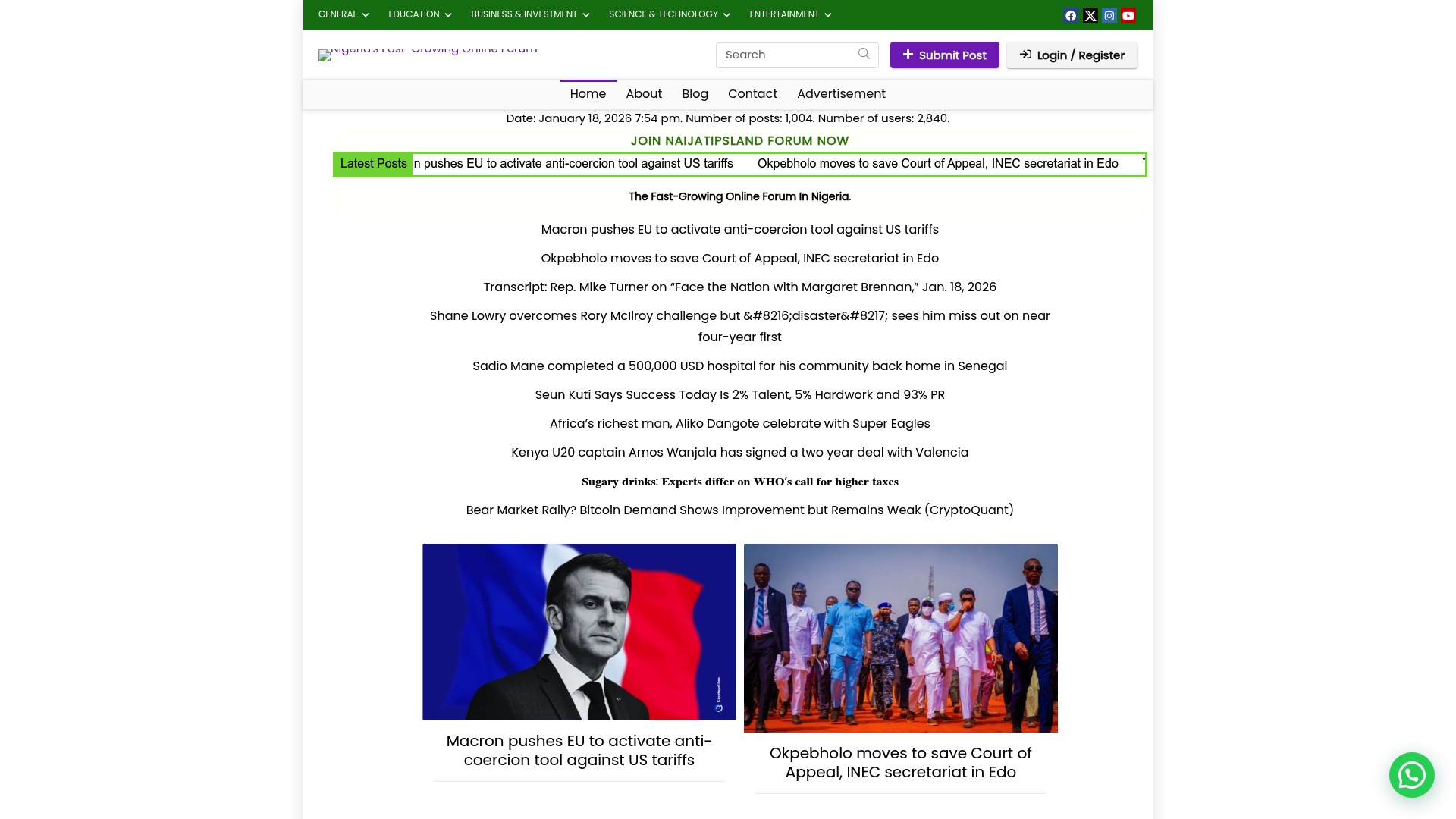
At Naijatipsland.com, we curate a wide range of content specifically built for Nigerian internet users who want balanced, reliable information. You can explore entertainment updates that give you a lighter but still informed view of what is happening across Nigeria and beyond. If you want to understand why news literacy is particularly important right now, our guide on the importance of current affairs walks you through the big picture clearly. And if you want to understand how staying informed connects to broader civic participation, read our piece on empowering Nigerian youth through current affairs engagement.
Frequently asked questions
What are some trusted platforms for Nigerian news?
Top choices include official sites and apps of major outlets like Punch, Vanguard, Channels TV, and Premium Times, along with verified aggregators. 91% of English-speaking Nigerians access news through digital media, so choosing the right platforms from that pool is critical.
How do I avoid fake news about Nigerian elections?
Always check election news with at least two reputable Nigerian outlets before sharing or reacting to any claim. Disinformation campaigns specifically target election periods and protests, so extra verification during these times is not optional.
Should I follow news on social media?
Social media is useful for news discovery in Nigeria, but it should never be your only source. Nigerian internet users face significant misinformation risks via digital platforms, so always confirm any story you find on social media with a trusted outlet before sharing it.
Is it safe to use WhatsApp for following Nigerian news?
You can receive timely alerts through WhatsApp, but only join official channels from verified outlets. Nigerian internet users are vulnerable to online scams that frequently circulate through private messaging apps, so never share news from unknown WhatsApp sources without cross-checking first.