


TL;DR:
- Digital storytelling combines multimedia elements into engaging, interactive narratives that go beyond traditional formats. It emphasizes strong narrative structure, emotional content, and audience interaction to create meaningful experiences. Proper planning and legal asset management are essential for effective and credible digital stories.
Digital storytelling is defined as the practice of combining images, video, audio, music, and text into short, interactive multimedia narratives designed to engage audiences meaningfully. Unlike traditional storytelling, digital narrative techniques use non-linear formats and interactivity to pull audiences into the story rather than simply presenting it to them. Content creators, marketers, and educators all rely on this method to communicate ideas that static text alone cannot carry. The digital storytelling definition has expanded well beyond slide shows and blog posts to include podcasts, VR experiences, social media campaigns, and interactive web narratives.
What is digital storytelling and why does it matter?
Digital storytelling is more than producing a media file. Its core purpose is meaning-making, promoting active audience participation rather than passive listening. That distinction separates it from traditional broadcast media, where the audience receives content without interacting with it.

The format has evolved from linear slide shows to fully interactive multimedia experiences that require intentional design for user interaction. That shift matters because audiences now expect to engage, not just watch. A well-designed digital story invites the reader or viewer to make choices, explore paths, or respond emotionally in ways a printed article never could.
Marketers use digital storytelling to build brand loyalty. Educators use it to increase student retention. Community organizers use it to amplify voices that traditional media ignores. The method works across all three domains because it combines emotional resonance with technical accessibility.
What are the key elements of effective digital storytelling?
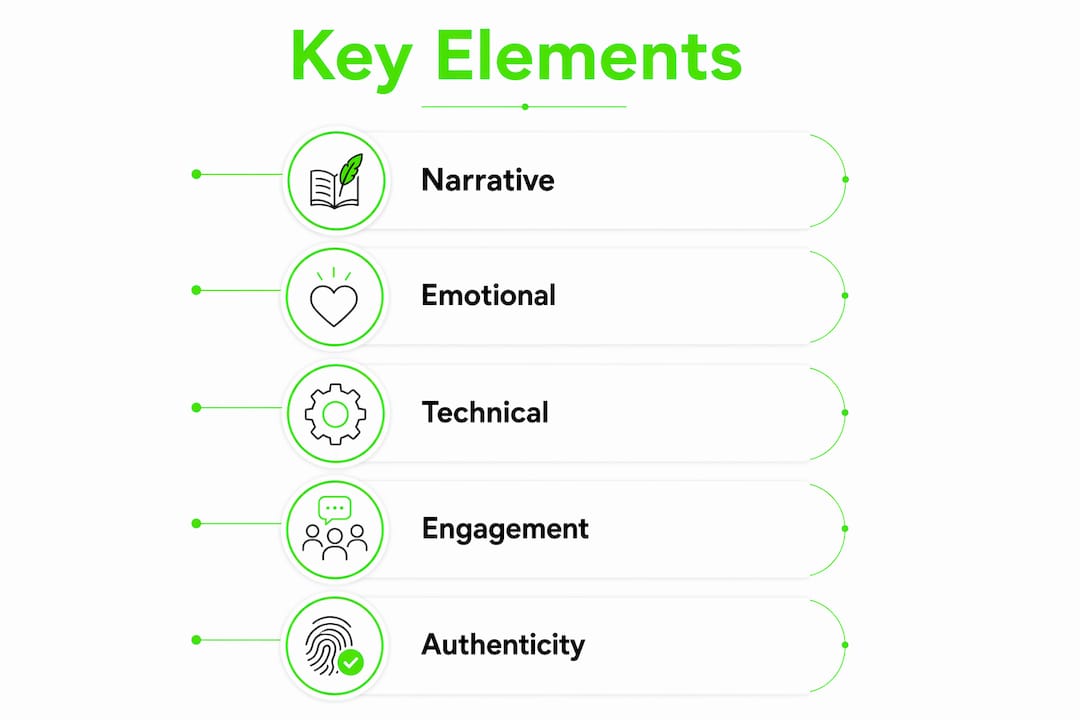
Seven core elements define a strong digital story. Understanding each one helps you build narratives that connect rather than just inform.
- Point of view: Every story needs a clear narrator perspective. Who is telling this story, and why does their angle matter?
- Dramatic question: A central question drives the narrative forward. It creates tension and gives the audience a reason to stay engaged.
- Emotional content: Emotion is the mechanism that makes stories memorable. Without it, even technically polished content fails to stick.
- Narrative voice: The tone, pace, and personality of the storyteller shape how the audience receives the message.
- Pacing: Rushing through key moments or dragging out transitions both kill engagement. Pacing controls the emotional rhythm of the story.
- Audio-visual components: Images, sound, music, and motion work together to create a multisensory experience that text alone cannot replicate.
- Closure: A satisfying ending gives the audience a sense of resolution. Without it, the story feels incomplete regardless of how strong the middle is.
Narrative structure consistently outperforms technical polish. A story with a clear dramatic arc and genuine emotional content will outperform a visually flashy piece with no clear point. Creators who prioritize structure over effects produce work that audiences remember and share.
Pro Tip: Before you open any editing software, write your dramatic question on a sticky note and keep it visible throughout production. Every scene, image, and audio clip should serve that question directly.
How do you create a digital story? Key steps and tools
The creation process follows seven stages, and skipping any one of them creates problems that are expensive to fix later. Experts recommend spending 50% of project time on pre-production phases before any recording or editing begins. That investment pays off in cleaner edits and stronger final products.
- Idea generation: Define your subject, your audience, and your dramatic question. Write a one-paragraph summary of the story before anything else.
- Research: Gather facts, interviews, and source material. Verify every claim and collect more than you think you need.
- Scriptwriting: Write a full script, not just bullet points. A complete script prevents rambling narration and keeps pacing tight.
- Storyboarding: Map each scene visually before production starts. A storyboard shows you where the story breaks down before you waste recording time.
- Production: Record audio, shoot video, and collect images. Organize all raw assets centrally in labeled folders from day one to avoid editing chaos later.
- Post-production: Edit video and audio, mix sound levels, and add music. Use simple transitions like fades and cross-dissolves rather than flashy effects that distract from the story.
- Distribution: Publish to the platform where your audience lives, whether that is YouTube, a podcast feed, a classroom LMS, or social media.
Accessible tools make this process achievable without a production budget. CapCut and iMovie handle video editing for beginners. Audacity and GarageBand cover audio recording and mixing. Canva works for graphic assets and title cards. Google Docs handles scripting and collaboration at no cost.
Pro Tip: Record audio in a small, carpeted room with the door closed. Audio quality affects perceived credibility more than video resolution does. A $30 external microphone outperforms a built-in laptop mic in almost every recording environment.
What are practical examples and applications of digital storytelling?
Digital storytelling appears across formats and industries. The most common formats include VR and AR experiences, podcasts, memes, GIFs, behind-the-scenes content, and interactive web narratives. Each format serves a different audience need and distribution channel.
- VR and AR stories: Immersive formats place the audience inside the narrative. Journalists use VR to put viewers at the scene of a news event. Educators use AR to overlay historical context onto physical locations.
- Podcasts: Audio-first storytelling reaches audiences during commutes, workouts, and tasks where video is impractical. Narrative podcasts like investigative journalism series demonstrate how audio alone can carry complex, multi-episode stories.
- Social media campaigns: Short-form video on platforms like Instagram and TikTok uses the digital storytelling structure of hook, conflict, and resolution compressed into 60 seconds or less.
- Educational videos: Teachers use narrated screen recordings, animated explainers, and documentary-style videos to present curriculum content in ways that increase retention compared to lecture alone.
- Interactive web narratives: Long-form journalism outlets use scrollytelling, where text, images, and video activate as the reader scrolls, to create immersive reading experiences.
Digital storytelling also powers community-based participatory research, where participants document their own lived experiences through multimedia. This approach gives communities narrative ownership and produces evidence that policy-makers and advocates can use directly. Naijatipsland covers how digital communities drive social change in the Nigerian context, which illustrates exactly this kind of participatory storytelling at scale.
| Format | Primary Use | Audience Benefit |
|---|---|---|
| Podcast | Narrative journalism, education | Accessible during multitasking |
| VR/AR experience | Immersive news, training | High emotional impact |
| Social media video | Marketing, activism | Wide reach, fast consumption |
| Interactive web narrative | Long-form journalism | Deep engagement, reader control |
| Educational video | Classroom instruction | Improved retention over lecture |
Stories now have a second life online through resharing, remixing, and platform migration, which means a single well-crafted digital story can reach audiences its creator never anticipated.
What are the benefits and common pitfalls of digital storytelling?
The benefits of digital storytelling are concrete and measurable across creator types. Emotional connection, multisensory engagement, and broad reach make it the most versatile communication method available to content creators, marketers, and educators today.
- Emotional connection: Combining voice, music, and imagery triggers emotional responses that text alone cannot produce. Audiences who feel something remember the message longer.
- Multisensory engagement: Activating sight, sound, and sometimes touch through interactive elements creates deeper cognitive processing than single-channel content.
- Accessibility: Digital stories can include captions, audio descriptions, and multiple language tracks, making content available to broader audiences than print or live presentation.
- Broad reach: A digital story published online can reach global audiences at zero additional distribution cost.
- Collaborative meaning-making: Collaborative digital storytelling empowers marginalized voices, making the act of storytelling as important as the finished product.
The pitfalls are equally real. Neglecting narrative quality in favor of visual effects is the most common mistake. Sourcing unlicensed media creates legal exposure and can result in content removal from distribution platforms. Poor audio quality undermines credibility faster than any visual flaw. Overusing transitions and animations pulls audience attention away from the story itself.
Professionals prefer minimal transitions, specifically fades and cross-dissolves, to keep the focus on narrative rather than production. Maintaining an attribution log for every image, audio clip, and video asset protects you legally and builds a reusable asset library for future projects.
Pro Tip: Build a simple spreadsheet that tracks every asset you use: file name, source URL, license type, and attribution text. Doing this during production takes five minutes per asset. Doing it after the fact during a copyright dispute takes days.
The role of digital journalism in storytelling shows how professional newsrooms handle these exact tradeoffs between speed, quality, and legal compliance.
Key Takeaways
Digital storytelling succeeds when narrative structure, emotional content, and technical discipline work together from pre-production through distribution.
| Point | Details |
|---|---|
| Definition is clear | A digital story combines images, video, audio, and text into a short, interactive multimedia narrative. |
| Structure beats polish | Spend 50% of project time on scripting and storyboarding before any recording begins. |
| Seven core elements matter | Point of view, dramatic question, emotional content, voice, pacing, audio-visual components, and closure all define quality. |
| Copyright compliance is non-negotiable | Maintain an attribution log and use only royalty-free or licensed assets to avoid platform removal. |
| Applications are wide | Podcasts, VR, social media, and interactive web narratives each serve different audiences and distribution needs. |
What Naijatipsland has learned about digital storytelling
The most persistent mistake creators make is treating digital storytelling as a production problem. They buy better cameras, download more plugins, and spend hours on color grading. Then they wonder why the audience drops off in the first 30 seconds. The story was weak. The equipment was irrelevant.
The creators who consistently produce work that gets shared and remembered spend most of their time on the dramatic question. They know exactly what tension they are creating and exactly how they plan to resolve it before they record a single second of footage. That discipline is rare, and it is the actual skill that separates effective digital storytellers from people who produce content.
The other thing worth saying plainly: interactivity is not a feature you add at the end. If you want your audience to participate, you design for participation from the idea stage. A podcast that ends with a genuine question for listeners, an interactive web narrative that lets readers choose a path, a social media video that invites a specific response. These choices happen in scripting, not in post-production.
Digital storytelling for advocacy, which Naijatipsland covers in depth through digital activism guides, adds another layer. When the story belongs to a community rather than a single creator, the process of making it becomes as meaningful as the product. That is the most powerful version of this craft.
— Naijatipsland
Stay current with storytelling and media on Naijatipsland
Naijatipsland publishes practical guides and updates on digital media, content creation, and entertainment trends relevant to Nigerian and African audiences.
Whether you are a marketer building your first social media campaign, an educator designing video lessons, or a creator developing your narrative voice, staying informed about media trends gives you a real advantage. Naijatipsland’s entertainment updates cover the formats, platforms, and cultural conversations shaping how stories get told and shared across Africa and beyond. Check the latest posts to keep your storytelling practice current and grounded in what audiences are actually responding to right now.
FAQ
What is the digital storytelling definition?
Digital storytelling is the practice of creating short multimedia narratives that combine images, video, audio, music, and text with interactive features. The standard format runs 3 to 5 minutes and prioritizes audience participation over passive viewing.
How long should a digital story be?
A digital story typically runs 3 to 5 minutes. That length is short enough to hold attention and long enough to develop a complete narrative arc with emotional resolution.
What tools do beginners use for digital storytelling?
Beginners use CapCut or iMovie for video editing, Audacity or GarageBand for audio, Canva for graphics, and Google Docs for scripting. All of these tools are free or low-cost and require no prior production experience.
What are the most common digital storytelling formats?
The most widely used formats include podcasts, social media videos, VR and AR experiences, educational videos, and interactive web narratives. Each format suits a different audience behavior and distribution platform.
Why is pre-production so important in digital storytelling?
Pre-production determines the quality of everything that follows. Experts recommend spending 50% of total project time on scripting and storyboarding, because disorganized assets and weak scripts create editing problems that no amount of post-production skill can fully fix.