Last updated 21 November 2026. Court cases on several tickets are still running, so check INEC’s website before you rely on any name below.
Nigerians vote for a president on Saturday 16 January 2027, and there are 18 names on the ballot. Most people can name three or four of them. This guide covers all 18: who each candidate is, how old they are, who is running with them, how they got the ticket and what has happened to their campaign since INEC published its final list on 12 September 2026.
I have also included the people who wanted to be on that list and are not, the candidates who stepped down to back someone else, and the court cases that could still change a name or two before polling day. Where reports disagree, I say so.
If you want the full election calendar, our 2027 Nigeria Election Hub has the dates, the voter numbers and how to collect your PVC. For how each ticket was won at the primaries, with vote counts, see who won each party primary.
The 2027 presidential field in numbers
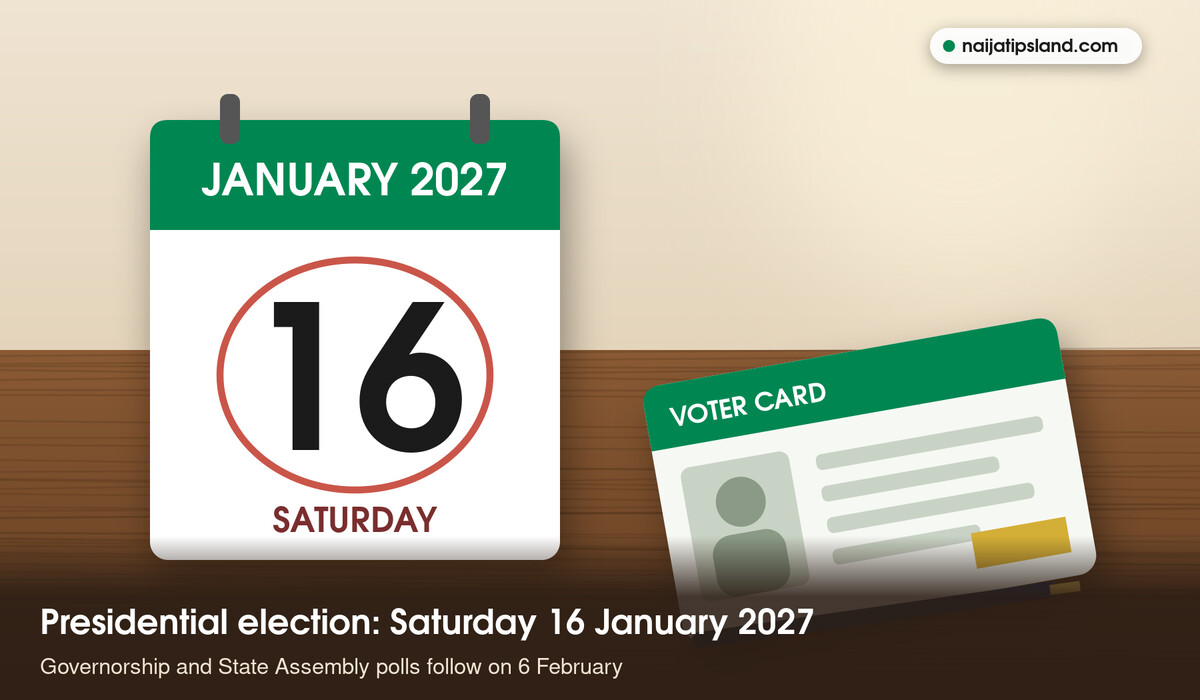
- Election day: Saturday 16 January 2027, together with the Senate and House of Representatives elections. Governorship and State Assembly polls follow on 6 February.
- Candidates: 18 presidential candidates and 18 running mates on INEC’s final list.
- Women: two presidential candidates and four running mates.
- Ages: from 35 (Moses Adebisi of the DLA, the minimum age the Constitution allows) to 79 (Atiku Abubakar of the ADC). President Tinubu, at 74, is the second oldest. The oldest person on any ticket is the PRP running mate, Kabiru Rabiu, at 80, according to INEC’s published list.
- Disability: none of the 36 people on the presidential tickets declared one.
- Education: INEC’s list shows qualifications from the First School Leaving Certificate up to doctorates.
To win in the first round, a candidate needs the highest number of votes plus at least 25% of the vote in two-thirds of the states and the FCT. With 18 names on the ballot and a split opposition, a run-off is a real possibility. Our explainer on what happens if nobody wins in the first round covers how that would work.
All 18 presidential tickets at a glance
Parties are listed in the alphabetical order INEC uses. Ages are as published on INEC’s list in September 2026; a dash means the age was not in the reports I could check.
| Party | Presidential candidate (age) | Running mate (age) |
|---|---|---|
| Action Alliance (AA) | Rufai Adekunle Omo-Aje (71) | Shehu Hussaini (56) |
| Action Democratic Party (ADP) | Abbas-Bin Aliyu (44) | Ike Chinazam (50) |
| Action Peoples Party (APP) | Yusuf Kabiru (54) | Peace Egobia Ofordile (47) |
| African Action Congress (AAC) | Omoyele Sowore (55) | Haruna Garba Magashi (49) |
| African Democratic Congress (ADC) | Atiku Abubakar (79) | Rotimi Amaechi (61) |
| All Progressives Congress (APC) | Bola Ahmed Tinubu (74) | Kashim Shettima (59) |
| Allied Peoples Movement (APM) | Oluseyi Makinde (58) | Musa Lawal Daura (73) |
| Boot Party (BP) | Sunday Adenuga (52) | Mustapha Usman Turaki (40) |
| Democratic Leadership Alliance (DLA) | Moses Olusoji Adebisi (35) | Nafisat Usaku Abubakar (35) |
| Labour Party (LP) | Sunday Chibuzo Okereke (43) | Bintu Konto (54) |
| National Democratic Party (NDP) | Ada Elizabeth Fredrick Okwori (48) | Uchenna Anthony Chukwuemeka (48) |
| National Rescue Movement (NRM) | Esther Nkem Okereke (43) | Sulaiman Nasir Muhammed (35) |
| Nigeria Democratic Congress (NDC) | Peter Obi (65) | Rabiu Musa Kwankwaso (69) |
| Peoples Democratic Party (PDP) | Sandy Ojang Onor (60) | Umaru Babangida (61) |
| Peoples Redemption Party (PRP) | Donald Duke (64) | Kabiru Rabiu (80) |
| Social Democratic Party (SDP) | Adewole Adebayo (54) | Usman Bugaje (-) |
| Young Progressives Party (YPP) | Peter Ada Agada (54) | Patience Ndidi Key (-) |
| Zenith Labour Party (ZLP) | Daniel Daberechukwu Nwanyanwu (-) | Hassan Khalid (-) |
Source: INEC final list of presidential candidates, 12 September 2026, as reported by Vanguard, Leadership, Arise News, Nairametrics and The Guardian. Some outlets give the DLA’s name as the Democratic Labour Alliance or Democratic Liberty Alliance; the abbreviation on the ballot is DLA.
Candidates who have held high office
Six of the 18 have been a president, vice president, governor or senator. They have the biggest party structures behind them, and five of them have run for or held national office before.
Bola Ahmed Tinubu (APC)
The President is 74 and seeking a second term. Before 2023 he was a senator for Lagos West in the Third Republic and governor of Lagos State from 1999 to 2007, and he was one of the founders of the APC in 2013. He won the APC’s direct primary in May 2026 with 10,999,967 votes against 16,504 for his only challenger, Stanley Osifo.
After months of talk that he might swap his running mate, the party confirmed Vice President Kashim Shettima, 59, on the ticket again in July. Tinubu chairs his own campaign council, with Shettima as vice chairman, and former Zamfara governor Abdulaziz Yari as Director-General. The ticket has also picked up support from outside the APC: the All Progressives Grand Alliance (APGA), led by Anambra governor Charles Soludo, did not field a candidate and has formally adopted Tinubu. Two candidates from other parties have also stepped down for him (more on that below).
For what he has pledged, see our guide to Tinubu’s 2027 promises.
Atiku Abubakar (ADC)
Atiku is 79, the oldest presidential candidate, and this is his seventh attempt at the presidency counting primaries. He was vice president from 1999 to 2007 and was the PDP’s candidate in 2019 and 2023. In 2025 he joined the African Democratic Congress, which had become the main home of the opposition coalition, and in May 2026 he won its primary with 1,846,370 votes ahead of Rotimi Amaechi and Mohammed Hayatu-Deen. Amaechi, 61, a former Rivers governor and transport minister, is now his running mate.
His candidacy is the most legally exposed of the big names. On 5 November 2026, Justice Peter Lifu of the Federal High Court in Abuja ruled that the David Mark-led caretaker leadership of the ADC was unlawful and voided actions taken under it, including the primary that produced Atiku. The party has filed a 17-ground appeal and asked the Court of Appeal to stop INEC from changing its leadership or candidate records while the appeal is heard. As of 20 November, an INEC official told Arise News that Atiku’s name remains on the commission’s website and that INEC will not act until the case is settled.
Our guide to Atiku’s 2027 manifesto sets out his main pledges.
Peter Obi (NDC)
Obi is 65, a former two-term governor of Anambra State (2006 to 2014), Atiku’s running mate on the PDP ticket in 2019 and the Labour Party candidate in 2023, when he came third with about a quarter of the vote. He joined the ADC coalition in 2025, then left in May 2026, citing court cases and internal fights, and moved to the Nigeria Democratic Congress together with Rabiu Kwankwaso.
The NDC ratified Obi as its candidate at the end of May, and he picked Kwankwaso, 69, the former Kano governor and 2023 NNPP candidate, as his running mate. Between them they won about 32% of the 2023 presidential vote. The party unveiled a campaign council in late October with NDC national leader Seriake Dickson as chairman and Obi as co-chairman, though one of the support groups behind the ticket, the OK Movement, publicly complained about its make-up. In October, Kwankwaso ruled out any withdrawal or late deal with the ADC.
See Peter Obi’s 2027 manifesto for his plans on the economy, power and jobs.
Oluseyi “Seyi” Makinde (APM)
Makinde, 58, is the only serving governor in the race. He is an electrical engineer by training and founded the Makon group of companies before going into politics. He won the Oyo governorship in 2019 and 2023 on the PDP ticket and cannot run for a third term, so in May 2026 he left the PDP for the small Allied Peoples Movement, which affirmed him as its consensus candidate in Ibadan on 30 May. His running mate is Musa Lawal Daura, 73.
The APM flagged off its Oyo campaign at the Durbar Stadium in Oyo town on 14 November. A day earlier, Makinde said he was willing to work with Obi, Atiku and others but not with Tinubu, which keeps talk of an opposition alliance alive. In October he also accused FCT Minister Nyesom Wike of disrupting opposition campaigns.
Donald Duke (PRP)
Duke, 64, was governor of Cross River State from 1999 to 2007 under the PDP and is a lawyer who studied at Ahmadu Bello University. He ran for president on the SDP platform in 2019, spent a short spell in the ADC in 2026 and then joined the Peoples Redemption Party, winning its primary with 6,499 votes. His running mate, Kabiru Rabiu, is 80.
A losing aspirant, Yakubu Kingsley, sued to remove him, arguing that Duke was not on the party’s membership register before the primary. On 30 September the Federal High Court in Abuja dismissed the case, holding that it was filed out of time and that party membership is an internal matter. Kingsley has said he will appeal.
Sandy Ojang Onor (PDP)
Onor, 60, is a professor of history and a former senator for Cross River Central (2019 to 2023). He began in public life as a two-term local government chairman in Etung and was the PDP’s governorship candidate in Cross River in 2023. In May 2026 he was the only aspirant to buy the presidential form of the PDP faction backed by Nyesom Wike, and that faction named him its consensus candidate on 26 May. His running mate is Umaru Babangida, 61.
The PDP that ruled Nigeria from 1999 to 2015 is badly split. A rival faction led by Kabiru Turaki named former President Goodluck Jonathan, but INEC rejected that nomination and recognises the faction that nominated Onor. So the PDP name on the ballot is Onor’s.
Repeat candidates
Three candidates are making at least their second presidential run on the same platform.
Omoyele Sowore (AAC)
Sowore, 55, is the founder of Sahara Reporters and of the African Action Congress, which he set up in 2018. He ran in 2019 and 2023 and was detained in 2019 over the #RevolutionNow protests he called. The AAC endorsed him unopposed in May 2026, and he stepped down as party chairman. His running mate is Haruna Garba Magashi, 49.
His campaign leans on online fundraising and a phone app called SoworeNow; he said the campaign raised about N5.5 million in under 24 hours in August. He has refused to join any opposition coalition. In November he called for a nationwide protest on Monday 23 November over campaign violence.
Adewole Adebayo (SDP)
Adebayo, 54, is a lawyer and businessman who was the SDP’s presidential candidate in 2023. Delegates from all 36 states and the FCT affirmed him as the party’s sole candidate at a convention in Bauchi in early May 2026, one of the first primaries held. His running mate is Usman Bugaje, a former member of the House of Representatives.
He has dismissed reports that he could step down for a joint opposition candidate or become Atiku’s running mate, and he has attacked the Tinubu government’s record repeatedly on the campaign trail.
Daniel Daberechukwu Nwanyanwu (ZLP)
Dan Nwanyanwu is the national chairman of the Zenith Labour Party and a former national chairman of the Labour Party. He was the ZLP’s presidential candidate in 2023, and the party named him its consensus candidate again at its Abuja convention on 30 May 2026. His campaign focuses on corruption, insecurity, electricity and state policing. His running mate is Hassan Khalid.
New names, party founders and chairmen
The other nine candidates are running for president for the first time, or are better known inside their parties than outside them. Several founded or chair the party whose ticket they hold.
Sunday Chibuzo Okereke (LP)
At 43, Okereke is one of the youngest candidates. The Labour Party describes him as a governance and policy consultant; INEC’s list shows a PhD, and he runs ERGAF-Africa, a policy and legislative research body. The Nenadi Usman-led LP adopted him by consensus on 30 May 2026. His running mate is Bintu Konto, 54.
The LP has been split for months. A faction linked to Julius Abure named its national youth leader, Prince Kennedy Ahanotu, as a parallel candidate, but only Okereke is on INEC’s list, and Ahanotu withdrew in November and endorsed Tinubu.
Esther Nkem Okereke (NRM)
Esther Okereke, 43, is a Nollywood actress and film producer who also has business interests in construction. She is the National Rescue Movement’s first female presidential candidate, chosen at the party’s convention in Abuja on 29 May 2026. She calls her plan the ESTHER agenda (education, security, technology, housing, entrepreneurship and restitution) and has named electricity, hunger, insecurity and jobs as her first targets. Her running mate, Sulaiman Nasir Muhammed, is 35, which makes theirs one of the youngest tickets.
Ada Elizabeth Fredrick Okwori (NDP)
Okwori, 48, is from the Idoma area of Benue State and is the founder and national chairman of the National Democratic Party. She first built a grassroots support group called Ward2Ward, and a Federal High Court ordered INEC to register the NDP on 16 February 2026. The party announced her as its candidate on 1 June, two days after the primaries window closed, which raised questions in the press, but she is on INEC’s final list. Her running mate is Uchenna Anthony Chukwuemeka, 48.
Peter Ada Agada (YPP)
Agada, 54, is an architect and businessman from Benue State. He wanted the Labour Party ticket and was screened for it, then left when the LP zoned the ticket south and he was ruled out. He joined the Young Progressives Party in June. The YPP’s original candidate, Anita Zugwai-Chukwu, withdrew in August, saying her family was worried about security, and Agada won the substitution primary on 21 August. His running mate is Patience Ndidi Key. He has said he would keep fuel subsidy only for vulnerable households and run government projects “like a project site”.
Abbas-Bin Aliyu (ADP)
Aliyu, 44, also reported as Aliyu Bin Abbas, is a former political aide to Atiku Abubakar and founder of the National Youth Alliance. He joined the Action Democratic Party in April 2026 and won its primary at the end of May. His running mate is Ike Chinazam, 50.
His ticket has had two scares. Another aspirant, Johnson Chukwuka, has sued to replace him, and in August and October Aliyu publicly accused his party chairman of planning to swap his name for a candidate from another party. The ADP had earlier denied that he was a placeholder for Atiku.
Rufai Adekunle Omo-Aje (AA)
Omo-Aje, 71, from Ede in Osun State, is a national chairman of the Action Alliance, and the party nominated him in May. The AA is divided too: a faction led by Kenneth Udeze disputes his recognition, and an aspirant named Joseph Oluwadare Faduri (known as Fadojoe) says he won the primary and has gone to court. INEC has kept Omo-Aje on its list. His running mate is Shehu Hussaini, 56.
Sunday Adenuga (BP)
Adenuga, 52, is the national chairman of the Boot Party (short for “Because Of Our Tomorrow”) and a businessman from Ogun State. He was returned unopposed at the party’s primary. His running mate is Mustapha Usman Turaki, 40.
Yusuf Kabiru (APP)
Kabiru, 54, is the Action Peoples Party candidate. Little has been published about him beyond INEC’s list, which gives his qualifications as the First School Leaving Certificate, the SSCE and a National Diploma. His running mate is Peace Egobia Ofordile, 47, one of the four women on vice-presidential tickets.
Moses Olusoji Adebisi (DLA)
Adebisi is 35, the youngest presidential candidate and exactly the minimum age allowed. The party’s Lagos chapter describes him as a US-based businessman. He replaced the party’s first candidate, Samuel Memeh, after a substitution primary. His running mate, Nafisat Usaku Abubakar, is also 35.
Court cases that could still change the ballot
The list INEC published in September is final in the sense that nominations have closed. A court can still order a change, and the Electoral Act 2026 has already shown it has teeth: in September, the Supreme Court upheld the rule that a party which missed INEC’s membership register deadline cannot field candidates, and several governorship names were dropped from INEC’s October list as a result. INEC said the presidential list was published before that judgment and was not affected.
These are the presidential cases I am following:
- ADC and Atiku: the Federal High Court voided the ADC primary on 5 November. The party’s appeal and its request for a stay of execution are pending. INEC says it will not act until the matter is settled.
- PRP and Duke: the challenge was dismissed on 30 September. The losing aspirant says he will appeal.
- AA and Omo-Aje: a rival aspirant is in court asking INEC to recognise him instead.
- ADP and Aliyu: a rival aspirant’s suit is pending, and the candidate has warned against any attempt to substitute his name.
- Accord and Gbenga Olawepo-Hashim: covered in the next section.
Who is not on the ballot, and why
Goodluck Jonathan
The Turaki-led PDP faction named the former President as its candidate on 30 May 2026. INEC rejected the nomination on 1 August because it was delivered by hand, not through INEC’s online portal; the faction says it was denied access codes for the portal. The Federal High Court refused in July to order INEC to recognise the Turaki faction, and the Court of Appeal dismissed the faction’s appeal on 4 November. The faction says it is going to the Supreme Court, but for now Jonathan is not a candidate.
Gbenga Olawepo-Hashim (Accord)
Hashim says he was the only aspirant and the winner of the Accord primary on 30 May, but the party’s national leadership disowned him and did not forward his name, so he was left off INEC’s list. On 5 October, Justice Mohammed Umar of the Federal High Court in Abuja ruled that his nomination was valid and ordered the party to forward his name to INEC. The Accord national chairman, Maxwell Mgbudem, has appealed. INEC said on 6 October that Accord had no presidential candidate, and I have not seen a report that his name has since been added. If it is, the field becomes 19.
Candidates who stepped down for Tinubu
- Christopher Imumolen, a professor and factional chairman of Accord who said he had won a rival Accord primary, withdrew in early August and endorsed President Tinubu.
- Prince Kennedy Ahanotu, the Abure-faction Labour Party candidate, withdrew in mid-November and endorsed Tinubu, blaming the LP’s long leadership crisis.
Others who dropped out or were replaced
- Anita Zugwai-Chukwu (YPP) withdrew in August over security concerns and was replaced by Peter Agada.
- Samuel Memeh (DLA) was replaced by Moses Adebisi in a substitution primary.
- APGA, the Youth Party and Accord did not nominate a presidential candidate, according to INEC on 6 October, and the NNPP withdrew its nominee during the substitution window. APGA has formally adopted Tinubu, and Governor Soludo has handed the party’s flag to Vice President Shettima on the President’s behalf.
Alliances to watch before January
With 18 names, the arithmetic of 2027 depends on whether anyone else steps aside. These are the public positions as of this week:
- Makinde (APM) says he is open to working with Obi, Atiku and other opposition candidates, though not with Tinubu.
- Kwankwaso (NDC) ruled out withdrawing the Obi-Kwankwaso ticket or striking a deal with the ADC.
- Adebayo (SDP) has rejected stepping down for a single opposition candidate.
- Sowore (AAC) has refused to join any coalition talks.
- APGA and two candidates from other parties have backed Tinubu.
INEC’s timetable allows no new nominations now, but a candidate can still campaign for someone else while staying on the ballot. That is how Imumolen and Ahanotu did it, and it is worth knowing when you see a name on the ballot paper that has already endorsed a rival.
What about governorship and National Assembly candidates?
“Every candidate” in 2027 runs into the thousands. INEC’s lists contain between about 4,400 and 4,900 Senate and House of Representatives candidates, depending on whose count you use, and 28 states choose a governor on 6 February. We cover those separately:
- 2027 governorship elections: which 28 states vote and who is on the ballot
- 2027 Nigeria Election Hub, which includes the National Assembly numbers
How to check the candidates in your area
- Go to INEC’s website (inecnigeria.org) and look for the published final lists of candidates under the 2027 general election section. INEC publishes them as PDFs by election.
- For Senate, House of Representatives and governorship races, search the PDF for your state and constituency.
- Check the date on any list you are sent on WhatsApp. Lists change after court orders, and old versions keep circulating.
- Before election day, confirm where your polling unit is and read how voting works on the day, from BVAS accreditation to casting your ballot.
Frequently asked questions
How many presidential candidates are there in 2027?
Eighteen, on INEC’s final list published on 12 September 2026. A court ruling in favour of Gbenga Olawepo-Hashim of Accord could make it 19 if his name is added, but that judgment is under appeal.
Who is the youngest presidential candidate?
Moses Olusoji Adebisi of the DLA, who is 35. His running mate, Nafisat Usaku Abubakar, is also 35.
Who is the oldest presidential candidate?
Atiku Abubakar of the ADC, at 79. President Tinubu is next at 74.
How many women are running for president?
Two: Esther Nkem Okereke of the NRM and Ada Elizabeth Fredrick Okwori of the NDP. Four women are running mates, on the LP, APP, YPP and DLA tickets.
Is Atiku still on the ballot after the court judgment?
Yes, for now. The Federal High Court voided the ADC primary on 5 November, but the party has appealed, and INEC says it will not change its records while the case is unresolved.
Is Goodluck Jonathan contesting in 2027?
No. INEC rejected the nomination filed by a PDP faction, and the courts have so far refused to make INEC recognise that faction. It says it will go to the Supreme Court.
Which party is Peter Obi running with?
The Nigeria Democratic Congress (NDC), with Rabiu Musa Kwankwaso as his running mate.
Who is the PDP candidate?
Sandy Ojang Onor, a former senator from Cross River, with Umaru Babangida as his running mate.
When is the presidential election?
Saturday 16 January 2027. Campaigns end on 14 January, according to INEC’s timetable. Our page on every INEC deadline still ahead has the full list.
I will update this page when a court changes a ticket or a candidate steps down. If you spot a change before I do, drop it in the comments with a link to the report.
Sources
- Vanguard: INEC unveils final list of presidential candidates for 2027 election (September 2026)
- Leadership: INEC releases final list of presidential candidates
- Arise News: INEC clears Tinubu, Obi, Atiku, others as presidential candidates
- Nairametrics: the 10 youngest presidential candidates (13 September 2026)
- The Nigeria Lawyer: Tinubu, Atiku, Obi among 18 presidential candidates
- The Guardian: only two women among 18 presidential candidates
- Zikoko: meet the 18 Nigerians who want to be president
- The Point: ADC files 17-ground appeal to save Atiku’s candidacy (18 November 2026)
- New National Star: INEC says court ruling does not invalidate Atiku’s candidacy (20 November 2026)
- Vanguard: INEC rejects Jonathan’s candidacy (August 2026)
- The Nigeria Lawyer: Court of Appeal rejects Turaki-led PDP recognition bid (5 November 2026)
- Sahara Reporters: INEC and Accord served with judgment affirming Hashim (8 October 2026)
- Sahara Reporters: Accord chairman appeals Hashim judgment (8 October 2026)
- Arise News: court dismisses suit challenging Donald Duke’s candidacy
- Blueprint: PRP aspirant to appeal judgment affirming Duke
- NAN: Accord presidential candidate Imumolen steps down, endorses Tinubu (August 2026)
- New Telegraph: LP factional candidate Ahanotu withdraws, endorses Tinubu (November 2026)
- Legit.ng: APGA formally adopts Tinubu, flag handed to Shettima
- Sahara Reporters: Makinde ready to work with Obi, Atiku and others (13 November 2026)
- allAfrica: Kwankwaso rules out withdrawal, rejects ADC alliance (19 October 2026)
- Sahara Reporters: NDC unveils national campaign council (25 October 2026)
- Sahara Reporters: Tinubu names Yari APC campaign Director-General (22 August 2026)
- Sahara Reporters: Sowore calls protest for 23 November
- Sahara Reporters: ADP candidate accuses chairman of plotting to replace him (7 October 2026)
- Premium Times: AA aspirant challenges INEC over Omo-Aje’s recognition
- Independent National Electoral Commission (INEC)
Join the discussion
Have you tried this, or do you have a question we did not answer? Be the first to share your experience. Leave a comment below. Every comment is read by the editor before it appears.