Internet Penetration in Nigeria 2026: Broadband, Data Use and the Digital Divide

Last updated: 14 October 2026. Figures come from the Nigerian Communications Commission (NCC) as reported by the press and are updated monthly. We replaced an earlier version that used older data.
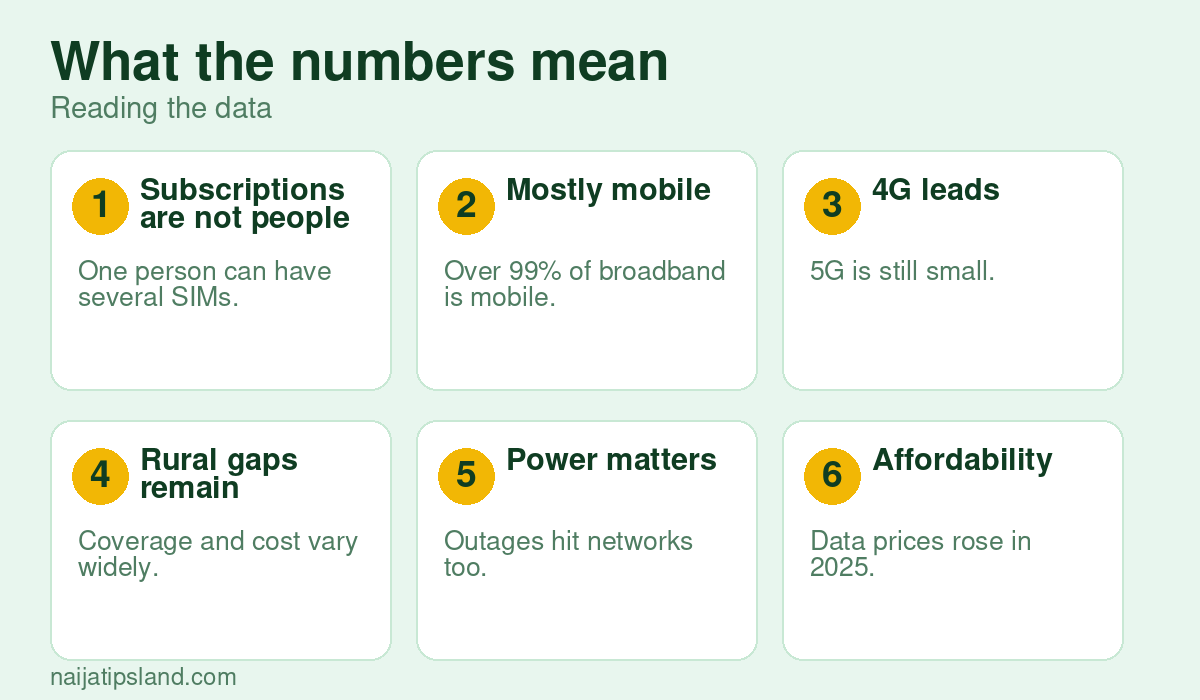
How many Nigerians are online? The honest answer depends on what is being counted. The NCC measures subscriptions rather than individual people, so the numbers are best read as a measure of how connected the country is, not a headcount of unique users.
The latest figures
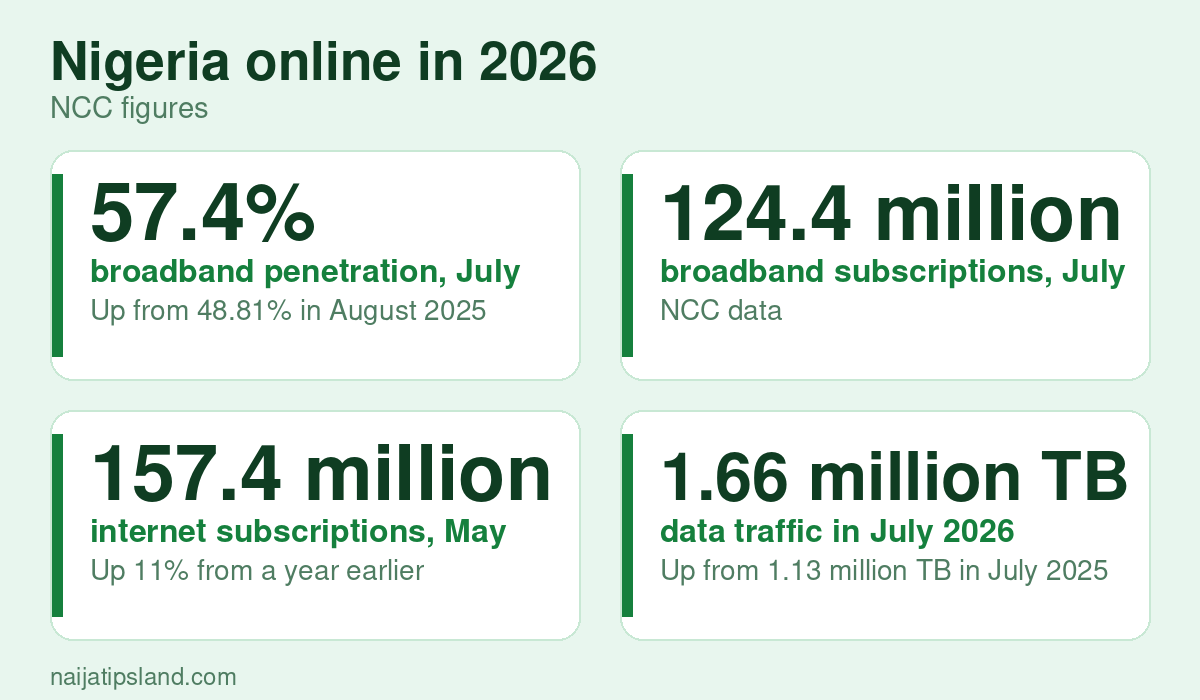
- Broadband penetration reached 57.4% in July 2026, up from 48.81% in August 2025, with 124,423,891 broadband subscriptions, according to the NCC.
- Internet subscriptions were 157.4 million in May 2026, up 11% from a year earlier, with mobile networks accounting for about 157 million of them.
- Active mobile subscriptions rose to 195.11 million in July 2026 from 192.23 million in June. MTN passed 100 million subscribers.
- Data traffic was about 1.66 million terabytes in July 2026, compared with 1.53 million in June and 1.13 million in July 2025.
- Technology mix: 4G made up 54.30% of mobile connections in May 2026 and 5G 4.49%, while 2G was 36.12% and 3G 5.10%. By June 2026, 4G and 5G together made up 58.92% of connections.
- Mobile first: over 99% of broadband connections are mobile, so smartphones are the main way Nigerians get online.
Why the numbers can mislead
Many people have more than one SIM, and some subscriptions are inactive or used for devices rather than people, so 157 million internet subscriptions does not mean 157 million internet users. Broadband penetration is also measured against a population estimate. Surveys of social media use give different pictures, so treat any single figure as an indicator.
What is driving growth
- Digital payments, e-commerce, streaming and online learning, according to the NCC. See our guides on fintech apps and e-commerce in Nigeria.
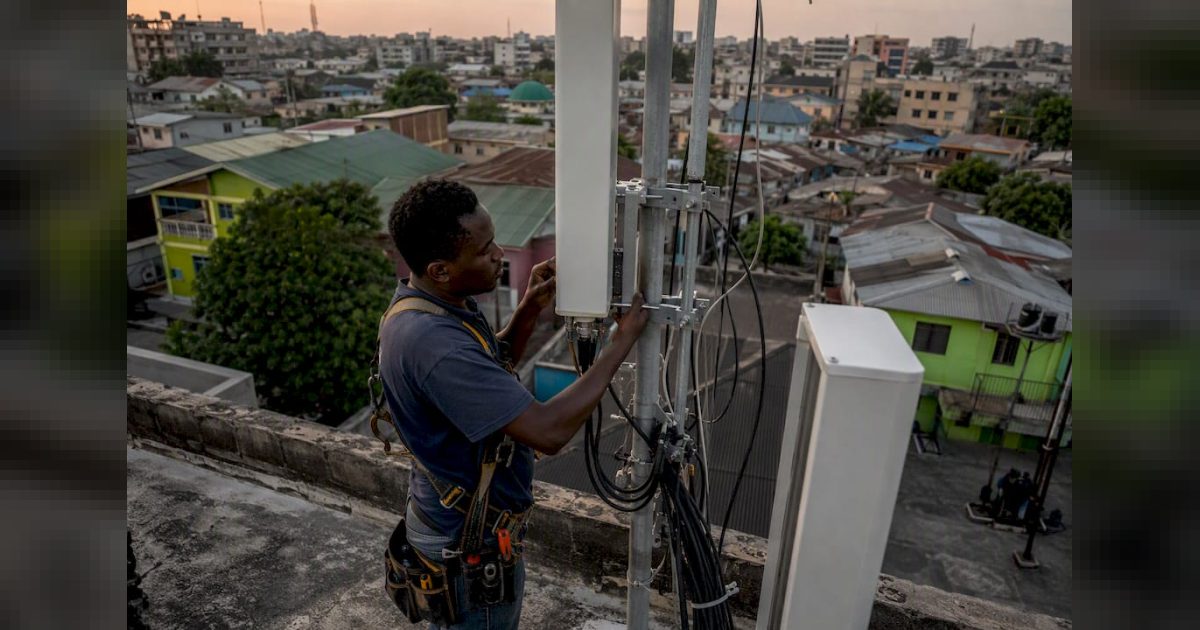
- Operator investment: the NCC is targeting the upgrade of about 12,000 base stations in 2026 to improve capacity and move 2G and 3G sites to 4G and 5G.
- Remote work and digital jobs. See our guides on remote work and earning money online.
The gaps and the barriers
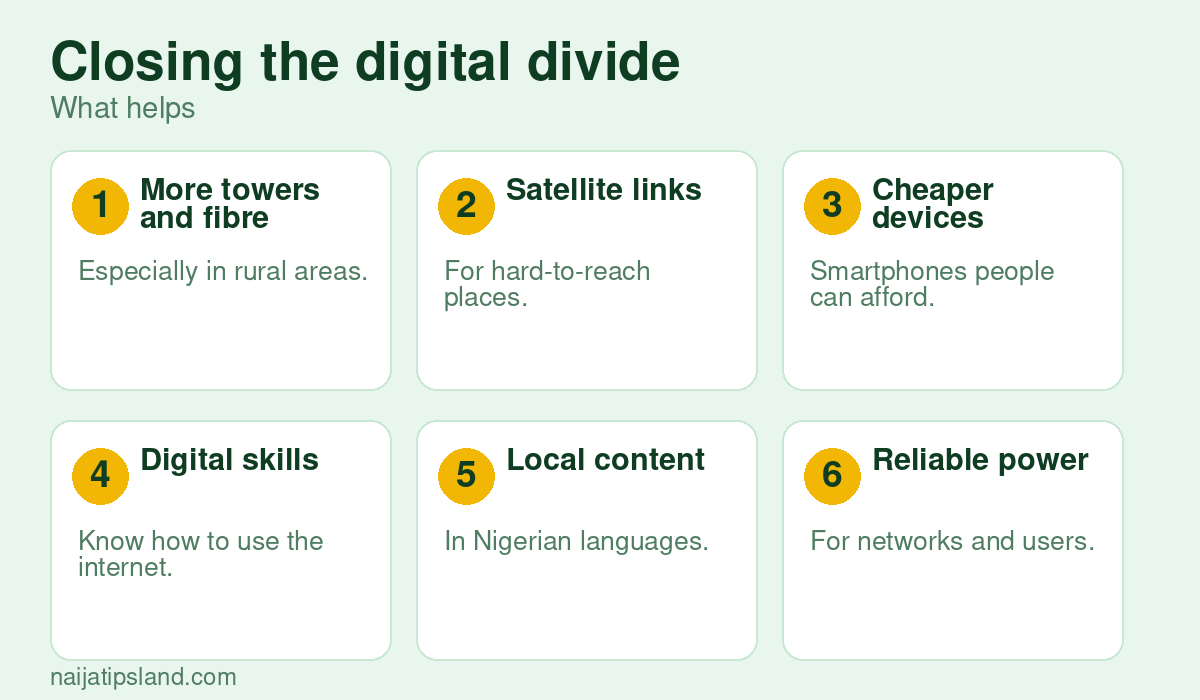
- Coverage: rural and riverine communities are underserved, and network quality is uneven even in big cities.
- 5G is slow to take off. The NCC reported a gap of about 70.9% between 5G devices and actual 5G coverage in Lagos and about 65.6% in Abuja, with more than 57,000 5G-capable devices in those two cities unable to connect to a 5G network.
- Cost: the 50% tariff increase approved in January 2025 made data more expensive. See our guide on MTN data plans and the cost of living.
- Power: unreliable electricity limits both networks and users.
- Skills and safety: many people do not know how to protect themselves or use the internet productively. See our digital literacy and cyber security guides.
What it means
The internet now touches payments, work, school, health and politics, so connectivity gaps become opportunity gaps. The information economy is also vulnerable to misinformation and fraud. Read our guides on Nigeria’s digital economy, mobile technology and fake news.
Key Terms Explained
- Subscription: an active SIM or service. One person can hold several.
- Broadband: internet fast enough for modern uses such as video and apps, defined by regulators using speed thresholds.
- Penetration: subscriptions divided by population, shown as a percentage. It can be misleading when many people have more than one SIM.
- Traffic: the total amount of data used over a period, measured in terabytes.
- 4G and 5G: generations of mobile technology. 5G is faster but needs new towers and compatible phones.
How to Check Your Own Connection
- Run a speed test at different times of day and in different rooms.
- Compare networks by trying a second SIM for a week.
- Note where signal drops, and report persistent problems to your operator and then the regulator.
- Keep your phone updated, since old software can slow connections.
Improving Signal at Home
- Place your phone or router near a window or high up, away from thick walls and metal.
- Use Wi-Fi calling or a booster if your provider supports it.
- Choose the network that works best in your area, not simply the cheapest.
What to Watch Next
- Whether 4G and 5G coverage keep growing in rural areas.
- Whether satellite-to-phone services arrive as planned.
- Whether data prices ease or rise again.
- Whether power supply and fibre rollout improve network quality.
Frequently Asked Questions
What is internet penetration in Nigeria?
Broadband penetration was 57.4% in July 2026, according to the NCC.
How many Nigerians use the internet?
Subscriptions were about 157 million in May 2026, but because of multiple SIMs the number of unique users is lower.
Is 5G widely available?
Not yet. It was 4.49% of mobile connections in May 2026 and is concentrated in big cities.
Sources
- Techeconomy: Nigeria’s broadband penetration reaches 57.4%
- Techeconomy: Internet subscriptions rise to 157.4 million in May
- Techeconomy: MTN crosses 100m subscribers, mobile lines hit 195.11 million
- allAfrica: 5G adoption remains low despite huge investments
- BusinessDay: NCC statistics for May 2026
- Techeconomy: Broadband penetration records 2.32% growth in Q1 2026