Last updated: 16 October 2026 · By Naijatipsland Editorial Team · Editorial policy
Resigning well is a skill. A short, clear letter, the right amount of notice and a calm handover protect your final pay, your reference and your reputation, which matters in a job market where your next employer may call your old one. Resigning badly can cost you money: in a 2020 Lagos case an employee who gave four weeks’ notice when her contract required three months was ordered to pay a month’s salary in lieu. This guide explains what the Labour Act says about notice, why your contract usually matters more, how to write the letter, gives three sample letters, and covers handover, final pay and pension.
The notice rules come from section 11 of the Labour Act as summarised by legal and HR sites. The Act is old, courts apply it case by case, and many employment contracts differ. This is general information, not legal advice, so for a dispute, a bond or a large payment, speak to a Nigerian employment lawyer or your union.
The short answer
- Read your contract and staff handbook first. The notice period written there usually decides what you must give.
- The Labour Act sets minimums: one day for three months of service or less, one week for more than three months and under two years, two weeks for two to under five years, and one month for five years or more. Notice of a week or more must be in writing.
- The Act mainly covers workers in manual and clerical roles. For administrative, executive and professional staff, the contract sets the notice, though employers often use the Act’s periods as a benchmark.
- Either side can accept payment in lieu of notice. Only the money wages count, not overtime or other allowances, according to the text of section 11.
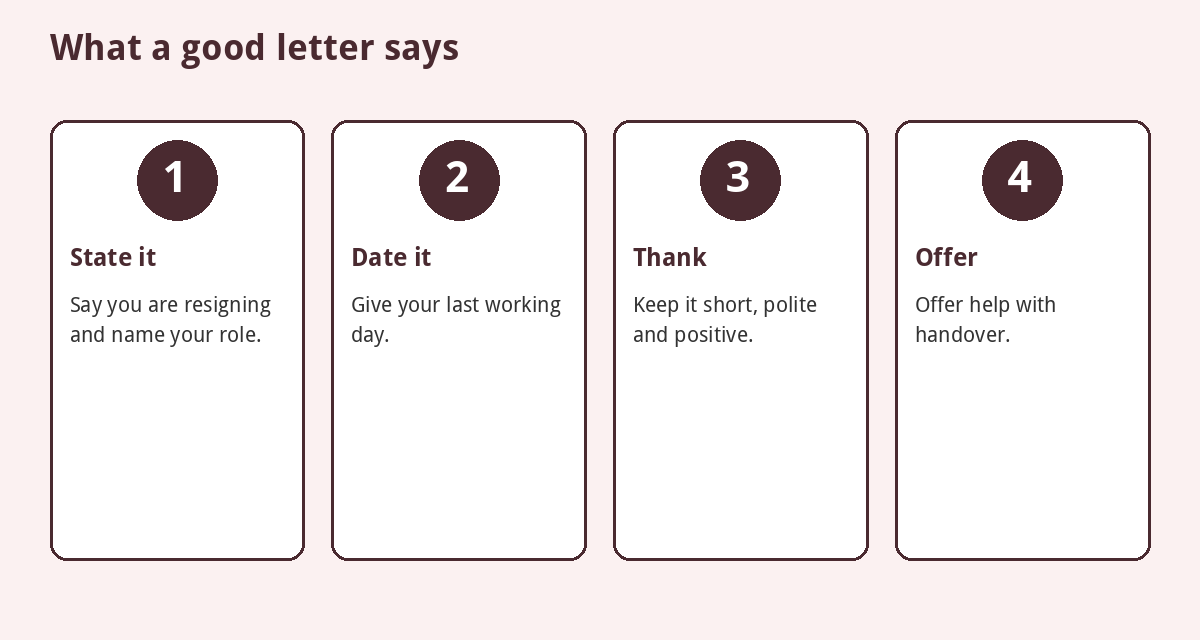
- Write a short, polite letter: say you are resigning, name your role, give your last working day, thank the employer and offer a handover. Do not air complaints in it.
What the law says about notice

Section 11 of the Labour Act lets either the employer or the worker end a contract by giving notice. The minimum periods depend on continuous service:
- three months or less: one day;
- more than three months but less than two years: one week;
- two years but less than five years: two weeks;
- five years or more: one month.
Notice of one week or more must be in writing, and the day on which notice is given does not count. Either party may waive the notice or accept payment in lieu. When calculating payment in lieu, only the money wages are counted, and they must be paid on or before the end of the notice period. The section does not stop a party from treating the contract as ended without notice because of the other party’s conduct.
Who the Act covers
Commentary on the Act says its notice rules apply to workers, typically manual and clerical staff, while administrative, executive and professional staff fall outside it and are governed by their contracts. In practice, many Nigerian employers apply the same periods or longer ones to everyone. If you are a manager or professional, treat your contract as the main document and the Act as a benchmark.
Contract notice can be longer
A contract can ask for more notice than the Act, often one to three months for senior or specialist roles. In a case reported by the National Industrial Court in 2020, an employee who said she resigned with four weeks’ notice was held to have given ineffective notice because her contract required three months. The court presumed she had resigned without proper notice and ordered her to pay one month’s salary in lieu, and it also awarded her unpaid salary, allowances and pension after that deduction. The court noted too that the employer had not shown she had received the staff handbook, so it could not rely on it against her. The lesson is twofold: know what you signed, and keep copies of your offer letter and handbook.
Before you resign
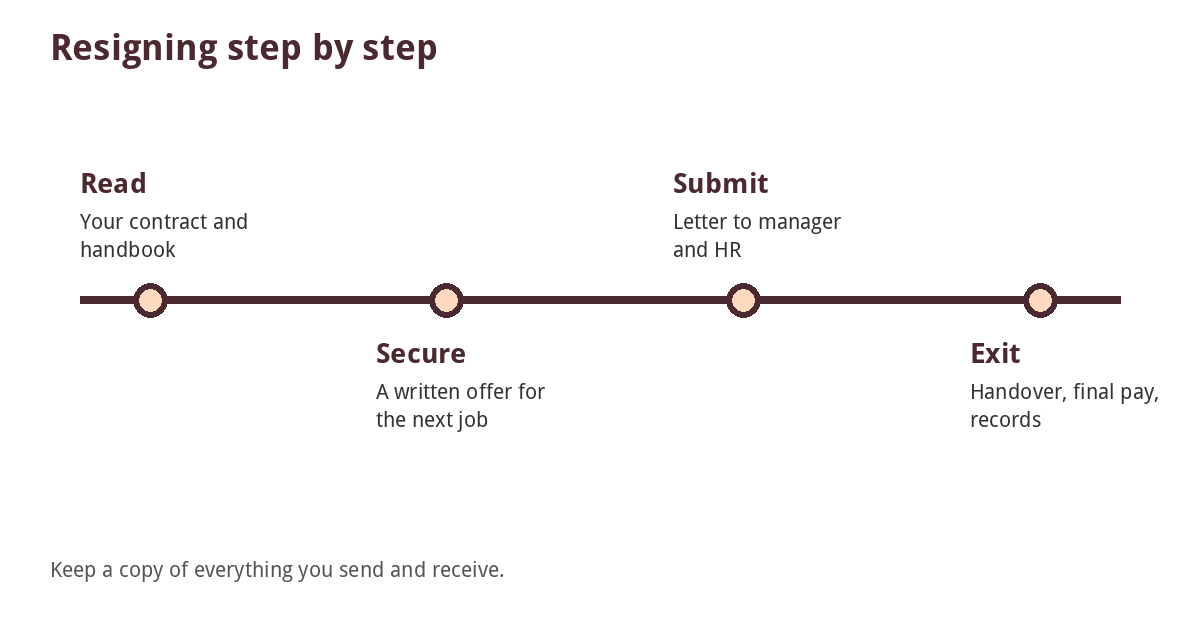
- Secure the next job in writing. Do not resign on a verbal promise. Get a signed offer with a start date, and check that background and reference checks are finished. If you are interviewing, see job interview tips for young Nigerian adults and common interview questions.
- Read your contract. Look for notice, bonus and commission rules, leave payout, training bonds, non-compete and confidentiality clauses, repayment of loans or relocation costs, and how notice must be delivered.
- Check dates. Know your service length, any probation, your leave balance and the salary payday so you can plan your last day.
- Collect your own documents. Offer letter, contract, appraisals, payslips, pension and tax details, and proof of any approved leave. Do this before you give notice, while you still have access, and do not take confidential company files.
- Plan your finances. A gap between the last pay and the first pay at the new job is common. Our guides to how to save money in Nigeria and best savings apps in Nigeria can help you plan a buffer.
- Tell your manager first. A short conversation before the letter is polite and avoids surprises.
How to write the letter
- Keep it to a few lines. A resignation letter is a record, not a place for complaints or feedback.
- State that you resign from a named position and the date of the letter.
- Give a clear last working day, counting the notice period from the day after you submit it.
- Thank the employer. One sentence of real thanks costs nothing.
- Offer a handover. Say you will complete outstanding work and hand over files and equipment.
- Address it properly. Send it to your line manager and HR, in the way your contract requires, with a copy for yourself.
- Use a professional tone. You may want a reference from these people later.
You do not have to give a detailed reason. If you do, keep it positive: a new opportunity, further study, a move. Do not write anything you would be unhappy to see quoted in a dispute.
Sample letter 1: standard notice
These samples are fictional. Change the details to match your contract.
Chinedu Okafor
Customer Service Officer
12 October 2026The Human Resources Manager
Kora Telecoms Limited
LagosSubject: Resignation from the position of Customer Service Officer
Dear Mrs Eze,
I write to resign from my position as Customer Service Officer at Kora Telecoms Limited. In line with my contract, I am giving one month’s notice, and my last working day will be 12 November 2026.
Thank you for the opportunities and support I have had during my time here. I will complete my outstanding work and hand over my files, accounts and company property before I leave. Please let me know if there is anything else you need from me.
Yours sincerely,
Chinedu Okafor
Sample letter 2: short notice with payment in lieu
Use this only if your employer agrees, or if your contract allows it. Never assume you can leave early.
Subject: Resignation with effect from 30 October 2026
Dear Mr Adeyemi,
I am resigning from my role as Operations Manager. Because I have been offered a position that starts on 1 November, I would like to leave on 30 October 2026 instead of completing my three-month notice period. I am willing to pay salary in lieu for the remaining notice, or to agree another arrangement with you, and I will prepare a full handover document before I go.
I am grateful for the opportunity to work with the team. Please confirm in writing whether you accept this arrangement.
Yours sincerely,
Amina Bello
Sample letter 3: resignation by email
Subject: Resignation: Tunde Balogun, Sales Executive
Dear Ms Ibrahim,
Please accept this email as my formal resignation from my position as Sales Executive. My last working day will be 6 November 2026, after the two weeks’ notice required by my contract. I attach a signed copy of the letter.
Thank you for your guidance. I will hand over my accounts and open leads before my last day.
Kind regards,
Tunde Balogun
An email is useful as proof of when notice was given, but follow your contract if it asks for a signed letter or delivery to HR.
Handover and your last weeks
- Write a handover note with ongoing tasks, passwords handled through your employer’s systems, key contacts and deadlines.
- Return laptops, phones, ID cards, keys and documents and get a signed acknowledgement.
- Work normally. Your reference depends on how you leave.
- Do not forward company data to your personal email or take client lists. That can breach your contract and the data protection law. See data privacy in Nigeria.
- Ask your manager what they will say if a new employer asks for a reference.
- Take part in the exit interview, but keep feedback factual and constructive.
Final pay and entitlements
What you are owed depends on your contract, the Labour Act where it applies, and company policy. Common items are:
- Salary up to your last working day, and allowances your contract says continue.
- Pay in lieu of notice, if you or the employer end the notice period early by agreement.
- Accrued leave, if your contract or policy says unused leave is paid out. Check whether leave can be used during notice.
- Bonuses and commissions earned under the plan rules.
- Deductions, such as loans or advances, which should match what you agreed in writing.
- Tax documents. Ask for your final payslip and tax records, which help your next employer and your own filing. See personal income tax in Nigeria 2026 and how to get a Tax Identification Number.
Pension
Your employer should have been remitting contributions to your Retirement Savings Account (RSA). A 2020 TheCable report on the Pension Reform Act 2014 describes a rule under which a person who resigns, retires voluntarily or is sacked may access 25% of the RSA balance if they cannot find another job within four months. Pension rules and administrative rules change, so confirm the current position with your pension fund administrator or the National Pension Commission. Keep your RSA number and make sure your new employer receives it.
If things go wrong
- The employer refuses to accept your resignation. Section 11 treats notice as a right for either side, but your contract and the facts matter. Keep proof that you gave written notice and work out your last day.
- Your final pay is delayed. Ask HR in writing for a date and a breakdown. Keep the thread. If it is not paid, a lawyer, a union or a labour office can advise on next steps.
- The employer makes a counter-offer. Think about why you wanted to leave. If you accept, get the terms in writing.
- Your contract has a training bond or non-compete clause. Ask a lawyer how it applies before you sign a new offer.
- You were pushed to resign. If you feel pressured, get advice before signing anything and do not sign a document that waives your rights without reading it.
Mistakes to avoid
- Resigning before the new offer is signed.
- Resigning by WhatsApp message only.
- Giving less notice than your contract requires without agreement.
- Writing an angry letter or posting about your employer online.
- Taking confidential files or customer lists.
- Not keeping copies of your letter, contract and payslips.
- Ignoring a bond or non-compete clause until it is a problem.
Frequently asked questions
How much notice must I give in Nigeria?
At least what your contract says. The Labour Act sets minimums of one day to one month depending on your length of service, and notice of a week or more must be in writing. Professional and managerial contracts often require one to three months.
Can I resign without notice?
You may be liable to pay salary in lieu of the notice period, as the 2020 court example shows. Some employers waive notice by agreement. Get it in writing.
Does my employer have to accept my resignation?
Section 11 describes ending a contract by notice by either party, so a properly given notice is generally effective, but contract terms and disputes vary. Get advice if you are in conflict.
Must I give a reason?
No. A short polite reason is optional. Keep it positive.
Can I use my leave during notice?
Only if your employer agrees and your contract or policy allows it. Ask in writing.
Do I get my pension if I resign?
Your RSA stays with you. Reports say that a person who leaves a job and cannot find work within four months may access 25% of the balance, but check the current rule with your pension administrator.
Should I send a letter or an email?
Follow your contract. A signed letter delivered to HR with an email copy covers both.
Bottom line
Secure your next job in writing, read your contract, give the notice it requires in a short, polite letter, hand over properly and follow up on your final pay and pension in writing. If your notice is shorter than the contract allows, agree it in writing first. With a new job in view, our guides to writing a CV, writing a cover letter, your LinkedIn profile and graduate trainee programmes may help, and essential career tips for young professionals covers life after the move.
Sources
- Jurist.ng: Labour Act, section 11, termination of contracts by notice
- CXC Global: Termination of employment in Nigeria
- Lexology: Global employee termination law, Nigeria
- National Industrial Court: Judgment declares staff resignation ineffectual and awards damages (2020)
- TheCable: Out-of-job Nigerians withdraw from pension savings (2020)
Related: Salary negotiation in Nigeria