Last updated: 13 October 2026. Hiring practice differs by employer and sector, so follow the instructions in each advert. We rewrote this guide using current Nigerian CV advice and recruiter guidance.
A CV has one job: to get you an interview. Recruiters in Nigeria often receive hundreds of applications for one role, and many use software to filter them before a person reads anything. A clear, honest, well-targeted CV beats a fancy one every time.
Step 1: Pick a clean, simple layout
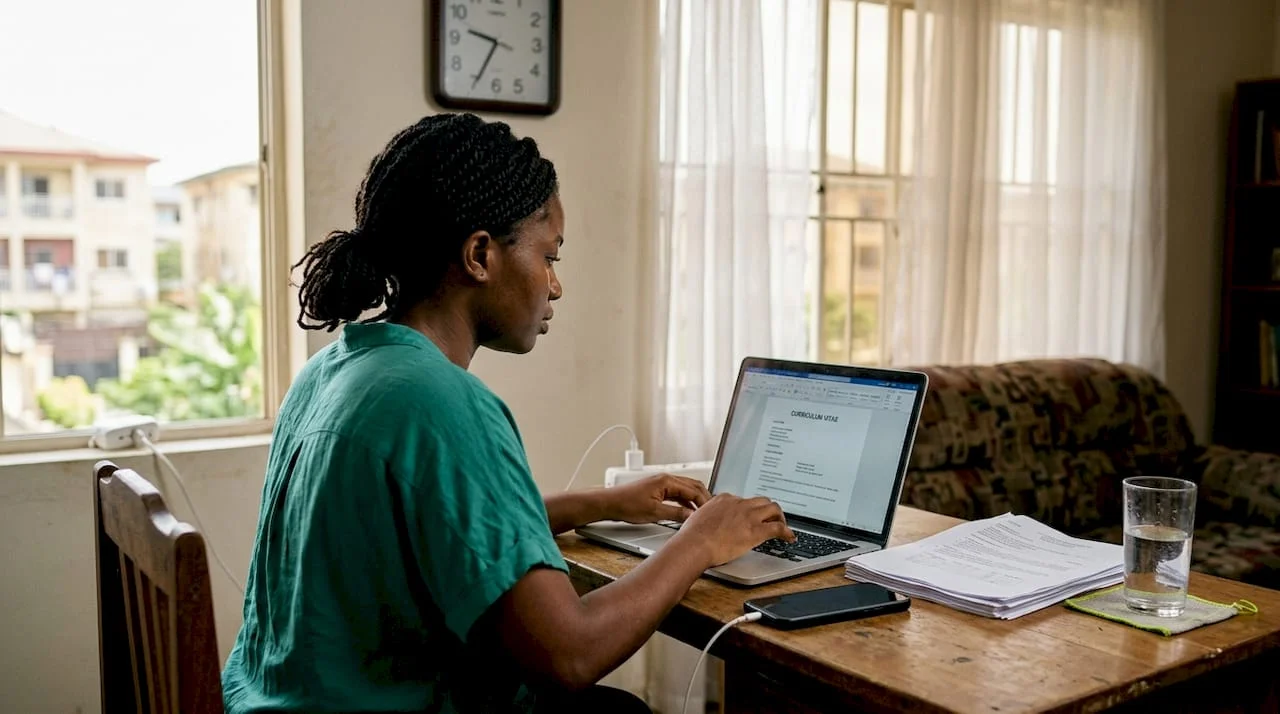
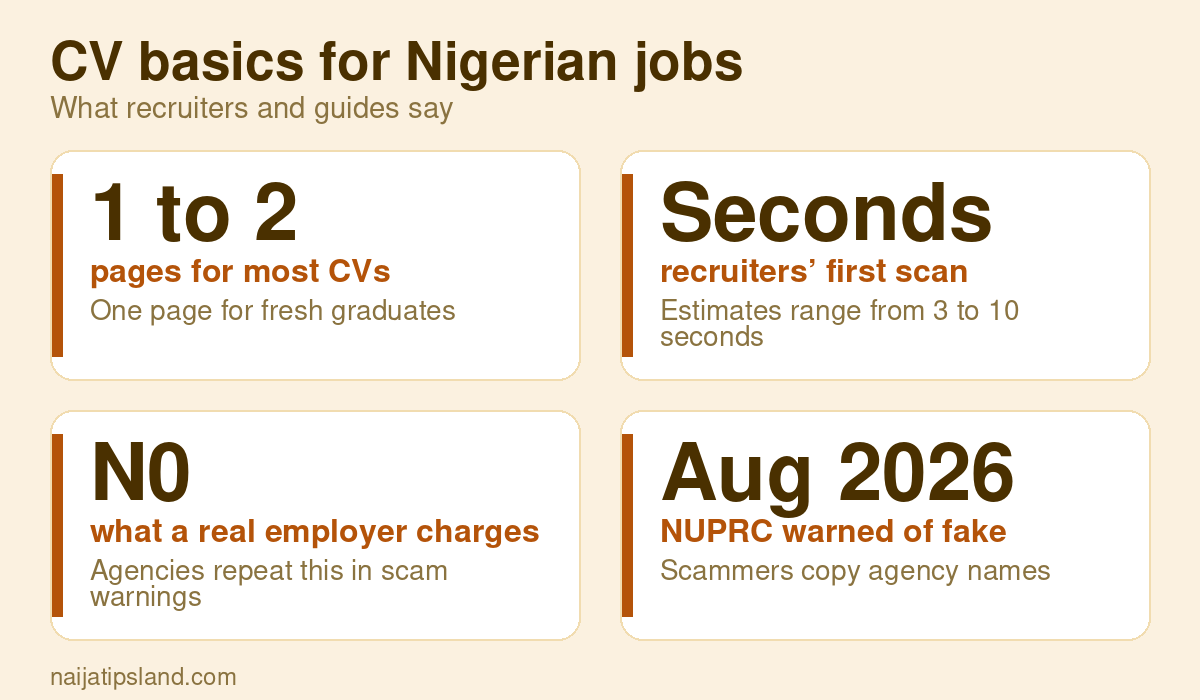
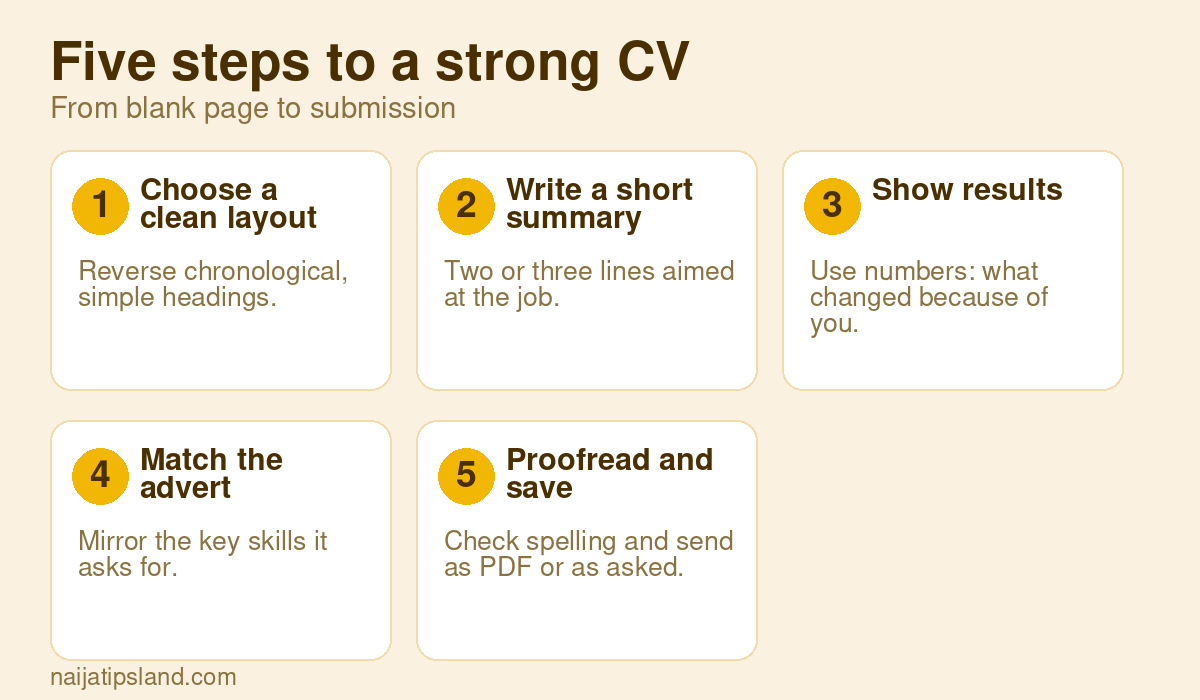
Use the reverse chronological format, listing your most recent role or qualification first. Guides aimed at the Nigerian market recommend one page for fresh graduates and one to two pages for people with several years of experience. Use plain fonts, standard headings such as Summary, Work Experience, Education and Skills, and avoid tables, text boxes and graphics that applicant tracking systems (ATS) may fail to read. Save as PDF unless the employer asks for Word.
Step 2: Write a short summary
Two or three lines at the top should say who you are, what you do and what you offer. For example: “Accounting graduate with a year of bookkeeping experience in a retail business, skilled in spreadsheets and reconciliations, seeking an entry-level finance role.” Tailor it to each job. A generic summary tells a recruiter nothing.
Step 3: Show results, not just duties
Each bullet should answer two questions: what did you do, and what changed because of it? Compare “Responsible for customer service” with “Handled about 40 customer enquiries a day and cut average reply time from two hours to 30 minutes”. If you do not have numbers, use specific outcomes, such as the number of events organised, the products sold or the people trained. Students and graduates can use projects, internships, volunteering and leadership roles.
Step 4: Match the job
Read the advert and pick out the skills and keywords it repeats. If you really have them, use the same words in your summary, skills list and bullets. Keep one master CV, then adapt it for each application. Do not claim skills you lack, because interviews and tests will expose them.
What to include and what to leave out
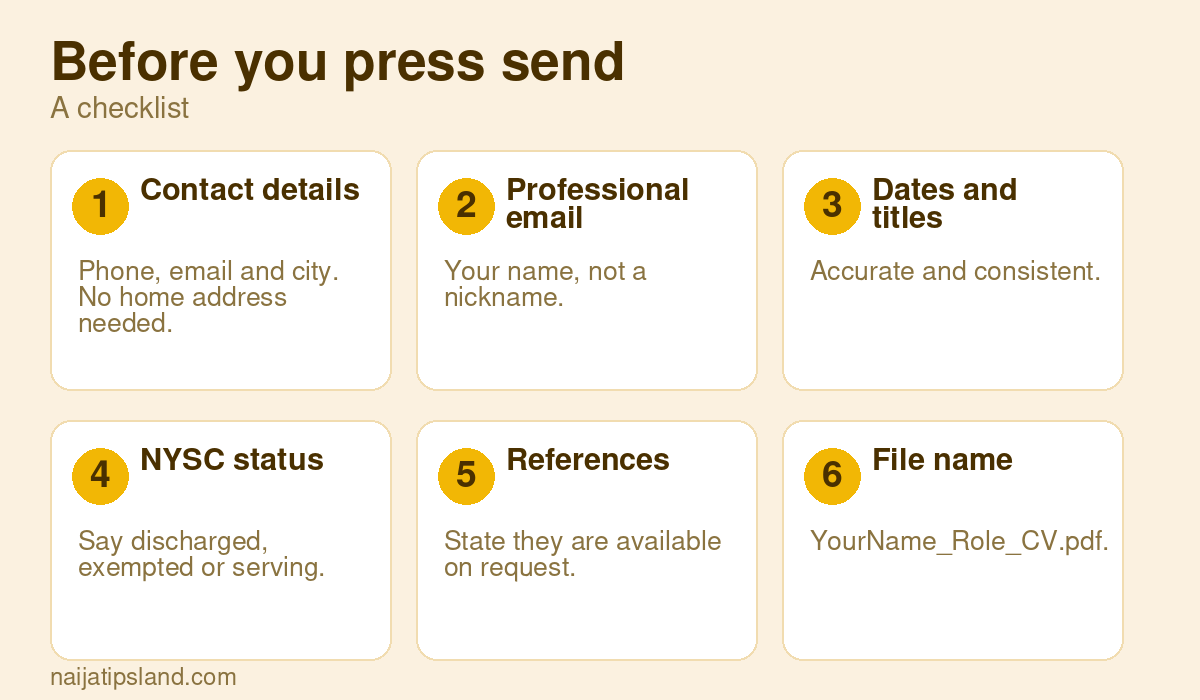
- Include: your name, phone number, professional email address, city, LinkedIn or portfolio link if you have one, summary, work history, education, certifications, skills and NYSC status.
- Usually leave out: date of birth, marital status, religion, state of origin and a passport photograph. Several recent Nigerian CV guides and recruiters say these are no longer expected, though some older templates and a few employers, especially in government, may still ask, so follow the advert.
- Never include: ID numbers, bank details or your BVN. They are a security risk, and no employer needs them at the CV stage.
- References: write “available on request”, and ask referees before you share their details.
Step 5: Proofread and send safely
Check spelling, dates and contact details, and ask someone else to read it. Send it from a professional email address with a short cover message that names the job. Use the company’s official careers page or email, not a link from a stranger.
Job scams to avoid
Fake recruitment is common. Government agencies such as the Immigration Service, the Customs Service and the Federal Airports Authority have repeatedly warned about fake adverts and appointment letters, and in August 2026 the upstream petroleum regulator warned of fake, AI-generated employment letters in its name. Remember:
- A real employer never charges a fee for applications, interviews, uniforms or “processing”. Government recruitment is free.
- Check the company’s official website and call its listed number before attending an interview.
- Beware of offers on WhatsApp or from free email addresses, and of anyone who asks for your BVN, card details or OTP.
- Report suspicious adverts to the agency named and to the police.
Read our guides on internet scams and WhatsApp scams.
Next steps
Once your CV is ready, prepare for the interview with our guides to interview tips, common interview questions and the interview checklist. Build your skills with the skills in demand guide and the digital skills checklist.
A CV That Survives Screening
- Use a clean layout: one or two pages, standard headings, a readable font and no photos, tables or text boxes that scanning software can misread.
- Mirror the job advert: use the employer’s own keywords where they truthfully describe your experience, because many companies filter CVs by keywords.
- Lead with results: employers increasingly hire for demonstrable skills and projects, not just certificates.
- Keep it truthful: verification is common, and a false claim can cost you an offer later.
From Duty to Result: Example Bullet Points
These are made-up examples that show the pattern.
- Weak: “Responsible for customer service.” Stronger: “Resolved about 40 customer queries a day and cut average response time from 2 hours to 30 minutes.”
- Weak: “Managed the shop’s social media.” Stronger: “Grew the shop’s Instagram following from 800 to 3,500 in six months through weekly product posts.”
Common CV Mistakes
- An unprofessional email address, or one that is hard to read out.
- Long paragraphs instead of short, scannable bullets.
- A different version of your name on your CV, ID and online profiles.
- Missing dates, unexplained gaps or listing every job since school.
- Sending the same CV to every job without edits.
A Five-Line Cover Letter
- Name the job and where you saw it.
- State your strongest relevant achievement.
- Explain why you want this employer.
- Say what you can do for them in the first months.
- Close politely and give your contact details.
Keep your online profiles consistent with your CV. See our guides on digital skills and interview preparation.
Frequently Asked Questions
How long should a CV be in Nigeria?
One page for fresh graduates and one to two pages for most others. Longer CVs are fine only for senior or academic roles.
Should I put a photo on my CV?
It is not usually required. Add one only if the employer asks.
What is the difference between a CV and a resume?
In Nigeria the two words are generally used for the same document in job applications.
How do I write a CV with no experience?
Lead with education, projects, internships, volunteering, leadership roles and skills, and describe results.
Sources
- Resumeble: What is the current CV format in Nigeria?
- Profolio: CV samples, Nigeria guide 2026
- Jobberman: How to stand out in your first job application
- Newsweek: Recruiter reveals what to delete from your CV
- MSME Africa: FAAN denies ongoing recruitment, warns against fake employment letters
- BusinessDay: The rise of recruitment fraud in Nigeria
- Techeconomy: Top in-demand skills and training platforms to watch in 2026