Last updated: 13 October 2026. Career advice depends on your field, your employer and your circumstances. This is general guidance, not a promise of results.
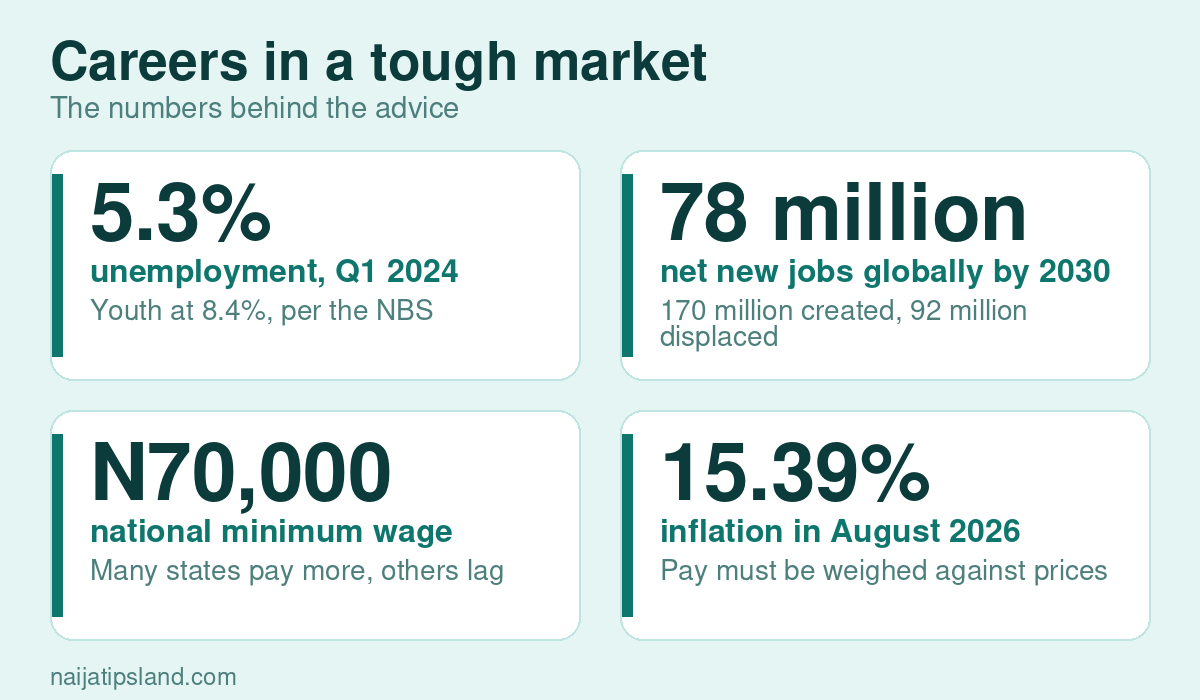
Starting a career in Nigeria is hard. According to the latest NBS figures we could verify, unemployment was 5.3% in the first quarter of 2024 and 8.4% among those aged 15 to 24, with many more underemployed, and inflation was still 15.39% in August 2026, so pay goes less far than it used to. The seven tips below will not remove those pressures, but they will help you make smarter choices.
1. Optimise for learning in your first jobs
In the early years, a role that teaches you skills and gives you responsibility is worth more than a slightly bigger title or salary in a job where you stagnate. Ask: will I be better at something valuable in a year? The World Economic Forum expects 170 million new jobs and 92 million displaced jobs globally by 2030, a net gain of 78 million, so the skill mix matters more than the label on your role. See our guide on skills in demand.
2. Build a real network
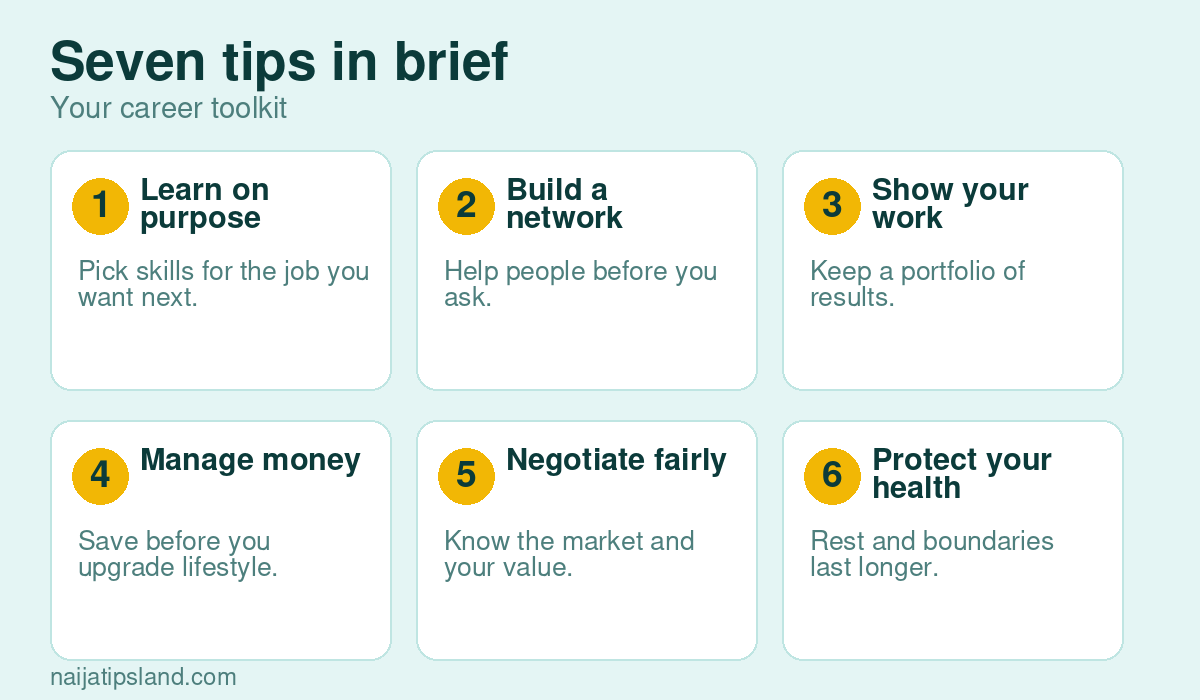
Many jobs and projects come through people. Be useful first: share information, make introductions, thank people who help you and keep in touch. Join professional associations and online communities in your field, and update your LinkedIn profile with results. Treat your network as long-term relationships, not a list to spam when you need a job.
3. Keep proof of your results
Keep a simple record of what you achieve: reports you improved, targets you hit, customers you helped, money you saved. It makes appraisals, promotions, job applications and salary talks easier. See our guides on CV writing and interviews.
4. Handle money with discipline
Do not let lifestyle grow as fast as your first salary. Build an emergency fund, avoid loan-app debt and save part of every pay. Read our guides on saving money, common money mistakes and the financial literacy checklist. Understand your pension and tax: employees contribute through a pension fund administrator, and the first ₦800,000 of annual taxable income is taxed at 0% under the Nigeria Tax Act 2025.
5. Negotiate fairly and read the contract
Research typical pay for your role and city, and know your lowest acceptable terms. Ask about allowances, leave, pension, health cover and growth, not just the salary. Get the offer in writing, and never pay any money to get or keep a job. Our guide to the minimum wage explains where the pay floor stands.
6. Build a side income and a safety net carefully
A small side income can reduce risk, but check your employment contract first, and do not let it hurt your main job. See our guides to side hustles and earning money online, and watch out for scams.
7. Protect your health, reputation and boundaries
Burnout ends more careers than competition. Sleep, rest and exercise, and learn to say no politely. Your reputation, built through reliability, honesty and good communication, travels with you. See our guide to communication skills.
When to change jobs
- You have stopped learning and see no path for growth.
- Your pay is regularly late or below what you were promised.
- The workplace is unsafe, abusive or unethical.
- You have a better offer in writing.
Do not resign before you have a written offer, and give the notice your contract requires.
What Skills-Based Hiring Means for You
Reports on Nigeria’s 2026 job market describe a shift towards skills-based hiring, where employers weigh what you can demonstrate against degrees alone. Demand is rising for AI, data, cybersecurity and cloud skills, and employers still value problem-solving, communication and adaptability. At the same time, Jobberman has noted that many graduates lack practical workplace skills, so showing real work gives you an edge.
A 90-Day Career Plan
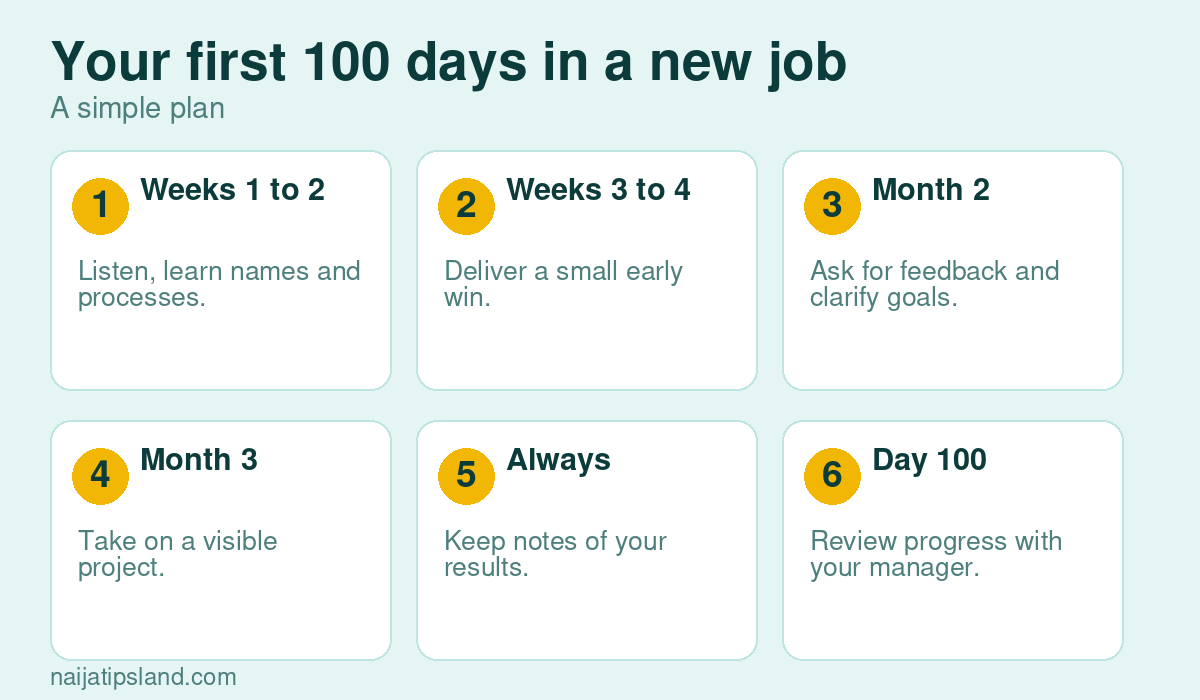
- Days 1 to 30: choose a target role, list the skills it needs and start a simple learning routine. See our digital skills checklist.
- Days 31 to 60: build two small projects or samples, and ask for feedback from someone working in the field.
- Days 61 to 90: update your CV and online profiles, apply to roles carefully and follow up on every conversation.
Networking Without Awkwardness
- Offer help first, such as a useful article or a short introduction.
- Send short, specific messages instead of “please help me find a job”.
- Attend industry events and online communities, and follow up within a week.
Know Your Pay and Benefits
Check that your pay meets the minimum wage and that your employer is making pension contributions. See our guides on the minimum wage, funding for founders and start-ups and financial literacy. Keep your finances steady while you grow. See how to save money in Nigeria.
Protect Yourself While Job Hunting
Never pay for a job, and verify recruiters first. See our guide to interview preparation and internet scams.
Frequently Asked Questions
Should I take any job or wait for the right one?
If you need income, take work that keeps you learning while you keep applying. Avoid roles that charge you or do not pay.
How do I grow in a company with little structure?
Ask for clear goals, volunteer for useful projects and keep records of your results.
Is a second degree worth it?
Only if employers in your field value it or you need it to change careers. Compare the cost with other routes such as certifications and projects.
Sources
- NAN: Nigeria’s unemployment rate increased to 5.3% in Q1 2024
- World Economic Forum: Future of Jobs Report 2025
- NBS: Consumer Price Index reports
- Safeguard Global: Nigeria Tax Act 2025 goes into effect on 1 January 2026
- Techeconomy: Top job market shifts to watch in 2026
- BusinessDay: Jobberman on skills-based hiring and the employability gap
Related: How to spot fake job ads in Nigeria: red flags and where to find verified vacancies
Related: Graduate trainee programmes in Nigeria: companies, requirements and deadlines