Last updated: 13 October 2026. Interview practice differs by employer and sector. We rewrote this guide with Nigerian labour data and current recruitment-scam warnings.
Getting an interview is half the battle in a market where, according to the latest NBS labour data we could verify, 5.3% of the labour force was unemployed in the first quarter of 2024 and youth unemployment was higher, at 8.4% for 15 to 24 year olds. Many more people are underemployed. When you do land one, the difference between an offer and a polite rejection often comes down to preparation. These tips will help you make the most of it.

1. Verify the interview first
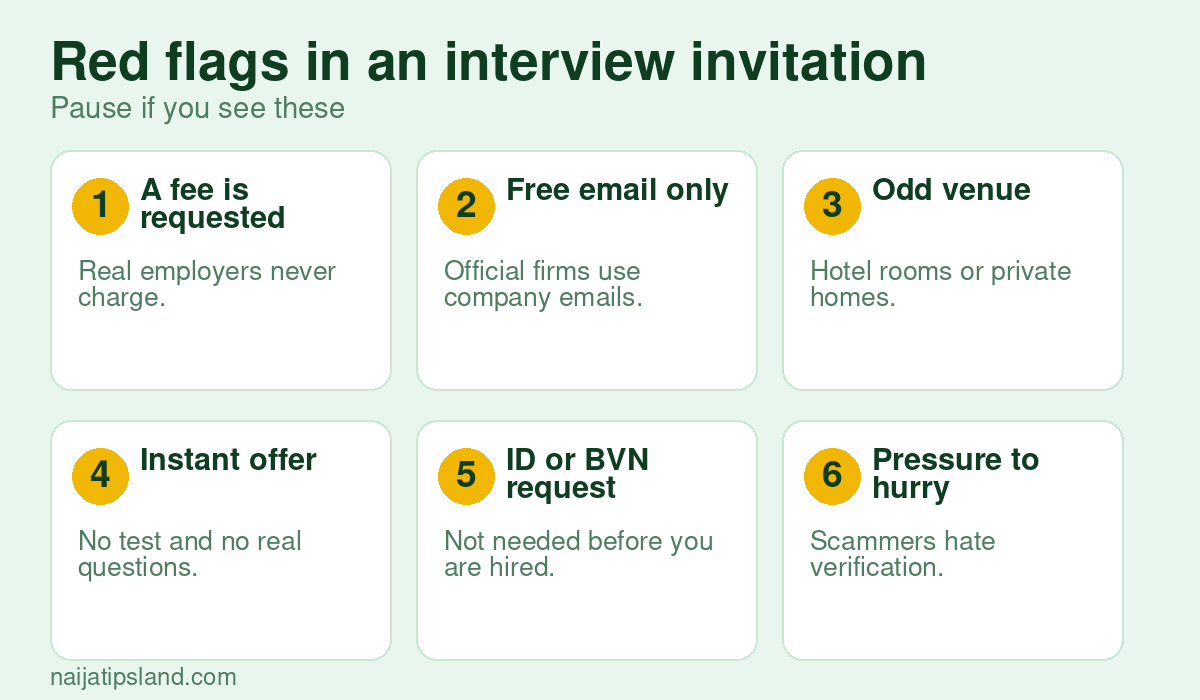
Recruitment fraud is a real danger. Genuine employers do not charge for applications or interviews, and government recruitment is free. Check the company’s official website and careers page, call a number you found yourself, and confirm the venue and the people you will meet. Fake offers often come from free email accounts or WhatsApp numbers, and agencies including the Immigration Service, the Customs Service and the Federal Airports Authority have warned about fake letters in their names. Never pay or send your BVN, card details or OTP. See our guides on internet scams and CV writing.
2. Research the employer and the role
Read the job description line by line and note the three or four things the employer cares about most. Learn what the organisation does, its products or services, recent news and its competitors. Check its social media pages and the people who will interview you on LinkedIn, if possible. The aim is to be able to say clearly why you want this job at this organisation.
3. Prepare stories, not speeches
Prepare three or four short real examples that show your skills. Use the structure of situation, task, action and result: what was happening, what you had to do, what you did and what happened. Rehearse them aloud so they sound natural, not memorised. The skills that employers value most, according to the World Economic Forum’s 2025 jobs report, include analytical thinking, resilience, flexibility, leadership and communication, so choose examples that show them. See our guide on skills in demand.

4. Plan the logistics
- Travel: plan the route, allow for traffic and arrive 15 minutes early. See our Lagos traffic guide if you are interviewing in Lagos.
- Documents: carry copies of your CV, certificates, ID and NYSC document in a neat folder.
- Dress: choose clean, neat clothes suited to the workplace, and when in doubt dress a little more formally.
- Power and data: for online interviews, charge your devices, test your camera and microphone, and find a quiet, well-lit spot. Have a backup data source.
5. During the interview
- Greet everyone politely, smile and keep good posture.
- Listen to the whole question before you answer, and take a moment to think.
- Answer honestly. If you do not know, say how you would find out.
- Give specific examples and quantify results where you can.
- Speak well of previous employers and colleagues, even if the experience was hard.
- Ask thoughtful questions about the role, the team and how success is measured.
For specific questions and sample answers, read our guide to common interview questions and use the interview checklist.
6. Talking about pay
Research typical pay for the role so you can answer calmly. Salaries are a hard conversation in Nigeria, where the national minimum wage is ₦70,000 a month and inflation is still high. Give a reasoned range rather than a single number, and ask about allowances, pension and health cover. See our guides to the minimum wage and the cost of living.
7. After the interview
Send a short thank-you message within a day, restating your interest and one point from the conversation. If they gave a decision date, wait until it passes before following up politely. Whatever the result, ask for feedback and note what you would improve.
Common mistakes
- Arriving late or unprepared, or speaking badly of a former boss.
- Memorising answers and sounding robotic.
- Exaggerating or lying on your CV. It tends to come out.
- Checking your phone or ignoring the receptionist.
- Ignoring the company’s values and not asking any questions.
Frequently Asked Questions
How should I answer “tell me about yourself”?
Give a 60-second summary: who you are professionally, one or two relevant achievements and why you want this role.
What should I wear?
Dress neatly and slightly more formally than the workplace norm, in clean, comfortable clothes.
Is it normal to be asked to pay for an interview?
No. Genuine employers never charge. Treat it as a scam and report it.
What if I freeze on a question?
Ask for a moment, repeat the question in your own words and answer it step by step.
Sources
- NAN: Nigeria’s unemployment rate increased to 5.3% in Q1 2024
- World Economic Forum: Future of Jobs Report 2025
- MSME Africa: FAAN denies ongoing recruitment, warns against fake employment letters
- BusinessDay: The rise of recruitment fraud in Nigeria
- The Guardian: No fee is charged for NIS recruitment
Related: How to write a cover letter for a Nigerian job: format, samples and mistakes