


TL;DR:
- Effective communication involves clearly exchanging information across verbal, written, and digital channels to reduce misunderstandings and foster professional growth. Mastering core skills like active listening, applying the 7 Cs framework, and addressing channel-specific challenges are essential for success. Focused, continuous practice and self-assessment accelerate development more effectively than one-time training sessions.
Effective communication is defined as the clear exchange of information, ideas, facts, and perspectives through verbal, written, and nonverbal channels. This effective communication skills list covers every core ability you need to connect clearly, reduce conflict, and advance your career. Frameworks like the 7 Cs and tools like Grammarly and Mindtools give you a structured path to improvement. The NACE Career Readiness Competencies confirm that 91.6% of employers rank oral and written communication as top priorities for new graduates. That number tells you exactly where to invest your development time.
1. Effective communication skills list: the top skills everyone needs

The most complete workplace communication framework covers five categories: verbal, written, nonverbal, interpersonal, and digital. SEEK New Zealand catalogs over 50 distinct communication skills across these channels, which means no single skill defines a strong communicator. You need a working command of each category to perform well across modern professional environments.
Here are the key skills for communication that belong on every professional’s development list:
- Active listening: Fully processing what someone says, including tone and body language, before responding.
- Clarity: Expressing ideas in plain, direct language that leaves no room for misinterpretation.
- Conciseness: Delivering your message without unnecessary words or tangents.
- Empathy: Recognizing and acknowledging the emotional state of your audience before and during a conversation.
- Assertiveness: Stating your needs and opinions confidently without aggression or passivity.
- Professional writing: Structuring emails, reports, and messages for your audience’s reading level and purpose.
- Body language awareness: Controlling posture, eye contact, and facial expressions to reinforce your spoken message.
- Digital communication etiquette: Applying appropriate tone, format, and response time across email, Slack, and video calls.
- Feedback delivery: Giving specific, constructive observations that help others improve without triggering defensiveness.
- Audience awareness: Tailoring messages for diverse audiences and contexts beyond just choosing clear words.
Each skill on this list operates differently depending on the channel you use. A person who speaks confidently in meetings may still write confusing emails. Recognizing that gap is the first step toward fixing it.
2. How the 7 Cs framework improves every message you send
The 7 Cs of communication is a structured checklist that translates vague communication goals into practical message checks for professional settings. Each C targets a specific failure point in how messages are constructed and received. Applying all seven before you send any important message reduces misunderstanding at the source.
Here is what each C means in practice:
- Clear: State your main point in the opening sentence. Avoid burying the request or conclusion at the end.
- Concise: Remove every word that does not add meaning. Shorter messages get read faster and remembered longer.
- Concrete: Use specific facts, numbers, and examples instead of vague language like “soon” or “many.”
- Correct: Check grammar, spelling, and factual accuracy. Errors undermine your credibility before the reader reaches your point.
- Coherent: Organize your message so each sentence logically follows the previous one. Readers should never have to re-read a paragraph to understand the sequence.
- Complete: Include every piece of information the reader needs to act. An incomplete message generates follow-up questions and delays.
- Courteous: Use a respectful, professional tone even when delivering criticism or bad news.
The most common failure is treating Concise and Complete as opposites. They are not. Concise messaging requires balancing brevity with completeness so your audience has all the information they need without wading through filler. A message that is short but missing key details forces a second conversation, which costs more time than writing it correctly the first time.
Pro Tip: Before sending any important email or report, run through the 7 Cs as a checklist. If your message fails even one C, revise that element before sending. This takes under two minutes and prevents most professional miscommunications.
3. Why active listening is the foundation of strong communication
Active listening is defined as a conscious effort to understand the complete message someone is sending, including their emotions, tone, and body language, not just their words. Mindtools describes active listening as going well beyond hearing to fully grasp what the speaker intends and feels. Most communication breakdowns happen not because someone spoke poorly, but because the listener stopped processing before the message was complete.
The techniques that make active listening work include:
- Acknowledgement: Nodding, making eye contact, and using brief verbal cues like “I see” or “go on” to signal engagement.
- Paraphrasing: Restating what you heard in your own words to confirm accuracy before responding.
- Reflection: Naming the emotion you detect. “It sounds like you’re frustrated with the timeline” opens more honest dialogue than jumping to solutions.
- Withholding interruptions: Letting the speaker finish completely before you respond, even when you think you already know what they will say.
“Listening to understand, including non-verbal and emotional content, prevents misunderstandings far more effectively than improving your speaking skills alone.” — Mindtools
The most practical technique for professional settings is the closed-loop process. Periodic paraphrasing during conversations improves both the speed and accuracy of understanding, especially in complex discussions or high-stakes negotiations. You confirm what you heard, the speaker corrects any misreading, and the conversation moves forward without accumulated confusion.
Pro Tip: In your next one-on-one meeting, paraphrase the other person’s main point before you respond. Say: “So what I’m hearing is…” This single habit reduces follow-up emails and repeat conversations by a measurable amount.
4. Comparing communication skills across verbal, written, nonverbal, and digital channels
Experts recommend segmenting skills by channel to avoid over-practicing irrelevant abilities and to target development where it actually matters. A manager who spends all their time improving public speaking while neglecting email clarity is optimizing the wrong channel for their daily work. The table below maps each channel to its core skills, common applications, and the most frequent pitfall to avoid.
| Channel | Core skills | Common application | Key pitfall |
|---|---|---|---|
| Verbal | Tone control, clarity, pacing | Meetings, presentations, phone calls | Speaking too fast or using filler words under pressure |
| Written | Structure, grammar, audience awareness | Emails, reports, proposals | Burying the main point in the third paragraph |
| Nonverbal | Eye contact, posture, facial expression | Interviews, negotiations, team discussions | Closed body language that contradicts spoken words |
| Digital | Email etiquette, video call presence, response time | Remote work, Slack, Zoom | Tone misreading due to missing nonverbal cues |
The digital channel deserves special attention in 2026 because remote and hybrid work has made it the primary communication channel for millions of professionals. Text-based messages strip out tone and facial expression, which means a neutral message can read as cold or dismissive. Writing with deliberate warmth and using tools like Grammarly to catch unintended bluntness directly reduces this risk. For social media communication, following social media etiquette rules keeps your digital presence professional and credible.
5. How to avoid toxic patterns that undermine your communication
Strong skills mean nothing if harmful communication habits cancel them out. Toxic communication patterns at work, such as passive aggression, dismissiveness, and blame-shifting, destroy trust faster than any skill can rebuild it. Recognizing these patterns in yourself is harder than spotting them in others, which is why self-assessment is a non-negotiable part of any list of communication techniques.
Empathy is the most direct antidote to toxic patterns. When you acknowledge another person’s perspective before defending your own, you lower defensiveness on both sides. Emotional manipulation at work often masquerades as assertiveness, so learning the difference between stating your position clearly and pressuring others to agree with it is a skill worth developing deliberately. The clearest test: assertiveness respects the other person’s right to disagree; manipulation does not.
6. How to prioritize and develop your communication skills effectively
Self-assessment is the starting point for improving verbal skills and every other communication channel. You cannot fix what you have not identified. The most practical approach is to map your daily communication tasks, list the channels you use most, and then honestly rate your performance in each one.
Once you know your gaps, use these steps to close them:
- Practice active listening daily: Choose one conversation per day where your only goal is to understand before responding.
- Apply the 7 Cs to written communication: Use the checklist on every email or report that matters before you send it.
- Seek specific feedback: Ask a trusted colleague to identify one communication habit you should change. Vague feedback like “communicate better” is useless. Ask for a specific behavior.
- Use Grammarly or Hemingway Editor: Both tools flag unclear sentences, passive voice, and readability issues in real time, which accelerates written communication improvement faster than self-editing alone.
- Study professional writing structure: Resources like structured writing guides show you how to organize information for maximum clarity and impact.
- Adapt for cross-cultural contexts: Remote work connects you with colleagues across different cultural communication norms. What reads as direct in one culture reads as rude in another. Research the norms of your key collaborators.
Pro Tip: Block 15 minutes each Friday to review one piece of written communication from that week. Ask yourself: Did it follow the 7 Cs? Did the recipient respond as intended? This weekly review builds communication awareness faster than any one-time training session.
Key takeaways
Mastering the effective communication skills list requires active listening, the 7 Cs framework, and channel-specific practice applied consistently across verbal, written, nonverbal, and digital contexts.
| Point | Details |
|---|---|
| Start with active listening | Paraphrase and reflect during conversations to confirm understanding before responding. |
| Apply the 7 Cs as a checklist | Run every important message through all seven criteria before sending to eliminate errors. |
| Segment skills by channel | Identify your weakest communication channel and target practice there first. |
| Eliminate toxic patterns | Self-assess for passive aggression and blame-shifting, which undermine all other skills. |
| Use tools to accelerate growth | Grammarly, Hemingway Editor, and Mindtools provide structured, real-time feedback on your communication. |
What Naijatipsland has learned about communication that most guides skip
Most communication advice focuses on what to say. The real leverage is in how you listen and how you structure what you write. After years of covering professional development topics for a Nigerian audience navigating both local and global workplaces, the pattern is clear: the professionals who advance fastest are not the most eloquent speakers. They are the ones who make other people feel heard.
The 7 Cs framework changed how Naijatipsland approaches written content. Before applying it, messages were often clear to the writer but incomplete for the reader. The “Complete” criterion alone, making sure the reader has everything they need to act, cut follow-up questions significantly. That is a measurable productivity gain from a simple checklist.
The other insight worth sharing: do not try to improve every skill at once. Pick the channel where your communication fails most visibly, whether that is email, meetings, or one-on-one conversations, and work on that exclusively for 30 days. Focused practice on one channel produces faster results than scattered effort across all of them. Continuous refinement and honest self-assessment, not one-time training, are what separate communicators who plateau from those who keep improving.
— Naijatipsland
Strengthen your communication skills with Naijatipsland
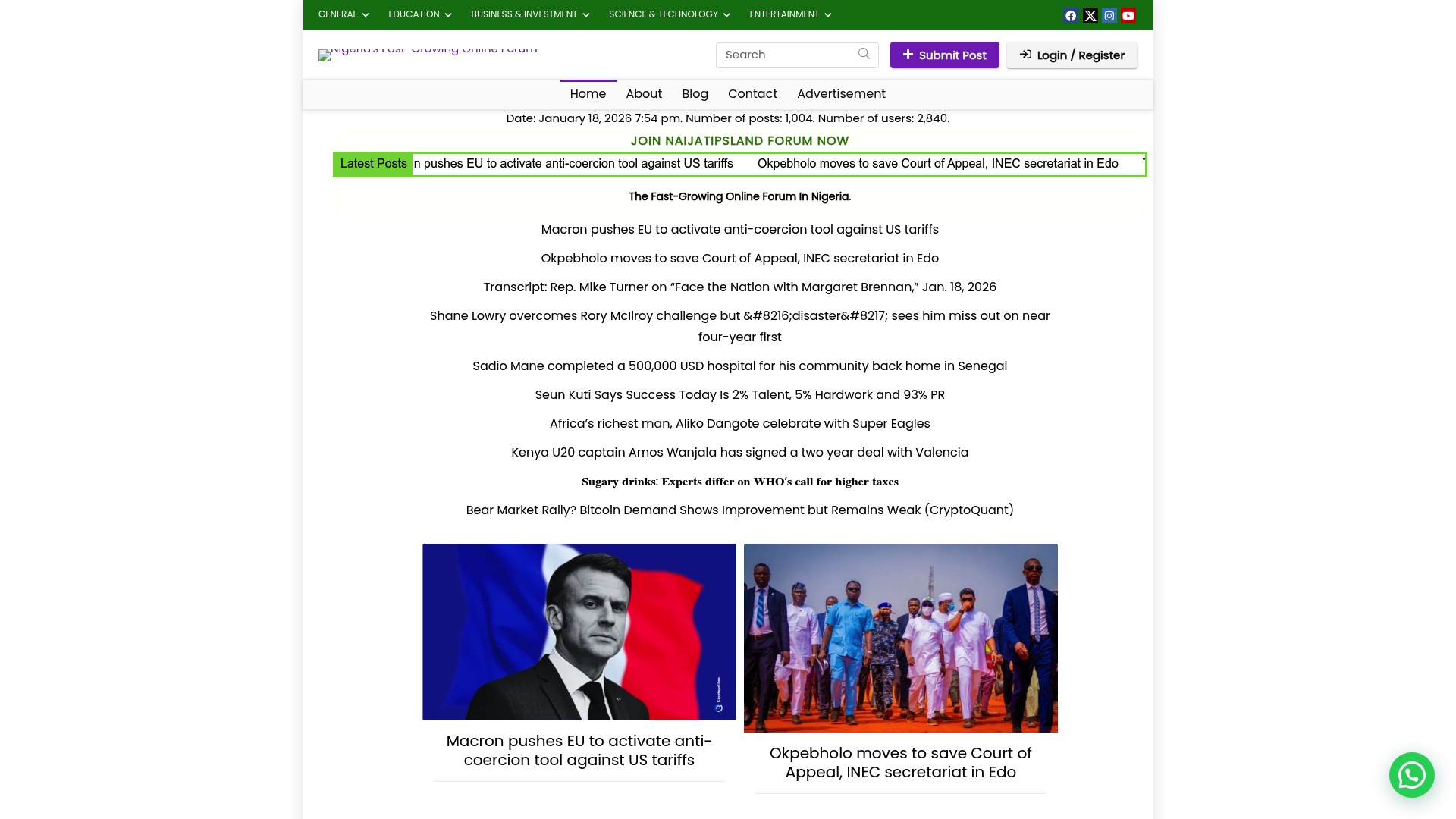
Naijatipsland covers practical communication strategies, current affairs, and community discussions designed for Nigerians who want to stay informed and engaged. If you want to put these skills into practice, the best environment is one where real conversations are already happening. Explore why discussing topical issues matters for Nigerian youth and how active participation in those discussions builds the exact communication competencies covered in this article. You can also learn how to start online discussions on forums to practice digital communication in a structured, community-driven setting. Real improvement comes from real practice, and Naijatipsland gives you the platform to do both.
FAQ
What are the most important communication skills to develop?
Active listening, clarity, and empathy are the three most transferable skills across all professional and personal contexts. SEEK New Zealand’s workplace list of over 50 communication skills confirms these appear across every channel and job type.
What is the 7 Cs of communication?
The 7 Cs framework is a message-design checklist covering Clear, Concise, Concrete, Correct, Coherent, Complete, and Courteous. Applying all seven to any professional message reduces misunderstandings and improves response quality.
How does active listening differ from regular listening?
Active listening requires a conscious effort to understand the full message, including emotions and nonverbal cues, not just the spoken words. Using techniques like paraphrasing and reflection confirms understanding and prevents miscommunication before it starts.
How do I know which communication skill to work on first?
Map your daily communication tasks by channel, then identify where your messages most often generate confusion or require follow-up. That channel is your highest-priority development area, and targeting it first produces faster results than trying to improve everything simultaneously.
Can digital communication skills be improved without formal training?
Yes. Tools like Grammarly and Hemingway Editor provide real-time written feedback, while reviewing your own sent messages weekly builds self-awareness quickly. Practicing community article submissions also sharpens professional writing for digital audiences.