Last updated: 13 October 2026. Online income varies hugely and nobody can promise you a figure. Platform rules change, so check each platform’s current terms. We removed unsourced claims from an earlier version.
Earning money online is real for many Nigerians, and it is also the subject of more scams and exaggerations than almost anything else. The honest picture is that it takes a skill, patience and a few months of unpaid effort before income becomes steady. This guide gives you a realistic plan, the rules of the main platforms and the ways people get cheated.
A reality check first
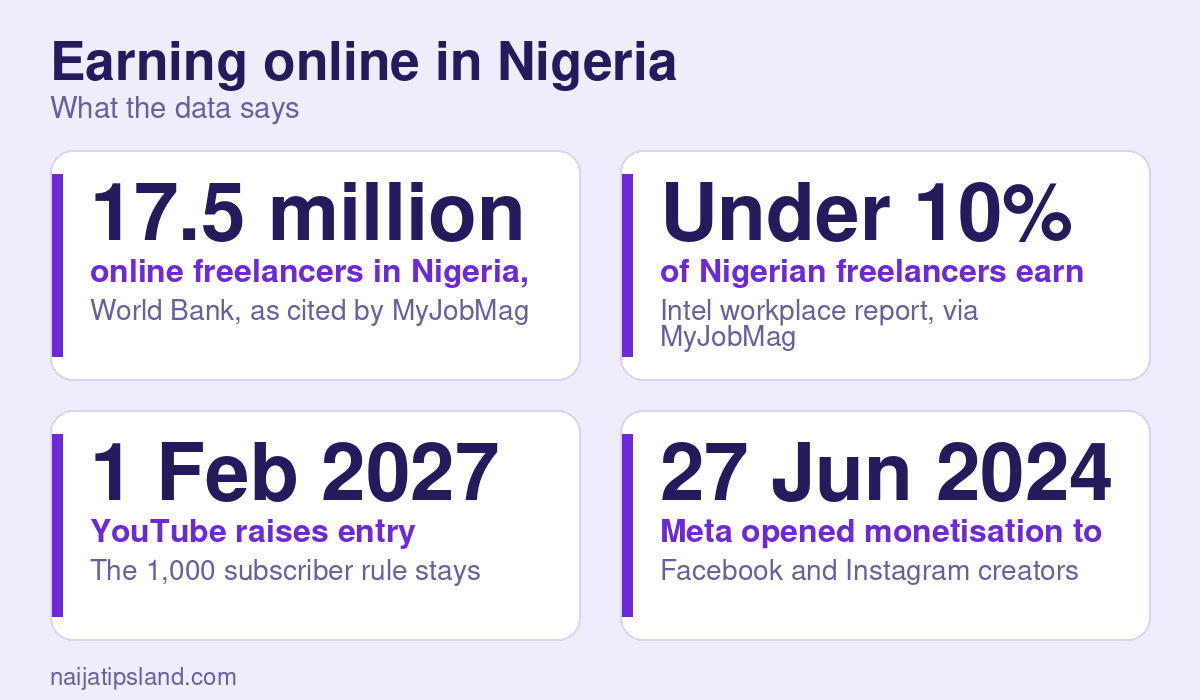
A World Bank study cited by MyJobMag counts about 17.5 million online freelancers across Nigeria, Ghana and South Africa, with Nigerians making up a significant share, and the Intel Nigerian workplace report cited by MyJobMag says around 17 in every 100 jobs in Nigeria are remote. But earnings are uneven: survey data reported by MyJobMag suggest that fewer than 10% of Nigerian freelancers earn more than ₦350,000 a month. Treat any post that promises thousands of dollars for a few hours of work as a warning sign.
Step 1: Choose a route that matches what you can already do
- Freelance services: writing, design, video editing, development, virtual assistance, bookkeeping and social media management. You sell your time and skill to clients at home or abroad.
- Remote jobs: a salary from an employer, usually after applications and tests. Competition is stiff, and genuine employers do not charge application fees.
- Content creation: videos, posts and podcasts that earn from ads, sponsors or your own products. It is the slowest route to income.
- Selling products: through a marketplace or social media. See our guides on where to sell online and Nigeria’s e-commerce market.
- Teaching and coaching: tutoring in school subjects, languages, music or professional skills.
Step 2: Understand the platform rules
- YouTube: the Partner Programme is to double its entry thresholds for new creators from 1 February 2027, though the 1,000-subscriber requirement stays, and existing members must accept new terms by 31 January 2027. YouTube AdSense paid Nigerian creators more than $10 million in 2024, according to creator economy research, which shows the market is real but small per creator.
- Facebook and Instagram: Meta made Nigeria eligible for monetisation on 27 June 2024, covering in-stream ads, reels ads, bonuses and subscriptions for those who qualify. In March 2026 Facebook announced a “Creator Fast Track” offering some established creators up to $3,000 a month for three months, so read the terms before you move content.
- TikTok: reports in August 2026 said it did not offer direct creator monetisation in Nigeria, though creators earn through brand deals and selling.
Step 3: Build proof before you ask for work
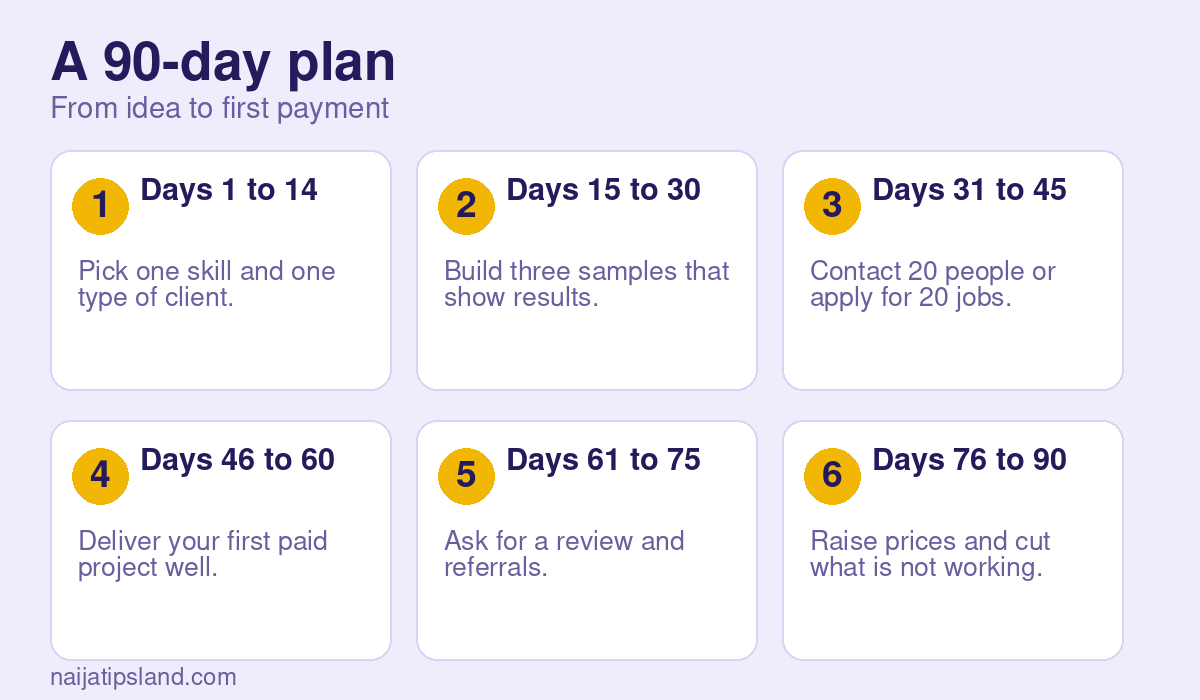
Clients pay for results they can see. Make three good samples, such as a sample article, a design set or a short video, tailored to the clients you want. Put them in one place with a short description of what you did and the outcome. A profile with three strong samples beats one with twenty weak ones.
Step 4: Find clients and apply smartly
- Start with people you know, local businesses and referrals.
- On marketplaces, apply to jobs you can really do and write a short, specific message for each.
- Price fairly. Cheap work attracts difficult clients, but unrealistic rates lose jobs. Raise prices as reviews build.
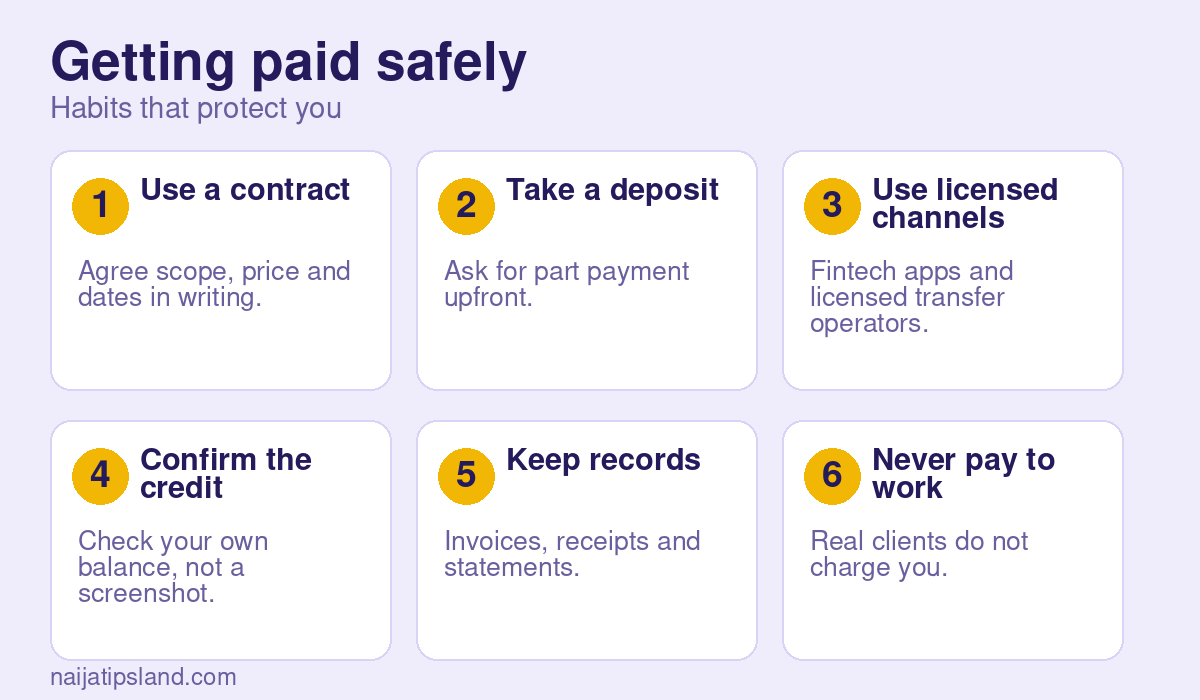
- Always agree scope, price, deadlines and revisions in writing.
Step 5: Get paid and stay legal
Payments can be awkward. Reports note that PayPal has restricted Nigerian accounts to sending since 2014 and that Wise suspended dollar transfers to Nigeria in November 2022, so many freelancers use other payment providers and bank accounts that accept foreign payments. If a client pays through a money transfer operator, remember that licensed operators now pay out in naira, and read our guide to sending money to Nigeria. Use regulated apps and see our guide to fintech apps.
On tax, the first ₦800,000 of annual taxable income is taxed at 0% under the Nigeria Tax Act 2025, but income above that is taxable, and reports say freelancers paid by foreign clients are expected to register and declare it. Keep invoices and bank statements, and see our guides on registering a business name and side hustles.
Step 6: Avoid the scams
- Pay-to-work: a real client never asks you to pay a registration fee, buy gift cards or deposit money.
- Work-first traps: the client asks for the whole job “to test quality” and vanishes.
- Fake alerts and overpayment: confirm money in your own account.
- Data harvesting: never give your BVN, card PIN or OTP to a client or “platform”.
- Click-to-earn and get-rich schemes: if the pay does not match the work, it is a trap. See our guides to internet scams and passive income.
What You Need to Start
- A phone or laptop that works reliably, with a power backup if you can.
- A monthly data budget. Calls, uploads and video all use more than people expect.
- A professional email address and a simple portfolio page or document.
- A way to receive payments, such as a bank account, and where needed a fintech account. See our fintech apps comparison.
- A weekly schedule you can keep, even if it is only a few hours.
A Quick Test to Pick Your Route
- Do you already have a skill clients pay for? Start with freelance services.
- Do you want a steady salary and can you handle competitive applications? Look for remote jobs.
- Are you comfortable on camera and willing to publish for months without pay? Try content creation.
- Can you source products cheaply and handle delivery? Try selling.
- Do you enjoy explaining things? Try tutoring or coaching.
Mistakes That Keep People Broke
- Trying five routes at once and finishing none.
- Spending on courses and tools before earning the first naira.
- Underpricing so heavily that the work is not worth doing.
- Ignoring contracts, deposits and records.
- Chasing viral trends instead of building a skill that clients need.
- Quitting a stable job before income is steady. Test the idea alongside your job first.
Frequently Asked Questions
How much can I earn online in Nigeria?
It varies from nothing to a full-time income. Fewer than one in ten Nigerian freelancers reportedly earn more than ₦350,000 a month, so plan for a slow start.
Can I start with no money?
Yes, with a phone and a skill, but you need data, time and a way to receive payment.
Which skill pays best?
Technical and specialist skills such as development, data, design and digital marketing generally pay more, but demand and your experience matter most.
Is online income taxed?
Yes, though the first ₦800,000 of annual taxable income is taxed at 0%. Keep records and check your position.
Sources
- World Bank: Working Without Borders, online gig work overview
- MyJobMag: Remote work statistics 2026
- Brandcom: YouTube raises the bar for incoming creators
- Brandspur: YouTube to double monetisation entry requirements from February 2027
- Techpoint: Meta approves monetisation for content creators in Nigeria and Ghana
- allAfrica: Facebook targets TikTok and YouTube creators with Creator Fast Track
- EarningNaija: Online side hustle platforms and payment restrictions
- Safeguard Global: Nigeria Tax Act 2025 goes into effect on 1 January 2026
Related: Remote jobs for Nigerians paid in dollars: where to look and how to get paid
Join the discussion
Have you tried this, or do you have a question we did not answer? Be the first to share your experience. Naijatipsland members help each other with real, first-hand experience.