Last updated: 14 October 2026. We merged two overlapping pages on this topic into this guide and added sourced examples.
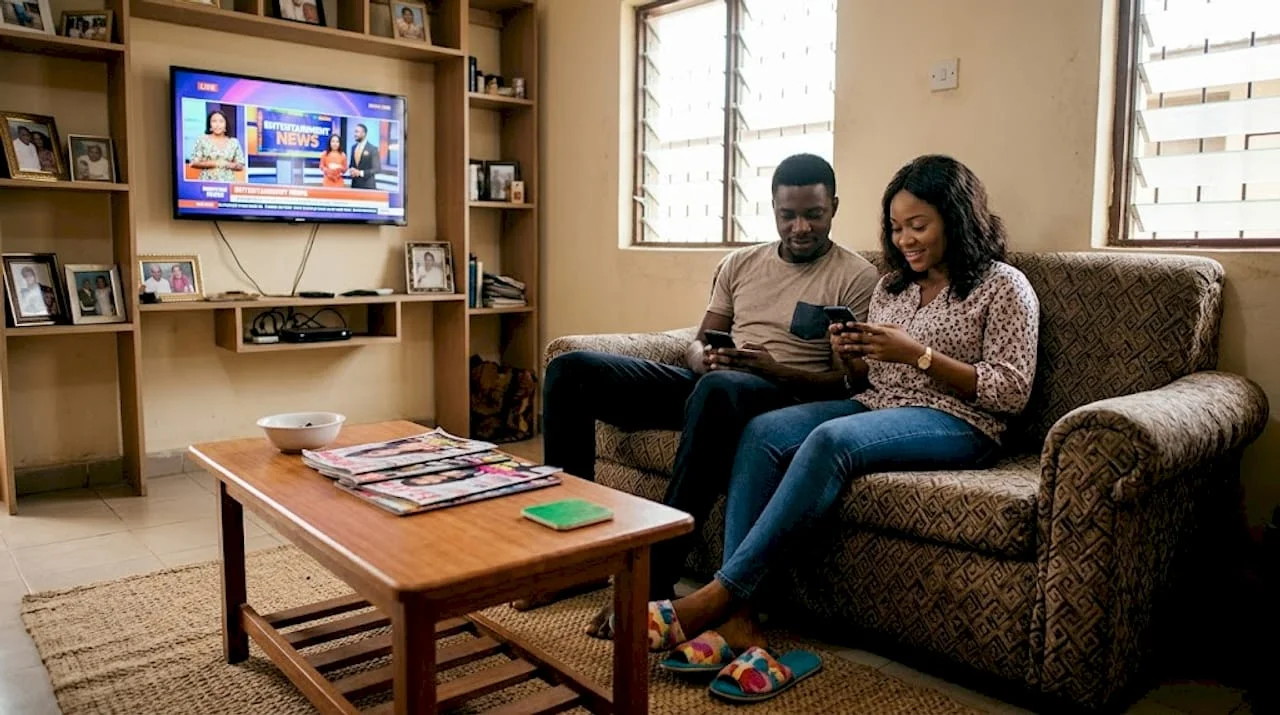
Entertainment news can look trivial next to politics or the economy, but for millions of Nigerians it is part of daily life: what to watch, who to listen to, where to go and what to talk about. Done well, it also supports a creative industry that employs many young people.
1. It connects people
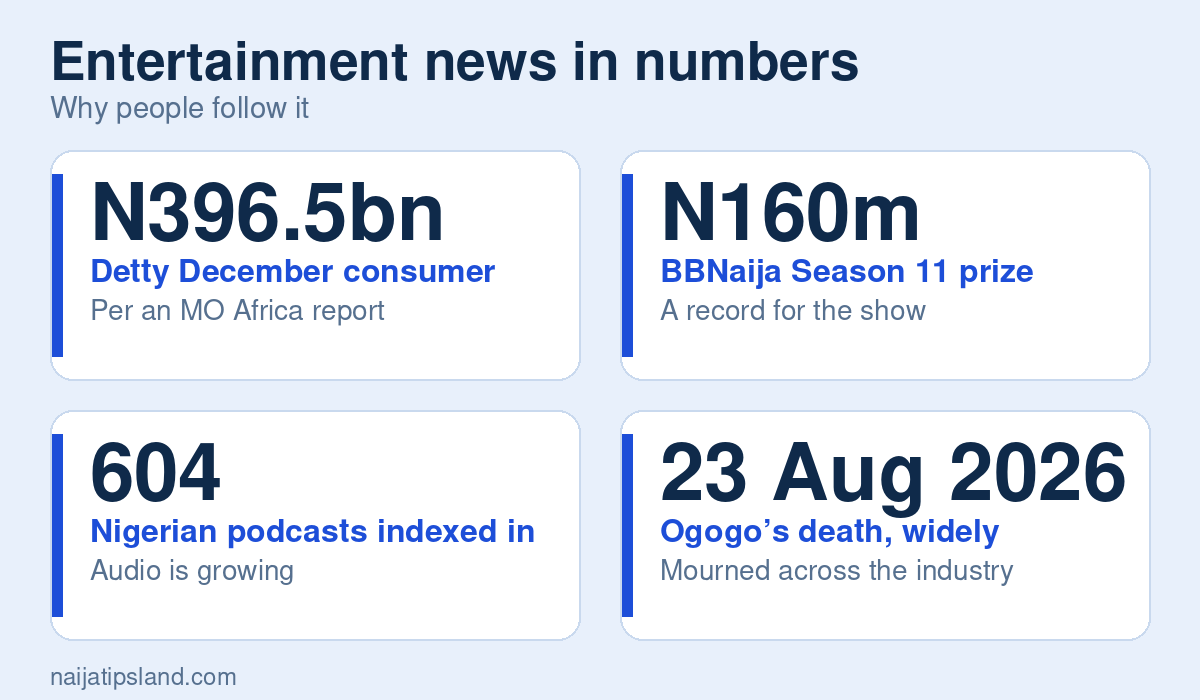
Shared moments, from a new album to a reality show eviction to a national football result, give people something to discuss across regions and generations. When Nollywood actor Ogogo died on 23 August 2026, the response came from fans, colleagues, politicians and diaspora communities. See our report on his career and legacy.
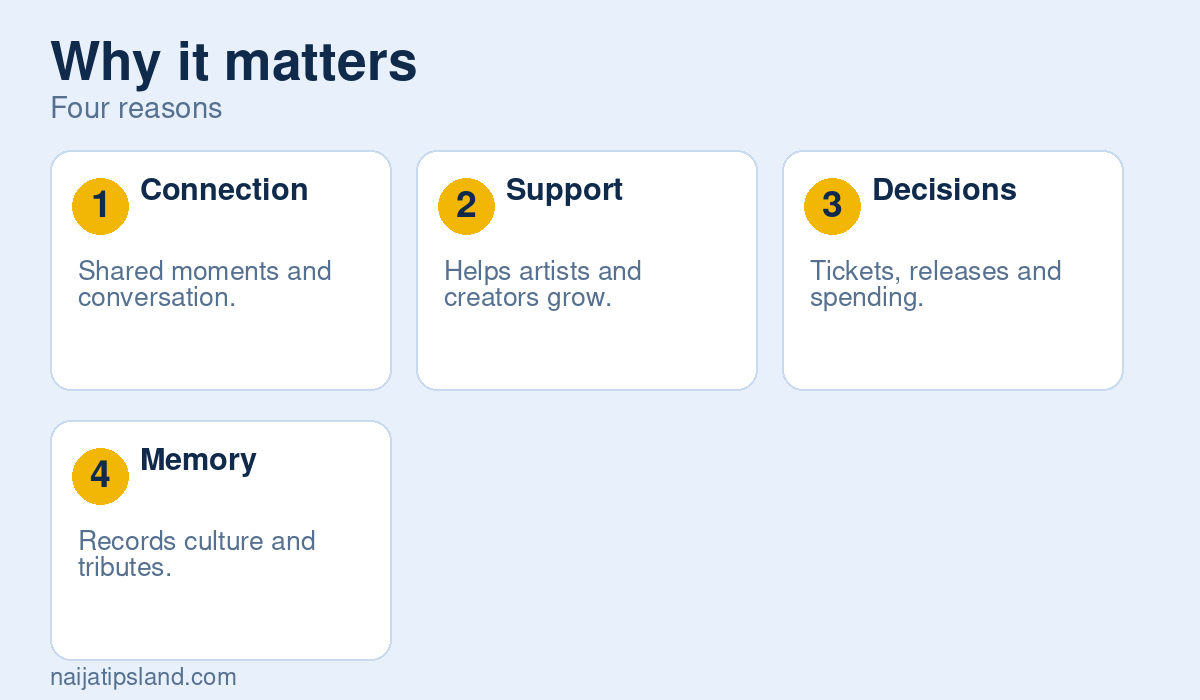
2. It supports creators
Coverage helps new artists and filmmakers find audiences, and helps audiences find legitimate ways to pay for what they enjoy. When fans know a Grammy nomination, a premiere date or a festival line-up, they can attend, stream and buy, which sustains the sector. See our guides on Afrobeats artists, BBNaija and Nigerian podcasts.
3. It guides decisions and spending
News about shows, tickets and releases helps people plan. Entertainment is also a large market: a report by MO Africa estimated that Detty December 2025 produced ₦396.5 billion in consumer spending in Lagos. Good information helps you avoid fake tickets and overpriced packages. See our guides on festivals in Nigeria and Lagos traffic.
4. It records culture
Entertainment reporting preserves memory, from tributes to the heritage debates around the Benin Bronzes. See the Benin Bronzes and the role of entertainment in culture.
The downsides to watch
- Rumours and clickbait: false death reports, fake scandals and AI-made clips are common. See fake news and verifying news.
- Privacy invasion: leaked content and harassment of celebrities and their families.
- Time and data costs: endless scrolling can crowd out study and work. See data plans.
- Scams: fake giveaways, tickets and fundraisers. See internet scams.
How to read entertainment news well
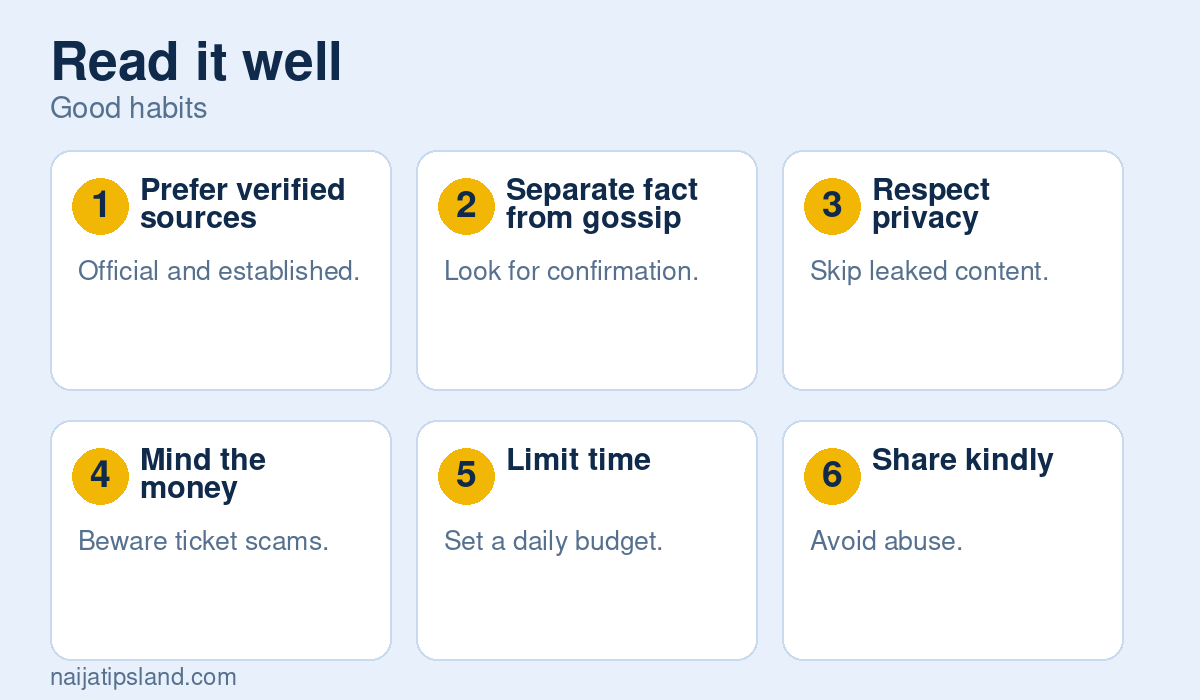
- Follow official accounts and reliable outlets. See how to access reliable entertainment updates.
- Wait for confirmation of sensitive stories.
- Respect privacy and avoid sharing leaked or intimate content.
- Pay for music, films and events legally.
- Set a time limit, and use the time to learn from what you enjoy. See why online trends matter for young people.
A Mindful Week of Entertainment
- Monday: choose one show, album or film to follow this week, and ignore the rest.
- Midweek: read one reliable article about the artist or show, not just clips.
- Weekend: attend or watch something live, or share it with friends.
- Every day: set a time limit on social media and avoid scrolling in bed.
- Before you share: check the source, the date and whether the family or official account confirmed it.
Entertainment News and Your Wallet
- Set a monthly entertainment budget for data, streaming, tickets and merchandise, and stick to it.
- Compare ticket prices from official sellers only, and be wary of last-minute “resale” offers on social media.
- Remember that betting adverts often sponsor entertainment and sport. If you gamble, set a limit you can lose and never borrow to bet.
- Pay for legal streams and downloads where you can, so creators earn.
Words You Will See in Entertainment News
- Exclusive: a story one outlet says it has first. Check whether others confirm it.
- Sources say: unnamed information. Treat it as unconfirmed until someone on record speaks.
- Teaser or trailer: promotional material, not the finished work.
- Sponsored content: paid by a brand, even if it looks like news.
- Deepfake: an AI-made video, image or voice that imitates a real person.
How to Judge an Entertainment Story
- Who is the source, and is it named?
- Is it new information, or a rumour with a catchy headline?
- Does it respect privacy and dignity?
- Would you be comfortable if it were about you or your family?
Why Quality Reporting Matters
Careful entertainment journalism records careers, explains deals and holds powerful people to account, for example when it investigates contracts or abuse. When audiences click on rumours, they reward clickbait and weaken serious coverage, so spend your attention on outlets that check their facts.
Frequently Asked Questions
Why should I care about entertainment news?
It helps you connect with culture, support creators and make good decisions about events and spending.
How do I avoid fake entertainment news?
Use official and established sources, wait for confirmation and check images and quotes.
Is entertainment important to the economy?
Yes. It creates jobs and spending, as seen in estimates for Lagos’ Detty December.