Last updated: 14 October 2026. The restitution story is still developing, and reports on museum openings and ownership disagreements have changed more than once. Check recent news from the Oba’s palace, the National Commission for Museums and Monuments and the museums involved. We replaced a very long earlier version with a focused, sourced history.
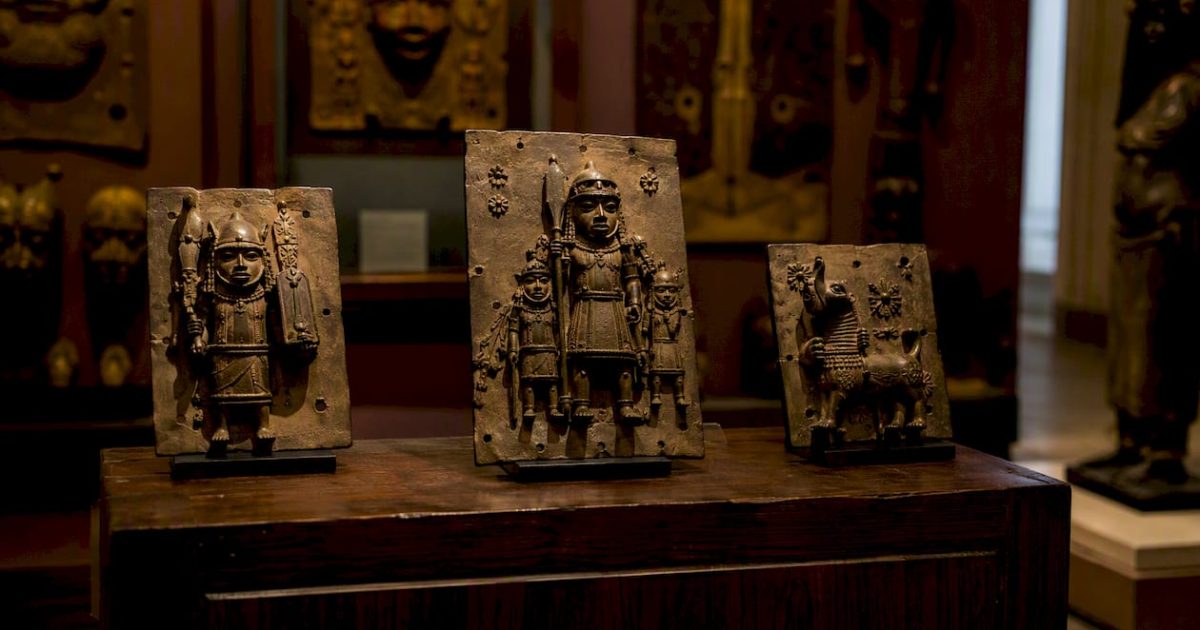
The Benin Bronzes are among the most famous works of African art, and among the most contested. They are about 3,000 sculptures, plaques and other objects, many made of brass and bronze, produced from the 16th century onward by the guilds of the Kingdom of Benin, in what is now Edo State. Many were commissioned by the Obas, or kings, to record history and honour ancestors.

The 1897 attack and looting
In 1897 British forces carried out a punitive expedition against the Kingdom of Benin, burned parts of Benin City and looted the royal palace. The kingdom was then absorbed into British-ruled territory. The seized objects were sold or distributed, and many ended up in museums and private collections in Britain, Germany, the United States and elsewhere. For decades, the royal family of Benin has called for their return, and the demand has been public since at least the 1930s.
The restitution era
- Early returns: in 2021, Jesus College, Cambridge, announced the return of a bronze cockerel, and the University of Aberdeen returned a bronze head of an Oba to representatives of the Oba, the National Commission for Museums and Monuments and the Nigerian government in Aberdeen in October 2021.
- Germany: Germany signed an agreement with Nigeria in 2022 covering the transfer of ownership of more than 1,000 objects held in its public museums, along with support for archaeology and the planned museum in Benin City.
- Other countries: France, Belgium, the Netherlands and the UK have also begun returning objects, and institutions in the United States, including the Smithsonian, have announced returns.
- The British Museum has faced pressure over its large collection, and has discussed loans rather than ownership transfers, which Nigerian officials have criticised.

Who owns the returned objects?
A dispute emerged between the National Commission for Museums and Monuments, the Edo State government and the royal court. In 2022, reports said the Oba of Benin, Ewuare II, was appointed the owner and administrator of the first 22 objects returned by Germany. On 23 March 2023, the federal government gazetted its position, officially recognising the Oba as the rightful owner and custodian of looted Benin artefacts, which ended the tussle with the Edo State government and, according to some observers, complicated negotiations that museums had been conducting with the national commission. Critics worry about public access and the care of the objects, while supporters say the Oba is the traditional custodian of the kingdom’s heritage.
Where will they be shown?
The planned Edo Museum of West African Art, later presented as the Museum of West African Art (MOWAA) in Benin City, was designed by Ghanaian-British architect David Adjaye and conceived as more than a bronzes gallery. A report in August 2026 said that returned bronzes would be displayed in an inaugural exhibition called Nigeria Imaginary: Homecoming, but the Oba has also wanted objects housed in his own Benin Royal Museum, so display arrangements and opening plans have been contested and have changed. Check current news before you plan a visit.

Why it matters
- History and justice: the bronzes document a sophisticated kingdom and the violence of colonial seizure.
- Culture and identity: returning them affects how Nigerians learn about their heritage. See our guides on entertainment and culture and festivals in Nigeria.
- Tourism and the economy: major museums can draw visitors and create jobs.
- Precedent: the Benin case shapes debates over other looted works.
How to learn more
- Read books and museum material, and look for reliable news. Verify claims about “bronze auctions” and fake objects before you buy anything. See internet scams and verifying news.
- Visit museums and exhibitions in Nigeria when they open, and support heritage education.
Frequently Asked Questions
What are the Benin Bronzes?
Royal sculptures and plaques, mostly made of brass, from the Kingdom of Benin, now in Edo State, Nigeria.
How did they leave Nigeria?
Mostly through the British punitive expedition of 1897, when the royal palace was looted.
Have they been returned?
Some have, including objects from Germany, the UK and the United States, but many remain abroad, and the arrangements for ownership and display are still debated.
Sources
- Artnet: Nigeria recognises the Oba as owner of the Benin Bronzes
- Worldcrunch: Why Germany is worried about the Benin Bronzes
- The Art Newspaper: Nigeria gets ready to receive the world’s Benin Bronzes
- Returning Heritage: Cambridge college and the German government set timetables for returning Benin Bronzes
- Apollo: Germany moves closer to returning Benin Bronzes
- Tartan: The Benin Bronzes homecoming to the MOWAA