

Last updated: 1 November 2026 · By Naijatipsland Editorial Team · Editorial policy
Checked 1 November 2026. High blood pressure is now one of the most common health problems in Nigeria. In July 2026 the Federal Government said that nearly one in three Nigerian adults has hypertension, and many of them don’t know it, because raised blood pressure usually has no symptoms until it causes a stroke, heart failure or kidney damage. Doctors call it “the silent killer” for that reason.
The good news is that what you eat every day has a real effect on your numbers. This guide explains how to manage high blood pressure with a healthy Nigerian diet: which local foods help, which ones quietly push your pressure up, how to cut salt without making your soup taste flat, a sample week of meals, and how to check your progress at home.
Important: diet works alongside medical care, not instead of it. If a doctor has prescribed blood pressure medicine, keep taking it. Never stop or change your dose without talking to your doctor, even when your readings improve.
Why diet matters so much for blood pressure in Nigeria
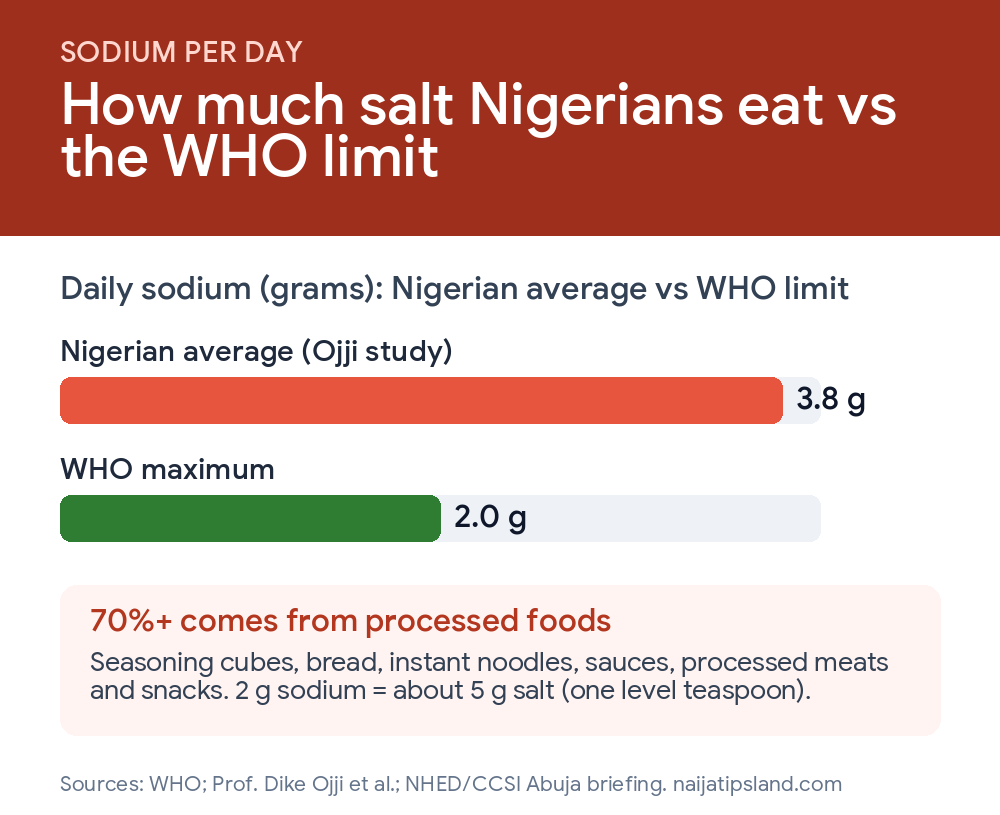
Salt (sodium) is the biggest dietary driver of high blood pressure, and Nigerians eat a lot of it. Research led by Prof. Dike Ojji of the University of Abuja found that Nigerians consume about 3.8 g of sodium a day, roughly double the World Health Organization’s limit. The WHO recommends adults eat less than 2 g of sodium a day, which is about 5 g of salt, or one level teaspoon, from all sources combined.
Most of that salt doesn’t come from the salt shaker. Food scientists speaking at a 2025 sodium-reduction training in Abuja said over 70% of sodium intake comes from processed and packaged foods such as seasoning cubes, bread, instant noodles, sauces, processed meats and snacks. In Nigerian kitchens, the seasoning cube is the main offender: many people add two, three or more cubes to one pot of soup or stew, on top of salt.
The government has noticed. Nigeria’s National Guideline for Sodium Reduction aims to cut population sodium intake by 30% by 2030, the country has adopted the WHO’s SHAKE salt-reduction approach, and the Standards Organisation of Nigeria has been reviewing sodium limits for packaged foods. Until those limits become mandatory, though, reducing salt is up to you.
For the bigger picture on how our eating habits feed both diabetes and hypertension, read our explainer on how Nigerian food culture affects diabetes and hypertension. This article is the practical follow-up: what to put on your plate.
Know your numbers first
Blood pressure is written as two numbers, such as 130/85 mmHg. The top (systolic) number is the pressure when your heart beats; the bottom (diastolic) number is the pressure between beats.
| Reading (mmHg) | What it usually means | What to do |
|---|---|---|
| Below 120/80 | Normal | Keep healthy habits; check at least once a year |
| 120–139 / 80–89 | Raised (borderline) | Cut salt, move more, recheck in a few months |
| 140/90 or higher on repeat checks | High blood pressure (hypertension) | See a doctor for diagnosis and treatment |
| 180/120 or higher | Very high | Recheck after 5 minutes’ rest; if still this high, or with chest pain, severe headache, weakness or confused speech, go to a hospital immediately |
One high reading doesn’t mean you have hypertension; stress, coffee or rushing can push it up. A diagnosis is based on repeated readings. That’s why home monitoring (covered below) is so useful.
The Nigerian blood pressure plate: what to eat more of
Doctors often recommend the DASH eating pattern (“Dietary Approaches to Stop Hypertension”), which is rich in vegetables, fruit, beans, whole grains and low-fat dairy, and low in salt, fatty meat and sugar. The good news is that a traditional Nigerian diet already contains most DASH foods. You just need to shift the balance.
1. Leafy vegetables, and plenty of them
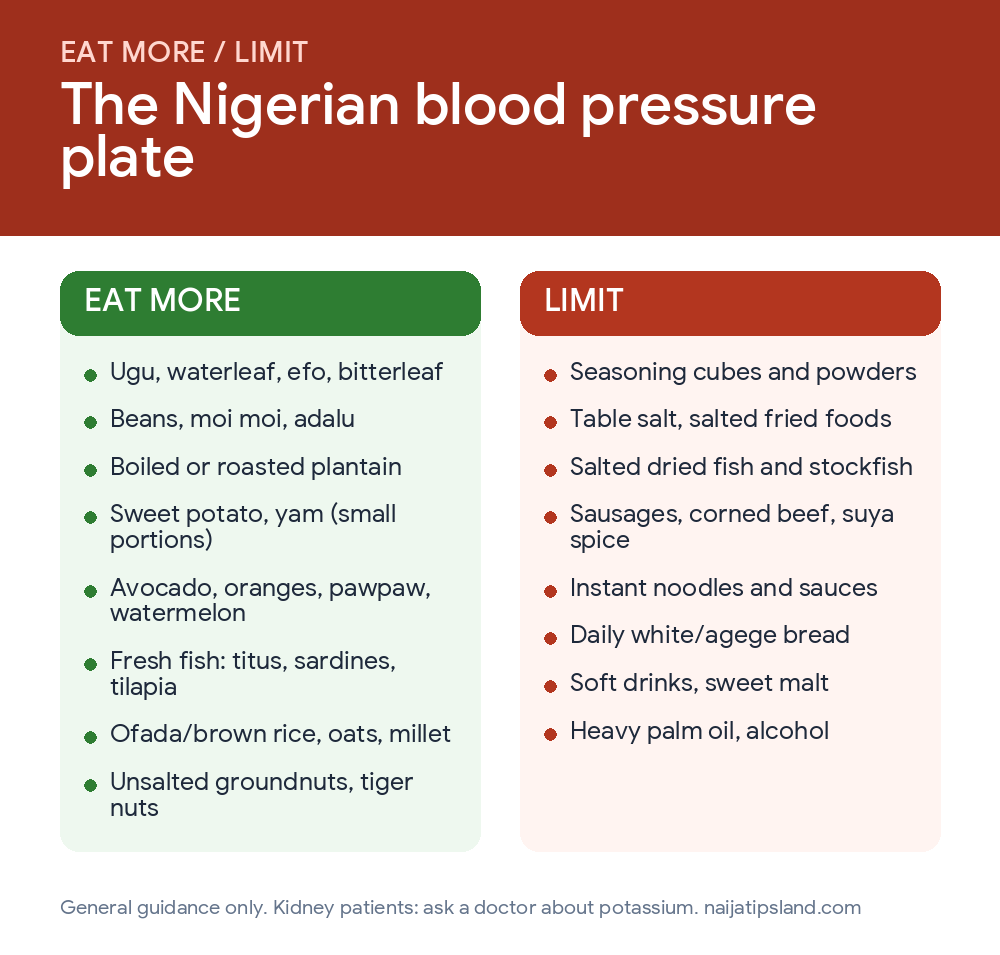
Ugu (fluted pumpkin), waterleaf, efo shoko, efo tete (green amaranth), bitterleaf, ewedu, scent leaf, garden egg leaves and spinach are full of potassium, magnesium and fibre. Potassium helps the body get rid of sodium and relaxes blood vessel walls. Aim for vegetables to fill half your plate, and make your soups more vegetable than oil.
2. Potassium-rich local foods
Potassium is the natural counterweight to salt. Good Nigerian sources include:
- Beans (oloyin, black-eyed peas) and moi moi or akara made with less oil
- Plantain (boiled, roasted or steamed rather than fried) and bananas
- Sweet potato, yam and cocoyam, boiled and in sensible portions
- Avocado (pear), oranges, watermelon, pawpaw and tomatoes
- Tiger nuts (ofio/aya) and groundnuts, unsalted, as snacks
- Zobo (hibiscus drink) made without sugar; small studies suggest hibiscus tea may modestly lower blood pressure
Caution: if you have kidney disease, or take certain blood pressure drugs (such as ACE inhibitors, ARBs or spironolactone), too much potassium can be harmful. Ask your doctor how much is right for you.
3. Whole grains and fibre
Swap some white rice and white bread for ofada rice, brown rice, oats, millet (gero), sorghum (dawa), guinea corn pap (ogi/akamu) and unripe plantain flour. Fibre helps with weight and cholesterol, both of which affect blood pressure.
4. Fish and lean protein
Choose fresh fish such as titus (mackerel), sardines, tilapia and catfish, which contain heart-friendly fats, plus chicken without the skin, eggs and beans. Cut down on red meat, offal (shaki, roundabout) and processed meats like sausages and corned beef.
5. Healthier fats, in smaller amounts
Palm oil is part of Nigerian cooking, but use it sparingly; one or two tablespoons per pot goes a long way. Groundnut, soybean or olive oil can replace some of it in stews and fried dishes. Measure oil with a spoon rather than pouring from the bottle.
Foods to limit or avoid
- Seasoning cubes and powders: the biggest single source of hidden salt in most Nigerian homes. Many 4 g cubes contain over 2 g of salt each, so two cubes can be close to your whole day’s limit. Check the nutrition panel on the pack.
- Added salt at the table and salt sprinkled on fried plantain, yam or eggs.
- Dried, salted and smoked fish, stockfish and crayfish: they are flavourful but often very salty. Rinse or soak them, and use less.
- Processed meats: suya spice blends with salt, sausages, corned beef, canned meats.
- Instant noodles (the flavour sachet is mostly salt and MSG), canned tomato paste with added salt, bottled sauces, salted snacks such as chin chin, plantain chips and salted groundnuts.
- White bread and “agege” bread, which add more sodium than most people realise when eaten daily.
- Sugary drinks (soft drinks, sweetened malt, juice drinks), which drive weight gain.
- Alcohol: heavy drinking raises blood pressure. If you drink, keep it occasional and small.
How to cut salt without losing the taste
Your taste buds adjust within a few weeks of eating less salt. Food that tastes bland on day one usually tastes normal by week three. These tricks make the change easier:
- Halve the cubes first. If you use three cubes per pot, use one and a half this month and one next month. Small steps stick.
- Season with natural flavour: onions, garlic, ginger, fresh pepper, scent leaf, curry leaf, thyme, uziza, uda, ehuru (calabash nutmeg), locust beans (iru/dawadawa) in small amounts, and a squeeze of lemon or lime.
- Make your own stock by boiling meat or fish with onions, ginger and garlic, then freeze it in portions. It replaces the cube’s flavour.
- Don’t salt twice. If you use stockfish, crayfish or dried fish, you need far less salt or seasoning.
- Taste before you add, and take the salt shaker off the dining table.
- Consider a potassium-enriched salt substitute. The WHO now recommends low-sodium salt substitutes for adults, except pregnant women, children and people with kidney disease or other conditions that affect potassium. Ask your doctor first if any of those apply.
- Read labels: compare brands of seasoning, bread and tomato paste and choose the one with less sodium per serving.
A sample 7-day Nigerian meal plan for high blood pressure
This plan is a guide, not a prescription. Adjust portions to your appetite, activity and any advice from your doctor or dietitian. Cook every dish with little salt, one cube or less per pot, and measured oil.
| Day | Breakfast | Lunch | Dinner |
|---|---|---|---|
| Monday | Oat pap or ogi with groundnuts (unsalted) and a banana | Ofada or brown rice with vegetable stew and grilled fish | Efo riro with plenty of greens, a small wrap of amala, and fish |
| Tuesday | Boiled eggs, sliced avocado and whole-wheat bread | Beans porridge with ripe plantain (low oil) | Vegetable soup with chicken and a small portion of eba or oat swallow |
| Wednesday | Moi moi (steamed, low oil) with pap | Boiled yam with garden egg sauce and egg | Pepper soup with fish, lots of scent leaf, and boiled plantain |
| Thursday | Sweet potato with scrambled eggs and tomatoes | Jollof made with half the usual cubes, extra vegetables and grilled chicken | Okra soup with fish and a small swallow |
| Friday | Akamu with akara (shallow-fried) | Unripe plantain porridge with ugu | Grilled titus with vegetable salad and boiled sweet potato |
| Saturday | Fruit bowl: pawpaw, watermelon, orange, with tiger nuts | Egusi soup (less oil, more vegetables) with a small swallow | Beans and corn (adalu) with vegetables |
| Sunday | Oats with banana and milk | Native rice with lots of leafy greens and fish | Chicken and vegetable stir-fry with a small portion of rice |
Snacks: fresh fruit, unsalted groundnuts, tiger nuts, roasted corn (no salt), cucumber or carrots. Drinks: water, unsweetened zobo, kunu without added sugar, low-fat milk.
Want to keep the cost down? Our affordable healthy meal plan for Nigerian families shows how to shop for these foods on a budget.

Beyond food: habits that lower blood pressure
- Lose some weight if you are overweight. Even losing 5 kg can bring your readings down, especially fat around the waist. See our guide to losing belly fat with Nigerian foods and exercise.
- Move for at least 30 minutes on most days. Brisk walking counts. No gym? Try our free home workouts and weekly plan.
- Stop smoking and keep alcohol low.
- Sleep 7 to 8 hours and look into snoring; untreated sleep apnoea raises blood pressure.
- Manage stress: traffic, money worries and long work hours are real. Short walks, prayer or quiet time, and time with family all help.
- Be careful with herbal mixtures and “agbo”. Some contain liquorice or other ingredients that raise blood pressure or interact with medicine. Tell your doctor about anything you take.
Check your blood pressure at home
A home blood pressure monitor lets you see whether your changes are working and gives your doctor far better information than a single clinic reading. Choose an automatic upper-arm monitor (more accurate than wrist models) from a known brand. In August 2026, Omron upper-arm models were selling in Nigeria from roughly ₦18,000 to ₦50,000, depending on the model, with basic versions at the lower end. Buy from a pharmacy or a trusted seller to avoid fakes, and check that the cuff fits your arm.
How to measure correctly:
- Don’t smoke, drink coffee or exercise for 30 minutes beforehand, and empty your bladder.
- Sit quietly for 5 minutes with your back supported, feet flat and legs uncrossed.
- Rest your arm on a table at heart level, with the cuff on bare skin.
- Take two readings a minute apart, morning and evening, for a week before a doctor’s visit.
- Write the readings down, or use the monitor’s memory, and take them to your appointment.
Getting treatment and keeping costs down
Many Nigerians need medication as well as lifestyle changes, especially if their readings stay at 140/90 or above. Blood pressure drugs are widely available and many are affordable generics. Primary health centres and general hospitals can check your pressure, and health insurance can reduce the cost of regular check-ups and drugs. Compare your options in our guide to affordable health insurance in Nigeria.
Young people aren’t immune either. Rising rates of obesity, stress and salty fast food mean more Nigerians in their 20s and 30s are being diagnosed. Our guide to common health issues among young Nigerians covers prevention.
Frequently asked questions
Can I cure high blood pressure with food alone?
For some people with mildly raised readings, diet, weight loss and exercise can bring blood pressure back to normal. Many others still need medicine. Food makes your medicine work better and may mean you need less of it, but only your doctor should change your treatment.
Is garden egg good for high blood pressure?
Garden eggs and their leaves are low in calories and contain potassium and fibre, so they fit well in a blood-pressure-friendly diet. They are a helpful food, not a treatment.
Is palm oil bad for blood pressure?
Palm oil is high in saturated fat, so it is best used in small, measured amounts. The bigger problem in most Nigerian dishes is the salt and seasoning cubes cooked with it.
Which Nigerian swallow is best for high blood pressure?
Portion size matters more than the type. Oat, unripe plantain and wheat swallows have more fibre than eba or pounded yam, but any swallow is fine in a small portion alongside a soup full of vegetables and low in salt.
Does garlic or zobo lower blood pressure?
Some studies suggest garlic and hibiscus (zobo) may lower blood pressure slightly. They are fine as part of your diet, without sugar, but they don’t replace prescribed medicine.
How quickly will my blood pressure drop after cutting salt?
Many people see a change within two to four weeks of eating less salt consistently. Keep monitoring at home and share the results with your doctor.
Disclaimer: this article is general health information based on WHO guidance and Nigerian health reports available on 1 November 2026. It is not medical advice and doesn’t replace a consultation with a doctor, pharmacist or registered dietitian. If you have high blood pressure, kidney disease, diabetes or are pregnant, get personal advice before changing your diet or using salt substitutes.









Editor’s note: the single most useful change most of us can make is cutting back on seasoning cubes. Try halving them for a month and keep a note of your home readings. And if you’re on blood pressure medication, please don’t stop it because your numbers improve. Talk to your doctor first.