

Last updated: 13 November 2026 · By Naijatipsland Editorial Team · Editorial policy
High cholesterol is one of the most common and least noticeable health problems among Nigerians at home and in the UK. It rarely causes symptoms, yet it raises your chance of heart disease and stroke over the years. The good news is that what you eat makes a real difference, and many of the foods that help are already in Nigerian kitchens or easy to find in UK supermarkets and African shops.
This guide explains which foods lower cholesterol, how much they help, which foods to cut back on, and how to turn the advice into a simple four-week plan. It is based on guidance from the NHS, the British Heart Foundation (BHF) and BBC Food, read on 13 November 2026. It is general information, not medical advice, and it does not replace a conversation with your GP.
Quick answer: which foods lower cholesterol?
The strongest evidence points to four changes. First, swap saturated fat (butter, lard, ghee, fatty meat, pastry, biscuits) for unsaturated fat such as olive, rapeseed or sunflower oil, nuts, seeds and oily fish. Second, eat more soluble fibre, found in oats, barley, beans, lentils, fruit and vegetables. Third, if your cholesterol is clearly high, foods fortified with plant stanols or sterols can help further. Fourth, be active, keep to a healthy weight and avoid smoking. Diet works best alongside, not instead of, any medicine your GP prescribes.
First, what is cholesterol and why does it matter?
Cholesterol is a fatty substance your body needs, and most of it is made by your liver. Problems start when too much of the “bad” kind, LDL (or non-HDL) cholesterol, builds up in your blood and furs up your arteries. Saturated fat in the diet pushes LDL up, which is why the first advice is nearly always to change the type of fat you eat. High cholesterol usually has no symptoms, so you only find out through a blood test, which your GP can arrange. In England, an NHS Health Check is offered to adults aged 40 to 74 and includes a cholesterol check.
The foods that help lower cholesterol
1. Unsaturated fats instead of saturated fats
The BHF says too much saturated fat is linked to raised cholesterol, and most people eat more than recommended. Swapping butter, lard and ghee for olive, rapeseed or sunflower oil can help. The NHS suggests eating more oily fish such as mackerel and salmon, olive and rapeseed oils and spreads made from them, nuts and seeds, and fruit and vegetables.
In a Nigerian kitchen this can mean frying less and grilling, baking or steaming more, measuring oil rather than pouring it, and using vegetable or olive oil in place of ghee or margarine where you can. Stews do not need a pool of oil on top to taste good.
2. Oats and barley
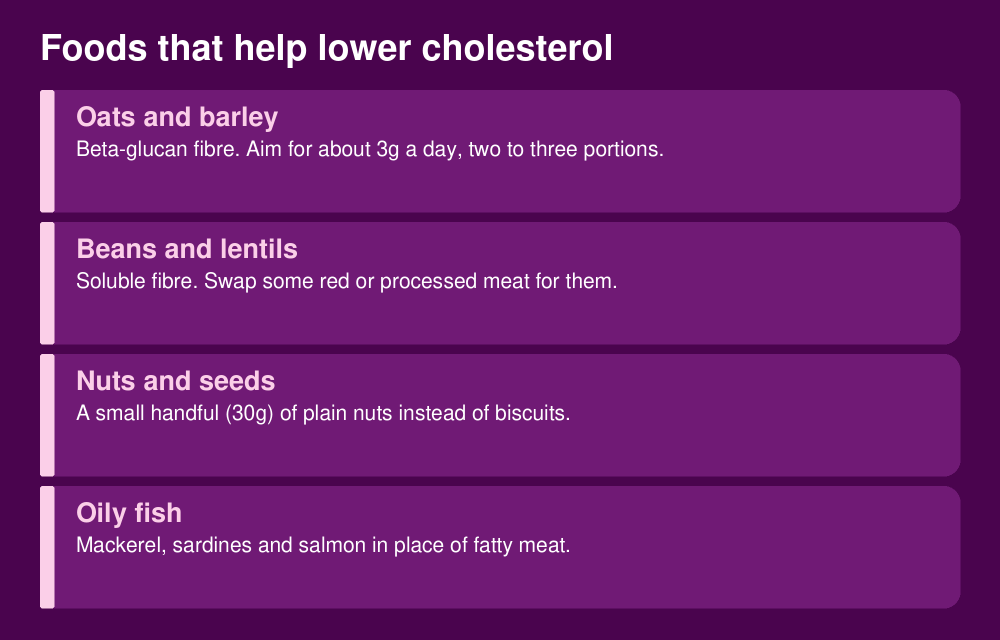
Oats and barley contain a soluble fibre called beta-glucan. The BHF explains that it forms a gel in the gut and helps stop cholesterol being absorbed, and that around 3g a day can help maintain healthy cholesterol levels. A bowl of porridge made with 40g of oats gives roughly 1.4g, so the BHF suggests aiming for two to three portions of oat or barley foods a day. BBC Food gives practical portions: a bowl of porridge made with 30g of oats, one oat biscuit or 75g of cooked pearl barley added to soups, stews or salads.
Plain porridge oats are cheap and widely sold. Try them with fruit and a few nuts rather than sugar.
3. Beans, lentils and peas
Beans, peas and lentils are good sources of soluble fibre, and the BHF also suggests swapping red and processed meat for them to lower saturated fat. Nigerian cooking is rich in beans: ewa agoyin, beans porridge, moi moi (steamed bean pudding) and boiled beans with vegetables all fit. Steamed and boiled dishes are better choices than deep-fried bean cakes, and watch the palm oil in the sauce. Tinned beans in water are a quick option, and the BHF notes that baked beans count, preferably the reduced sugar and salt kind.
4. Nuts and seeds
Nuts supply unsaturated fat and fibre. The BHF recommends a small handful, about 30g, of plain unsalted nuts as a swap for snacks such as chocolate, cakes and biscuits, and says a mixture of nuts and seeds gives a wider range of nutrients. Groundnuts (peanuts) are included in the BBC Food list of unsalted nuts, along with almonds, walnuts and Brazil nuts. Choose plain ones, not salted, sugared or coated.
5. Oily fish, soya and avocado
BBC Food lists avocado, olive oil, rapeseed oil, oily fish such as mackerel, salmon and sardines, soya products, nuts and seeds among the unsaturated fats that can replace saturated ones. Grilled or baked fish is better than fried. Omega-3 fats from oily fish are mostly linked to lower triglycerides, so think of fish as a swap for fatty meat rather than a cholesterol cure.
6. Fruit, vegetables and more fibre overall
Fruit and vegetables contain both soluble and insoluble fibre, and the BHF says eating more fibre is linked to a lower risk of heart and circulatory disease. Both the NHS and BBC Food point to a target of at least 30g of fibre a day, which most adults miss. Add okra, ugu (pumpkin leaves), spinach, tomatoes, carrots, oranges, apples and pears, and swap white rice, white bread and pasta for brown rice, wholegrain bread and wholewheat pasta. For gentle ways to raise fibre without discomfort, see our guide to improving gut health naturally.
7. Foods with added plant stanols or sterols
Plant stanols and sterols compete with cholesterol for absorption in the gut. BBC Food says studies show foods enriched with 1.5g to 2.4g a day, together with a healthy diet, can lower LDL cholesterol by about 7 to 10 percent. They are sold as fortified spreads, yoghurts and small yoghurt drinks. The BHF stresses important limits: these products are intended for people with high cholesterol, not the general population, they are not a substitute for a healthy diet or for cholesterol-lowering medicine, and trials have not shown that they reduce heart attacks or strokes. They are not suitable for everyone, so check the label and ask your pharmacist or GP before using them.
Foods to cut back on
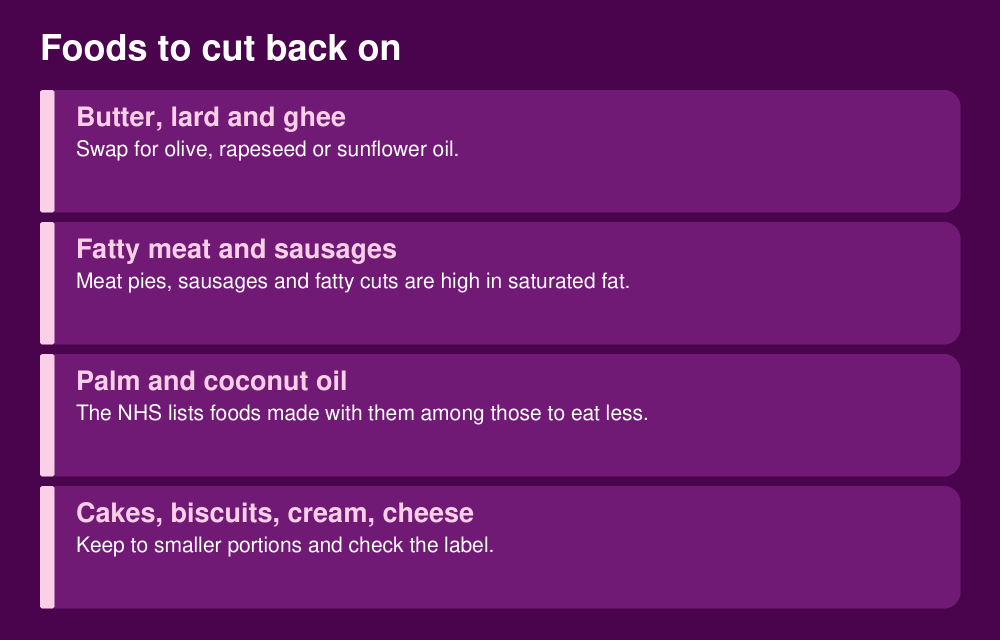
The NHS advice is to eat less food high in saturated fat. Its list includes meat pies, sausages and fatty meat; butter, lard and ghee; cream and cheese; cakes and biscuits; and food containing coconut oil or palm oil. For Nigerian cooking, the practical points are:
- Go easy on palm oil. It adds flavour and colour, but it is high in saturated fat. Use less of it and measure it.
- Trim visible fat from meat, remove skin from chicken, and choose lean cuts. Eat suya, bole, fried plantain and fried meats in smaller portions.
- Cut back on pastry and fried snacks such as meat pie, sausage roll, puff-puff and chin chin, which combine saturated fat and refined carbohydrate.
- Read labels. Look at the saturated fat per 100g and choose lower-fat versions of spreads, yoghurts and cheese.
Lifestyle changes that work alongside food
The NHS advises more than diet alone: be active for at least 150 minutes of moderate activity a week (a brisk walk counts), cut down on alcohol, stop smoking and aim for a healthy weight. Our guides to losing belly fat with Nigerian foods and exercise, managing high blood pressure with a Nigerian diet and Nigerian foods that help control blood sugar overlap with this advice, because heart-healthy eating usually helps all three. For a wider look at traditional dishes, see traditional Nigerian foods and their health benefits.
A simple four-week plan
Small changes that you keep are better than a big overhaul you drop. Try this order:
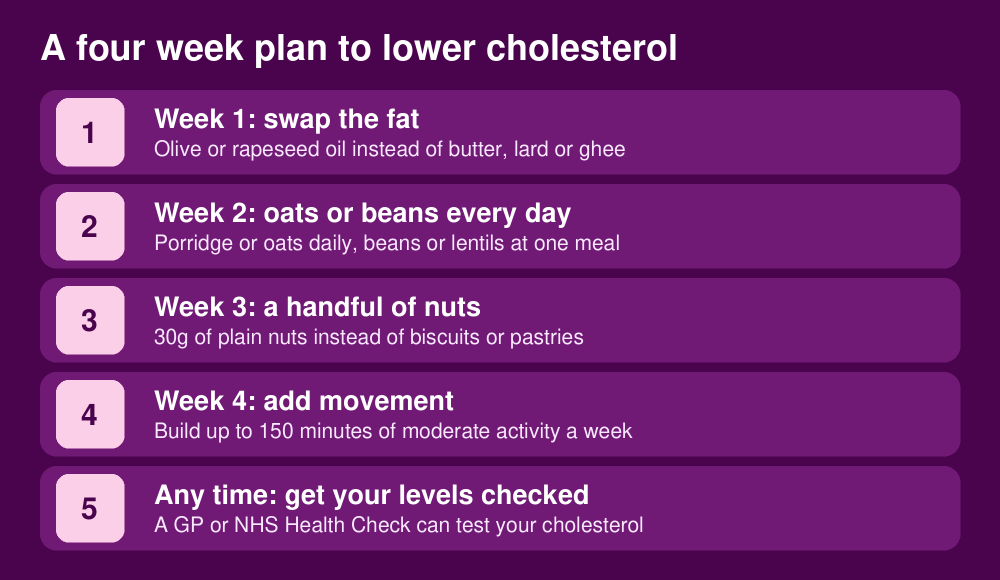
- Week 1, swap the fat. Use olive, rapeseed or sunflower oil in place of butter, lard or ghee, and measure it.
- Week 2, add soluble fibre. Have porridge or an oat-based breakfast most days and beans or lentils in at least one meal.
- Week 3, swap snacks. Replace biscuits and pastries with a handful (30g) of plain nuts or a piece of fruit.
- Week 4, move more. Build up to 150 minutes of moderate activity a week and book a cholesterol check if you have not had one.
When to see a doctor
See your GP if you have never had your cholesterol checked and you are over 40, if you have a family history of early heart disease or stroke, or if you have diabetes, high blood pressure or kidney disease. Very high cholesterol that runs in the family can be an inherited condition that diet alone will not fix, so ask for advice if close relatives had heart attacks at a young age. If your GP prescribes a statin or other medicine, keep taking it. The BHF says that even if you are doing all the right things with your diet, you may still be recommended medication, and that diet will support the treatment and help lower your risk. If you ever have chest pain, breathlessness, or sudden weakness or numbness on one side of the body, call 999.
Frequently asked questions
What is the best food to lower cholesterol quickly?
No single food works quickly on its own. Oats and barley have some of the clearest evidence because of their beta-glucan fibre, but changes usually take weeks and work best as part of an overall swap of saturated for unsaturated fat.
Do oats really lower cholesterol?
Yes, modestly. The BHF says about 3g of beta-glucan a day can help maintain healthy cholesterol, which means roughly two to three portions of oat or barley foods a day. Effects are small to moderate, so combine oats with other changes.
Is palm oil bad for cholesterol?
The NHS lists foods made with palm or coconut oil among those high in saturated fat to eat less often. You do not have to remove it entirely, but use less, measure it and favour olive, rapeseed or sunflower oil for everyday cooking.
Can I lower cholesterol without statins?
Diet and activity can lower cholesterol for many people, but whether you need a statin depends on your overall heart and stroke risk, which only your GP can assess. Never stop a prescribed statin because you have changed your diet.
Are plant stanol and sterol yoghurts worth buying?
They can lower LDL cholesterol by around 7 to 10 percent for people with high cholesterol, according to BBC Food. The BHF notes that they have not been shown to reduce heart attacks or strokes, and they are not a substitute for a healthy diet or medicine. They also cost more than ordinary foods.
How long does it take to lower cholesterol with diet?
Responses vary. Some changes show on a blood test within a few weeks, but your GP will usually recheck after a few months. Keep the habits going, because levels can rise again.
This article is general information and not medical advice. It does not diagnose any condition. Speak to your GP, practice nurse or pharmacist about your own cholesterol and any medicines.
Sources
- NHS: How to lower your cholesterol
- British Heart Foundation: 5 cholesterol-lowering foods
- BBC Food: How to lower cholesterol through diet
- BBC Science Focus: The best way to reduce your cholesterol without statins, according to a leading doctor
Join the discussion
Have you tried this, or do you have a question we did not answer? 1 reader has already shared their view. Naijatipsland members help each other with real, first-hand experience.




Editor’s note: this guide is general information based on NHS, British Heart Foundation and BBC Food guidance, and is not medical advice. High cholesterol often has no symptoms, so the only way to know your level is a blood test. If you take a statin or other medicine, keep taking it and talk to your GP or pharmacist before changing anything. – Ade