Last updated: 22 October 2026 · By Naijatipsland Editorial Team · Editorial policy
Health insurance in Nigeria used to feel like something only people with corporate jobs or deep pockets could access. That’s changing. Between the National Health Insurance Authority’s (NHIA) renewed push for universal coverage and a growing field of private HMOs competing for individual customers, it’s now realistic for most working Nigerians – and even informal workers and families – to get on some form of health cover for a fraction of what a single hospital emergency would cost. Here’s a practical breakdown of what’s available, what it costs, and how to actually sign up.

Why This Matters: Coverage Is Still Low, But Growing
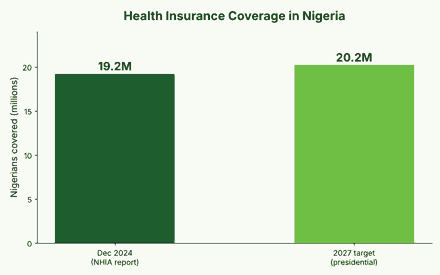
According to an NHIA report covering December 2024, around 19.2 million Nigerians were covered by some form of health insurance – roughly 95% of the way toward the federal government’s 2027 coverage target. That’s real progress, but it also means the vast majority of Nigeria’s population – well over 150 million people – still pay for healthcare entirely out of pocket, often skipping treatment altogether when money is tight. Closing that gap starts with knowing what options actually exist and what they cost.
The Cheapest Individual HMO Plans Right Now
If you’re self-employed, a freelancer, or your employer doesn’t offer health cover, a private Health Maintenance Organisation (HMO) plan is often the fastest route to protection. Prices vary enormously depending on the provider and plan tier, but several NHIA-accredited HMOs now offer genuinely affordable individual plans – some starting below N15,000 a year.

Some of the most affordable plans available
- Healthcare Partners – Treasure Plan: N12,000/year
- Salus Trust – Salus Green Plan: N40,000/year
- United Healthcare – Premium Plan: N44,800/year
- HCI Healthcare – Titanium Compact Plan: N50,700/year
- Avon HMO – Life Plus (Level 2): N65,429/year
- Novo Health – Standard Insurance Plan: N72,292/year
- Clearline HMO – Clear Value Plan: N80,000/year
- AXA Mansard – Bronze Plan: N89,500/year
- SUNU Health – Sapphire Plan: N110,172/year
- Precious HMO – Diamond Plan: N120,000/year
Before picking a plan based on price alone, check exactly what’s covered – outpatient visits, maternity care, surgeries, and which hospitals are in-network near you. The cheapest plan isn’t always the best value if it excludes something you’re likely to need, and provider networks can vary a lot by state and city.
The Government Route: NHIA Enrollment Programmes
Beyond private HMOs, the NHIA runs several structured programmes designed to bring different groups of Nigerians into the national health insurance net – often at lower cost than buying a private plan independently, and sometimes free for the most vulnerable.

GIFSHIP (Group, Individual and Family Social Health Insurance Programme)
This is the main route for self-employed people, informal sector workers, families, and small and medium-sized enterprises (SMEs). Individual enrollment costs roughly N38,718 a year, while a 10-person group plan costs around N220,000, with each additional member beyond that added at roughly N22,000 per person. This is usually the best option for freelancers, traders, artisans, and small business owners who don’t have access to an employer scheme.
OPSSHIP (Organised Private Sector Social Health Insurance Programme)
This applies to private companies with five or more employees, and enrollment is mandatory – the employer registers staff and contributes toward their cover, similar to how pension contributions work. If you work for a mid-sized or larger private company, ask your HR department whether you’re already enrolled; many employees don’t realise they already have this coverage.
State Schemes
Nigeria operates a federal structure, so each state runs its own State Social Health Insurance Agency, and residents can enroll directly through their state’s scheme. Costs, benefits, and accredited facilities vary from state to state, so it’s worth checking your specific state agency’s website or office for local rates and coverage details.
Vulnerable Group Fund
This fund exists specifically to extend free or heavily subsidized coverage to pregnant women, children under five, the elderly, and people with disabilities – groups who are statistically most likely to need care but least likely to afford it. If you fall into one of these categories, or care for someone who does, it’s worth asking your Primary Healthcare Centre or State Agency directly whether you qualify.
How to Actually Enroll: Step by Step
- Confirm which programme fits you – GIFSHIP for self-employed/informal workers and families, OPSSHIP through your employer if eligible, your State Scheme if you prefer a state-run option, or the Vulnerable Group Fund if you qualify.
- Choose an NHIA-accredited HMO (where applicable) – compare plans by cost, benefits, and which hospitals near you are in-network.
- Select a Primary Healthcare Provider (PHP) – this becomes your first point of contact for most routine care and referrals.
- Gather your documents – typically your National Identification Number (NIN), a passport photograph, personal and LGA (Local Government Area) details, and information for any dependants you’re enrolling alongside yourself.
- Submit your application – through the relevant NHIA portal, your chosen HMO, or your State Social Health Insurance Agency office.
- Pay your premium – either as a lump sum annually or, with some providers, in installments.
- Receive your enrollee ID card – this is what you present at accredited facilities to access covered care.
- Note any waiting periods – many plans, especially for maternity and certain surgeries, have a waiting period before those specific benefits activate, so enroll ahead of when you expect to need care.
Choosing Between Options
For most readers, the decision comes down to a few practical questions: Does your employer already offer a scheme? If not, can you afford GIFSHIP’s roughly N38,718 individual annual rate, or would a cheaper private HMO plan like Healthcare Partners’ N12,000 Treasure Plan make more sense as a starting point? And critically – does your chosen plan actually cover the hospitals and treatments you’re likely to use? A plan that’s cheap but excludes your nearest functioning hospital isn’t really saving you money.
If you’re part of a family, it’s often more cost-effective to enroll everyone under one family or group plan rather than buying separate individual policies, since most HMOs and the GIFSHIP group rate offer meaningful discounts per additional member.
The Bottom Line
Nigeria’s health insurance landscape has genuinely more entry points than most people realise – from a N12,000-a-year HMO plan to free coverage for pregnant women and children through the Vulnerable Group Fund. With out-of-pocket healthcare costs capable of wiping out months of savings in a single emergency, even a modest, affordable plan can be the difference between getting timely treatment and delaying care until a manageable problem becomes a serious one. The hardest part is usually just starting the enrollment process – once you’ve picked a programme and gathered your documents, the rest typically takes no more than a few days.
This article is for general informational purposes and reflects HMO pricing and NHIA programme details available at the time of writing. Premiums, plan benefits, and enrollment requirements can change, so confirm current rates and terms directly with your chosen HMO or NHIA office before enrolling.