Last updated: 22 October 2026 · By Naijatipsland Editorial Team · Editorial policy
Feeding a Nigerian family well in 2026 is harder than it was even two years ago. Staple prices keep climbing, protein is often the first thing to disappear from the plate when money is tight, and many households are quietly eating less varied, less nutritious food just to make it to the next pay day or the next market day. The good news is that “affordable” and “healthy” are not opposites — with the right choices, a Nigerian family can eat well on a realistic weekly budget. This guide breaks down what food actually costs right now, where the average Nigerian diet is falling short nutritionally, and gives you a practical 7-day meal plan built around the staples you already know, at prices you can plan around.
What Nigerian staple foods actually cost in September 2026
Before you can build a budget, you need real numbers. Based on market price tracking for September 2026, here is what the core staples behind almost every Nigerian meal plan were going for:
- Rice (50kg bag): ₦51,571
- Beans, Oloyin variety (50kg bag): ₦75,000
- White garri (50kg bag): ₦19,500
- White maize (50kg bag): ₦40,000
- Pepper, medium bag: ₦40,000
- Plantain, small bunch: ₦3,000
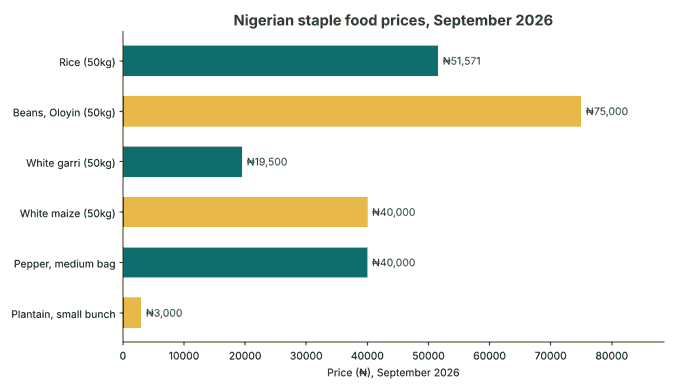
A few things jump out immediately. Garri remains the cheapest calorie source by far, which is exactly why it still anchors so many Nigerian households’ meal plans — a 50kg bag works out to roughly ₦390 per kilogram, compared to over ₦1,000 per kilogram for rice and a staggering ₦1,500 per kilogram for beans. Beans, unfortunately, has become one of the most expensive sources of plant protein in the average kitchen, which has real consequences for how much protein Nigerian families are actually eating — more on that below.
Pepper at ₦40,000 a medium bag is also worth planning around rather than buying in small daily quantities, since bulk-buying and drying or blending-and-freezing pepper in batches can cut your per-meal cost noticeably compared to buying tomatoes and fresh pepper from a roadside seller every other day.
Nigeria’s hidden protein gap
This is the part of “affordable healthy eating” that gets skipped the most, and it shouldn’t be. The Food and Agriculture Organization (FAO) recommends a minimum of about 53.8 grams of protein per day for an average adult. The average Nigerian adult is currently eating closer to 45.4 grams a day — a shortfall of roughly 8.4 grams, or about 16% below the recommended minimum.
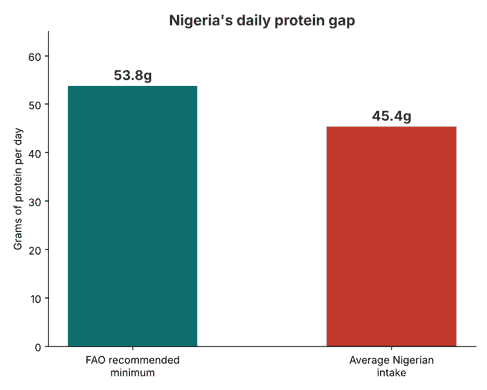
That gap matters more than it might sound. Protein is what keeps children growing properly, keeps adults energised through long work and school days, and supports recovery from illness. It’s also the macronutrient families cut first when budgets tighten, because protein sources — meat, fish, eggs, beans — are almost always the priciest items in the pot. The meal plan below is deliberately built to close that gap without blowing up your food budget, by leaning on the most cost-efficient protein sources available: eggs, dried fish, groundnuts, and beans used strategically rather than daily.
A 7-day affordable, protein-smart meal plan
This plan assumes a family of four to six and is built around bulk-bought staples (rice, garri, beans, maize) stretched across the week, with protein rotated so no single expensive item (like beans or fish) is relied on every single day.
Monday
Breakfast: Pap (maize) with a boiled egg and groundnuts.
Lunch: Garri and vegetable soup with dried fish.
Dinner: Rice and beans (ẹwa riro) with fried plantain.
Tuesday
Breakfast: Bread and akara (bean cakes), fried in small batches to stretch the bean supply.
Lunch: Jollof rice with vegetables, small portion of chicken or fish.
Dinner: Yam porridge (asaro) with dried fish and vegetables.
Wednesday
Breakfast: Pap with groundnut and a boiled egg.
Lunch: Garri with okra soup and dried fish.
Dinner: Beans and plantain (beans porridge) with a side of fried egg.
Thursday
Breakfast: Boiled plantain and egg sauce.
Lunch: White rice with stew, vegetables, and a small portion of beef or fish.
Dinner: Maize and beans (adalu) with palm oil and pepper.
Friday
Breakfast: Pap with akara.
Lunch: Garri with vegetable soup (ugwu or waterleaf) and dried fish.
Dinner: Rice and stew with plantain, egg added for extra protein.
Saturday
Breakfast: Yam and egg sauce.
Lunch: Beans and rice (combined to stretch both) with fried plantain.
Dinner: Semovita or garri with egusi soup and dried fish.
Sunday
Breakfast: Bread, egg, and tea.
Lunch: Jollof rice with chicken or beef — the one “special” protein-heavy meal of the week.
Dinner: Light vegetable soup with garri, leftover protein from lunch.
Notice the pattern: eggs and groundnuts (the cheapest reliable protein sources) appear almost daily, beans appears in concentrated portions rather than every meal, and the one meat- or fish-heavy “treat” meal is reserved for Sunday lunch, when the family can enjoy it together and the cost is absorbed once rather than spread thin and still not covering the week.
What this actually costs per week
Putting the staple prices above into real weekly numbers, here’s what a staple-heavy meal plan like this one costs by household size:
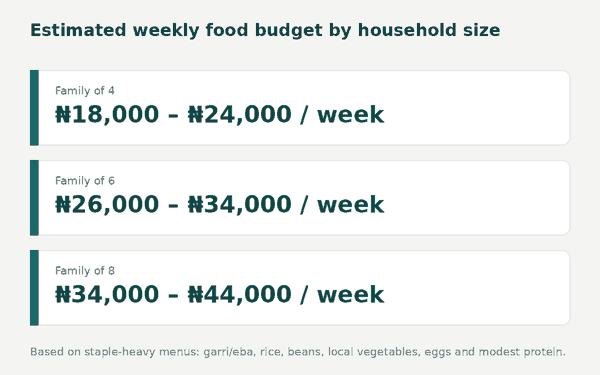
- Family of 4: ₦18,000 – ₦24,000 per week
- Family of 6: ₦26,000 – ₦34,000 per week
- Family of 8: ₦34,000 – ₦44,000 per week
These ranges assume garri, rice, beans, and maize bought in 50kg bags (which lowers the per-meal cost significantly compared to buying in smaller daily or weekly quantities), vegetables and pepper bought in bulk and preserved, and protein sources rotated as shown in the meal plan above rather than eaten at every meal.
Five ways to stretch your food budget further
- Buy staples in 50kg bags, not derica or small bags. The price-per-kilo difference between a 50kg bag of rice or beans and buying small daily portions can be 20–30%. If you can’t afford a full bag alone, splitting one with a neighbour or relative is still cheaper than buying small.
- Batch-process your pepper and tomatoes. Blend and freeze in weekly portions when prices dip, rather than buying fresh (and often more expensive) pepper every few days.
- Use eggs and groundnuts as your everyday protein, not meat or fish. They’re far cheaper per gram of protein and close most of the protein gap discussed above without breaking the budget.
- Rotate beans instead of making it a daily staple. At ₦75,000 per 50kg bag, beans is now one of the costliest items in the average Nigerian kitchen. Use it 2–3 times a week in combination dishes (beans and rice, beans and plantain) rather than as a standalone daily dish.
- Plan one “protein day” rather than spreading meat thin all week. A concentrated Sunday meal with meat or fish, as shown in the plan above, feels more satisfying and nutritionally complete than tiny unsatisfying scraps of meat spread across seven days.
The bottom line
Feeding a Nigerian family affordably and healthily in 2026 is absolutely possible — it just requires planning around real prices rather than guessing, and being deliberate about where protein comes from rather than letting it disappear from the plate first when money gets tight. Use the weekly budget ranges above as your starting point, adjust the meal plan to your family’s taste and local prices, and revisit it every month or two as staple prices shift.