
How to Improve Your Memory and Concentration (2026): Evidence-Based Habits That Work

Last updated: 10 November 2026 · By Naijatipsland Editorial Team · Editorial policy
Forgetting where you kept your phone, reading the same page three times, or losing your train of thought in the middle of a meeting is something almost everyone experiences. For students preparing for exams, workers juggling two jobs and Nigerians abroad balancing shifts, study and family, a sharper memory and steadier focus can change how a week feels. This guide pulls together the habits that have the best support, explains how to use them in everyday Nigerian and diaspora life, and tells you clearly when forgetfulness is a reason to speak to a doctor.
Quick answer: protect your sleep, move your body most days, eat regularly, study with active recall and spaced repetition rather than rereading, work in short single-task blocks with your phone out of reach, and manage stress. If memory problems are new, getting worse or worrying you, see a GP or doctor.
Why memory and concentration slip
Memory and attention are not fixed traits. They respond to how much you sleep, how stressed you are, how often you are interrupted and how you learn new material. Common everyday causes of poor focus include short or broken sleep, constant phone notifications, skipping meals, long periods of sitting, worry about money or visas, and trying to do several tasks at once. The encouraging part is that most of these are things you can change without spending money.
1. Protect your sleep first
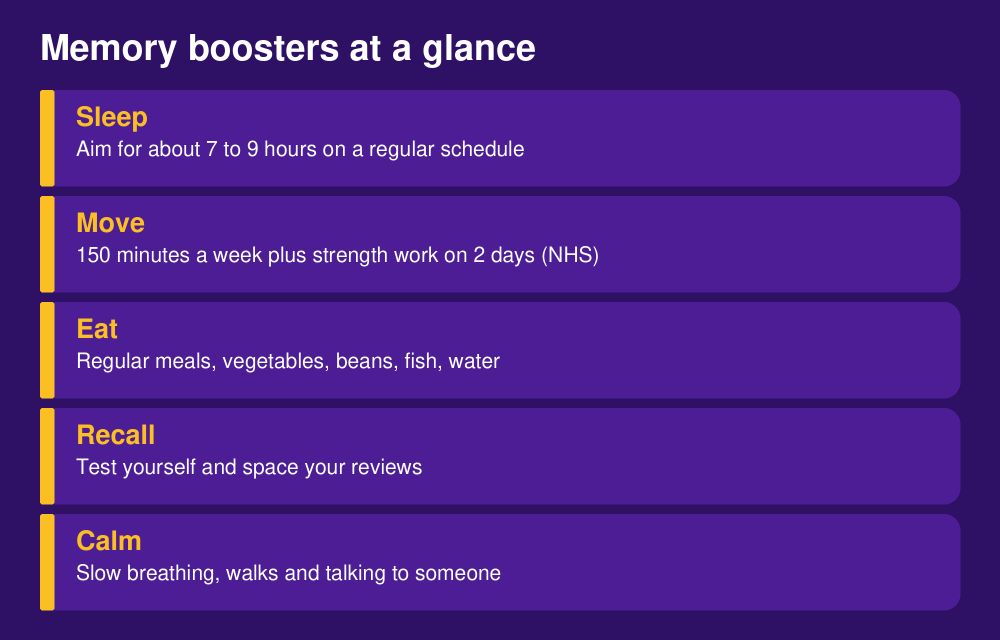
Sleep is when the brain sorts what you learned during the day. Most adults are advised to aim for roughly seven to nine hours a night. Keep a regular bedtime and wake time, keep the bedroom dark, cool and quiet, and stop looking at your phone for the last 30 to 60 minutes before bed. If heat, noise or generator hours make this hard, a simple eye mask and earplugs are cheap fixes. Our guide to natural ways to improve sleep and reduce stress covers this in more detail.
2. Move your body most days
The NHS recommends that adults aged 19 to 64 do at least 150 minutes of moderate-intensity activity a week, or 75 minutes of vigorous activity, plus muscle-strengthening activities on at least two days a week. Brisk walking, dancing, cycling, football with friends or a home workout all count. Exercise before study or work is a practical way to feel more alert, and breaking up long periods of sitting helps too.
3. Eat regularly and drink enough water
The brain needs a steady supply of energy. Long gaps without food, then a heavy meal, can leave you tired and unable to concentrate. Build meals around beans, vegetables, fish or eggs, whole grains and fruit, and drink water through the day. Many familiar Nigerian meals can fit this pattern, for example beans with vegetables, ugwu or efo soup with fish, or oats and fruit for breakfast. For a food-focused plan, see our guide to managing high blood pressure with a healthy Nigerian diet, which uses the same balanced approach. No single food or supplement has been shown to boost memory in healthy adults, so be cautious about products that promise a miracle.
4. Study in ways that actually build memory
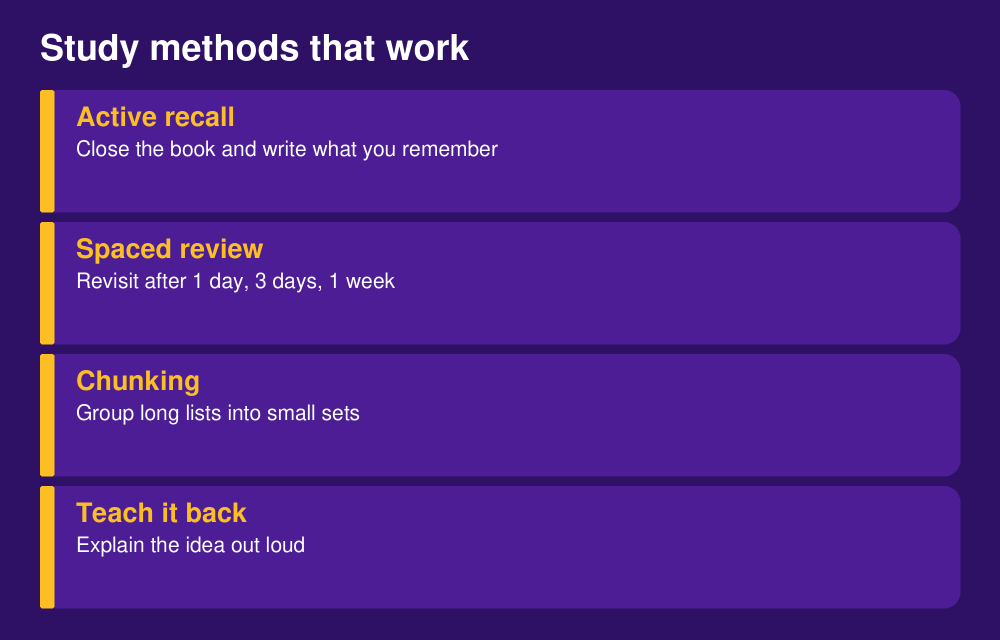
Rereading and highlighting feel productive but are weak. Methods with stronger support are:
- Active recall: close the book and write down or say everything you remember, then check.
- Spaced repetition: review the same material after one day, three days, a week and a month instead of cramming.
- Chunking: group long lists into small meaningful sets, as we do with phone numbers.
- Teaching it back: explain the idea out loud to a friend or to yourself.
- Linking new facts to things you know: pictures, stories and examples from your own life make facts stick.
5. Train your attention with single-task blocks
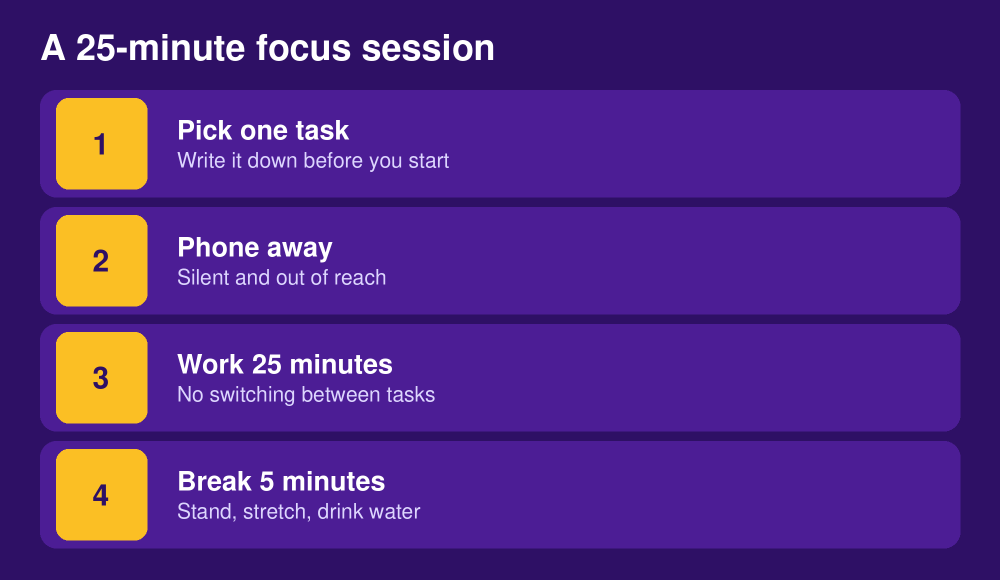
Switching between tasks costs time and focus. A simple method is the 25-minute block: choose one task, put your phone in another room or on silent, work for 25 minutes, then take a five-minute break away from the screen. After four blocks, take a longer rest. Write a short list of your top three tasks each morning so you do not have to remember them. Using a notebook, calendar reminders or a notes app is not cheating; it frees your mind for thinking.
6. Manage stress and worry
Stress competes for the same mental space you need to learn and recall. Slow breathing, a short walk, talking to someone you trust, prayer or meditation if that suits you, and writing worries down before bed can all reduce the load. If you are carrying heavy pressure, our list of mental health support resources for Nigerians shows where to turn, and the tips on managing stress when working from home may help.
7. Stay mentally and socially active
Learning something new, reading, playing games with others, volunteering and keeping up friendships all keep the mind engaged. If you are improving your language skills for study or work abroad, see our guide to IELTS vs PTE vs TOEFL for a goal to aim at.
A simple daily routine
- Wake at a regular time and take ten minutes of daylight and movement.
- Eat breakfast and write your top three tasks.
- Do your hardest work in one or two 25-minute blocks with the phone away.
- Walk for 20 to 30 minutes at some point, and strength-train twice a week.
- Review what you learned that day using recall, without notes, for five minutes.
- Wind down screens early and keep a regular bedtime.
When to see a doctor
Everyone forgets things sometimes, and tiredness, stress, low mood, some medicines and other health conditions can all affect memory. The NHS advises seeing a GP if someone is becoming increasingly forgetful, particularly alongside growing difficulty with tasks that need concentration or planning, changes in personality or mood, periods of confusion, or trouble finding words or following conversations. A GP can ask about how symptoms developed, may do a memory test and examination, and may arrange blood tests to look for other causes. Early assessment matters. If you are in the UK and need advice, the Dementia UK Admiral Nurse helpline is 0800 888 6678 and the Alzheimer’s Society support line is 0333 150 3456. In Nigeria, speak to a doctor at a hospital or primary health centre. This article is general information and is not a diagnosis; it does not replace advice from a qualified health professional.
FAQ
How long does it take to improve memory?
Better sleep and less multitasking can help within days. Study habits such as spaced repetition show their benefit over weeks. Be patient and consistent.
Do brain games and supplements work?
Practising a game makes you better at that game, but evidence that it transfers to everyday memory is limited. No supplement is proven to boost memory in healthy adults. Ask a pharmacist or doctor before taking any.
Is forgetfulness a sign of dementia?
Usually not. Stress, poor sleep and busy lives are far more common causes. See a GP if it is new, getting worse or worrying you.
How can I concentrate when studying with noise or power cuts?
Use short blocks, earplugs or headphones, study at fixed times and keep a charged power bank and printed notes as backup.
Does exercise really help concentration?
Regular activity supports general health and many people feel more alert after it. Follow the NHS targets of 150 minutes a week plus strength work on two days.
Sources
- NHS: Physical activity guidelines for adults aged 19 to 64
- NHS: Worried about memory loss or dementia
Join the discussion
Have you tried this, or do you have a question we did not answer? 1 reader has already shared their view. Naijatipsland members help each other with real, first-hand experience.









Thanks for reading. Which habit will you try first this week? Tell us below and share the guide with someone who is revising for exams. – Ade Adeniyi