Last updated: 22 October 2026 · By Naijatipsland Editorial Team · Editorial policy
Ask any Nigerian doctor what’s filling their waiting rooms these days, and chances are “lifestyle” conditions — hypertension, diabetes, heart disease — will top the list. These aren’t imported diseases. They’re rising fastest in the very places where our traditional diets are being squeezed between convenience, cost, and changing habits. Understanding exactly how what’s on our plates connects to what shows up on a blood pressure cuff or a glucose meter is the first step to doing something about it.
Hypertension Has Exploded in a Single Generation
The numbers are hard to ignore. Nigeria’s first major national health survey in 1995 put hypertension prevalence at roughly 4.3% of adults. By 2025, the State of Health of the Nation Report estimated that 35% to 40% of Nigerian adults are living with hypertension — an almost tenfold increase within one generation.
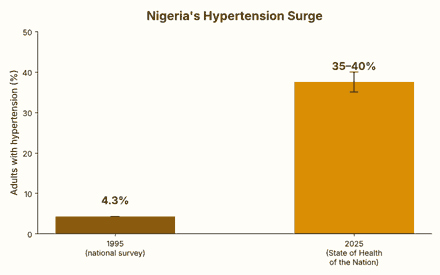
That kind of jump doesn’t happen because of genetics changing in 30 years. It happens because of what — and how much — people are eating, how little they’re moving, and how much stress modern urban life piles on. Diet is one of the biggest levers in that equation, and Nigerian diets have shifted substantially even as some traditional staples remain unchanged.
Salt: The Quiet Driver of High Blood Pressure
Salt is probably the single biggest dietary contributor to hypertension in Nigeria, and most people have no idea how much they’re actually consuming. The World Health Organization recommends no more than 5 grams of salt a day — about one level teaspoon. Studies estimate that typical Nigerian intake ranges from 2.8 to as high as 10 grams a day, meaning many Nigerians are consuming double the recommended limit or more.

The surprising part is where that salt actually comes from. Experts estimate that more than 70% of sodium intake in Nigeria comes not from the salt shaker at home, but from industrially processed and pre-packaged foods: seasoning cubes (a near-universal ingredient in Nigerian cooking), bread, instant noodles, canned goods, sauces, and processed meats. Add to that the sodium hidden in restaurant meals and popular street foods like suya and kilishi, plus flavor enhancers like MSG, and it becomes clear why cutting back on “adding salt” alone barely moves the needle.
Where the sodium really hides
- Seasoning cubes — used in nearly every Nigerian soup, stew, and jollof rice, often in multiples per pot
- Dried fish and stockfish — a staple in many soups, but naturally high in sodium from the preservation process
- Bread and bakery products — sodium is used both for flavor and as a preservative
- Instant noodles and canned foods — convenient, but loaded with sodium for shelf stability
- Suya, kilishi, and other seasoned street snacks — flavorful spice blends usually contain significant salt
The Carbohydrate Load of Nigerian Staples
The second major piece of the puzzle is carbohydrate density. Nigerian meals are built around starchy staples — fufu, eba, amala, pounded yam, rice — and these are, nutritionally speaking, very high in carbohydrates with relatively little fiber once processed. A typical “complete” Nigerian meal often combines a heavy starch (eba or pounded yam) with a soup that may itself contain additional starchy thickeners, plus a side of rice or beans on special occasions. Nutritionists generally recommend limiting carbohydrate intake to roughly 60-75 grams per meal for blood sugar stability — a limit that’s easy to blow past when a single wrap of eba or a heaped plate of jollof rice is involved, especially when rice is combined with other starches like beans or potatoes in the same meal.
This matters because repeated carbohydrate spikes, especially from refined and starchy foods eaten in large portions, put sustained pressure on insulin production over years. Combined with low physical activity in sedentary urban jobs, this is a major contributor to the rising rates of type 2 diabetes — currently estimated to affect around 8% of Nigeria’s population, with many more living with undiagnosed prediabetes.
Cooking Oil and Fat Choices
Palm oil is central to much of Nigerian cuisine — it’s the base of banga soup, egusi, and countless stews — and it’s not inherently unhealthy in moderation. The concern arises from the volume used in many dishes, combined with the frequent use of other saturated fats (like excess meat fat left on cuts of beef or goat meat before cooking) and the popularity of deep-fried snacks: plantain chips, chin chin, puff puff, and fried fish or meat eaten several times a week. Over time, this consistent saturated fat load contributes to the kind of arterial stiffening that drives blood pressure up and sets the stage for heart disease.

Practical Changes That Don’t Mean Abandoning Nigerian Food
The goal isn’t to give up jollof rice, egusi, or pounded yam — it’s to adjust how often, how much, and how these dishes are prepared. Small, sustainable swaps add up over months and years:
- Cut back on seasoning cubes gradually — try using one instead of two, and lean more on natural aromatics like ginger, garlic, onions, and local spices such as uziza or ehuru for flavor instead.
- Choose low-sodium or homemade stock where possible, instead of relying entirely on bouillon cubes for soup bases.
- Swap white rice for brown rice occasionally, and mix in more whole grains like millet, sorghum, or bulgur, which offer more fiber and a gentler effect on blood sugar.
- Practice portion control with starches — avoid combining multiple heavy carbohydrate sources (rice, potatoes, and a starchy swallow) in a single meal.
- Add more vegetables to soups and stews — bitter leaf, ugu (pumpkin leaves), spinach, and waterleaf add fiber, volume, and nutrients while displacing some of the starch and fat.
- Trim visible fat from meat before cooking, and reduce the frequency of deep-fried snacks to a few times a week rather than daily.
- Use healthier oils in moderation — canola, groundnut, or olive oil alongside palm oil, rather than relying on palm oil alone in heavy quantities.
- Read labels on packaged foods for sodium content, and limit instant noodles, canned goods, and processed snacks where alternatives exist.
Why This Matters Now
With hypertension affecting over a third of Nigerian adults and diabetes on a clear upward trajectory, the dietary patterns of today are shaping the health outcomes of the next decade. The encouraging news is that these aren’t conditions requiring exotic solutions — they respond well to the kind of gradual, practical dietary shifts described above, combined with regular physical activity and routine blood pressure and blood sugar checks, especially for anyone over 35 or with a family history of either condition.
Nigerian food culture is rich, diverse, and deeply tied to identity — there’s no need to abandon it. But small, informed adjustments to how often certain dishes are prepared, how they’re seasoned, and what accompanies them can meaningfully reduce the long-term risk of hypertension and diabetes, without sacrificing the flavors that make Nigerian cuisine so loved.
This article is for general health information purposes and does not replace professional medical advice. Anyone managing hypertension, diabetes, or related conditions should consult a licensed healthcare provider for personalized guidance.