
How to Learn Cybersecurity From Scratch in Nigeria (2026): Free Resources, Roadmap and Certifications

Last updated: 4 November 2026 · By Naijatipsland Editorial Team · Editorial policy
Cybersecurity is one of the few tech careers where demand is rising even when other hiring slows. Nigerian banks, fintechs, telecoms, government agencies and online businesses all face constant phishing, fraud, ransomware and account-takeover attacks. Industry estimates suggest the country lost around $2.4 billion to cyberattacks in the first ten months of 2024, although such figures vary by source and method. That pressure creates jobs, but it also attracts scammers selling expensive ‘hacking courses’. This guide, written from the UK for readers in Nigeria, explains how to learn cybersecurity from nothing, which free resources are worth your time, what certifications cost, and how to stay on the right side of the law.
Quick answer: learn IT basics, networking and Linux first; practise safely on legal training labs such as TryHackMe; use Cisco Networking Academy’s free introductory course for structure; and only pay for a certification such as CompTIA Security+ once you know the career is for you. Never test techniques on real systems you do not own or have written permission to test.
What does a cybersecurity professional actually do?
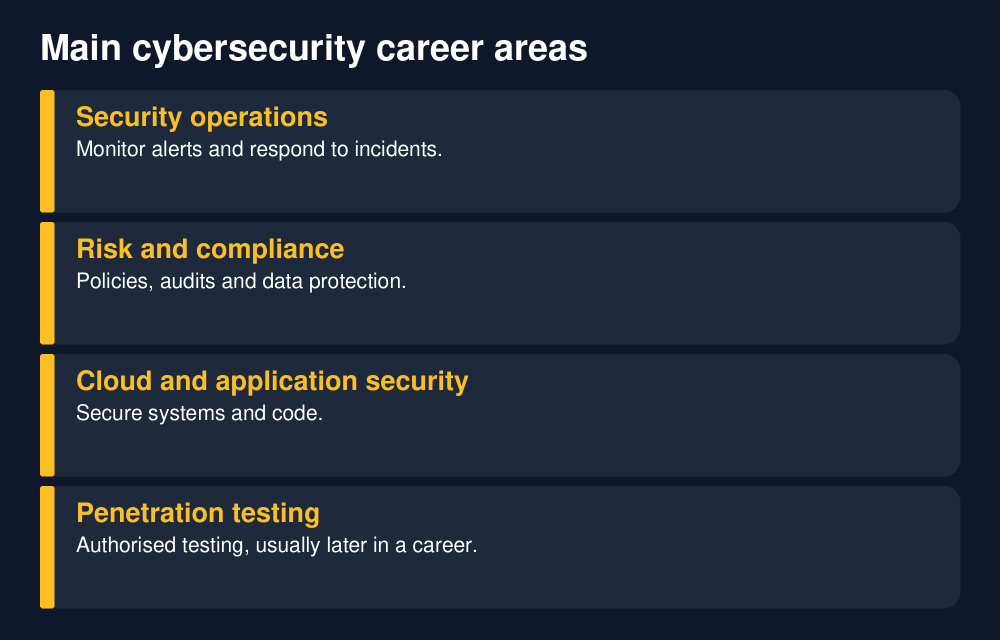
Cybersecurity is not just ‘hacking’. Most entry-level jobs involve watching alerts in a security operations centre, investigating suspicious logins, patching systems, managing user access, running awareness training, reviewing risks, or helping a company meet data protection rules. Offensive roles, such as penetration testing, exist but usually come after years of foundation skills. Knowing the main areas helps you choose: security operations (defending and monitoring), governance, risk and compliance (policy and audits), cloud security, application security and penetration testing.
A step-by-step roadmap for beginners
Step 1: Learn how computers and the internet work
Before security, understand files, operating systems, accounts, browsers, email, and how websites load. If you cannot yet explain what an IP address or a password hash is, start here. Our guide to affordable tech courses for beginners in Nigeria covers free ways to build IT basics, including the 3MTT programme.
Step 2: Learn networking
Networks are where most attacks happen. Learn IP addressing, DNS, HTTP and HTTPS, ports, firewalls and Wi-Fi security. Cisco Networking Academy offers a free Introduction to Cybersecurity course and many networking courses, although its professional certifications, such as CCNA exams, are paid. You can self-study the material for free first.
Step 3: Get comfortable with Linux and the command line
Most security tools run on Linux. Install a Linux distribution in a virtual machine and practise navigating folders, reading logs and managing permissions. Free tutorials and the practice rooms on TryHackMe teach this well.
Step 4: Learn security fundamentals
Study the CIA triad (confidentiality, integrity and availability), common attacks like phishing and SQL injection, encryption basics, multi-factor authentication, and incident response. Our explainer on why cyber security matters in Nigeria gives local context, and our guide to avoiding internet scams in Nigeria shows the social engineering tricks defenders must understand.
Step 5: Practise hands-on in safe labs
TryHackMe uses guided ‘rooms’ and virtual machines to teach hacking and defence step by step; it has both free and paid content. Cybrary offers free introductory courses with a paid tier. Always use legal training platforms. Before you try challenges, set up a virtual machine and keep your own computer updated and protected.

Step 6: Build a small portfolio
Write short notes or blog posts about rooms you complete, document a home-lab project, and explain in plain English how you would secure a small business’s email and social accounts. Employers want evidence that you can learn, communicate and stay ethical.
Free and low-cost learning resources
TryHackMe’s free rooms, Cisco Networking Academy’s introductory cybersecurity course, Cybrary’s free introductions, and the 3MTT cybersecurity track are the main free starting points. The 3 Million Technical Talent programme lists cybersecurity among its first-phase tracks; fellows apply through the official portal, take an entry assessment, and receive hybrid training with no tuition fee in the current phase, while paying their own transport, meals and data. Beware of anyone charging for a ‘guaranteed’ place.
Certifications: what is worth paying for?
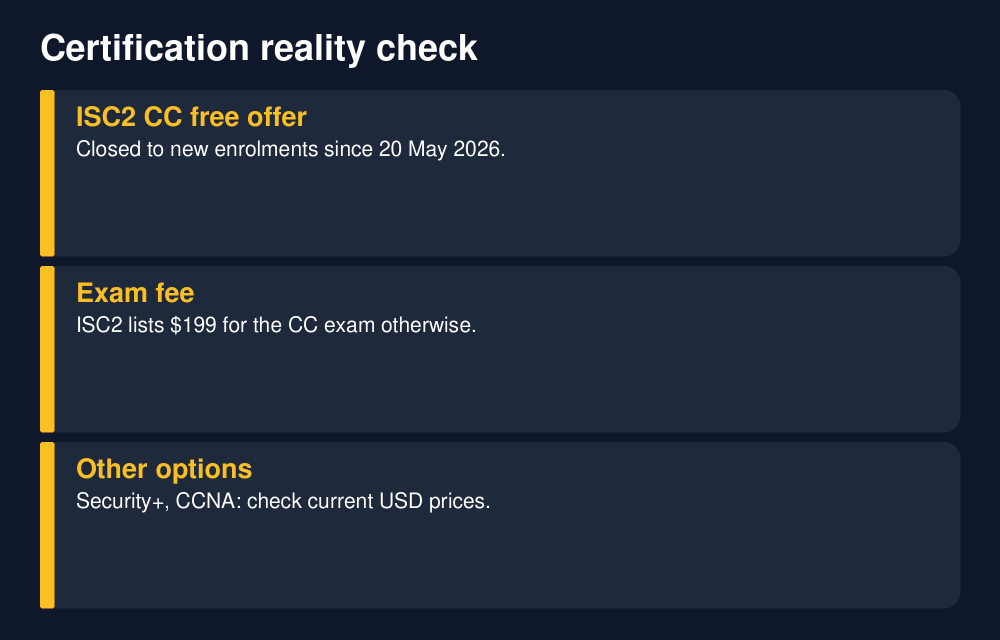
Certifications help recruiters filter candidates, but they cost money in dollars, so be selective. One important update: ISC2’s free ‘One Million Certified in Cybersecurity’ programme has closed to new enrolments since 20 May 2026, and no new free exam codes are being issued. People holding unexpired codes may still sit the Certified in Cybersecurity exam until 31 December 2026. Otherwise the exam is paid; ISC2 lists a fee of $199, plus a $50 annual maintenance fee for members after passing. Other common entry-level routes include CompTIA Security+, Cisco’s CCNA for networking, and cloud fundamentals certificates from major providers. Prices change and are quoted in dollars, so check each provider’s official page before paying. Do not buy exam ‘dumps’ or pay agents to sit exams for you; that can get you banned and ruin your reputation.
Cybersecurity careers and pay in Nigeria
Entry-level roles include SOC analyst, IT security officer, junior risk or compliance analyst, and help-desk roles that lead into security. One training-provider estimate puts entry-level cybersecurity and tech pay in Nigeria at roughly ₦4 million to ₦6 million a year, but salaries vary widely by employer, city and skill, and such figures should be treated as a rough guide rather than a promise. Remote work for foreign companies can pay more in dollars but is competitive; see our guide to remote jobs for Nigerians paid in dollars. Industry bodies also describe a skills gap, with demand rising for cloud security, identity management and penetration testing.
Stay legal: Nigeria’s cybercrime rules
Learning to attack systems is only legal in controlled settings. Nigeria’s Cybercrimes (Prohibition, Prevention, etc.) Act, amended in 2024, criminalises unauthorised access to computers and other offences. Only practise on training platforms, your own devices, or systems where you have clear written permission. Also learn how personal data must be handled; our guide to data privacy in Nigeria and your rights under the NDPA 2023 explains the basics. This is general information, not legal advice.
Protect yourself while you learn
Use strong unique passwords and a password manager, turn on multi-factor authentication, keep software updated, download tools only from official sources, and never run suspicious files on your main computer. Be wary of ‘cracked’ software and ‘free hacking tools’ from random Telegram groups; they often contain malware aimed at beginners. Use a VPN and virtual machine as appropriate for lab work.
Studying on Nigerian data and power
Prefer text-based lessons, download large files and virtual machine images on Wi-Fi, and compare bundles using our guides to Airtel data plans and Glo data plans. A laptop with at least 8GB of RAM makes virtual machines workable. Keep a power bank and study in short regular sessions.
Related guide (updated 4 November 2026): Free Websites to Learn Programming in Nigeria (2026): Best Sites, Learning Paths and Data-Saving Tips — free programming websites.
Related guide (updated 4 November 2026): Best Artificial Intelligence Courses for Beginners in Nigeria (2026): Free and Paid Options — beginner AI courses.
Frequently asked questions
Can I learn cybersecurity from scratch with no IT background?
Yes, but start with IT and networking basics. Most beginners need several months of steady study before they are ready for entry-level applications.
Is cybersecurity free to learn in Nigeria?
Much of the learning is free through TryHackMe’s free content, Cisco Networking Academy’s introductory course, Cybrary’s free introductions and 3MTT. Certifications and some advanced labs cost money.
Is the free ISC2 Certified in Cybersecurity exam still available?
Not for new enrolments. ISC2 closed the programme from 20 May 2026. Only holders of unexpired exam codes can still sit the exam, until 31 December 2026.
Do I need to learn coding for cybersecurity?
Not for every role, but basic Python and scripting help a lot, especially in security operations and automation.
Is ethical hacking legal in Nigeria?
Only with authorisation. Practise on legal lab platforms or systems you own, and never test other people’s systems without written permission.
Which certification should I get first?
Many beginners consider CompTIA Security+ or an entry-level vendor-neutral certificate after building basics, but check current prices and whether employers in your target role ask for it.
How long does it take to get a cybersecurity job?
Commonly six to twelve months of focused study and practice for entry-level roles, though it varies with prior experience and the job market.
Disclaimer: this guide is general information based on providers’ official pages and recent published reports available on 4 November 2026. Programmes, exam fees and salary estimates change often and dollar prices move with the exchange rate, so confirm details with each provider before paying. Providers named are examples, not endorsements. Nothing here is legal advice.







Ade Adeniyi here: please practise only on legal training platforms and systems you own. Note that the ISC2 free exam offer has closed to new sign-ups. Tell us which area of cybersecurity interests you most and I will help point you in the right direction.
Ade Adeniyi here: please practise only on legal training platforms and systems you own. Note that the ISC2 free exam offer has closed to new sign-ups. Tell us which area of cybersecurity interests you most and I will help point you in the right direction.