
Free Websites to Learn Programming in Nigeria (2026): Best Sites, Learning Paths and Data-Saving Tips

Last updated: 4 November 2026 · By Naijatipsland Editorial Team · Editorial policy
You do not need a computer science degree, a bootcamp loan or a dollar card to learn programming. Some of the best coding education in the world is free online, and Nigerians already use it to build websites, apps, data skills and remote careers. The real obstacles are different: choosing where to start, not drowning in tutorials, and keeping going when data is expensive and electricity is unreliable. This guide, written from the UK for readers in Nigeria, reviews the most useful free programming websites, explains who each is best for, and gives a practical way to study without wasting money or megabytes.
Quick answer: for most beginners, start with freeCodeCamp or The Odin Project for web development, add CS50 if you want strong fundamentals, and use MDN Web Docs and JavaScript.info as references. If you want guided classes with a Nigerian cohort, apply to the Federal Government’s 3MTT programme, which has a software development track at no tuition cost.
The best free websites to learn programming
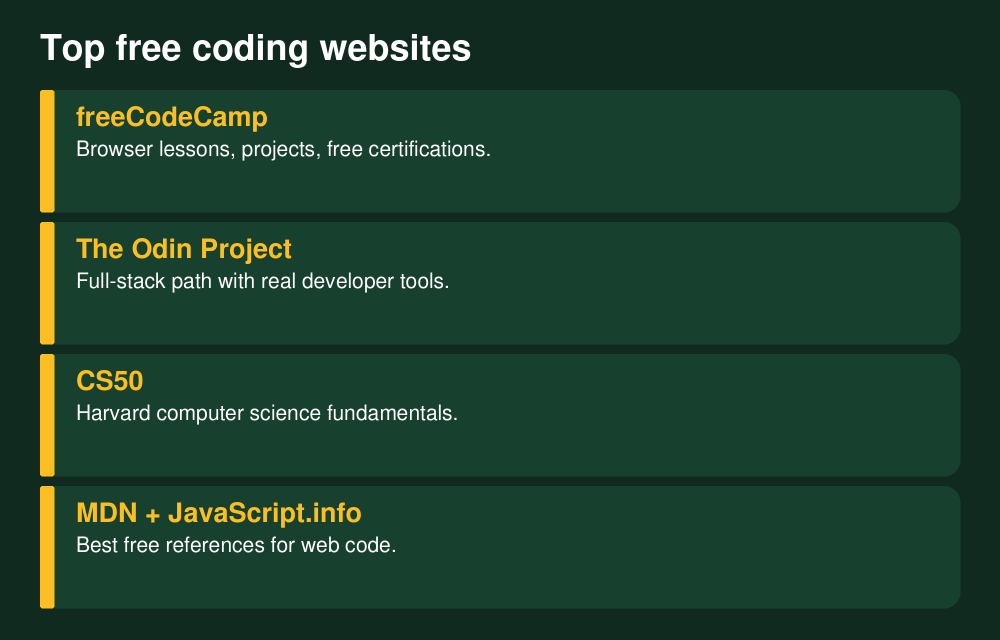
1. freeCodeCamp
freeCodeCamp teaches web development, Python, data analysis, machine learning and more through interactive lessons and projects in the browser, with free certifications earned by completing projects. It is friendly to beginners because you can start straight away with no setup. The downside is that browser-based exercises are more guided than real life, so you should also build projects on your own computer. Visit freecodecamp.org.
2. The Odin Project
The Odin Project is a free, open-source full-stack curriculum, mainly JavaScript, that makes you use real tools such as a code editor, Git and the terminal. It is harder than a click-and-type site, but you finish with skills closer to real jobs. It suits self-disciplined learners who want a complete path. Find it at theodinproject.com.
3. CS50 (Harvard)
CS50 is Harvard’s famous introduction to computer science, free to follow online. It covers how computers work and teaches C, Python, SQL, HTML, CSS and JavaScript. It is not a web-development shortcut and the pace speeds up in later weeks, but it builds the problem-solving habits that make everything else easier. A free certificate may need a paid option, so check the current terms on the course page.
4. MDN Web Docs (Mozilla)
MDN is the standard reference for HTML, CSS, JavaScript and web APIs, with beginner guides too. It has no projects or progress tracking, so use it beside a project-based course rather than instead of one.
5. JavaScript.info
A clear, free tutorial that takes you from JavaScript basics to advanced topics. It is JavaScript only, but it explains ideas well. It is also light on data, because it is mostly text.
6. Full Stack Open (University of Helsinki)
A free, modern course covering React, Node.js, GraphQL, TypeScript and databases. It is excellent after you know the basics, and its focus on building real applications helps with portfolios.
7. Exercism
Exercism offers coding exercises in dozens of languages with free feedback from volunteer mentors. It is better for practising a language you already know than for learning programming from nothing.
8. Khan Academy
Khan Academy teaches programming through drawing and animation, which suits visual and younger learners, and works well for building confidence.
9. Codecademy free tier
Codecademy’s free plan is a gentle taste of coding in the browser, but it is limited and not deep enough to get you hired on its own. Use it to test whether you enjoy programming.
10. 3MTT software development track
The 3 Million Technical Talent programme lists software development among its first-phase tracks, alongside AI and machine learning, cloud computing, data science, cybersecurity, DevOps, UI/UX design and more. Applicants sign up on the official portal, take an entry assessment, and receive hybrid training with no tuition fee in the current phase. Fellows pay their own transport, meals and other costs. Do not pay anyone for a place. Our guide to affordable tech courses for beginners in Nigeria explains 3MTT and other routes in more detail.
Which language should a beginner choose?
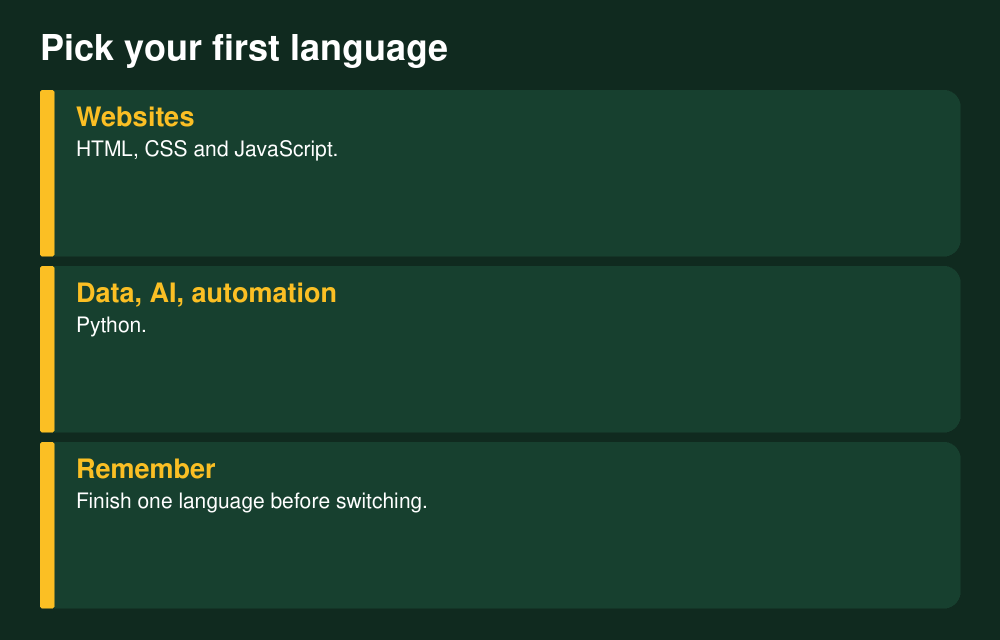
Do not agonise. If you want websites, learn HTML, CSS and JavaScript. If you want data analysis, automation or AI, start with Python. If you want Android apps, Kotlin comes later, after the basics. The first language matters less than finishing one properly, because concepts such as variables, loops, functions and debugging carry across languages.
A simple 12-week learning path
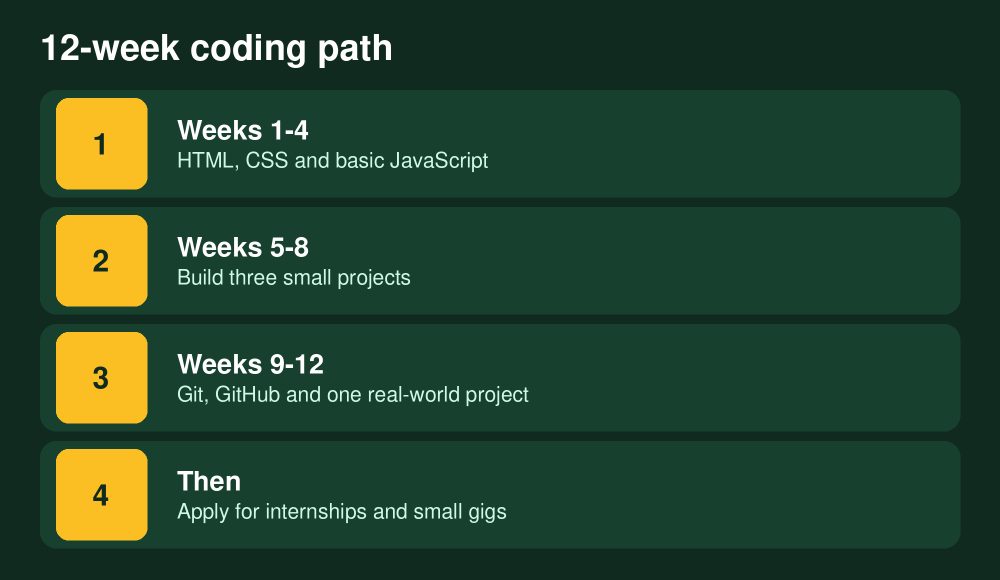
Weeks one to four: HTML, CSS and basic JavaScript on freeCodeCamp or The Odin Project’s foundations. Weeks five to eight: build three small projects, such as a personal page, a calculator and a to-do app, and put them on GitHub. Weeks nine to twelve: learn Git properly, build one project that solves a real local problem, such as a price list for a shop or a booking page, and start applying for internships, volunteer work or small freelance jobs. Do not wait until you feel ‘ready’; nobody does.
How to study with expensive data and unreliable power
Choose text-heavy sites first, because articles use far less data than video. Download videos on Wi-Fi at a campus, library or office and watch offline. Compare network bundles before you buy: see our guides to Airtel data plans and Glo data plans. Many editors, such as VS Code, work offline once installed, and Python and documentation can often be saved locally. Keep a power bank, note your light schedule, and study offline in the hours when electricity is on. Short, regular sessions of 45 to 90 minutes beat occasional all-night marathons.
What equipment do you need?
You can begin on a smartphone with browser-based lessons, but real progress needs a laptop. A used laptop with 8GB of RAM and an SSD is a sensible target. If you cannot afford one yet, use a school, library or a trusted friend’s laptop for a few hours a week while continuing theory on your phone.
Turning programming skills into income
Free learning only matters if it leads somewhere. Build a small portfolio, keep a clean GitHub profile, and take on tiny paid tasks, such as fixing a local business’s website. When you are ready, read our guides to the best freelance websites for Nigerians, how to receive international payments as a freelancer and remote jobs for Nigerians paid in dollars. Also read our digital skills checklist for Nigerian professionals for the non-coding skills employers expect.
Mistakes to avoid
Tutorial hell is the biggest trap: watching lesson after lesson but never building anything. Copy-pasting code without understanding it is another. Switching languages every week is a third. And watch out for paid ‘guaranteed job’ programmes with no public syllabus, vague instructors and pressure to pay immediately. If something sounds too good to be true, check our guide on how to avoid internet scams in Nigeria.
Related guide (updated 4 November 2026): Best Artificial Intelligence Courses for Beginners in Nigeria (2026): Free and Paid Options — beginner AI courses.
Related guide (updated 4 November 2026): How to Learn Cybersecurity From Scratch in Nigeria (2026): Free Resources, Roadmap and Certifications — learning cybersecurity from scratch.
Frequently asked questions
Can I really learn programming for free in Nigeria?
Yes. freeCodeCamp, The Odin Project, CS50, MDN, JavaScript.info and Full Stack Open are free to study, and 3MTT offers tuition-free training. You may still need to pay for data, a laptop, and optional certificates.
Which website is best for a complete beginner?
freeCodeCamp is the easiest to start because you can code in the browser immediately. The Odin Project is better once you are ready to use real tools.
Do I need a laptop?
Not on day one, but you will need one for serious projects. Start with whatever you have and upgrade when you can.
How long does it take to learn programming?
Most people can learn the basics in two to three months of steady part-time study, and need six to twelve months for entry-level skills, depending on time and practice.
Which programming language should I learn first?
JavaScript for web development or Python for data, automation and AI. Both have large free communities.
Are free certificates worth it?
They help show commitment, but projects matter more. Employers and clients want to see what you have built.
How do I save data while learning?
Prefer text lessons, download videos on Wi-Fi, lower video quality, and use offline tools like VS Code.
Disclaimer: this guide is general information based on providers’ official pages and recent published reviews available on 4 November 2026. Course content, features, certificate terms and programme intakes change often, so confirm details on each website before relying on them. Websites named are examples, not endorsements.








Ade Adeniyi here: pick ONE site from this list and stay with it for four weeks before trying another. Tutorial-hopping is the real enemy. Tell us which language you are learning and how you cope with data and light, and let us share tips.
Ade Adeniyi here: pick ONE site from this list and stay with it for four weeks before trying another. Tutorial-hopping is the real enemy. Tell us which language you are learning and how you cope with data and light, and let us share tips.