Last updated: 30 October 2026 · By Naijatipsland Editorial Team · Editorial policy
Freelancing is one of the most realistic ways for Nigerians to earn from international clients without leaving the country. Writers, designers, developers, video editors, virtual assistants and customer-support agents all sell their skills online. But the platform you choose affects how much you keep, how quickly you find work and how safely you get paid. This guide compares the main freelance websites, explains their fees as published on their own sites, covers how Nigerians receive foreign payments, and warns about common scams. Checked 30 October 2026. Fees and rules change, so confirm on each platform before you sign up. Earnings are never guaranteed and depend on your skill, niche and effort.
Quick comparison

1. Upwork
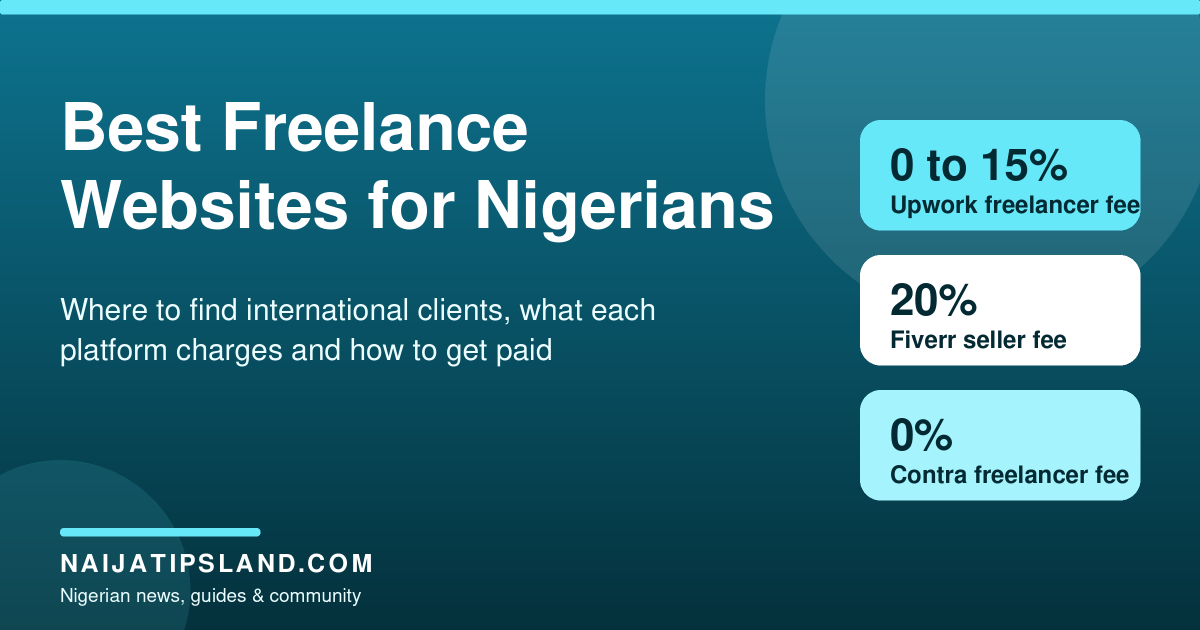
Upwork is the biggest general marketplace, with jobs in writing, design, software development, marketing, admin support and more. Freelancers pay a variable service fee of 0% to 15% per contract, depending on contract type and market conditions, according to Upwork. Clients pay their own service fee on top. Direct contracts with existing clients carry a 5% fee on the basic plan or 0% on Freelancer Plus. You spend “Connects” to apply for jobs, so write targeted proposals instead of mass-applying.
Good for: skilled freelancers who can build a profile and reviews over time. Watch out for: heavy competition on beginner jobs and fake job posts.
2. Fiverr
On Fiverr you create “gigs”, which are fixed-price packages that clients browse and buy. Fiverr takes a 20% commission on each order, according to Fiverr and third-party fee guides, and this applies to tips and extras too. Withdrawals may carry a small fee depending on the method.
Good for: people with a clear, repeatable service such as logo design, voice-over, video editing or proofreading. Watch out for: the higher commission and slow starts for new sellers.
3. Freelancer.com
Freelancer.com lets you bid on projects. The site lists a 10% fee on hourly projects, and for fixed-price projects 10% or $5, whichever is greater. There is a free tier with limited monthly bids, and paid memberships and bid packs cost extra. It has a wide variety of work, including small jobs, contests and long-term projects.
Good for: beginners comfortable bidding for small jobs. Watch out for: low-paying projects and spending money on upgrades you may not need.
4. PeoplePerHour
PeoplePerHour is popular with UK and European clients and supports both hourly and fixed-price work. Third-party comparisons put its freelancer fees at roughly 3.5% to 20%, depending on the earnings band, so check its current fee page.
Good for: freelancers targeting UK and European clients. Watch out for: profile approval and fee tiers that reward high earners.
5. Contra
Contra is built around portfolios, and its free plan charges freelancers no commission, according to the platform and independent fee comparisons. Fixed platform fees or payment-processor charges may apply to some payments, so read the terms. It suits creatives and digital professionals who want a professional profile and direct clients.
6. Toptal
Toptal is a selective network for experienced developers, designers, finance experts and project managers. Independent guides say only a small share of applicants pass its screening, and talent pays no direct fee. Rates can be high, but you need strong experience and a tough interview process.
Other places to find clients
You do not have to use marketplaces only. LinkedIn, X (Twitter), niche communities and direct cold outreach all bring clients. Our guides on using LinkedIn to find work and remote jobs for Nigerians show other routes, and our overview of ways to earn money online covers wider options.

How to land your first client
- Choose one skill. Specialising (for example, “SEO blog writing for SaaS companies”) beats offering everything.
- Build proof. Make two or three samples or a small portfolio. If you have no clients yet, create practice projects or volunteer for a small business.
- Set up a strong profile. Use a clear headline, a professional photo, a short bio focused on what you do for clients, and your best samples.
- Write tailored proposals. Read the job post, mention specific details and explain how you will solve their problem in a few short paragraphs.
- Deliver on time and collect reviews. Early reviews matter far more than the first payment.
- Raise your rates gradually as your ratings and demand grow.
How Nigerians get paid
Getting paid is where many beginners struggle, so plan it before you start. Common options include:
- Payoneer: commonly used for marketplace payouts and withdrawals to Nigerian banks. Fee guidance varies by currency and payer, so check Payoneer’s pricing page.
- PayPal: widely accepted by clients, but fees and conversion markups can be high.
- Wise: offers low conversion costs, though account availability for Nigeria-based users has varied, so check eligibility first.
- Bank wire to a domiciliary account: suits larger invoices but can come with fixed and intermediary charges and take several days.
- Stablecoins: some freelancers are paid in USDT and sell through peer-to-peer platforms. This carries price, platform and regulatory risks, so use only reputable services and understand the rules.

Our guides to a dollar account in Nigeria and a dollar virtual card explain how to hold and spend foreign income. Keep records of every invoice and payment. Foreign income earned by Nigerian residents may be taxable depending on your circumstances, so speak to a qualified tax adviser. This article is general information, not financial or tax advice.
Scams and red flags
- Pay-to-work offers: real clients do not ask you to pay for a job, training kit or “registration”.
- Moving the chat off-platform immediately, especially to Telegram or WhatsApp, before any contract exists.
- Fake cheques and overpayments: never refund “extra” money or buy equipment on behalf of a client.
- Requests for your login, ID or bank details in exchange for a job.
- Too-good-to-be-true pay for little work.
Read our warnings on job scams and internet scams in Nigeria before applying, and use the platform’s own messaging and payment protection.
Practical tips for Nigerian freelancers
- Test your internet and power backup, because missed calls and deadlines cost reviews.
- Set rates in dollars but understand your costs, fees and the exchange rate.
- Communicate clearly in English and confirm deadlines in writing.
- Do not rely on one client or platform. Keep a mailing list or a personal portfolio site.
- Learn in-demand skills. See our list of side hustles and online business ideas for inspiration.
Frequently asked questions
Which freelance site is best for beginners?
Fiverr, Upwork, Freelancer.com and Contra are common starting points. Start with the one that fits your skill, whether that is selling fixed services or bidding on jobs.
Can I use Upwork in Nigeria?
Nigerian freelancers use Upwork, though account approval and payout options can change, so check the current help pages when signing up.
How much can I earn?
It varies widely. Beginners often earn little at first, while experienced specialists can earn much more. No platform guarantees income.
Do I need a laptop?
Many skills need one, though some tasks such as writing or social media can be done on a good phone to start.
Bottom line
The best freelance site is the one that matches your skill and gets you paid reliably. Compare fees, start with one or two platforms, build a portfolio, set up a safe payment route, and treat every unsolicited job offer with caution. Over time, direct clients can reduce the share you lose to platform fees.