
How to Become a Virtual Assistant in Nigeria (2026): Skills, Rates, Platforms and Payments

Last updated: 9 November 2026 · By Naijatipsland Editorial Team · Editorial policy
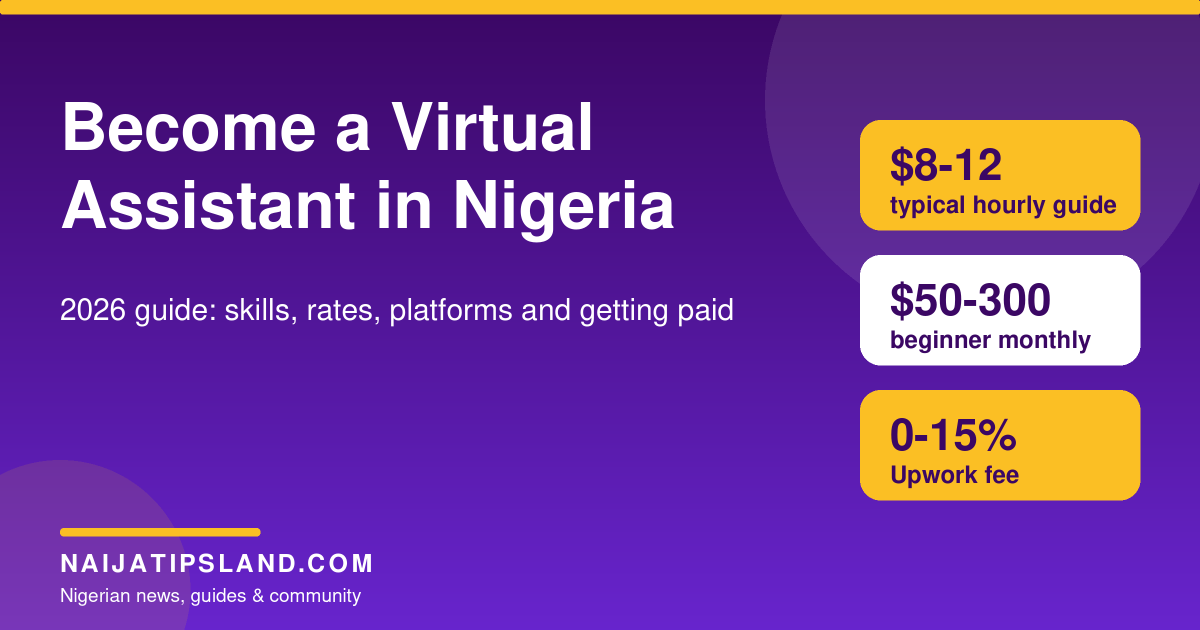
In brief: A virtual assistant (VA) is a remote freelancer who handles admin, customer support, social media, research, scheduling and similar tasks for clients, often overseas. You do not need a degree. You need reliable internet and power, good written English, a few core tools, a small portfolio and the discipline to pitch every day. Published guides suggest beginners often charge about $50 to $300 a month for part-time work, intermediate VAs $300 to $1,000, and specialists more, while Upwork’s Nigeria page lists a typical client-side range of $8 to $12 an hour. These are guides, not guaranteed earnings.
Rates, platform fees and tax rules change. Check Upwork, your payment provider and the Nigerian tax authorities before you rely on any figure here.
What does a virtual assistant do?
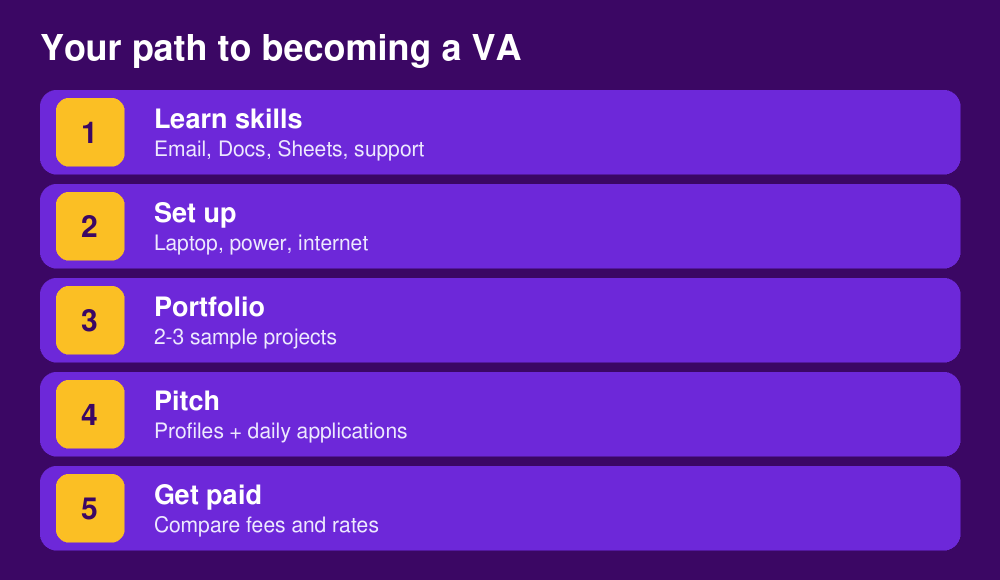
Typical VA services include inbox and calendar management, data entry, customer support by email or chat, social media scheduling, research, transcription, bookkeeping support, e-commerce store support and lead generation. Executive VAs handle travel and meetings for busy founders, while niche VAs focus on one industry such as real estate or online shops. The more specific your skill, the easier it is to charge higher rates.
Step 1: Learn the core skills
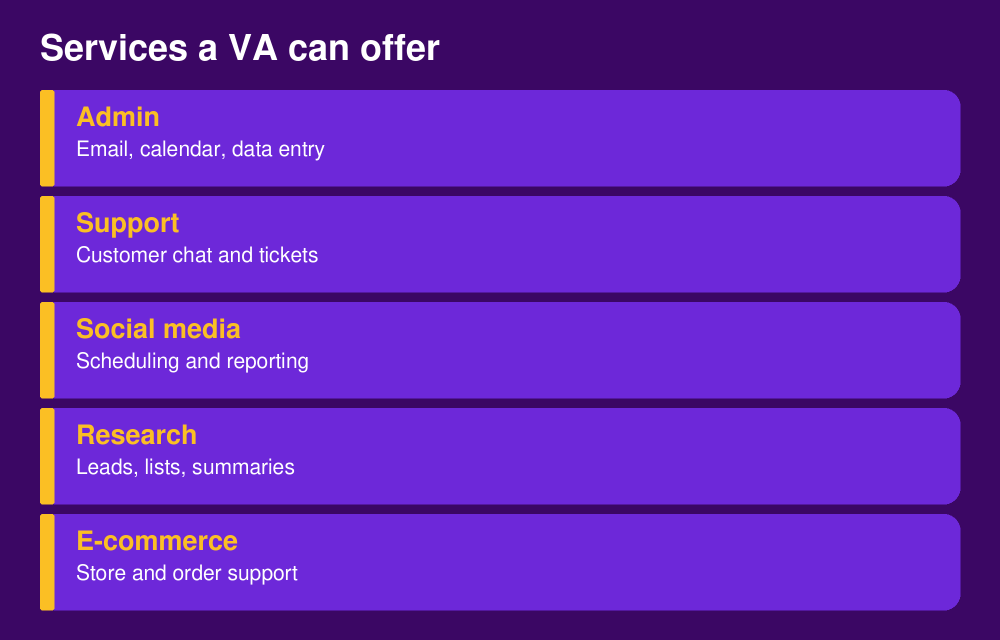
Start with clear written English, time management, Google Workspace (Docs, Sheets, Calendar, Gmail), Zoom and WhatsApp or Telegram, and Canva for simple graphics. Free resources such as YouTube and Google’s digital skills courses are enough to begin. Pick one or two niches to learn deeper, for example email management, customer support, social media or bookkeeping tools.
Step 2: Set up your workstation
- A reliable laptop, a backup power plan (power bank, inverter or UPS) and a stable internet connection with a second data option.
- A professional email address and a clean photo for your profiles.
- Task tools such as Trello or Notion and a time tracker, because many clients want proof of hours.
Step 3: Build a small portfolio
Create two or three sample pieces: a sample inbox-management plan, a one-month social media calendar, a researched lead list or a cleaned spreadsheet. You can also offer a short unpaid trial to one or two small business owners in exchange for a testimonial, but never work unpaid for long. Keep screenshots and before-and-after examples.
Step 4: Create your profiles and pitch
Set up a LinkedIn profile, then profiles on freelancing sites such as Upwork and Fiverr, or look at remote job boards. Write a short headline that says what you do and for whom, for example ‘Email and calendar management for busy founders’. Apply to several well-matched jobs a day with a personalised message that proves you read the post. Landing the first client commonly takes a few weeks of steady effort, and some people take longer. See our guide to remote jobs for Nigerians for places to look.
How much can a Nigerian virtual assistant earn?
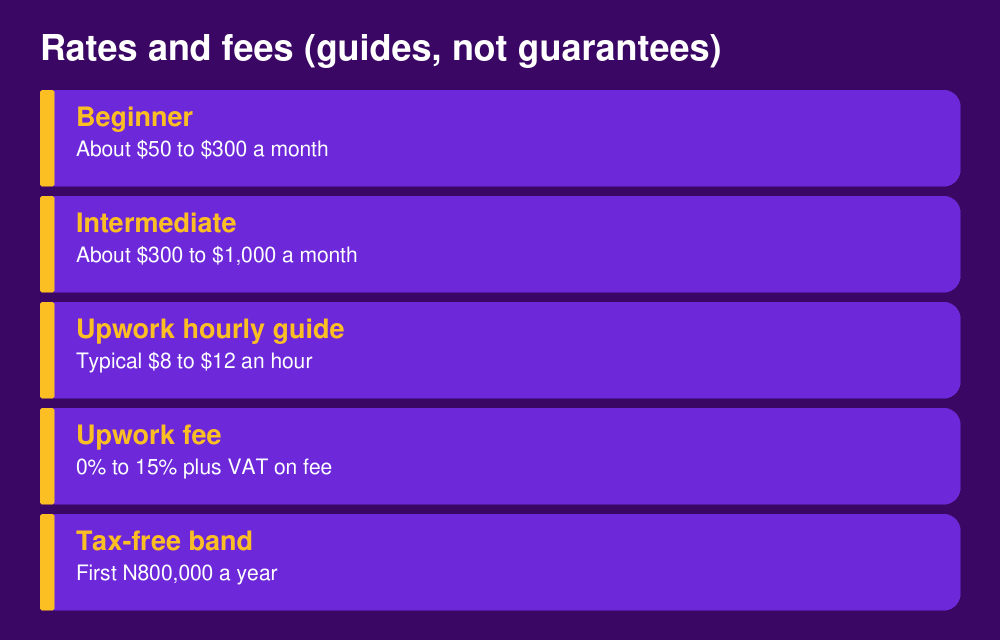
Guides report beginner VAs earning around $50 to $300 a month, intermediate VAs $300 to $1,000 and advanced or specialist VAs $1,000 or more. Per hour, Upwork’s Nigeria hiring page shows a typical range of $8 to $12 for virtual assistants. Your income depends on hours, skills, client budgets and how quickly you improve. Do not expect high pay in your first month.
How do you get paid?
Platforms such as Upwork allow withdrawal to a Nigerian bank in naira (a small fee per withdrawal, with the exchange rate possibly including a markup), through Payoneer, or into a dollar account provider such as Grey or Wise where available. Compare fees and exchange rates before choosing, because conversion margins can matter more than the headline fee. Upwork’s freelancer service fee ranges from 0 percent to 15 percent depending on the contract, and Nigeria adds VAT on the fee, so check the figure shown before you accept a job.
Tax and records
Foreign income earned by a Nigerian tax resident can be taxable. Under the Nigeria Tax Act, which took effect on 1 January 2026, the first ₦800,000 of annual taxable income is taxed at 0 percent, with progressive rates above that. Keep invoices and bank statements, get your Tax ID, and ask a qualified accountant or your state revenue service how to file.
Scams to avoid
- Anyone who asks you to pay a fee to be ‘hired’ or to buy training that ‘guarantees’ a job.
- Overpayment or cheque scams, where a ‘client’ sends too much money and asks you to forward the balance.
- Clients who move you off the platform immediately, refuse milestones or ask for your passwords and bank login.
- Fake recruiters on social media. Verify the company, its website and the person on LinkedIn before sharing documents.
Never share banking passwords, one-time codes or your NIN beyond what a genuine employer legitimately needs.
Common mistakes
- Sending the same copied proposal to every job.
- Charging too little for too long, which makes it hard to raise rates.
- No contract or clear scope. Agree tasks, hours, payment dates and communication in writing.
- Relying on one client for all your income.
Frequently asked questions
Do I need a degree or certificate to be a virtual assistant?
No. Clients care about proof of skill, reliability and communication, though training can help.
How long before I get my first client?
Often a few weeks of consistent applications, but it varies.
Which platform is best for beginners?
Upwork, Fiverr and LinkedIn are common starting points. Choose one or two and do them well.
Can I work as a VA alongside a job?
Yes, if your employer allows it and your client timezones fit your free hours.
Is it legal to receive dollars as a freelancer in Nigeria?
Yes, freelancers regularly do, but the income is generally taxable, so keep records.
This article is general information, not financial or tax advice.
Join the discussion
Have you tried this, or do you have a question we did not answer? 1 reader has already shared their view. Naijatipsland members help each other with real, first-hand experience.






Ade Adeniyi here: never pay anyone to be hired as a virtual assistant, and treat any rate in this guide as a guide rather than a promise. Which task would you offer first?