How to Follow the News Without Being Fooled: A Practical Guide for Nigerians (2026)


Last updated: 14 October 2026. Media habits are personal, and no source is perfect. We replaced an earlier generic list with a practical routine built for Nigeria’s mobile-first, WhatsApp-heavy news environment.
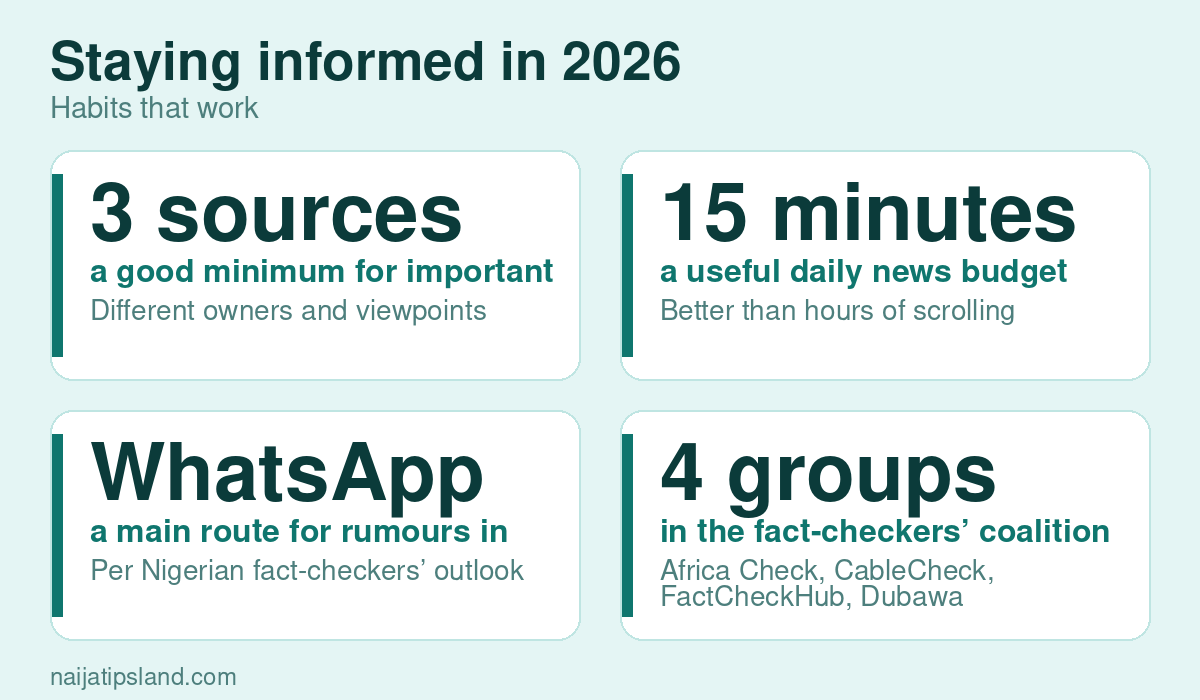
News reaches most Nigerians through phones: social media feeds, WhatsApp groups and push alerts. That makes it fast, but also noisy. Fact-checkers expect WhatsApp and Telegram to remain central to political rumours in 2026, and false stories in local languages to spread faster than they can be checked. A few habits will keep you informed without making you anxious or easily fooled.
1. Choose a small set of good sources
- Mix: a couple of national outlets, one or two business or sector sources for your interests, a local source for your state, and one international outlet.
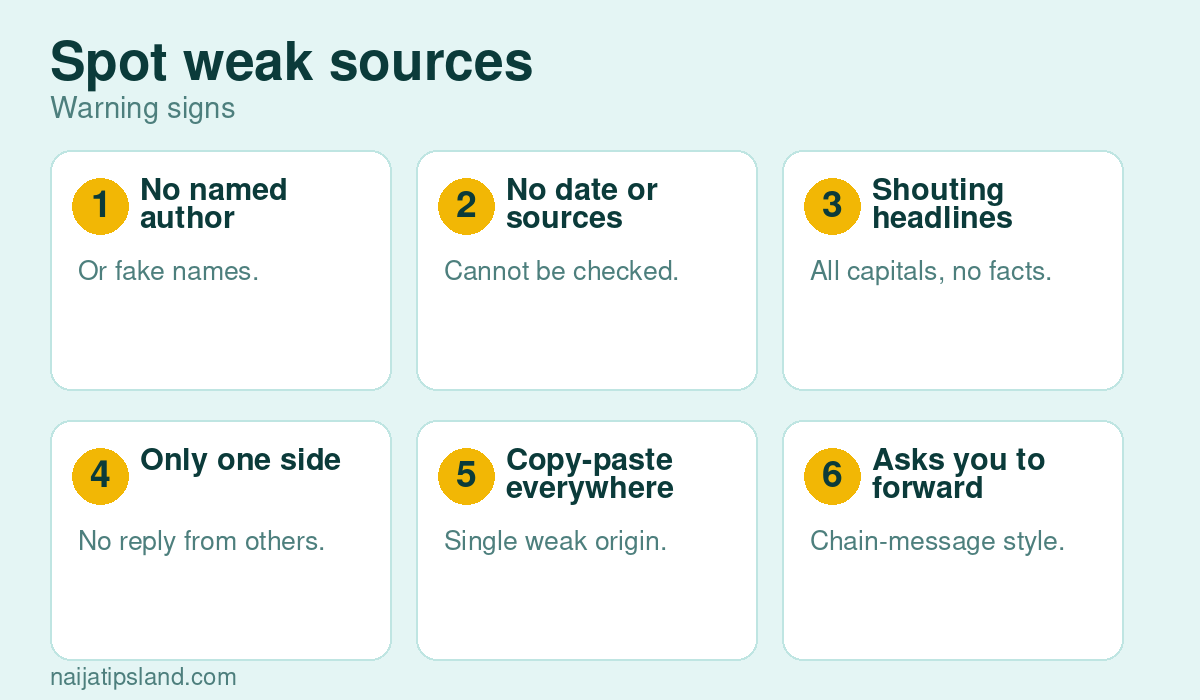
- Look for track records: named editors and reporters, clear corrections, separation of news and opinion, and sources for claims.
- Use different owners and viewpoints. If all your sources share the same owner or politics, you will get a narrow picture.
- Go to primary sources when you can: statements from agencies such as INEC, the NBS, the CBN or the NCC, court judgments and official data.
2. Set a time budget
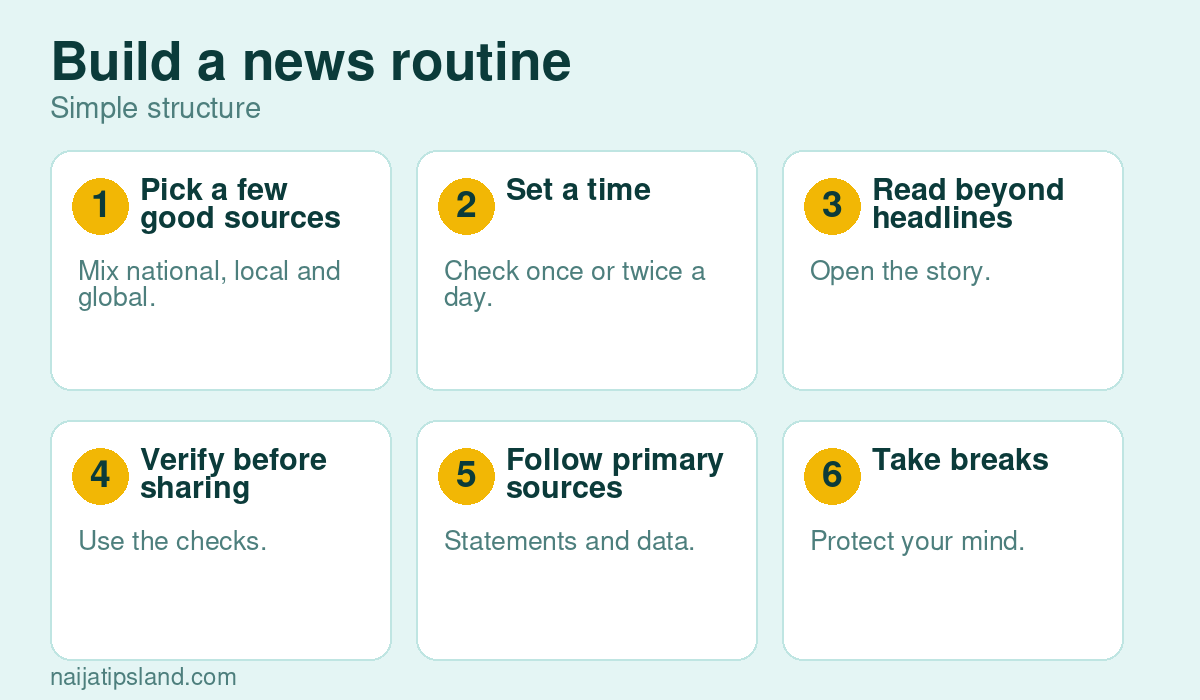
Fifteen focused minutes once or twice a day beats hours of scrolling. Turn off most alerts, and choose a few trusted newsletters or a daily summary. Avoid doomscrolling before bed, since constant bad news affects mood and sleep.
3. Read beyond the headline
Headlines are written to get clicks. Read the story, see who said what and look for evidence. Check the date, since old stories often resurface as new.
4. Handle WhatsApp and social media carefully
- Treat forwarded messages as rumours until you can verify them, especially those that say “forward to ten people”.
- Check screenshots by finding the original post or page.
- Be careful in election season: deepfakes, cloned voices and fake notices are circulating before the 2027 elections. See our guides on fake news and AI deepfakes and verifying news.
- Do not rely on a chatbot as your only fact-checker.
- Leave or mute groups that spread panic.
5. Use fact-checkers
The Nigerian Fact-checkers’ Coalition, formed in 2022, includes Africa Check, CableCheck, FactCheckHub and Dubawa. They publish verifications and opened situation rooms during recent state elections. Follow them, and check their sites before sharing viral claims.
6. Understand spin and bias
- Ask who benefits from you believing a story, and whether other sides were asked.
- Notice loaded words, selective numbers and missing context.
- Separate facts (what happened), analysis (what it means) and opinion (what the writer thinks). See our guide on political commentary.
7. Look for numbers and check them
Many stories rely on statistics. Check the source, the date, the measure and the comparison. For example, inflation figures, poverty rates and subsidy claims can be confusing. Our guides on the cost of living, poverty and economic trends show how to read the data.
8. Take care of yourself
Constant exposure to violence and conflict can be draining. Take breaks, discuss issues calmly with people you trust and focus on what you can do, such as voting, volunteering or supporting reliable journalism.
A sample daily routine
- Morning: five minutes on a trusted summary of top stories.
- Midday: check one or two sources in your field.
- Evening: ten minutes on one story in depth, using primary sources if possible.
- Before sharing: run the checks, or do not share.
For civic context, read our guides on Nigerian democracy and politics and development, and for digital skills, digital literacy.
Build a Healthier News Diet
- Choose three to five reliable sources with different strengths, such as a wire agency, a national paper, a business outlet and a fact-checker.
- Check the news at set times instead of all day.
- Follow official accounts directly, but treat their claims as statements to be checked.
- Keep one source that disagrees with your views so that you see the other side.
Primary Sources Worth Bookmarking
- INEC for election timetables, candidate lists and voter registration.
- The National Bureau of Statistics for inflation, jobs and GDP.
- The CBN and the DMO for monetary policy, exchange rates and savings bonds.
- The NCC for telecom rules, and JAMB and NYSC for education and service notices.
Read Beyond the Headline
Headlines can exaggerate. Check the date, the named source and whether the story gives numbers and context. Be careful with screenshots and forwarded messages, and wait for confirmation on breaking news. During election season expect more rumours, so see our voter registration guide and democracy explained.
Frequently Asked Questions
How many news sources should I use?
At least three for important stories, ideally with different owners and viewpoints.
Is social media a reliable news source?
It can alert you to events but is a weak source on its own. Always verify with reliable outlets and primary sources.
How do I stop feeling overwhelmed by the news?
Set a time budget, turn off alerts, choose a few sources and take breaks.
Sources
- ICIR: What to expect in Nigeria’s fact-checking space in 2026
- RoundCheck: NFC opens situation rooms ahead of the Osun election
- Techpoint: AI could disrupt Nigeria’s 2027 election
Join the discussion
Have you tried this, or do you have a question we did not answer? Be the first to share your experience. Naijatipsland members help each other with real, first-hand experience.