
How to Improve Your English and Communication Skills (2026): A Practical Plan for Nigerians

Last updated: 10 November 2026 · By Naijatipsland Editorial Team · Editorial policy
English is Nigeria’s official language and the language of most offices, universities, visa applications and online jobs. Yet many capable people hold back in interviews, meetings and exams because they worry about accent, grammar or confidence. The good news is that speaking and writing clearly is a skill, and skills improve with practice. This guide sets out a practical plan to improve your English and communication skills, whether you are preparing for IELTS, a job interview, university abroad or simply want to sound more confident at work.
Quick answer: use English every day, find people to speak with, record yourself and listen back, improve your listening by watching and reading in English, learn phrases in context, practise clear writing, and keep one small goal per week. The British Council compares learning to speak with learning to drive: studying the rules helps, but nothing replaces time behind the wheel.
Clear communication is more than correct grammar
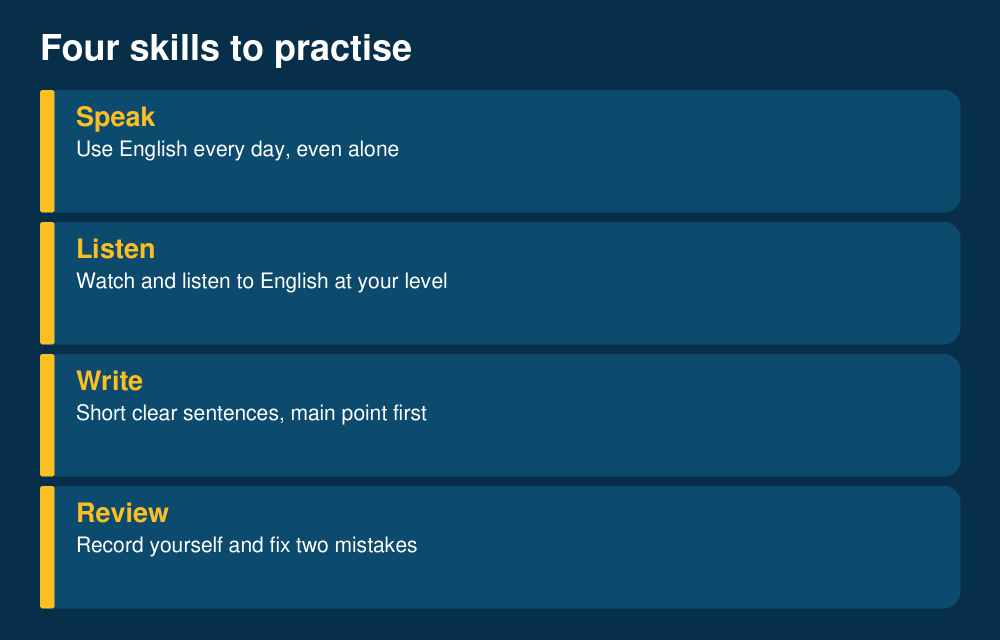
Good communication means the listener understands you the first time. That depends on four things: clear ideas, a simple structure, suitable words for the person you are speaking to, and good listening. Nigerian English, Pidgin and mother-tongue code-switching are part of who we are and are fine in the right setting. The skill is knowing when to use formal English, for example in an interview, an official email or an exam, and when to relax.
1. Use English regularly
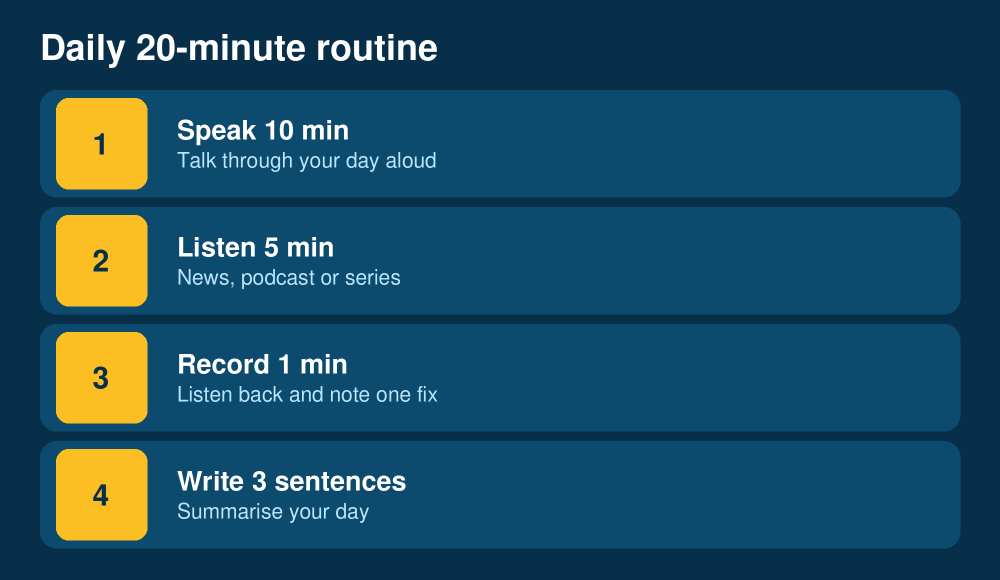
Speak English during your day, even if you are alone. Describe what you are doing, plan your day aloud, or talk through a problem. Short daily practice beats a long weekly session. Join conversations at work, church groups, clubs or online communities where English is the main language.
2. Find people to talk to
The British Council suggests starting with friends or colleagues who speak English, attending meetups for language learners, and joining a language exchange where you help someone learn your language while they speak English with you. If you meet people online or in person, stay safe: use public places, do not share financial details and trust your instincts.
3. Record yourself and listen back
Recording yourself feels awkward but works. You will probably find you speak better than you expected, which builds confidence. Listen for mistakes you can correct, repeat the same topic to build fluency, and notice pronunciation of words you find difficult. A one-minute recording on your phone each day is enough.
4. Improve your listening
Listening shapes speaking. Watch series, news and interviews in English, listen to audio at your level, and pay attention to pronunciation, stress and intonation. Collect new words and phrases and write down how they are used in a sentence. Subtitles in English can help at first. Being a good listener in conversation also makes you a better communicator, because people value someone who listens and shows interest even when their English is not perfect.
5. Learn words and phrases in context
Learning isolated word lists is slow. Instead, learn phrases you will use: how to disagree politely, ask for clarification, introduce yourself, give an opinion, or end a meeting. Examples include “Could you repeat that, please?”, “I see your point, but…” and “Let me summarise.” Keep a notebook or phone note of useful phrases and review them with spaced repetition. Our guide on improving memory and concentration explains study methods that help.
6. Improve your writing
Many jobs and visas depend on written English. Write short, clear sentences. Put the main point first in emails, use a specific subject line, and read your message aloud before sending. Practise by writing a daily three-sentence summary of your day or a short opinion on a news story. Ask a friend or tutor to point out repeated errors and then focus on fixing those first. Our effective communication skills list for professionals is a helpful companion.
7. Build confidence for interviews and presentations
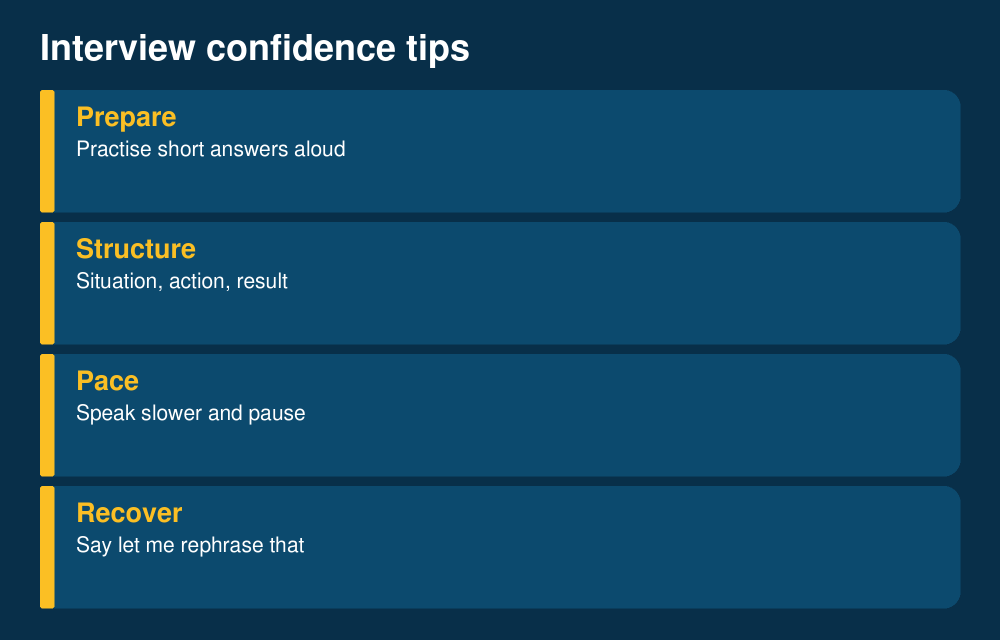
- Prepare short answers to common questions and practise them aloud.
- Use the structure situation, action, result to describe achievements.
- Speak slightly slower than normal and pause between ideas.
- Maintain relaxed eye contact and an open posture.
- If you lose your words, take a breath and say, “Let me rephrase that.”
8. Prepare for an English test
If you need a certificate for study or migration, choose the right test and practise its format. Read our comparison of IELTS, PTE and TOEFL for Nigerians and check the requirements in the guide to the UK Skilled Worker visa or the UK spouse visa for the level you need. For nurses, see the NMC registration guide, which also lists English requirements.
A 4-week practice plan
- Week 1: speak English for ten minutes daily and record one minute on your phone.
- Week 2: add a daily listening session of 15 minutes and note five new phrases.
- Week 3: have two real conversations with a partner or group and write one short email each day.
- Week 4: do a mock interview or presentation, record it, and fix two things.
Common mistakes to avoid
- Waiting until your English is perfect before you speak.
- Only memorising grammar rules without speaking.
- Copying long phrases you do not understand.
- Comparing your accent with others instead of aiming for clarity.
- Paying anyone who guarantees a test score or sells fake certificates. Official tests are taken only at approved centres.
FAQ
How long does it take to improve my English?
It varies with your starting point and the time you practise. Daily practice for several weeks usually brings noticeable confidence.
Do I need to change my accent?
No. Aim to be clear and easy to understand. Slowing down and stressing key words helps more than imitating an accent.
Is Pidgin a problem for professional English?
No, but switch to standard English in formal settings such as interviews and exams.
Can I improve English for free?
Yes. Free resources such as the British Council LearnEnglish site, radio, podcasts, library books and language exchanges can all help.
What is the fastest way to improve speaking?
Speak every day, record yourself, and get feedback on a few repeated errors.
Sources
Join the discussion
Have you tried this, or do you have a question we did not answer? 1 reader has already shared their view. Naijatipsland members help each other with real, first-hand experience.







What is the hardest part of speaking English for you: confidence, vocabulary or pronunciation? Share in the comments and we will cover it. – Ade Adeniyi