
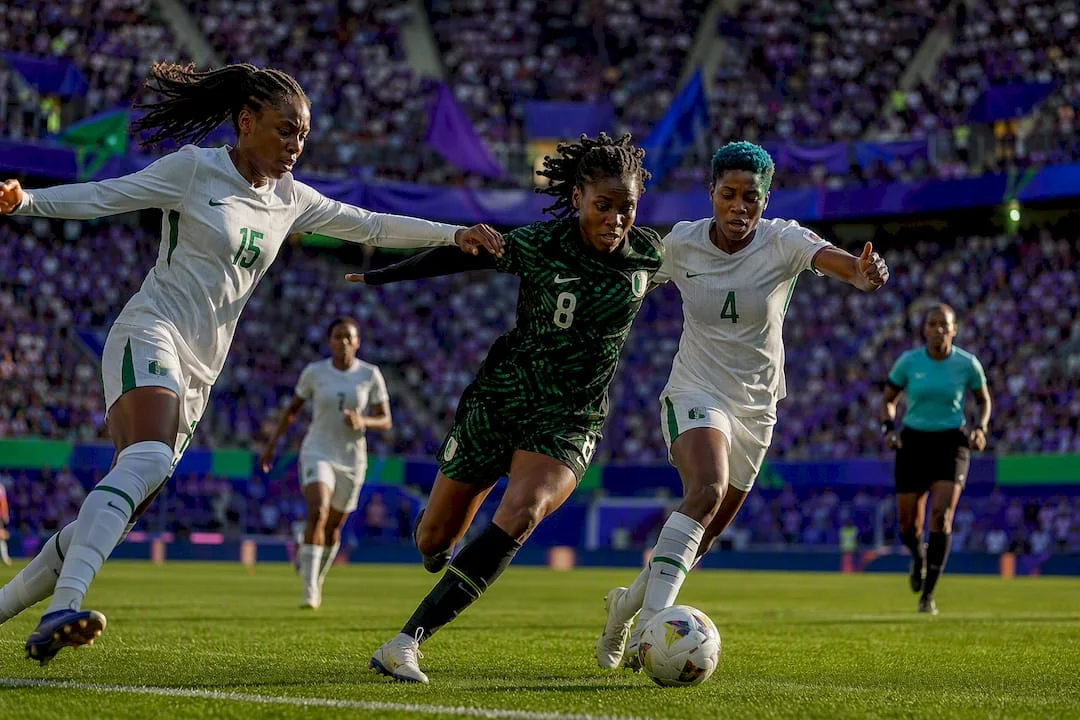
Nigeria’s Super Falcons are Africa’s most successful women’s national team, and their WAFCON crown remains the country’s headline women’s football story going into 2026. The squad enters this year defending a record title haul, working through World Cup qualification fixtures, and drawing renewed attention to the domestic league that feeds it. For live results, squad news, and stats, the National Federation and stat sites remain the fastest, most reliable check.
TL;DR:
- Nigeria’s women’s team holds the record with 10 WAFCON titles, but their FIFA ranking of 36th indicates a gap between continental dominance and global competitiveness.
- Key players like Perpetua Nkwocha and Onome Ebi set benchmarks with 80 goals and 109 caps respectively, highlighting the long-term talent within the program.
- The current squad’s WAFCON 2025 victory positions Nigeria strongly for World Cup qualification, although results against European teams reveal ongoing depth issues.
- Domestic league performance largely depends on the NWFL Premiership, which has historically produced national team players but faces challenges like fixture congestion and limited visibility.
- Media coverage and sponsorship are cyclical, intensifying around major tournaments, leaving the domestic scene underreported but supported increasingly by community and digital platforms.
Table of Contents
- Women’s Football Nigeria Quick Facts: Titles, Coach, and Top Stats
- Super Falcons History: From 1991 World Cup Debut to Continental Dominance
- WAFCON 2025 and the Road to World Cup 2026
- Player Stats: Who Holds the Records and Who’s Making Headlines
- Inside the NWFL: How Nigeria’s Domestic League Works
- How Players Get Noticed: The Pathway From Grassroots to the Super Falcons
- Following the Super Falcons: Fixtures, Live Scores, and Squad News
- Women’s Football and Gender Equality in Nigeria
- Sponsorship and Media Coverage of Nigerian Women’s Football
- Naijatipsland’s Take on Growing Nigerian Women’s Football
- Join the Conversation: How Naijatipsland Covers Women’s Football
- Where to Verify Records, Fixtures, and Squad News
- Sources
Women’s Football Nigeria Quick Facts: Titles, Coach, and Top Stats
Before getting into the history and the drama, here’s what you need to know if you’re catching up on Nigerian women’s football right now.
- Governing body: Nigeria Football Federation (NFF); domestic league run by the Nigeria Women Football League (NWFL)
- Nickname: Super Falcons; FIFA code NGA
- Continental titles: A record 10 WAFCON championships, more than any other African nation
- Head coach: Justine Madugu, who named the squad for the 14th Women Africa Cup of Nations title defense
- Captain: Rasheedat Ajibade, named among the 25 players in that same official squad list
- All-time top scorer: Perpetua Nkwocha, 80 international goals
- Most capped player: Onome Ebi, 109 appearances
- Where to follow fixtures: NFF and NWFL official sites for announcements, plus Sofascore, Flashscore, and ESPN for live stats
Quick stat: Nigeria’s FIFA world ranking sat at 36th as of June 16, 2026, a number that undersells the team’s continental dominance but reflects how much ground has opened up globally in women’s football over the past decade.
That gap between “best in Africa” and “36th in the world” is the tension running through everything else in this piece.
Super Falcons History: From 1991 World Cup Debut to Continental Dominance
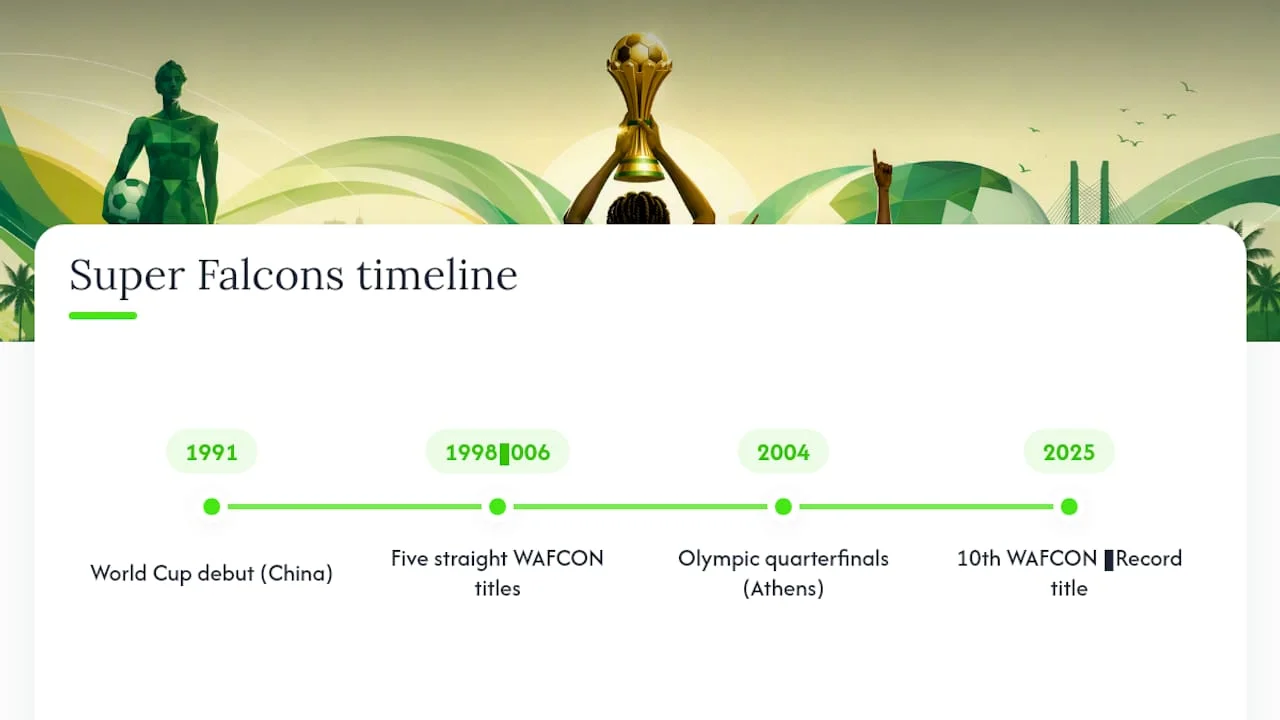
Nigeria’s national women’s team didn’t emerge from nowhere. The program took shape in the late 1980s as FIFA moved toward a global women’s tournament, and Nigeria became the first African nation to appear at a Women’s World Cup when the tournament launched in 1991 in China. That alone set the tone: Nigeria would spend the next three decades as the continent’s benchmark, not just a participant.
The real dynasty began in the mid to late 1990s. Between 1998 and 2006, the Super Falcons won five straight African championships, a run that established players like Mercy Akide and Perpetua Nkwocha as household names in Nigerian sport and turned the national team into a fixture of continental football conversation. Nkwocha, in particular, became the face of an era, finishing her career as the program’s all-time leading scorer with 80 goals, a tally that still stands unmatched.
The dominance didn’t stop there. Nigeria kept collecting WAFCON titles through the 2000s and 2010s, building toward the record 10 championships the team holds today, a number no other African nation is close to touching. On the global stage, Nigeria has qualified for multiple Women’s World Cups and reached the knockout rounds, with a best finish that places the team among Africa’s most consistent World Cup performers even as European and North American sides have pulled ahead in resources and depth. At the Olympics, Nigeria’s best result came in 2004 in Athens, where the team reached the quarterfinals, a high point that still gets cited by older fans as proof of what the program is capable of when funding and preparation align.
Identity matters here too. “Super Falcons” isn’t a marketing invention; it echoes the men’s “Super Eagles” branding and signals the same national pride. Home matches have historically been staged at venues in Lagos, Abuja, and Uyo, with the Godswill Akpabio International Stadium in Uyo hosting several high-profile fixtures over the years because of its capacity and pitch quality. The players who built this legacy, Nkwocha, Akide, Onome Ebi, and later Asisat Oshoala, gave the team a reputation for technical flair and physical resilience that Nigerian fans expect from every new generation that pulls on the jersey.
What separates the Super Falcons from most African women’s programs isn’t just the trophy count. It’s continuity. Nigeria has never gone through the kind of multi-year competitive collapse that has hit other federations on the continent, even during periods of funding disputes and administrative turmoil within the NFF.
WAFCON 2025 and the Road to World Cup 2026
The most significant recent result is straightforward: Nigeria won the 2025 WAFCON final 3-2 against Morocco, extending their record to 10 continental titles and reaffirming their status as Africa’s team to beat. That scoreline tells you something about the current squad’s character. Morocco, playing as hosts and riding significant home support, pushed the Super Falcons to the wire, and Nigeria answered instead of folding.
That win matters beyond the trophy itself. It reset expectations heading into 2026 and gave Madugu’s coaching staff a clear platform to build World Cup qualification plans around a proven core rather than a rebuilding project.
Since that final, the picture has been more mixed. Warm-up fixtures and qualification-adjacent matches through early 2026 have included setbacks alongside wins, a normal pattern for a team transitioning from a major tournament into a new qualifying cycle. Nigeria’s preparation camps, including a training base opened in Yaoundé ahead of continuing WAFCON commitments, point to a federation trying to manage form and fitness carefully rather than rushing squad changes.
A few things to keep in mind about where things stand:
- The 2025 WAFCON title puts Nigeria in a strong position for regional World Cup qualification slots, though nothing is locked in until qualifying matches conclude
- Results against European-style pressing sides, including warm-up matches against European opposition, have exposed depth issues in midfield transitions
- Nigeria’s FIFA ranking of 36th means World Cup seeding could put the Super Falcons in a tougher group than their continental résumé would suggest
- Coach Madugu has continued to rotate personnel in non-competitive fixtures, a sign the technical staff is testing squad depth ahead of qualifiers
None of this changes the core fact: Nigeria remains the team every other African nation has to dethrone. But the margin between “Africa’s best” and “genuine world contender” is exactly what these 2026 fixtures are testing.
Player Stats: Who Holds the Records and Who’s Making Headlines
Two names anchor the Super Falcons’ record books, and neither is currently active, which tells you something about how long their marks have stood. Perpetua Nkwocha scored 80 goals for Nigeria across a career that ran through the height of the team’s continental dominance, a total no current player is within realistic reach of touching in the next few years. Onome Ebi holds the appearances record with 109 caps, a mark built on nearly two decades of near-uninterrupted selection, an extraordinary run for any national team player, male or female.
The current squad has its own standouts, and each brings a different kind of value to the team.
- Asisat Oshoala remains Nigeria’s most internationally recognized player, a multiple-time African Women’s Footballer of the Year whose club career in Europe and Asia has kept the Super Falcons visible on the global stage
- Chiamaka Nnadozie anchors the goalkeeping position and has become one of the more reliable shot stoppers at continental tournaments, a role that rarely gets headlines but consistently shows up in clean sheet counts
- Rasheedat Ajibade captains the side and was named in the official 25-player squad for the WAFCON title defense, giving the team a leader with both tournament experience and attacking output
- Onome Ebi continued featuring in squads well past the point most defenders retire, a testament to fitness and game intelligence rather than pure athleticism
Statistic to watch: Ebi’s 109 caps and Nkwocha’s 80 goals aren’t just trivia. They’re the benchmarks every young player entering the NWFL system gets measured against, whether coaches say it out loud or not.
Behind these established names sits a layer of home-based talent that rarely gets the same visibility. Players competing in the NWFL Premiership often go unnoticed by international scouts simply because domestic league footage and stats get far less circulation than a Champions League highlight reel. That visibility gap is one of the defining structural issues in Nigerian women’s football right now, and it shapes who actually gets a national team call-up.
Inside the NWFL: How Nigeria’s Domestic League Works
The Nigeria Women Football League sits at the center of the domestic pyramid, and understanding its structure explains a lot about where future Super Falcons come from. The NWFL Premiership functions as the top professional tier, a league that traces its organized roots back to 1990, making it one of the older structured women’s football competitions on the continent.
Below the Premiership sit the Championship and Nationwide divisions, which serve as the developmental and regional tiers feeding talent upward. Promotion and relegation connect these levels, at least in principle, though enforcement and scheduling consistency have varied across seasons, a common challenge for domestic women’s leagues operating with limited broadcast revenue.
What actually matters for readers tracking club-to-country pathways:
- NWFL Premiership clubs regularly supply players who go on to represent Nigeria at continental and world tournaments
- Strong Premiership performances have historically opened doors to the CAF Women’s Champions League, giving standout clubs and players continental exposure beyond domestic competition
- Clubs based in Lagos, Rivers, and the Federal Capital Territory have produced a disproportionate share of national team talent over the years, reflecting where investment and facilities have concentrated
- Season structure and fixture congestion remain ongoing issues, with some campaigns compressed into shorter windows than ideal for player development
For readers trying to follow NWFL news directly, the league’s official site posts fixtures, results, and club updates, though coverage depth varies club to club depending on local reporting capacity. That inconsistency is exactly the gap that community platforms and local sports forums exist to fill, especially for matches that never make national television.
How Players Get Noticed: The Pathway From Grassroots to the Super Falcons
The typical route to a Super Falcons call-up starts at grassroots or school-level football, moves into an NWFL club, and from there depends heavily on whether national team scouts and coaching staff are actually watching. That last part is where the system shows real cracks.

Selection patterns have historically favored players with overseas club experience, and it’s easy to see why. A player competing in a European league generates video footage, scouting reports, and statistical data that a domestic league player rarely has access to. Fans and local analysts have long argued this creates a structural bias where technically gifted NWFL players get overlooked simply because nobody outside Nigeria is watching their matches closely.
Beyond visibility, the domestic game faces real material challenges: inconsistent funding across clubs, facilities that lag behind what men’s teams receive, and periodic labor disputes over unpaid wages that have disrupted seasons at multiple clubs. None of this is unique to Nigeria, but it compounds the visibility problem, since underfunded clubs can’t produce the kind of match footage or press coverage that gets a player noticed beyond her own league.
Pro Tip: If you’re a player or coach trying to build visibility from inside the NWFL system, don’t wait for a scout to show up. Build a highlight reel from every match you can, enter regional and state-level tournaments even when they seem minor, and get your performances mentioned in local match reports and community forums. National team scouts increasingly check secondary coverage and social channels, not just top-flight European leagues, when building shortlists.
Following the Super Falcons: Fixtures, Live Scores, and Squad News
Getting reliable, current information means checking a few specific sources rather than relying on secondhand recaps.
- NFF official site publishes squad announcements directly, including the full 25-player list named for major tournaments, the most reliable place for confirmed call-ups
- NWFL official site covers domestic league news, fixtures, and club-level updates that rarely make national headlines
- Sofascore, Flashscore, and ESPN provide live scores, lineups, and minute-by-minute match stats for both international and, in some cases, domestic fixtures
- Cross-check before trusting a rumor: if a squad list or transfer story is circulating without an NFF or NWFL source attached, treat it as unconfirmed until an official channel posts it
Local reporting fills the remaining gap, especially for NWFL matches that international stat sites don’t track in full detail.
Women’s Football and Gender Equality in Nigeria
The Super Falcons’ success has done something few policy initiatives manage: it’s made women’s athletic achievement a point of national pride rather than a niche interest. A team with 10 continental titles is hard to dismiss, and that record has given young girls across Nigeria a visible, undeniable model of professional success in a field long treated as a men’s domain.
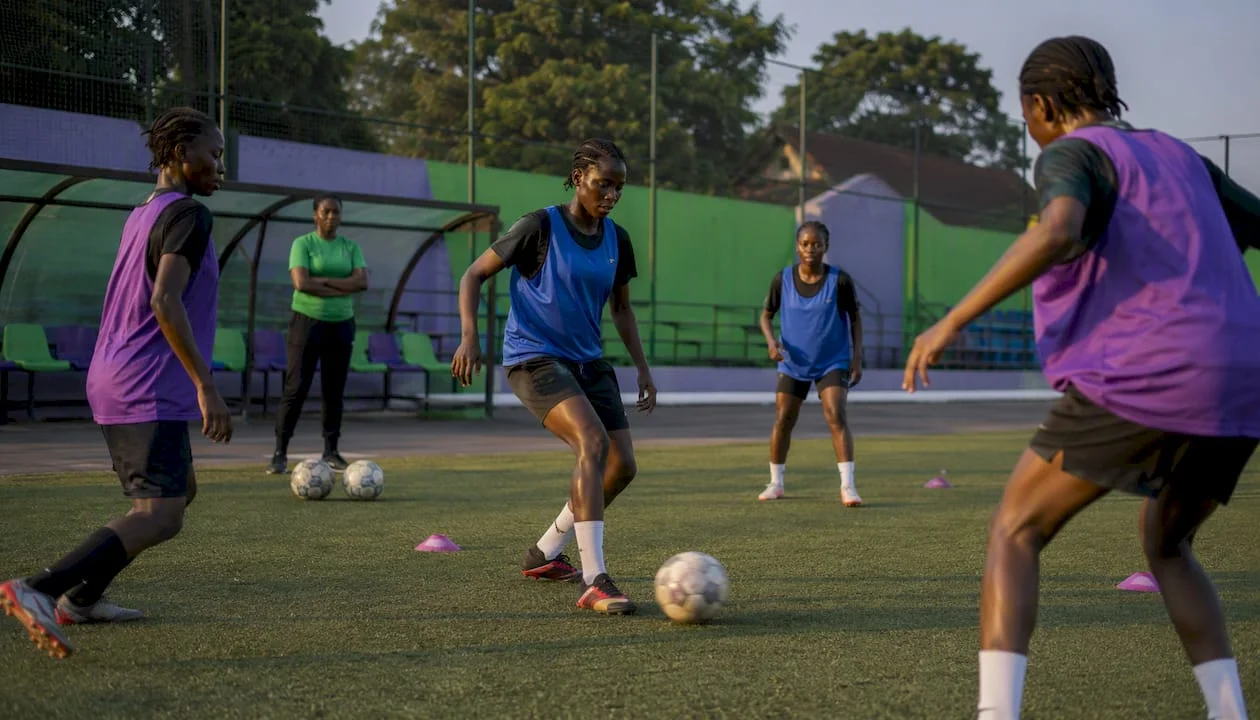
That said, the gap between symbolic pride and structural equality remains wide. Male footballers in Nigeria still command dramatically more sponsorship attention, media coverage, and club investment than their female counterparts, even when the women’s team is outperforming the men’s on the continental stage. This mismatch shows up in everything from stadium allocation to prize money structures at domestic tournaments.
What’s changing, gradually, is public conversation. Nigerian sports commentary now routinely compares Super Falcons achievements to Super Eagles disappointments, a framing that would have been unthinkable a generation ago. Parents in cities like Lagos and Enugu increasingly point to Oshoala or Ajibade as role models when encouraging daughters into organized sport, not just as a physical activity but as a viable path. Grassroots girls’ football programs, often run by former players and community coaches with minimal federal support, have expanded in response to that visibility, even without matching increases in funding.
Sponsorship and Media Coverage of Nigerian Women’s Football
Media coverage of the Super Falcons spikes predictably around major tournaments, WAFCON finals and World Cup qualifiers draw national television attention and front-page sports coverage, and drops off sharply between them. That cycle creates a visibility problem for NWFL clubs and players who never get the tournament spotlight.
Sponsorship follows a similar pattern. Corporate backing tends to concentrate around the national team during tournament windows rather than sustaining year-round investment in domestic clubs or youth development pipelines. This isn’t unique to Nigeria, most federations worldwide struggle to convert World Cup enthusiasm into consistent club-level sponsorship, but it hits harder in a system where NWFL clubs already operate on thin budgets.
The upside is that digital and community media have started filling gaps traditional broadcasters leave open. Local sports forums, social media accounts run by fans and former players, and community platforms increasingly cover NWFL match results and player development stories that national television skips entirely. That shift matters more than it might seem, because sponsors and scouts alike pay attention to where conversation is happening, not just where cameras are pointed.
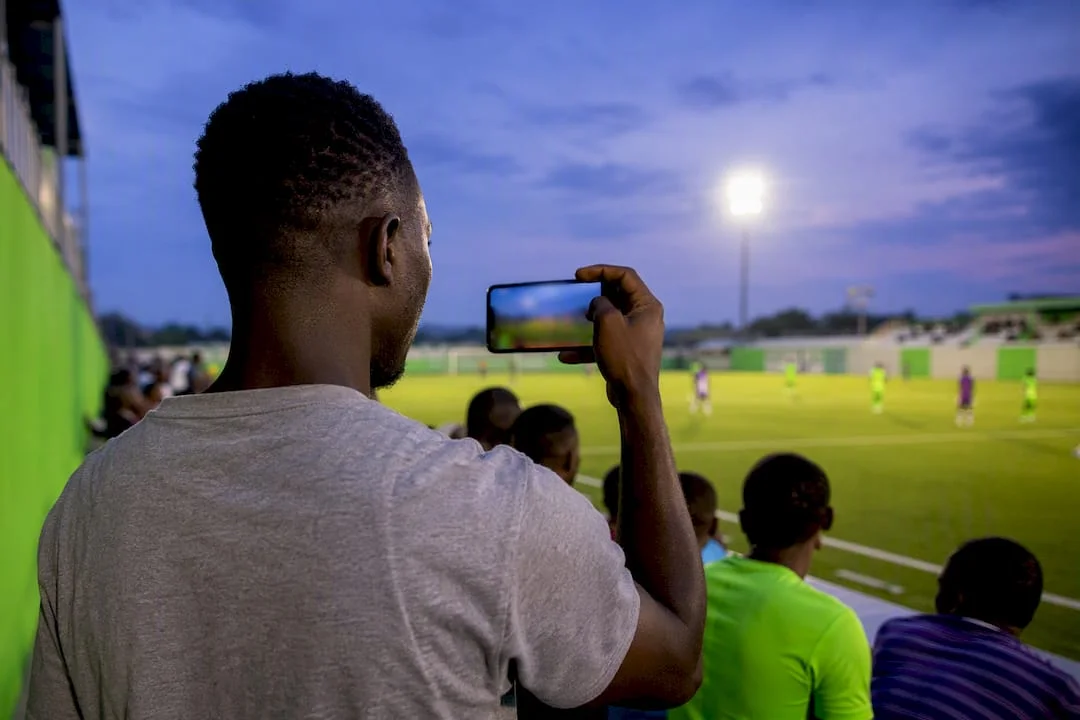
Naijatipsland’s Take on Growing Nigerian Women’s Football
The Super Falcons’ trophy cabinet proves the talent pipeline works at the top. What it doesn’t prove is that the system underneath is healthy, and anyone honestly covering this sport needs to say that plainly instead of just celebrating the latest WAFCON win.
Naijatipsland’s focus stays on the matches and players that national broadcasters skip: NWFL fixtures, home-based standouts, and the local match reports that rarely reach a wider audience. That coverage gap is exactly where reader-submitted reports and local match tips make the biggest difference, because a Premiership goal scored in Uyo or Enugu deserves the same visibility as a Super Falcons friendly in Europe. Better local coverage doesn’t just inform fans; it puts names in front of scouts who otherwise only watch overseas leagues.
If you’ve watched an NWFL match, followed a local youth tournament, or have a squad update worth sharing, your report belongs in this conversation.
— Naijatipsland
Join the Conversation: How Naijatipsland Covers Women’s Football
Naijatipsland gives Nigerian women’s football a home that national outlets often don’t: match previews before tournaments, squad breakdowns when the NFF drops a new list, and space for fans to argue about team selection the day it happens, not three days later. That’s the real gap Naijatipsland fills compared to waiting on international outlets that only cover Nigeria during World Cup windows.
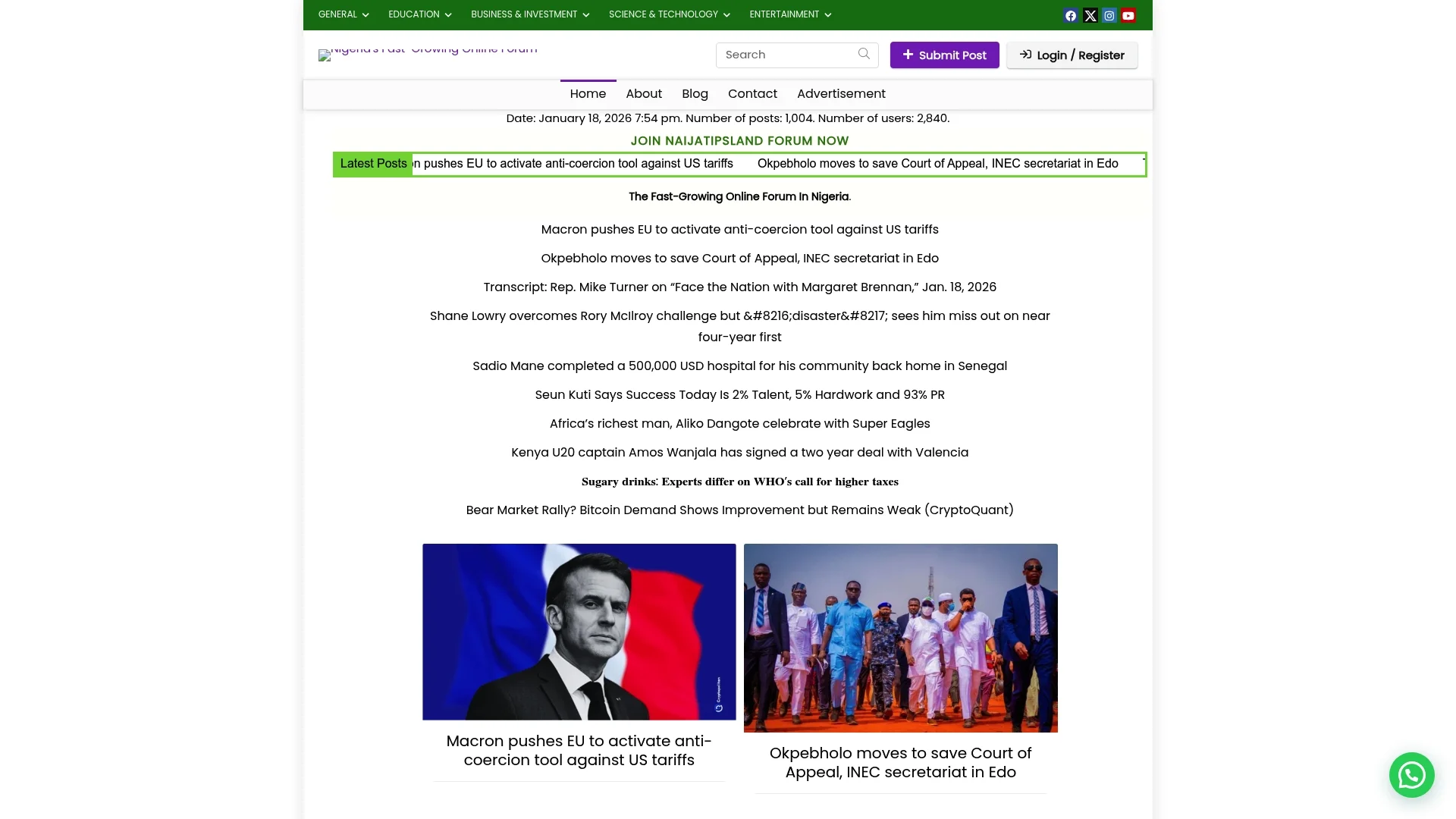
Coverage includes previews ahead of Super Falcons fixtures, breakdowns of squad announcements like Madugu’s WAFCON title-defense list, and ongoing tracking of NWFL storylines that rarely make national television. If you’ve got a local match report, a tip on an emerging NWFL player, or an opinion on the next squad list, the forum is built for exactly that kind of contribution. Learn how to start a discussion on the platform and post your take before the next call-up news breaks.
Where to Verify Records, Fixtures, and Squad News
For anything beyond this overview, go straight to the source rather than a secondhand recap.
- NFF official site, best for confirmed squad announcements and federation statements
- NWFL official site, best for domestic league fixtures, results, and club news
- Sofascore, Flashscore, and ESPN, best for live scores, lineups, and player statistics across matches
- Wikipedia’s Nigeria women’s national football team and Women’s football in Nigeria pages, useful secondary sources for historical timelines and record verification, though always cross-check dates against official NFF releases
Sources
- Nigeria women’s national football team — Wikipedia
- 14th Women Africa Cup of Nations: Madugu picks Ajibade, Nnadozie, 23 others for title defence – The NFF Official Website
- The NWFL – Nigeria Women’s Football League