13 Signs Someone Is Not Ready for Marriage: A Practical Checklist for Nigerian Couples


Last updated: 14 October 2026. This guide is general information and not professional counselling, medical or legal advice. It applies to men and women, and to anyone considering marriage. We rewrote an earlier version that focused only on men, because readiness depends on both people.
Weddings are exciting, but marriage is a long-term partnership. In Nigeria, family expectations, money pressure and community opinion can push people to marry before they are ready. Here are thirteen signs that someone may need more time, followed by a checklist you can use together.
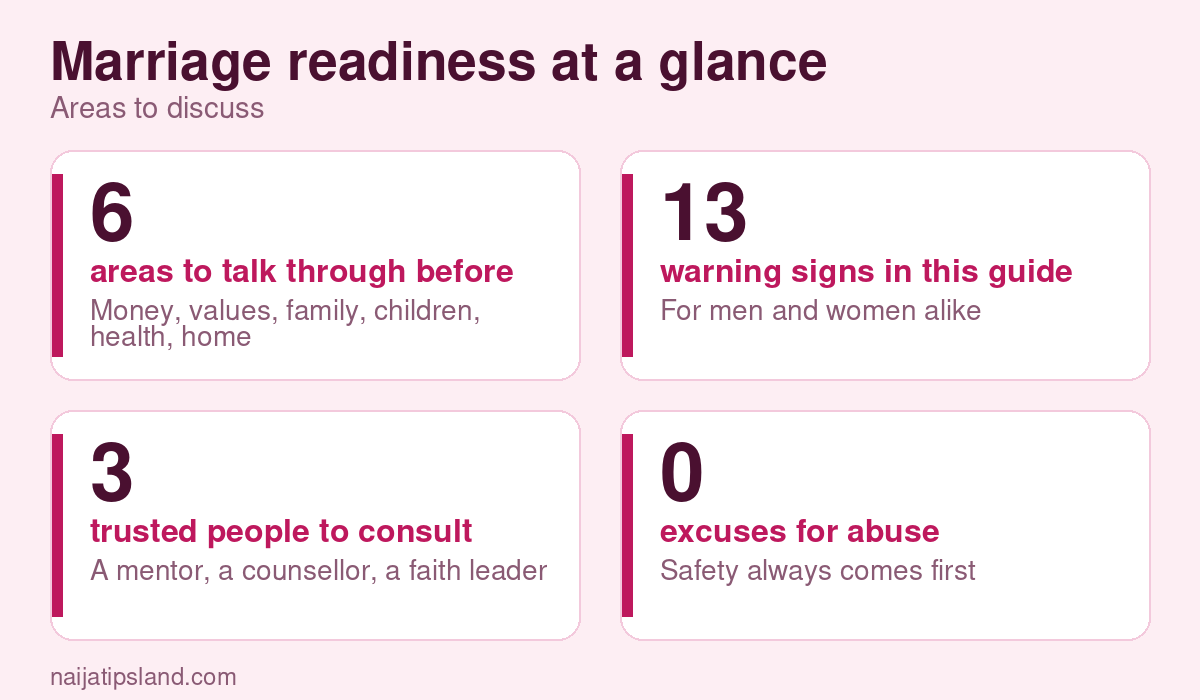
Thirteen warning signs
- They avoid honest conversations about the future. If talk of plans, children, work or where to live always gets deflected, there may be a gap between what you each want.
- They hide money or debts. Secret loans, hidden income or evasive answers about spending are risks. Money disagreements are a common source of strain, especially when prices are high. See our guides on saving money, common money mistakes and the cost of living.
- They depend heavily on family or others for basic decisions and cannot make a joint decision as a couple.
- They cannot manage conflict. Shouting, silent treatment, threats, name-calling or leaving every argument unresolved will not improve after the wedding.
- They are controlling or jealous, monitor your phone, isolate you from friends or decide where you can go.
- They do not take responsibility. Blaming others for every problem, lateness or broken promises, and a pattern of excuses, are warning signs.
- They have no basic plan for work or income, or are unwilling to work on one. The ability to earn is not the only measure of a person, but a shared plan for income matters. See career tips and skills in demand.
- They disrespect you, your family or others, including in public or on social media.
- Their values clash with yours on faith, children, roles at home or how to treat family, and they will not discuss it.
- They are marrying to meet pressure, such as age, family urging, community talk or fear of being alone, rather than because they want this partnership.
- They are unresolved about past relationships or are still entangled with an ex.
- They struggle with addictions or risky behaviour and do not accept help.
- They are not ready to be accountable for health, including refusing testing or counselling.

One sign does not decide a relationship, and people can change, but patterns that continue after honest conversation should be taken seriously. These signs apply to women as well as men, and you should also ask yourself whether you are ready.
Six conversations to have before you marry
- Money: income, debts, savings, who pays for what, support for relatives and plans. Keep a joint plan.
- Values and faith: beliefs, practices and how you will raise children.
- Family and culture: expectations about in-laws, traditions, bride price, living arrangements and boundaries.
- Children: whether, when and how many, and how you will share care and costs.
- Health: premarital health testing and counselling are common in Nigeria, for example around genotype compatibility, where some pairings carry a higher chance of children with sickle cell disease, and other infections. Discuss testing openly and speak to a doctor or counsellor.
- Home and roles: where you will live, how chores and decisions will be shared, and how you will deal with work and travel.
When counselling helps
Premarital counselling, offered by many faith communities, counsellors and psychologists, helps couples discuss difficult topics with a neutral person. It is not only for couples in trouble. Individual counselling can also help if you carry past hurt or anxiety about commitment.

If safety is at risk
Violence, threats, forced sex, controlling money and isolation are abuse, not “misunderstandings”, and marriage will not fix them. If you feel unsafe, speak to someone you trust, keep important documents and numbers safe, and contact the police or a recognised support organisation. If you are in immediate danger, go to a safe place and call emergency services. Never blame yourself.
Practical steps
- Take time: a longer engagement is better than an unhappy marriage.
- Be honest about your own flaws and fears too.
- Do not stretch your budget for a wedding. See our guide on financial literacy and lifestyle tips for young adults.
- Beware of romance scams and people who ask for money. See internet scams.
- Protect privacy, including intimate images. See data privacy and cyberbullying.
Frequently Asked Questions
How do I know if I am ready for marriage?
You can talk honestly about money, values, family and children, handle disagreements respectfully and want the partnership for its own sake.
Should couples take genotype and other health tests?
Many couples do, and counsellors and doctors often recommend it. Talk openly and get professional advice.
What if my partner will not go for counselling?
Ask why, offer alternatives, and consider counselling for yourself. Refusal to discuss serious issues is itself a sign to take seriously.