


Balancing traditional expectations with modern urban life feels overwhelming for many young Nigerians. You face pressure from family, financial stress, and daily logistics in busy cities. This guide delivers practical, culturally grounded lifestyle tips to help you thrive socially, financially, and personally in 2026.
Table of Contents
- Understanding Nigerian Lifestyle For Young Adults
- Prerequisites For Improving Your Lifestyle
- Core Lifestyle Improvements For Daily Living In Nigeria
- Urban And Social Hacks For Nigerian Cities
- Common Mistakes Nigerian Young Adults Make And How To Avoid Them
- Measuring Your Lifestyle Improvement Success
- Explore More Tips And Community Support At Naijatipsland
Key takeaways
| Point | Details |
|---|---|
| Social etiquette preserves respect and improves relationships | Applying Nigerian cultural norms in daily interactions strengthens personal and professional bonds. |
| Budgeting improves financial stability and reduces stress | Realistic monthly budgets using Nigerian currency tools help you save consistently and avoid debt. |
| Balanced local diets boost energy and health | Eating traditional vegetables and moderate protein reduces fatigue and improves overall wellness. |
| Urban living hacks reduce costs and improve daily convenience | Shared housing and smart transport choices cut expenses significantly in Nigerian cities. |
| Avoiding common pitfalls maximizes lifestyle success | Steering clear of financial mistakes and poor etiquette ensures long-term lifestyle improvements. |
Understanding Nigerian lifestyle for young adults
Nigerian lifestyle for young adults blends deep-rooted traditional values with the fast pace of modern urban living. You navigate expectations from elders while pursuing personal ambitions in education, career, and relationships. This duality creates unique pressures that require culturally sensitive strategies.
Cultural expectations often emphasize respect, community involvement, and family obligations. Urban realities like high living costs, traffic congestion, and competitive job markets add complexity. Young Nigerians in cities like Lagos, Abuja, and Port Harcourt must balance these forces daily.
Common challenges include managing tight budgets, maintaining social etiquette in diverse settings, and finding affordable housing. You also face decisions about diet, transport, and time management that directly impact your quality of life. Understanding these dynamics helps you apply saving tips for Nigerian youth effectively.
Key lifestyle elements young Nigerians must address:
- Social interactions requiring cultural awareness and respect
- Financial planning with limited income and high expenses
- Health choices balancing traditional foods and modern wellness
- Urban logistics including housing, commuting, and safety
Prerequisites for improving your lifestyle
Before applying lifestyle changes, you need foundational knowledge and tools. These prerequisites ensure your efforts produce lasting results rather than temporary fixes.
Cultural and social awareness: Understand basic Nigerian etiquette including proper greetings, dress codes, and respect for elders. Knowing when to use formal language versus casual speech prevents social missteps.
Budgeting tools and financial literacy: Access apps or spreadsheets that support naira calculations. Familiarity with basic budgeting principles helps you track income and expenses accurately. Explore practical ways to save money in Nigeria to strengthen your financial foundation.
Urban living knowledge: Recognize common challenges in Nigerian cities like unreliable power supply, water scarcity, and transport delays. Knowing alternative solutions for these issues reduces frustration.
Open mindset toward wellness: Be willing to blend traditional health practices with modern fitness and nutrition advice. This flexibility helps you create sustainable health routines.
Having these prerequisites in place sets you up for success. You can then implement specific lifestyle improvements with confidence and cultural sensitivity.
Core lifestyle improvements for daily living in Nigeria
These actionable steps address the most pressing daily challenges Nigerian young adults face. Apply them consistently to see measurable improvements in your social, financial, and personal life.
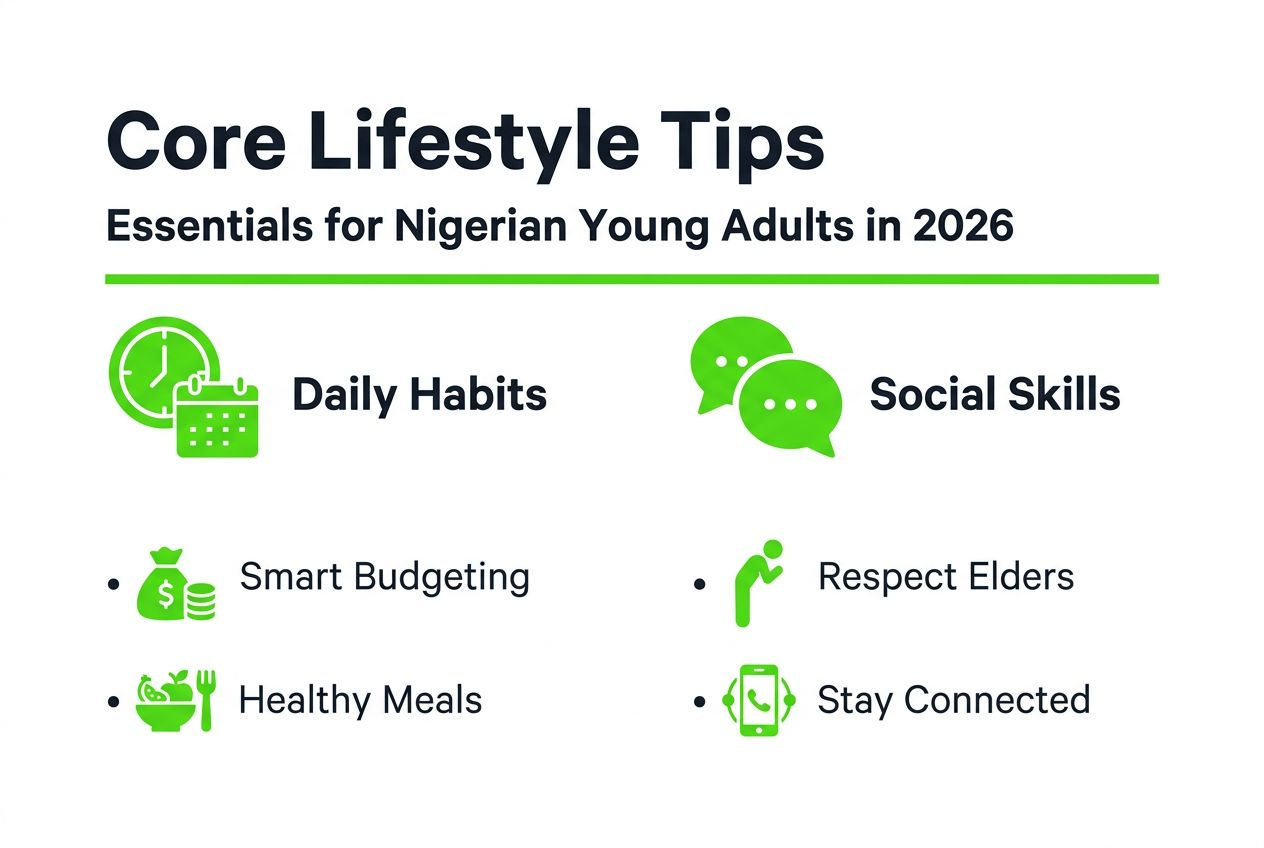
Master Nigerian social etiquette: Use appropriate greetings based on age and setting. Address elders with respect using titles like Uncle, Aunty, or Sir. Dress modestly for family gatherings and professional settings. This cultural fluency strengthens relationships and opens doors professionally. Check social media etiquette rules to extend your etiquette online.
Create a realistic monthly budget: List all income sources and fixed expenses like rent, transport, and food. Allocate at least 10% to savings before discretionary spending. Use Nigerian budgeting apps or simple spreadsheets to track spending weekly. Review Nigerian career tips to boost income over time.
Adopt a balanced Nigerian diet: Prioritize local vegetables like ugwu, waterleaf, and ewedu. Include moderate protein from fish, beans, or eggs. A balanced Nigerian diet focusing on local vegetables and moderate protein intake improves energy levels and reduces fatigue. Avoid excessive fried foods and sugary drinks that drain energy.
Implement time management techniques: Use time-blocking to dedicate specific hours to work, study, and personal activities. Set clear daily goals each morning. Eliminate distractions like excessive social media during productive hours. This structure increases output and reduces stress.
Pro Tip: Start with one lifestyle change at a time rather than overhauling everything simultaneously. Master budgeting for one month before adding diet changes. This gradual approach prevents overwhelm and builds lasting habits.
These core improvements address fundamental aspects of Nigerian young adult life. Consistent application creates a solid foundation for further enhancements. Revisit saving money in Nigeria strategies as your budget stabilizes.
Urban and social hacks for Nigerian cities
Navigating Nigerian cities requires specific strategies to reduce costs and maximize opportunities. These hacks address housing, transport, and social engagement with cultural awareness.

Housing comparison:
| Housing Type | Average Monthly Cost | Pros | Cons |
|---|---|---|---|
| Shared Accommodation | ₦40,000-₦80,000 | Lower rent, shared utilities, built-in social network | Less privacy, potential roommate conflicts |
| Single Apartment | ₦150,000-₦300,000 | Full privacy, independent living | Higher costs, isolation, full utility burden |
Shared accommodation cuts housing costs by 50% or more in cities like Lagos and Abuja. You split utilities and sometimes food expenses. Choose roommates carefully through mutual connections to avoid conflicts.
Transport cost reduction strategies:
- Use ride-sharing apps during off-peak hours for better rates
- Join workplace carpool groups to split commute costs
- Plan errands to combine multiple trips and reduce total travel
- Consider living closer to work even if rent is slightly higher
Young Nigerian adults living in Lagos spend approximately 40% of their monthly income on commuting due to transit inefficiencies. Strategic planning cuts this significantly. Review saving tips for Nigerian youth for additional transport savings.
Social engagement without overspending:
- Attend free community events at cultural centers and churches
- Organize home gatherings instead of expensive outings
- Participate in skill-sharing groups that build connections and knowledge
- Join professional networks that combine socializing with career growth
Pro Tip: Track your monthly transport expenses in a notebook or app for two weeks. You’ll discover hidden costs and identify your biggest spending patterns. This awareness reveals specific areas to cut without sacrificing mobility.
These urban hacks maintain your social life and mobility while protecting your budget. They acknowledge Nigerian city realities and provide culturally appropriate solutions.
Common mistakes Nigerian young adults make and how to avoid them
Avoiding these frequent errors saves you money, protects your health, and preserves important relationships. Learn from others’ missteps to accelerate your lifestyle improvement.
Social etiquette mistakes:
- Ignoring proper greetings or using overly casual language with elders damages relationships
- Wearing inappropriate clothing to traditional events shows disrespect
- Failing to acknowledge gifts or help from others strains friendships
- Using phones excessively during face-to-face conversations appears rude
Correction: Study basic Nigerian cultural norms and observe respected peers. When uncertain, choose formality over casualness. Explore common financial mistakes among Nigerian millennials to avoid parallel errors.
Financial planning errors:
- Spending without tracking leads to mysterious money disappearance
- Failing to save for emergencies creates crisis situations
- Taking on debt for lifestyle expenses rather than investments
- Ignoring small daily expenses that accumulate significantly
Correction: Implement the budgeting system from the core improvements section. Review spending weekly and adjust categories that exceed limits.
Health and safety lapses:
- Eating from street vendors without checking cleanliness causes illness
- Skipping meals to save money damages energy and concentration
- Neglecting exercise due to gym costs despite free alternatives
- Staying in unsafe areas to save rent money
Correction: Choose vetted street food vendors with visible hygiene practices. Cook simple meals at home using affordable local ingredients. Use bodyweight exercises and neighborhood walks for free fitness.
Pro Tip: Create a personal checklist of your three biggest mistakes from the past six months. Write one specific prevention strategy for each. Review this list monthly to track improvement and reinforce new habits.
Recognizing these patterns early prevents costly consequences. Small adjustments in awareness and behavior produce major lifestyle gains over time.
Measuring your lifestyle improvement success
Tracking specific metrics helps you verify progress and stay motivated. These indicators show whether your lifestyle changes produce real results.
Progress indicators:
| Success Area | Measurable Indicator | Target Timeline | How to Track |
|---|---|---|---|
| Social Relationships | Fewer conflicts, more invitations | 3 months | Count social interactions monthly |
| Financial Stability | Consistent savings, reduced debt | 6 months | Review bank statements and budget |
| Physical Health | Higher energy, fewer sick days | 2 months | Log energy levels and health issues |
| Productivity | Meeting deadlines, completed goals | 1 month | Track task completion rates |
| Living Costs | Lower monthly expenses | 3 months | Compare monthly spending totals |
| Mental Wellbeing | Reduced stress, better mood | 2 months | Journal emotional state weekly |
Start tracking these areas immediately after implementing lifestyle changes. Document your baseline in week one, then measure monthly progress.
Social success signals:
You receive more event invitations from friends and family. People seek your advice on personal matters. Elders compliment your respectful behavior. Professional contacts recommend you for opportunities.
Financial health markers:
Your savings account grows every month without exception. Emergency expenses don’t create panic. You meet bill deadlines comfortably. Debt balances decrease steadily.
Physical and mental improvements:
You wake refreshed and maintain energy throughout the day. Illness occurs less frequently. You handle stress without excessive anxiety. Focus and concentration improve during work or study.
Review career tips for Nigerian professionals as your overall stability improves. Professional growth often accelerates once personal life stabilizes.
Celebrate small wins along the way. Acknowledge when you successfully apply a new habit for 30 consecutive days. Share progress with supportive friends who understand your journey.
Explore more tips and community support at Naijatipsland
Your lifestyle transformation continues beyond this guide. Naijatipsland offers ongoing resources tailored to Nigerian young adults navigating similar challenges.
Our platform provides practical advice on financial management, helping you implement practical ways to save money in Nigeria through detailed strategies. Community forums let you share experiences, ask questions, and learn from peers facing identical urban living challenges.
Join discussions about social etiquette where members share real scenarios and solutions. Learn forum etiquette importance to engage respectfully and productively. Discover how to start online discussions that generate valuable advice and lasting connections.
Connect with thousands of young Nigerians building better lifestyles through shared knowledge and mutual support. Your questions receive answers from people who understand Nigerian cultural context and urban realities.
FAQ
What are some essential social etiquette rules for young Nigerians?
Use respectful greetings appropriate to the setting and person’s age. Dress modestly for family events and professional occasions. Practice punctuality to show respect for others’ time. Always acknowledge elders properly and honor community norms around hospitality. These basics prevent misunderstandings and strengthen relationships. Review social media etiquette rules to extend good manners online.
How can I create a realistic budget that fits Nigerian expenses?
Track every income source and expense for one full month to understand your patterns. Use budgeting apps that support naira or create a simple spreadsheet. Prioritize savings by allocating 10-15% before other spending. List essential bills like rent, transport, and food first, then allocate what remains to discretionary items. Check saving money tips Nigeria for specific strategies that work within Nigerian economic realities.
What are effective ways to stay healthy with Nigerian food options?
Include local vegetables like ugwu, waterleaf, and ewedu in daily meals for essential nutrients. Add moderate protein from affordable sources like beans, fish, or eggs. A balanced diet focusing on local vegetables and moderate protein improves energy levels significantly. Avoid street food vendors without visible hygiene practices. Incorporate both traditional wellness approaches and modern fitness routines for comprehensive health.
How can I reduce living costs in busy Nigerian cities effectively?
Consider shared accommodation to cut rent by 50% or more compared to single apartments. Use carpooling or ride-sharing during off-peak hours to lower transport expenses. Plan trips to combine multiple errands and reduce total travel costs. Young adults in Lagos spend approximately 40% of income on commuting, making strategic transport choices critical. Living slightly closer to work often saves more than the extra rent costs through reduced commute expenses.