


TL;DR:
- Viral marketing uses peer-to-peer sharing on social media to rapidly amplify brand messages. It relies on a K-factor above 1 and activating multiple psychological drivers for effective growth. Combining trendjacking with private seeding and easy sharing increases the likelihood of campaigns going viral.
Viral marketing is the strategic use of peer-to-peer sharing on social media and digital platforms to rapidly amplify brand messages through exponential audience reach. Unlike paid advertising, it relies on voluntary sharing by real people, which makes each share a credibility signal, not just a distribution event. Jonah Berger’s STEPPS framework and the viral coefficient (K-factor) are the two most widely used tools for engineering and measuring this kind of growth. Understanding what is viral marketing means understanding both the psychology that drives sharing and the math that sustains it.
What is the viral coefficient (K-factor) in viral marketing?
The K-factor measures virality mathematically by multiplying the average number of invitations a user sends by the conversion rate of those invitations. A K-factor greater than 1 means each user brings in more than one new user. That creates exponential growth. A K-factor below 1 means the campaign is shrinking, not spreading.
Many marketers confuse slow word-of-mouth with a true viral loop. They are not the same thing. Word-of-mouth is linear. A viral loop is self-reinforcing, and it only works when the K-factor exceeds 1.
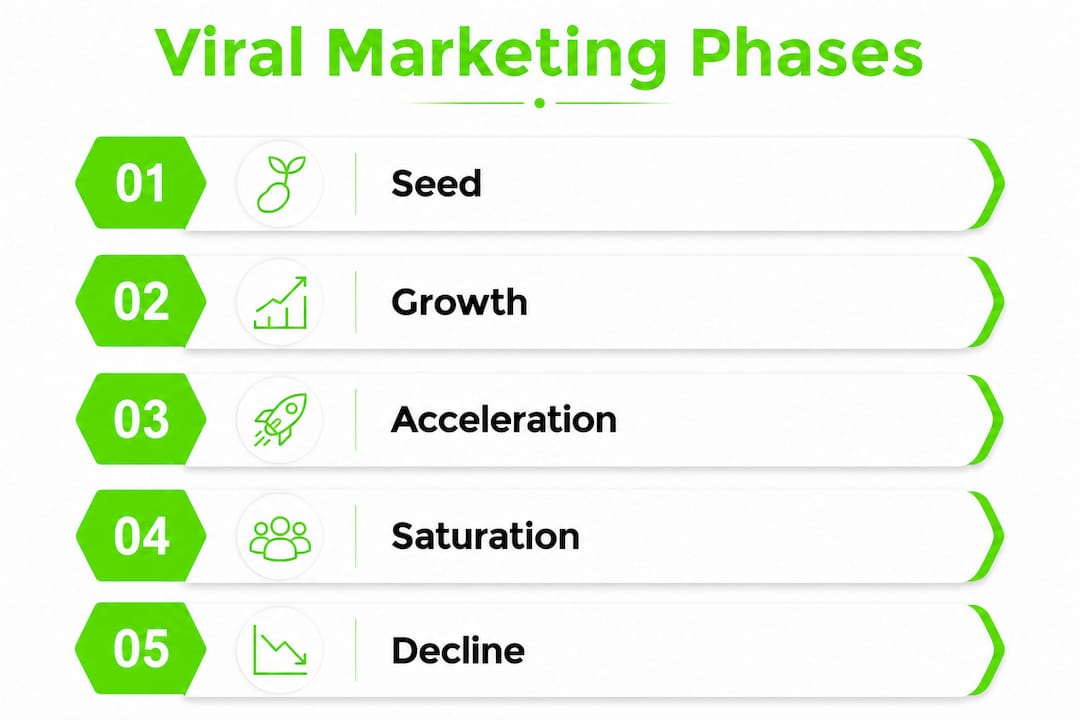
Viral campaigns follow four distinct phases. The seed phase is when you push content to an initial audience, typically through influencers or owned channels. The spike phase is rapid growth triggered when the algorithm picks up momentum. The plateau phase arrives when audience saturation slows new shares. The tail phase is residual sharing that continues after the spike fades.
| Phase | What happens | Your goal |
|---|---|---|
| Seed | Initial push to targeted audience | Hit algorithmic tipping point |
| Spike | Rapid, exponential sharing | Sustain momentum with fresh content |
| Plateau | Growth slows as audience saturates | Capture leads before decay |
| Tail | Residual sharing continues | Repurpose content for new audiences |
Pro Tip: Calculate your K-factor before launch, not after. If your sharing mechanism requires more than two steps, your conversion rate will drop and your K-factor will fall below 1 before the campaign even starts.
Most viral campaigns require coordinated seeding through influencers posting within a tight time window to hit algorithmic tipping points. A network of 50–100 nano-influencers posting within a six-hour window creates the density that platform algorithms interpret as trending content. That density is what triggers the spike phase.
How do psychological drivers influence viral sharing?
Jonah Berger’s STEPPS framework identifies six psychological drivers that make content shareable. Campaigns activating three or more of these drivers achieve significantly higher sharing rates than single-element campaigns. Each driver works on a different human motivation, which is why stacking them multiplies impact.
- Social Currency: People share content that makes them look good, knowledgeable, or ahead of the curve. A campaign that gives your audience insider information or exclusive access activates this driver directly.
- Triggers: Content tied to a recurring cue in daily life gets shared repeatedly. A campaign linked to a daily habit, a season, or a cultural moment stays top of mind longer than a one-off post.
- Emotion: High-arousal emotional content such as awe, excitement, or even anger achieves about twice the sharing frequency compared to neutral content. Emotion is not decoration. It is the engine.
- Public: Content that is visible in public spaces gets imitated and shared. Behaviors people see others doing feel normal and desirable.
- Practical Value: People share useful information because helping others reinforces their own social identity. How-to content, tips, and guides tap directly into this driver.
- Stories: Narratives carry information in a format the brain processes naturally. A brand story that embeds a message inside a compelling narrative spreads the message without feeling like an ad.
High-arousal emotional content motivates sharing by enhancing social currency and practical value simultaneously. That combination is why emotionally charged content consistently outperforms polished but neutral brand messaging. You do not need a big budget. You need a strong emotional hook.
What are modern viral marketing strategies for 2026?
The mechanics of how viral marketing works have shifted significantly with platform algorithm changes and the rise of social search. These are the strategies that drive results right now.
Trendjacking: This means piggybacking on existing memes, cultural moments, or news cycles to capture audience attention quickly. Trendjacking is a top 2026 strategy because it lets brands enter conversations that already have momentum, without needing to create the original spark. The key is speed and relevance. A brand that joins a trend 48 hours late looks out of touch.
Social SEO optimization: Platform search is now a primary discovery channel, especially on short-form video platforms. Social SEO in 2026 means writing keyword-rich captions and descriptive alt text so your content appears in in-app keyword searches. Treat your caption like a search engine meta description.
Interactive platform features: Remixing, duets, and stitch features on short-form video platforms are built-in viral mechanics. When you create content designed to be remixed, you are building a sharing loop directly into the format. This is one of the most underused viral marketing techniques available to marketers today.
Engagement depth over reach: Comments, saves, and loops signal algorithmic value more than passive views. Design content that prompts a response, a question, or a reaction. A post with 500 comments reaches more people than a post with 50,000 views and no engagement.
Dark Social seeding: Private sharing channels like WhatsApp and Telegram drive significant viral momentum but are invisible to standard analytics. Seed your content in private groups and communities before pushing it to public feeds. That early velocity signals authenticity to platform algorithms.
Pro Tip: Optimize your video content for platform search using keyword-rich captions and descriptive thumbnails. A solid video SEO approach can extend a campaign’s reach long after the initial spike fades.
How does viral marketing differ from buzz marketing?

Viral marketing is a technical, engineered distribution strategy. Buzz marketing is more spectacle and PR-driven. Both aim for wide reach, but they use fundamentally different mechanics to get there.
Viral marketing builds a self-replicating loop. The content itself carries the sharing mechanism. Buzz marketing creates a single large event or stunt that earns media coverage and public conversation. A product launch with a shocking reveal is buzz marketing. A referral program that rewards users for inviting friends is viral marketing.
| Factor | Viral marketing | Buzz marketing |
|---|---|---|
| Core mechanic | Engineered sharing loop | Spectacle or PR event |
| Measurement | K-factor, share rate | Media mentions, PR coverage |
| Duration | Sustained through loop design | Short spike around the event |
| Cost structure | Low per-share cost at scale | High upfront event or PR cost |
| Best use case | Product launches, referral programs | Brand awareness, cultural moments |
The two approaches work well together. A buzz marketing event can seed the initial audience for a viral loop. The spectacle drives the first wave of attention. The viral loop sustains and amplifies it. Marketers who understand audience engagement strategies know that combining both approaches produces stronger results than either alone.
Key Takeaways
Viral marketing succeeds when you engineer a sharing loop with a K-factor above 1, activate multiple STEPPS psychological drivers, and reduce every friction point in the sharing process.
| Point | Details |
|---|---|
| K-factor is the core metric | A K-factor above 1 is required for exponential growth; below 1, the campaign shrinks. |
| STEPPS framework drives sharing | Activating three or more STEPPS drivers significantly increases a campaign’s shareability. |
| Emotion doubles share rates | High-arousal content like awe or excitement shares at roughly twice the rate of neutral content. |
| Trendjacking saves time and budget | Joining existing cultural moments is faster and cheaper than creating original viral sparks. |
| Dark Social drives early velocity | Private channels like WhatsApp seed initial momentum that public analytics cannot track. |
Naijatipsland’s take on what actually makes campaigns go viral
Most marketers treat virality as a lottery. They post content and hope it catches. That mindset is the single biggest reason campaigns fail. Virality is engineered, not discovered. Every successful viral campaign I have seen up close was built around a system, not a single piece of content.
The detail most guides skip is share friction. Minimizing sharing friction is not a nice-to-have. If sharing your content requires more than one tap, a significant portion of your potential sharers will drop off. That directly kills your K-factor. The platforms that grow fastest are the ones that make sharing feel effortless and socially rewarding at the same time.
Dark Social is the other blind spot. Marketers obsess over public feed metrics while the real early momentum builds in WhatsApp groups and Telegram channels. If you are not seeding your content in private communities before you push it publicly, you are missing the phase that triggers algorithmic recognition.
The last thing I will say is this: platform algorithms change constantly. A tactic that worked in 2024 may actively hurt you in 2026. The marketers who stay ahead are the ones who track engagement metrics closely and adjust their loop design every quarter, not every year.
— Naijatipsland
Stay ahead with Naijatipsland
Viral marketing moves fast. The brands that win are the ones that stay informed about what is trending, what audiences are sharing, and where culture is heading next.
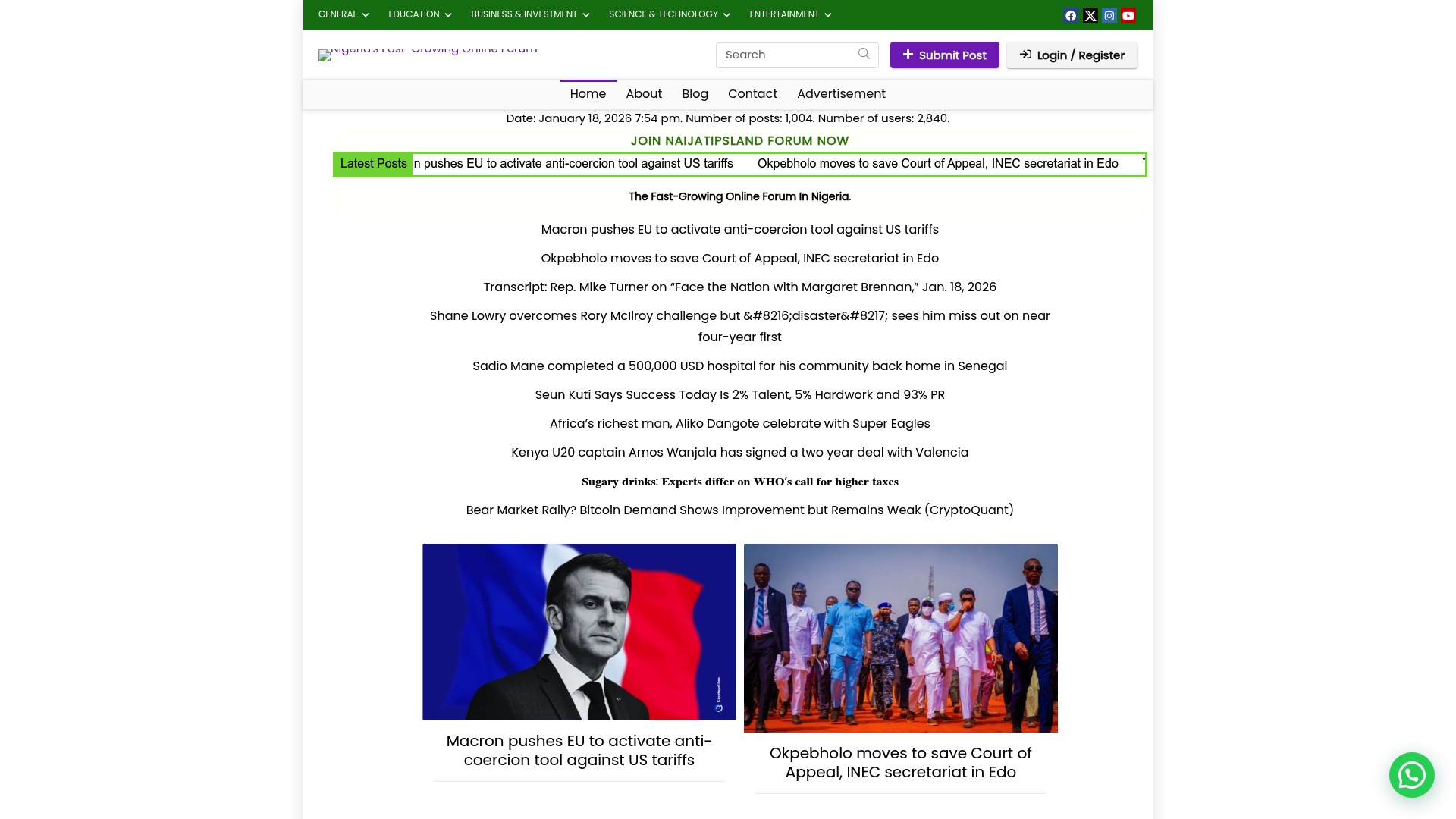
Naijatipsland covers entertainment updates, digital trends, and Nigerian cultural moments that marketers can tap into for timely, relevant content. If you want to understand what Nigerian audiences are sharing and why, stay informed and engaged with Naijatipsland’s regularly updated content hub. You will find the kind of real-time cultural intelligence that turns a good campaign idea into one that actually spreads. Explore the platform and make it part of your weekly content research routine.
FAQ
What is viral marketing in simple terms?
Viral marketing is a strategy where content spreads rapidly through voluntary peer-to-peer sharing on social media and digital platforms. The goal is exponential reach driven by the audience, not paid distribution.
What is the K-factor and why does it matter?
The K-factor measures how many new users each existing user brings in. A K-factor above 1 means the campaign grows on its own; below 1, it shrinks.
What makes content go viral?
Content that triggers high-arousal emotions like awe or excitement shares at roughly twice the rate of neutral content. Activating multiple STEPPS drivers, including social currency and practical value, amplifies this effect further.
How is viral marketing different from buzz marketing?
Viral marketing uses an engineered sharing loop that sustains itself over time. Buzz marketing relies on a single high-impact event or PR stunt that generates a short spike of attention.
What is trendjacking in viral marketing?
Trendjacking means joining an existing cultural moment, meme, or news cycle to capture audience attention quickly. It is one of the most cost-effective viral marketing strategies for 2026 because the audience already exists.