Last updated: 13 October 2026. Advertising rules for influencers in Nigeria are changing and, in some respects, contested. This is general information, not legal advice. Check current guidance from ARCON and the FCCPC before you run or accept a paid campaign.
Influencers in Nigeria at a glance
- Why they matter: DataReportal’s research found that Nigerians use social media on about 5.84 days out of 7, that 56.6% of active users cite current affairs as a draw and that about 70% use social media to learn about brands.
- The rules: sponsored content counts as advertising. The Advertising Regulatory Council of Nigeria (ARCON) says adverts, including influencer posts, need vetting, and the consumer protection law bans false or undisclosed endorsements.
- The golden habit: disclose paid posts clearly, every time.
- Be careful with claims: no one can promise guaranteed results from an influencer campaign.
Influencers, from comedians and musicians to fashion creators, food bloggers and political commentators, have become powerful voices in Nigerian life. They popularise slang, make products famous, spread news and sometimes spread rumours. An earlier version of this article quoted statistics on influencer impact that we could not trace, so we have removed them and replaced them with sourced data and the rules that apply to this fast-moving field.
How Influencers Shape Trends and Culture
- They set the conversation. A phrase, challenge or opinion from a trusted creator can spread across timelines within hours, especially on platforms where Nigerians spend much of their day.
- They shape tastes. Recommendations influence what people wear, eat, listen to and buy, in part because people research brands on social media before they decide.
- They lend credibility. Followers often trust a creator they feel they know more than a faceless advert.
- They shape civic debate. Creators influence how people talk about elections, public services and social issues, which is why fact-checkers watch for fabricated quotes and fake posts. See our guides on discussing politics online and trending topics.
- They build communities. Many creators run groups, newsletters and events that give followers a sense of belonging.
Influence is not automatically good or bad. It carries responsibility, because large audiences can be helped or harmed by what a creator says.
What Makes an Influencer Effective?
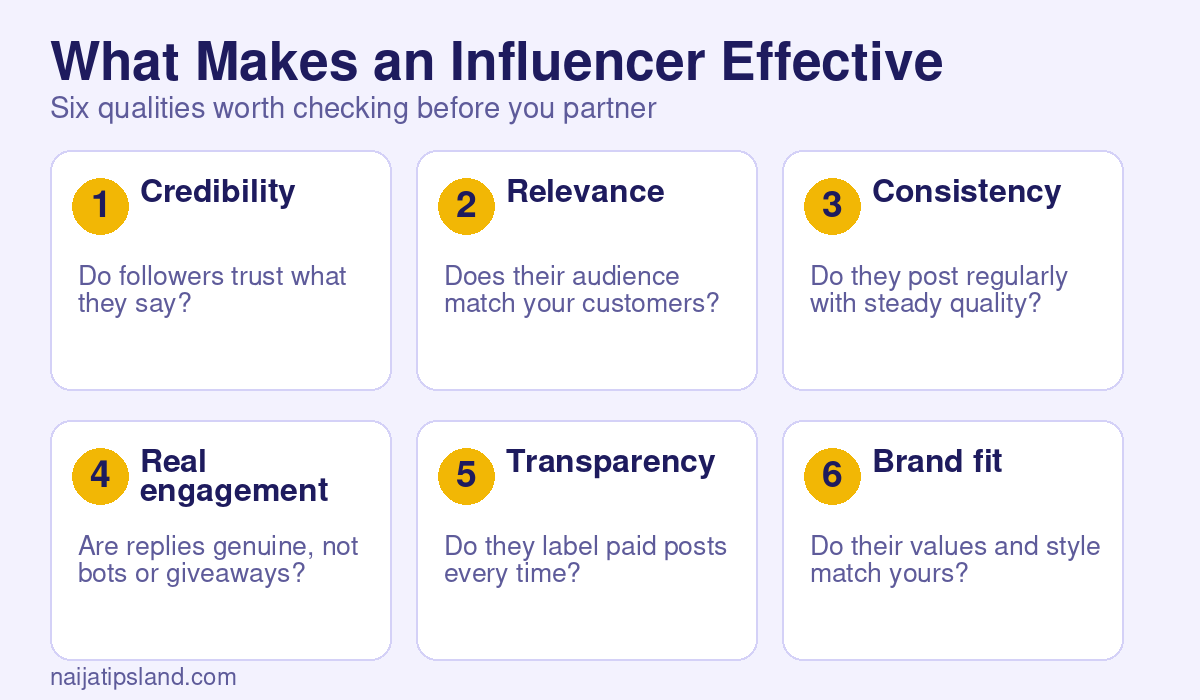
- Credibility: followers trust what they say, based on a record of honesty.
- Relevance: their audience matches the people you want to reach.
- Consistency: they publish regularly and keep up quality.
- Real engagement: replies and shares come from genuine people, not bots or giveaway hunters.
- Transparency: they label paid content every time.
- Brand fit: their values and style match your brand.
Micro-Influencers or Celebrities?
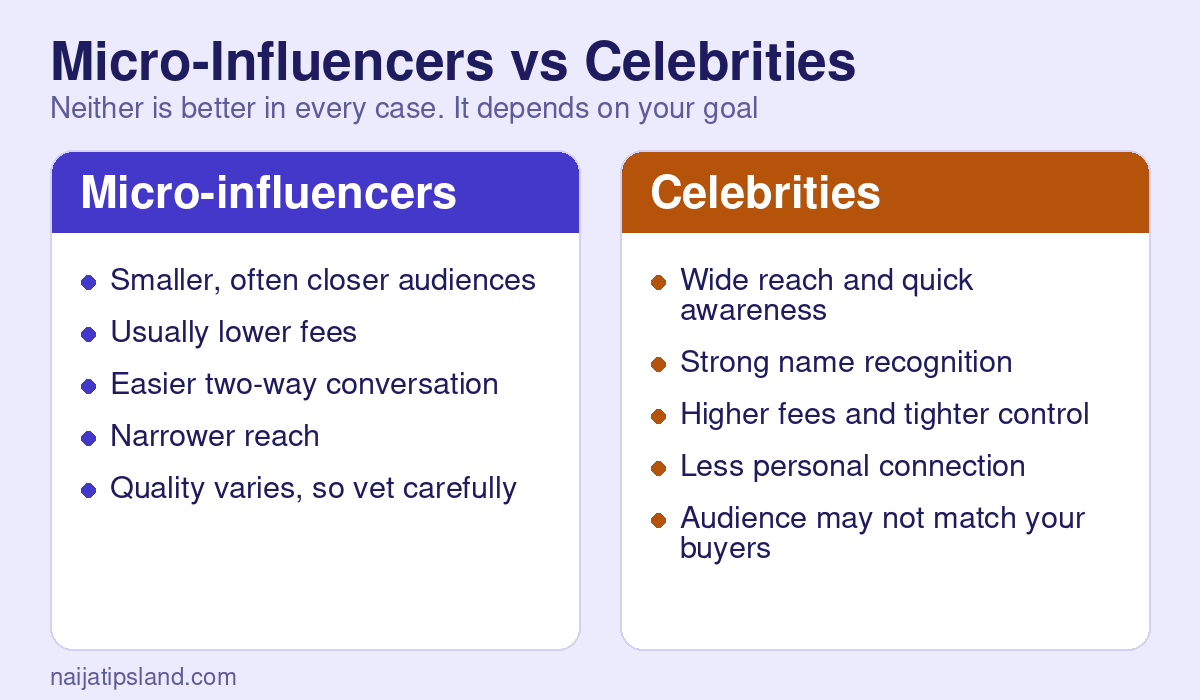
Micro-influencers have smaller followings and often closer relationships with their audiences, which can suit local businesses and niche products. Celebrities offer wide reach and recognition, which can suit launches and awareness campaigns, but they cost more and the audience may not match your buyers. There is no universal rule about which gives better returns, so test small and measure.
The Rules in Nigeria
ARCON: advertising rules
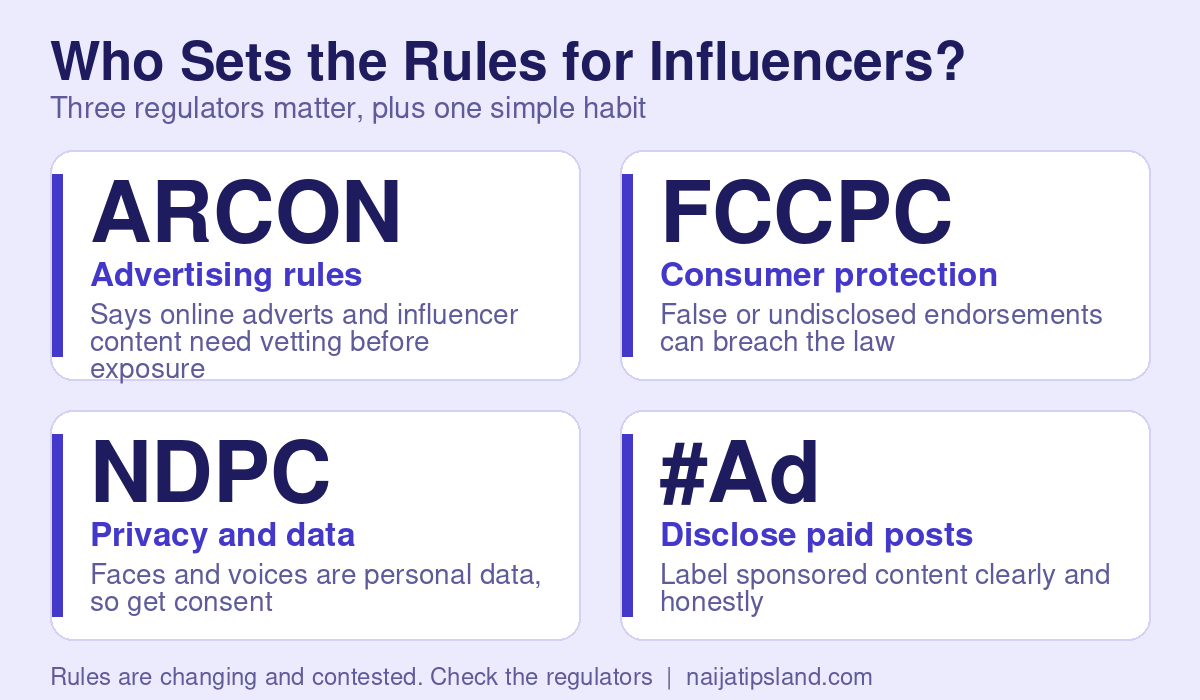
The Advertising Regulatory Council of Nigeria was created by the ARCON Act 2022. On 30 April 2025, a Federal High Court ruled that ARCON has authority to regulate advertising content, including on social media and digital platforms. In May 2025 ARCON issued a directive requiring influencers, content creators and advertisers to obtain approval before exposing an advert. Commentators report fines of up to ₦1 million per infraction for adverts that skip vetting, and vetting fees reported at roughly ₦7,500 to ₦100,000 depending on format and placement. The policy has been criticised: the Advertisers Association of Nigeria wrote an open letter in February 2026 saying the guidelines created bottlenecks, and a presidential business environment report ranked ARCON poorly on compliance. Because the position is contested and may change, confirm current requirements with ARCON before you publish paid content.
FCCPC: consumer protection
The Federal Competition and Consumer Protection Act prohibits false, misleading or deceptive endorsements, including undisclosed sponsorships and unauthorised testimonials. Influencers and brands that make misleading claims, such as promising unrealistic results, can face complaints, damages or fines.
NDPC: privacy and data
The Nigeria Data Protection Act treats a person’s face and voice as personal data, so featuring identifiable people without consent can be a breach. See our guide on data privacy.
The simple habit: disclose
Whatever else is uncertain, label paid posts, gifts and partnerships clearly, with terms such as “Ad”, “Sponsored” or “Paid partnership”, at the start of the post rather than hidden in a long caption.
Advice for Brands
- Define the goal before you choose anyone: awareness, sign-ups, sales or community growth.
- Vet the influencer. Review their past content, audience comments and engagement quality, and look for sudden follower jumps that suggest bought followers.
- Write a clear brief and contract. Cover deliverables, dates, approval steps, disclosure, usage rights, payment terms and what happens if either side breaks the deal.
- Do not script false claims. You can be held responsible for what your influencers say about your product.
- Check regulatory requirements for vetting and disclosure before the campaign goes live.
- Measure honestly with tracked links and codes. Our guide to engagement metrics explains what to track.
Advice for Creators
- Protect your credibility. Only promote products you have checked and are willing to stand behind.
- Disclose every time. It builds trust and protects you legally.
- Avoid fake giveaways and get-rich schemes. They hurt followers and can be scams. Read our guide to avoiding internet scams.
- Verify before you share. A false claim from a large account spreads quickly.
- Look after yourself. Online attention brings pressure and criticism. Keep real-world connections, as discussed in our guide to community and mental health.
Risks to Watch
- Fake followers and engagement, which waste budgets and mislead brands.
- Misinformation, including fabricated quotes and AI-made content around elections.
- Scams using borrowed credibility, such as cloned accounts offering fake giveaways.
- Undisclosed political promotion, which misleads audiences about who is behind a message.
- Regulatory uncertainty, because enforcement and requirements may shift.
Questions to Ask Before You Hire an Influencer
- Who is their audience by age, location and interests, and can they show it?
- Have they worked with similar brands, and can you speak to them?
- How do they label paid content, and will they follow your disclosure rules?
- What do they charge, what does that include and what are the usage rights?
- How will you measure results, and who owns the performance data?
- What happens if the content needs to be corrected or removed?
Clauses to Include in an Influencer Agreement
- Deliverables, formats and deadlines.
- Approval steps and how many revisions are allowed.
- Payment amounts, dates and any bonus or penalty.
- Disclosure and compliance duties, including advertising vetting where it applies.
- Rights to reuse the content, for how long and where.
- Rules on honesty: no false claims, fake engagement or undisclosed deals.
- Termination, takedown and dispute resolution.
Because rules and best practice are evolving, have a lawyer review any significant agreement.
Questions Creators Should Ask Brands
- Is the product safe, legal and something I can honestly recommend?
- Who is responsible for vetting and approvals, and who pays the fees?
- Can I disclose the partnership in my own words and format?
- What claims am I allowed to make, and can the brand prove them?
- When will I be paid, and what happens if the campaign changes?
Signs an Audience May Not Be Real
- Followers jump suddenly with no clear reason such as a viral post.
- Comments are generic, repeated or posted by accounts with no history.
- Likes are high but replies, saves and shares are almost nonexistent.
- The audience’s location or language does not match the creator’s content.
- Giveaway posts account for most of the activity.
None of these proves fraud on its own, but several together are a reason to ask for audience data or to walk away.
Frequently Asked Questions
Do influencers in Nigeria need ARCON approval?
ARCON has directed that adverts, including influencer content, be vetted before exposure, and a court affirmed its authority in April 2025. The policy has been criticised, so check ARCON’s current guidance before publishing paid content.
Do I have to say when a post is sponsored?
Yes. Clear disclosure is expected under advertising rules and consumer protection law, and it is good practice regardless.
Are micro-influencers better than celebrities?
Not always. Micro-influencers can offer closer audiences at lower cost, while celebrities offer reach. Choose based on your goal and test small.
How can I tell if an influencer’s followers are real?
Look at engagement quality, the content of comments, sudden spikes in followers and whether the audience matches the claimed location and interests.
Can a brand be responsible for what an influencer says?
Yes, brands can face consequences for misleading claims made on their behalf, so brief influencers carefully and review content.
Related Guides
- Social media growth in Nigeria: a workflow that works
- Digital advertising in Nigeria: what works and what the rules say
- What is user-generated content?
- How to spot fake news in Nigeria
Sources
- Mondaq: Regulatory and compliance regulations in influencer marketing and advertising
- Trusted Advisors Law: Regulatory and compliance regulations in influencer marketing
- Chambers: Influencer and digital marketing regulation in Nigeria
- Tribune: Why influencers and digital ad operators need ARCON
- BusinessDay: Businesses strained under advert regulator’s vetting regime
- Wikipedia: Advertising Regulatory Council of Nigeria
- DataReportal: Digital 2025 Global Overview Report
- DataReportal: Digital 2026, 2 in 3 people on Earth now use social media