
Last updated: 13 October 2026. Platform audiences and algorithms change often. Audience numbers below are each platform’s own estimate of potential advertising reach, as reported by DataReportal, not counts of unique people.
Social media growth at a glance
- Where the audience is: in late 2025 TikTok had the largest potential advertising reach in Nigeria at 47.8 million adults, followed by Facebook at 38.0 million, YouTube at 30.5 million, Instagram at 10.0 million and X at 6.95 million.
- Usage is frequent: Nigerians say they use social media on about 5.84 days out of every 7.
- No guarantees: nobody can promise a fixed rate of follower growth. Your own history is the only fair benchmark.
- What works: a clear audience, a few content pillars, a weekly workflow, quick replies and honest measurement.
Growing an audience on social media is a skill, not a trick, and the people who succeed usually do the same simple things for a long time. An earlier version of this guide gave benchmark figures and expected growth rates that we could not source, so we have taken them out. This version explains where Nigerian audiences are, how to plan, create and review content week by week, and which mistakes and legal points to watch.
Where Nigerians Are: The Platform Picture
DataReportal’s Digital 2026 report for Nigeria, which uses each platform’s advertising tools and covers late 2025, gives a side-by-side view of potential advertising reach among adults:

- TikTok: 47.8 million, up 43.4% in a year, equal to about 44% of Nigerian internet users.
- Facebook: 38.0 million, up 6.9%, about 34.9% of internet users.
- YouTube: 30.5 million, up 13.0%, about 28.1% of internet users.
- Instagram: 10.0 million, down 6.1%.
- X: about 6.95 million, down 10.7%.
Bigger is not automatically better. A platform with fewer users may suit a niche audience, and these numbers do not tell you how many people will see or care about your posts. They also overlap, because many people use several platforms.
Step 1: Know Your Audience and Set Honest Goals
Start with who you are trying to reach and what you want them to do. Describe one typical person: their age, location, interests, the platforms they use and the problems you can help them with. Then set goals you can measure, such as newsletter sign-ups, enquiries, group members or website visits, rather than just followers. Use your own past numbers as the baseline, and compare each month with the last one, not with a stranger’s account.
Step 2: Audit What You Already Do
Look at your last 20 to 30 posts. Which ones got the most replies, shares, saves or clicks? Which formats worked, and at what times? Note patterns in topic, tone and format. This is the cheapest research you can do, because it uses your real audience.
Step 3: Choose Content Pillars and Platforms
Content pillars are three or four themes you return to again and again. For example, a small food business might choose recipes, behind-the-scenes and customer stories, while a news community might choose explainers, fact-checks and member questions. Pick one or two platforms and do them well rather than posting everywhere badly.

Step 4: Build a Weekly Workflow
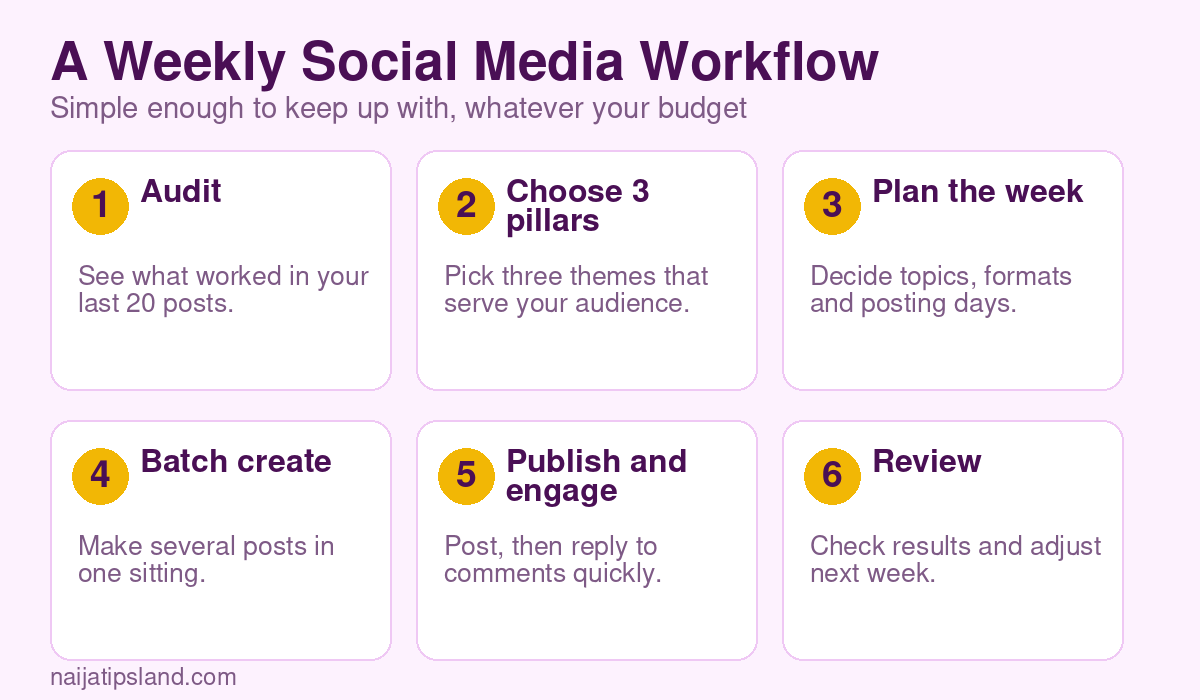
- Audit last week’s results.
- Plan the week’s topics, formats and posting days.
- Batch create several posts in one sitting to save time.
- Publish at times your audience is active, based on your own data.
- Engage by replying to comments and messages and joining conversations in your niche.
- Review what worked and adjust the next week.
A sample week might include one educational post, one short video, one community question, one behind-the-scenes post and one post that links to your website or offer. Keep what works and drop what does not.
Step 5: Engage and Build Community
- Reply quickly and kindly, especially in the first hours after posting.
- Ask real questions and respond to the answers.
- Collaborate with creators and organisations your audience already trusts.
- Use your audience’s content with permission and credit. See our guide to user-generated content.
- Moderate your spaces, as explained in our guide to comment moderation.
Step 6: Measure and Adjust
Track a handful of numbers that match your goals, such as reach, saves and shares, link clicks, replies, sign-ups and returning visitors. Record your baseline, review monthly and change one thing at a time. Our guide to engagement metrics explains the definitions and formulas.
Nigerian Realities to Plan For
- Data costs and phones: keep videos short and images light. Add captions, because many people watch without sound.
- Language and tone: mixing English and Pidgin can feel natural to your audience, but stay clear and respectful.
- WhatsApp: much sharing and customer contact happens there, so consider a WhatsApp channel or community, and use tagged links to track traffic.
- Trends: use them selectively and verify before you join. See our guide to trending topics.
- Scams and impersonation: accounts get cloned and customers get targeted. Warn your followers about fake pages and read our guides on WhatsApp scams and internet scams.
Rules to Follow When You Promote
- Be truthful. Do not make false or exaggerated claims about products or results.
- Disclose paid content. Label sponsored posts and partnerships clearly.
- Check advertising rules. Nigeria’s advertising regulator, ARCON, has said online adverts and influencer content need vetting. See our guides on influencers and digital ads.
- Respect privacy. Get consent before you feature identifiable people.
Common Mistakes
- Buying followers or engagement, which brings fake accounts and distorts your data.
- Posting everywhere without a plan.
- Chasing every trend regardless of fit.
- Ignoring comments and messages.
- Changing strategy every week before you have enough data.
- Copying someone else’s content instead of adding your own value.
A Sample One-Week Content Plan
- Monday: an educational post that answers a common question.
- Tuesday: a short video that shows something in action.
- Wednesday: a question to your community, and replies throughout the day.
- Thursday: a behind-the-scenes or customer story, with permission.
- Friday: a post that links to your website, newsletter or offer.
- Weekend: light content, replies and a quick review of the week.
Content Ideas for Common Niches
- Food and retail: how it is made, customer reviews, price lists and delivery updates.
- Services and professionals: short explainers, myth-busting, case studies and answers to frequently asked questions.
- News and community pages: verified summaries, fact-checks, polls and member stories.
- Education and careers: exam tips, admission updates, interview advice and scholarship alerts.
Handling Negative Comments
- Read it calmly, and decide whether it is a fair complaint, a question or abuse.
- Reply politely and publicly to fair complaints, then move details to a private message.
- Fix the problem and, where appropriate, update the original thread.
- Hide or remove abuse, threats and spam under your community rules.
- Learn from patterns, because repeated complaints show what to improve.
How Much Time Does This Take?
A small team can often run a basic programme in about five hours a week: one hour to plan, two to create, one to publish and engage and one to review. If you have less time, post less often but keep quality and replies. Consistency beats bursts of activity followed by silence.
Quick Wins You Can Do This Week
- Rewrite your profile so a stranger can tell in five seconds who you serve and what you offer.
- Pin your best post or your key offer where new visitors will see it first.
- Reply to every comment from the last seven days.
- Add captions to your videos and a clear call to action to each post.
- Ask three loyal followers what they would like to see more of.
Repurpose One Idea Many Ways
Good ideas deserve more than one post. A single explainer can become a short video, a carousel of key points, a quote graphic, a poll, a thread and a newsletter item. Each format reaches people who prefer to consume content differently, and you spend your research time once. Always adapt the format to the platform rather than pasting the same file everywhere, and keep a record of which versions perform best.
Frequently Asked Questions
Which platform should I use first?
The one where your audience already spends time and where you can create content consistently. TikTok has the biggest reach in Nigeria, but Facebook, YouTube and WhatsApp may suit your goals better.
How often should I post?
Often enough to be consistent, but not so often that quality drops. Many small teams do well with three to five good posts a week.
How long does it take to grow?
It varies widely. Judge progress by your own monthly trends, not by promises of fast growth.
Is it worth paying for ads?
It can be, if you have clear goals, a budget you can afford to lose and a way to measure results. Follow advertising rules and disclosure requirements.
Can I use trending sounds and images?
Only if you have the rights or the platform’s licence allows it. Respect copyright and credit creators.
Related Guides
- Engagement metrics explained
- How to find and write about trending topics in Nigeria
- What is user-generated content?
- How to register a business name in Nigeria
Sources
- Vanguard: TikTok, Instagram, Facebook or X, where Nigerians are building audiences
- allAfrica: TikTok, Instagram, Facebook or X, and what each platform rewards
- DataReportal: Digital 2026, Nigeria
- DataReportal: Digital 2026, 2 in 3 people on Earth now use social media
- Krestel Digital: Social media statistics in Nigeria, 2026 data report
- BusinessDay: Businesses strained under advert regulator’s vetting regime