Last updated: 13 October 2026. Trends change by the hour, so the examples here are a snapshot. The advice on finding, checking and writing about trends applies whenever you read it.
Writing about trending topics: the short version
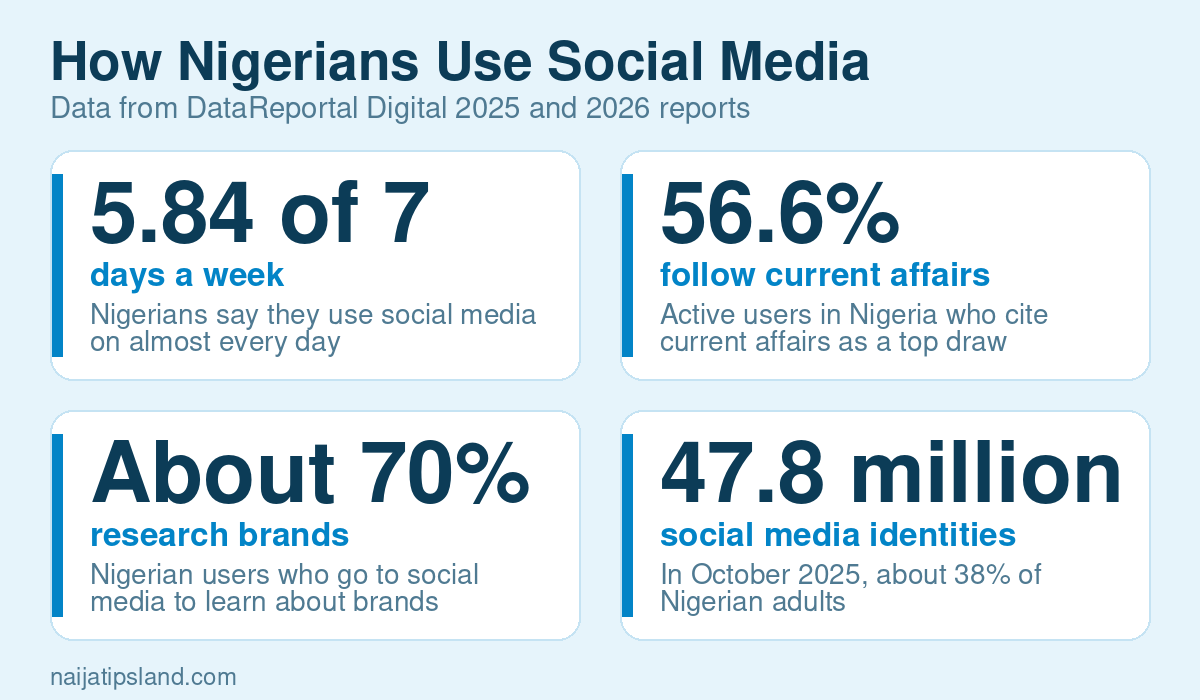
- Audience is there: DataReportal’s 2026 data says Nigerians use social media on about 5.84 days out of every 7, and 56.6% of active social media users in Nigeria say current affairs is a top draw.
- Spot a trend on at least two sources before you write about it.
- Verify first: fake and AI-made content spreads fastest when something is trending.
- Add value: explain, give local context, link to sources and update the post when facts change.
- No magic numbers: no method guarantees a fixed increase in engagement, so judge results by your own data.
Trending topics are the stories, debates and moments that suddenly fill Nigerian timelines, from election news and naira movements to football fixtures, viral videos and new rules. Writing about them can bring readers to your site or community quickly, but it also carries risks: rumours, copied content and posts that go out of date within a day. This guide explains how to find trends, check them, turn them into useful posts and measure whether it worked. An earlier version of this page promised that following its steps would produce a specific percentage increase in engagement. We cannot back that claim, so it has been removed and replaced with advice grounded in real data.
Why Trending Topics Matter in Nigeria
Social media is a daily habit for many Nigerians. DataReportal’s Digital 2026 research counted about 47.8 million social media user identities in Nigeria in October 2025, about 38% of the adult population. Its global survey data indicates Nigerians use social media on about 5.84 days a week, which is a high figure, and its 2025 report found that 56.6% of active social media users in Nigeria cite current affairs content as a top reason for using the platforms, while about 70% go to social media to learn more about brands. Those habits explain why news, politics and entertainment spread so fast and why useful, accurate commentary can stand out.
What Counts as a Trending Topic?
A trend is a subject drawing unusual attention for a short period. Useful categories include:
- News-driven trends: elections, policy changes, court rulings, strikes and security events.
- Money trends: naira movements, fuel prices, tax and bank rules.
- Sports trends: Super Eagles fixtures, transfers and major tournaments.
- Culture trends: music releases, reality shows, memes and viral videos.
- Seasonal trends: exam seasons, admissions, festive periods and national holidays.
Some trends fade in hours, while others, such as an election or a new tax regime, stay relevant for months. Decide which kind you are covering, because it affects how deep and how durable your post should be.
Where to Spot Trends
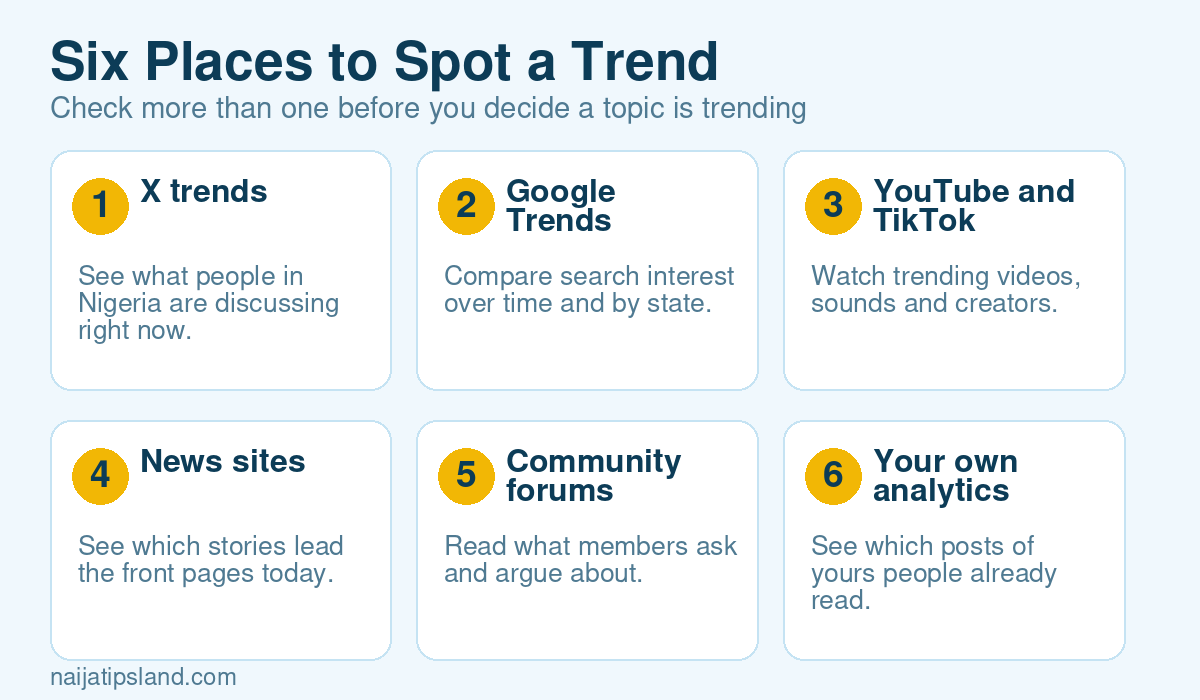
- X (Twitter) trends: shows what people in your region are discussing right now. DataReportal’s analysis found that X is a major arena for political talk in Nigeria, though that does not mean everything trending there is true.
- Google Trends: lets you compare search interest over time and by state, which helps you separate a real surge from a short burst of noise.
- YouTube, TikTok and Instagram: useful for spotting viral videos, sounds, challenges and creators.
- Nigerian news sites and newsletters: see which stories lead the day, and which angles are missing.
- Community forums and comment sections: your own audience’s questions are some of the best signals of what to write.
- Your analytics: posts that already get steady views show what your audience wants.
Verify Before You Write
Trending moments are when false information spreads fastest. Fact-checkers have documented AI-made fake newspaper covers, fabricated quotes and recycled videos in the run-up to the 2027 elections. Before you publish:
- Find the original source, not a screenshot of it.
- Confirm the claim with at least one credible outlet or an official statement.
- Search Dubawa, Africa Check and FactCheckHub for existing fact-checks.
- Check dates, because old stories often resurface as new.
- Label what is confirmed, what is claimed and what is unknown.
Our guide on how to spot fake news in Nigeria and our guide to discussing politics online go into more detail.
From Trend to Post: A Six-Step Workflow
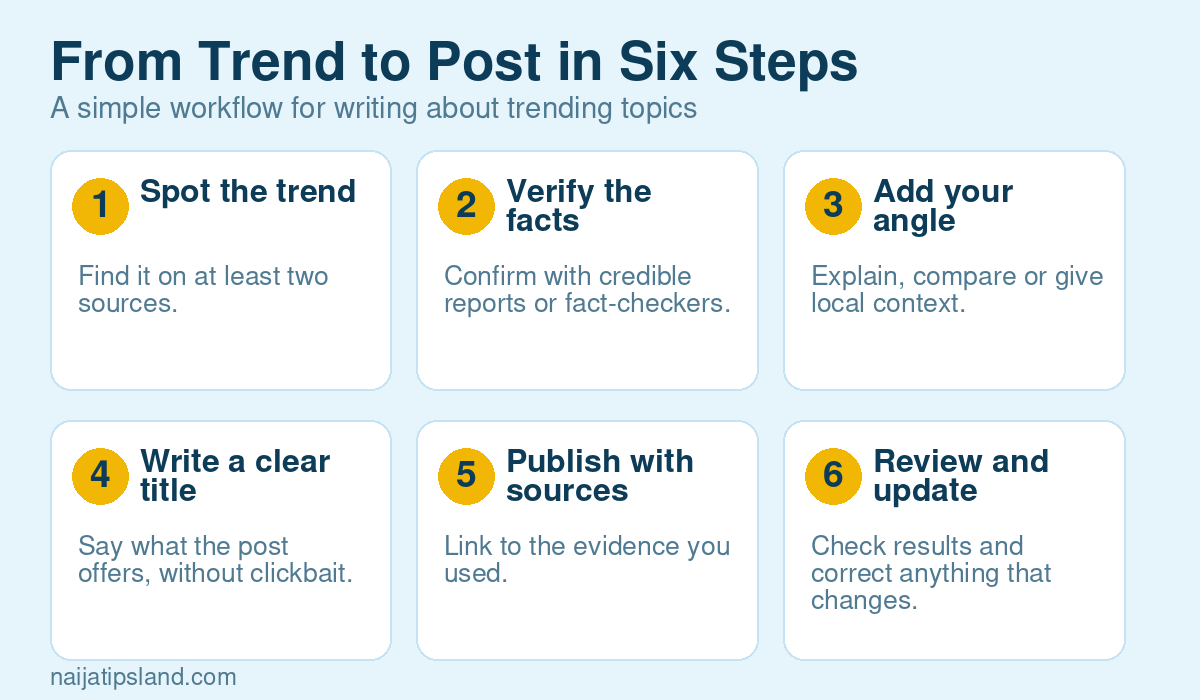
- Spot the trend on at least two sources.
- Verify the facts using credible reporting and official sources.
- Add your angle. Explain what happened, why it matters, what it means for readers and what comes next. Do not just repeat headlines.
- Write a clear title and opening. Say what the reader will learn. Avoid clickbait, because it damages trust.
- Publish with sources. Link to the evidence and attribute quotes properly.
- Review and update. Check your numbers after publishing, and correct or add to the post when facts change.
Trending in Nigeria Right Now: Examples
In mid-October 2026, topics drawing sustained interest include the 2027 elections, university admissions, the naira, tax changes and the Super Eagles. Each can be covered in a durable way if you give readers something to act on:
- The 2027 election hub explains dates, the timetable and candidates.
- JAMB admissions and cut-off marks matter to candidates before the 31 October university deadline.
- The dollar to naira rate is checked daily.
- Super Eagles fixtures and results follow the AFCON qualifiers.
- VAT and the new tax laws affect businesses and shoppers.
Writing Tips That Work
- Lead with the answer. Put the key fact in the first two sentences.
- Use plain language and short paragraphs. Most readers are on phones.
- Use local context. Explain what a development means for Nigerians, using local examples and data.
- Use headings and lists so readers can scan.
- Show your dates. State when you wrote or updated the post.
- Link to related posts so readers can go deeper.
Legal and Ethical Points
- Do not defame. Stick to verifiable facts about people and organisations.
- Respect privacy. Do not publish private details, and follow data protection rules.
- Respect copyright. Summarise in your own words, quote briefly with attribution and use images you have the right to use.
- Avoid hate and incitement, especially around ethnic, religious and political divisions.
How to Measure Whether It Worked
Define success before you publish, and use metrics you can check:
- Views and time on page show whether people read the post.
- Returning visitors show whether you earn trust.
- Shares and comments show interest, though not always quality.
- Search impressions and clicks show whether the post can be found later, which matters for evergreen angles.
Results vary widely by topic, timing and audience, so compare your posts with your own earlier posts rather than with promises from anyone else.
Common Mistakes
- Publishing before checking the facts.
- Copying another site’s article instead of adding something new.
- Using misleading titles to chase clicks.
- Leaving stale posts online without a date or an update.
- Ignoring comments that correct you.
Plan Ahead: A Simple Content Calendar
Not every trend is a surprise. Many topics return on a predictable calendar, so you can prepare useful posts before the rush. In Nigeria, common recurring moments include admission and exam seasons, national holidays such as Democracy Day and Independence Day, budget and tax announcements, major football fixtures, the festive season and election cycles. Keep a shared calendar, assign posts to people and update your best older posts each time the topic returns instead of writing a new one from scratch.
Case Study: Turning a Money Trend Into a Useful Post
Suppose the naira is trending because the exchange rate has moved sharply. A weak post repeats a screenshot and a rumour. A strong post explains what the official and parallel rates are, links to the central bank’s published rate, shows a short history, explains what moved the rate and gives readers something to do, such as how to compare rates before sending money. It cites its sources, carries a date and is updated when the numbers change. That is exactly how our dollar to naira rate page works, and the same approach fits any trend.
A Short Checklist Before You Publish
- Have I confirmed the main claim with at least two credible sources?
- Have I checked the date, location and speaker of any quote, photo or video?
- Does the post explain something readers cannot get from the headline alone?
- Are my links, numbers and names correct?
- Have I avoided insults, stereotypes and unproven accusations?
- Have I set a reminder to review the post when facts change?
Frequently Asked Questions
How do I know if something is really trending?
Check at least two independent sources, such as X trends, Google Trends and credible news sites. A topic that appears on only one platform may be a small but loud group.
Should I write about every trend?
No. Choose trends that fit your audience and where you can add real value or local context.
How fast should I publish?
Fast enough to be useful, but not so fast that you skip verification. A correct post an hour later is better than a wrong one first.
Will writing about trends guarantee more engagement?
No. Trending topics can bring attention, but there is no guaranteed increase. Quality, accuracy and timing matter, and results differ by audience.
What should I do if I publish something wrong?
Correct it quickly, note the correction on the page and thank anyone who flagged the error.
Related Guides
- How to spot fake news in Nigeria
- How to discuss politics online respectfully
- 2027 Nigeria election hub
- Nigeria’s cybercrime laws
Sources
- DataReportal: Digital 2026, Nigeria
- DataReportal: Digital 2026, 2 in 3 people on Earth now use social media
- DataReportal: Digital 2025 Global Overview Report
- Dubawa: 2027 election, how AI use is reshaping political disinformation in Nigeria
- Greenlearners Technologies: Digital marketing statistics in Nigeria (summarising DataReportal)