UK Visas for Nigerians in 2026: Fees, Refusal Rates and How to Avoid Rejection

Last updated: 14 October 2026. Immigration rules and fees change often, so use the UK government website for the current position. This is general information, not immigration advice. We rewrote this guide using the latest Home Office figures reported in 2026.
The UK is among the most popular destinations for Nigerians who want to study, work or visit family, but it is also one of the hardest to get into. A visa application is expensive, fees are generally not refunded after a refusal, and recent rule changes have made some routes harder.
The numbers
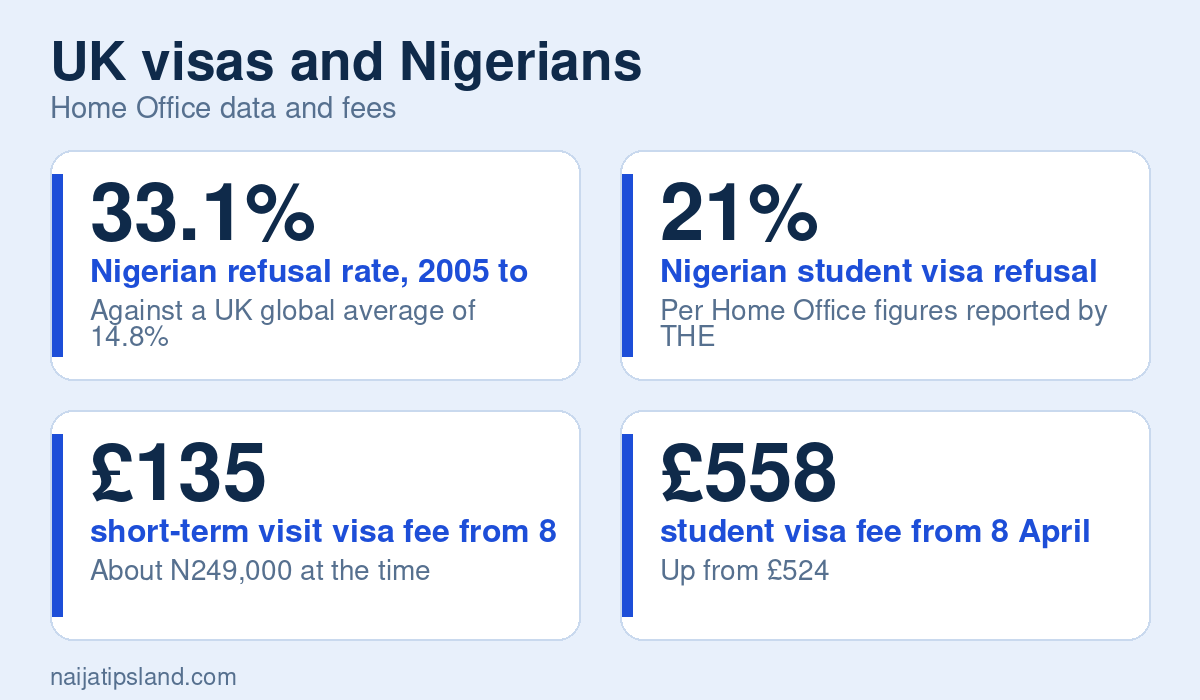
- Between 2005 and the first quarter of 2026, Nigerians lodged about 4.09 million UK visa applications. According to Home Office data analysed in the press, 2,723,558 were granted and 1,344,595 refused, a cumulative refusal rate of 33.1%, more than double the UK global average of 14.8%.
- Nigeria is the second-largest source of refusals after India, though it is also one of the largest recipients of visas, and Africa’s largest.
- In the first quarter of 2026, UK sponsored study visas fell to a post-pandemic low of 35,625, and refusals jumped 56% from a year earlier. The refusal rate for Nigerian students was about 21%, according to the figures reported by Times Higher Education. Some universities have stopped recruiting from countries with high refusal rates ahead of stricter compliance rules.
- In April 2024 the minimum salary for the Skilled Worker route rose from £26,200 to £38,700 and dependants’ rights were restricted for students and care workers, after which work visa applications from Nigeria fell sharply. The graduate visa has also been shortened, with reports citing 18 months.
The pressure on applicants is also showing up in admissions. The Financial Times, as reported by Nairametrics on 11 October 2026, found that 22.7% of UK study visa applications from Nigeria were withdrawn in the first half of 2026, up from 4.5% a year earlier, as universities revoked offers. Home Office study visa refusals doubled in that period, and from 1 June 2026 the maximum visa refusal rate a sponsoring university can have under the Basic Compliance Assessment fell from 10% to 5%, which is why universities are cutting risk. Universities UK International called visa processing “markedly less predictable”. Confirm that your offer and the university’s sponsor status are valid before you pay deposits or tuition.
n
Fees from 8 April 2026
- Short-term visit visa: £135, up from £127, reported as about ₦249,000. Long-term visit visas: £506 (2 years), £903 (5 years) and £1,128 (10 years).
- Student visa: £558, up from £524.
- Skilled Worker: £819 for stays of up to three years and £1,618 for longer, with lower fees for Immigration Salary List roles.
- Settlement: £3,226, and British citizenship by naturalisation: £1,709.
Some applications also carry a healthcare surcharge, biometric and priority service costs, so check the full costs on the official site. Exchange rate movements make the naira cost swing. See our guides on the Nigerian economy and cost of living.
Common reasons for refusal
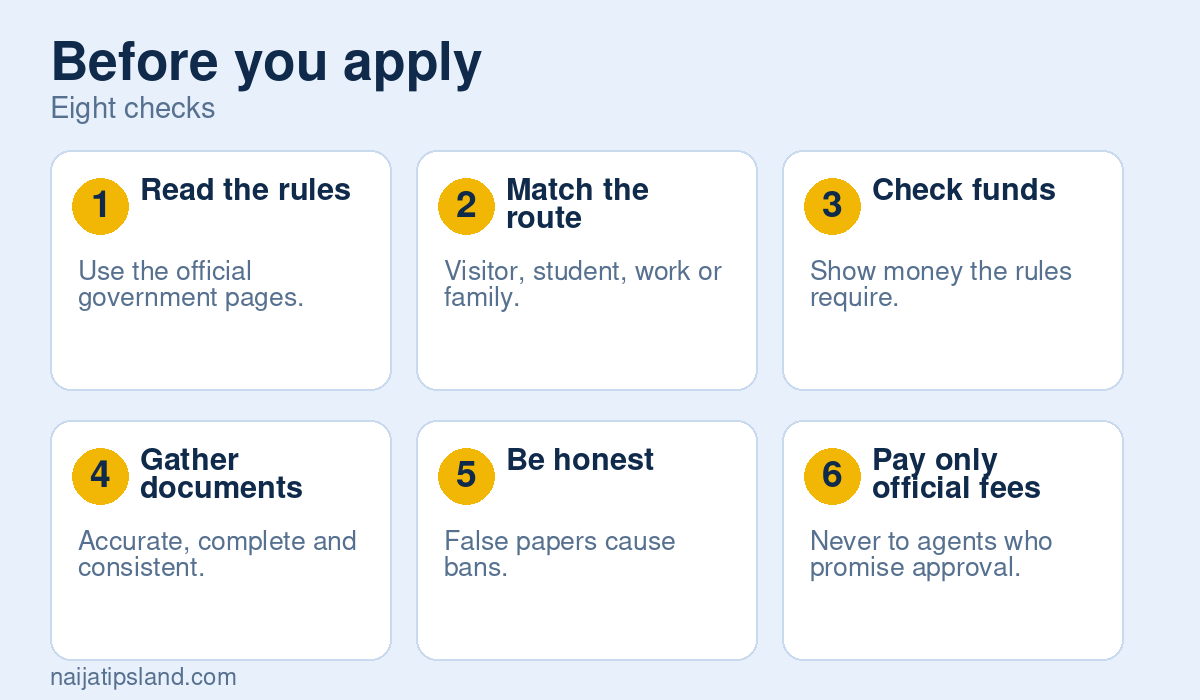
- Financial evidence problems: money that appeared suddenly, was held for too short a time or cannot be explained.
- Inconsistent information: dates, employers or plans that differ between documents.
- Doubts about your intention: visitors who do not show strong reasons to return, and students whose course choice or plan seems unconvincing.
- Missing or poor-quality documents.
- False documents or statements, which can bring a long ban.
A checklist to reduce mistakes
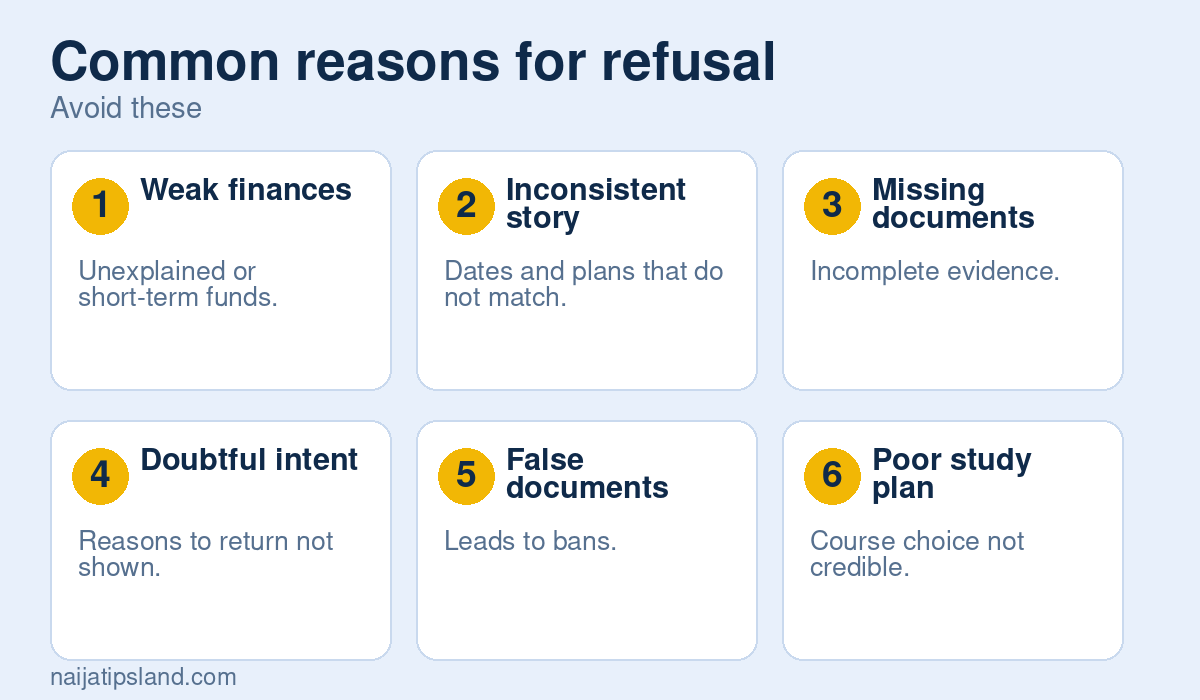
- Use only official government pages for rules, forms and fees.
- Choose the correct route and read its eligibility requirements line by line.
- Build your documents early: passport, bank statements covering the required period, proof of employment or study, accommodation, a clear itinerary or course details and a sponsor letter where relevant.
- Make sure every document tells the same, truthful story.
- Explain any gaps, large deposits or past refusals openly.
- Keep copies of everything and keep your application receipts.
- If you are refused, read the reasons carefully before reapplying. Check whether an appeal or administrative review is available.
Visa scams to avoid
- “Guaranteed visa” agents who charge huge fees. No agent can guarantee approval.
- Fake sponsorship and job offers, including offers of care worker roles that ask you to pay for a certificate of sponsorship. Genuine employers do not charge workers for sponsorship.
- Forged bank statements and “show money” services, which can lead to refusal and a ban, and criminal charges.
- Fake visa websites that look like official sites and charge extra. See our guides on internet scams and types of visas.
If you are weighing study options, read our guides on scholarships and university admission, and see how to plan your money with the financial literacy checklist.
Related guide (updated 31 October 2026)
Visiting Nigeria instead? See how to apply for a Nigerian visa from the UK.
Frequently Asked Questions
Why are so many Nigerian UK visa applications refused?
Reasons include documentation and finance problems, doubts about intentions and stricter UK policy. The cumulative refusal rate since 2005 is 33.1%, according to Home Office data.
Do I get my fee back if my visa is refused?
Generally no. UK visa fees are not refundable after a decision.
Can an agent guarantee my UK visa?
No. Anyone promising a guaranteed visa is likely a scammer.
Sources
- allAfrica: UK rejects 1.34m visa applications by Nigerians
- Brandspur: UK rejects over 1.34 million Nigerian visa applications in 21 years
- Times Higher Education: UK student visa refusal rates rise amid falling applicant numbers
- BusinessDay: UK visitor visa fee increases to N249,000, other changes
- BusinessDay: UK raises visa, residency and citizenship fees from April 2026
- News Central: UK increases visa and citizenship fees
- Nairametrics: UK universities withdraw offers to Nigerian students as visa refusals rise
- Wonkhe: Who pays the price when universities cancel offers to protect refusal rates