
How to Invest in Nigerian Real Estate From Abroad (2026): Safe Steps, Documents and Scams to Avoid


Last updated: 4 November 2026 · By Naijatipsland Editorial Team · Editorial policy
Property is the investment most Nigerians abroad dream about. A plot of land in Lagos, a duplex in Abuja, a block of flats you can rent out: it feels solid and familiar. It is also the area where diaspora buyers lose the most money, because they cannot inspect the land, verify documents or chase a seller in person. This guide explains how to invest in Nigerian real estate from abroad with fewer risks: the documents that matter, a step-by-step process, safer alternatives such as REITs, realistic costs and the scams to watch for. Checked 4 November 2026. Laws, fees and prices vary by state and change often, so confirm details with a qualified Nigerian property lawyer. I am not a lawyer or licensed financial adviser, and this is general information, not legal or investment advice.
Why diaspora buyers are targeted
Fraudsters know that people abroad often buy quickly, rely on photos and WhatsApp messages, and trust family introductions. Common traps include forged titles, the same plot sold to several buyers, sellers who do not own the land, family land sold without the family’s consent, land inside government acquisition, and “omonile” demands for extra payments after you start building. Reported scam activity is often concentrated in fast-growing corridors, such as parts of Lagos like Lekki, Ajah and Ibeju-Lekki, but the risk exists everywhere.
Decide your goal first
Before searching for land, be clear on why you are buying.
- A home to retire or return to. Prioritise location, security and title over price.
- Rental income. Rental yields in major cities have been reported in a range of roughly 4 to 8 percent, but this varies widely and tenants, maintenance and void periods eat into it.
- Capital growth. Land can appreciate, but it can also stay illiquid for years.
- Diversification. If property is only one part of your wealth, a regulated fund may be easier than managing a physical asset.
For the wider picture on diaspora money, read how Nigerians in the diaspora can invest in Nigeria safely.
The documents that matter
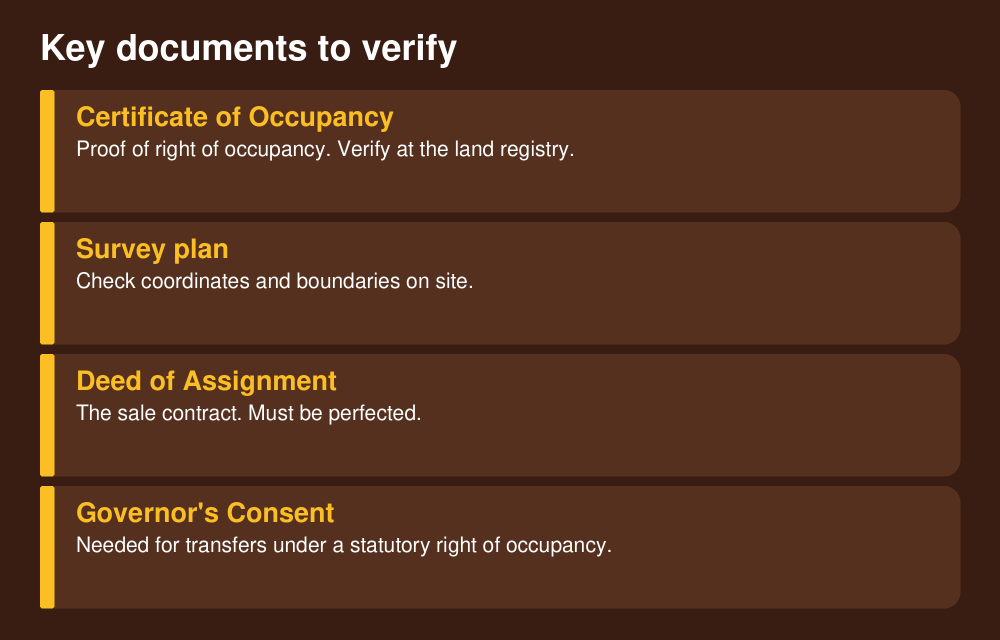
Certificate of Occupancy (C of O)
A C of O is the government’s evidence of a right of occupancy, usually granted for a fixed term such as 99 years in many states. A statutory C of O is issued by the state governor for land in urban areas, while a customary right of occupancy is issued by a local government for rural land. Always verify a C of O at the land registry rather than trusting a photocopy.
Survey plan
A survey plan shows the boundaries and coordinates of the plot. It should be prepared by a licensed surveyor and checked with the state surveyor general. Visit the site to confirm the coordinates match the actual land.
Deed of Assignment
This is the contract that transfers the property from seller to buyer. It must be properly drafted by your lawyer, signed and stamped.
Governor’s Consent
Under Section 22 of the Land Use Act 1978, a transfer of land held under a statutory right of occupancy generally needs the governor’s consent. Without it, the transfer may be treated as void. This is one of the steps diaspora buyers most often miss.
Registration
After consent, the deed should be registered at the land registry so that your interest is recorded. Lagos introduced an online land information system, but physical registry checks and a lawyer who knows the process are still essential. A record that should be digitised but returns nothing is a warning sign.
Our detailed checklist is in how to buy land in Nigeria without getting scammed.
A step-by-step process for buying from abroad
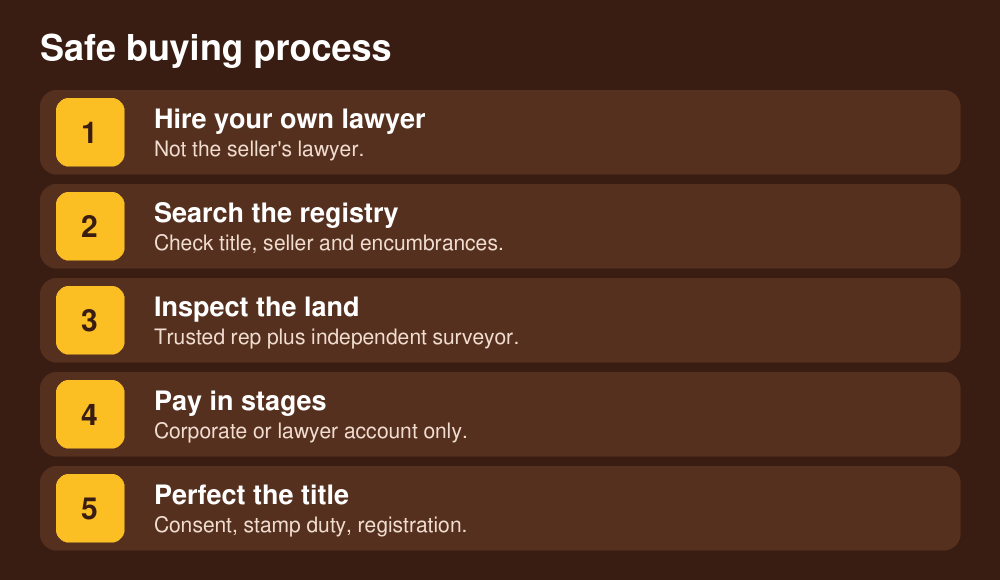
- Hire your own independent lawyer. Do not use the seller’s lawyer, the agent’s lawyer or someone introduced by them. Agree the scope and fee in writing.
- Verify the seller. Confirm identity, ownership and authority. For companies, check CAC registration and directors. For family land, ask who the recognised family head is and whether all required family members agree.
- Search the land registry. Your lawyer should check that the title exists, matches the seller and is not mortgaged, disputed or acquired by government.
- Verify the survey. Confirm it with the surveyor general and have an independent surveyor check the coordinates on site.
- Inspect physically or through a trusted representative. Use a video call walkthrough and a verified local rep, not only photos and drone clips. Speak to neighbours and community leaders.
- Negotiate in writing. Agree price, payment schedule and what happens if documents turn out to be defective.
- Pay safely. Pay into a corporate account or lawyer’s client account against a receipt, in stages tied to checks, not 100 percent upfront. Never pay cash or into personal accounts.
- Perfect the title. Sign the deed of assignment, obtain governor’s consent, pay stamp duty and register the deed.
- Secure and document the property. Fence or monitor the plot, keep copies of everything and consider regular inspection by a trusted person.
How to send the money properly
Send funds through a bank or a licensed money transfer operator and keep the transfer records. Ask your bank about a Certificate of Capital Importation when bringing in foreign currency for an investment, because it may help later if you want to repatriate sale proceeds. Rules change, so confirm with your bank. See our guides to sending money to Nigeria safely and the cheapest transfer apps for Nigerians in the UK. A Nigerian account helps with ongoing costs: see opening a Nigerian bank account from abroad.
Costs to budget for
- Purchase price and any agent or developer fees.
- Legal fees for searches, deed drafting and perfection.
- Survey costs, if you need a new or verified survey.
- Government charges: consent, registration and stamp duty. These vary by state, so ask your lawyer for a written breakdown.
- Development costs if you plan to build. See the cost of building a house in Nigeria for 2026 estimates.
- Ongoing costs: security, property management, service charges and taxes.
- Currency and transfer costs, which can move your real cost significantly. Track the dollar to naira rate.
Buying a finished home instead of land
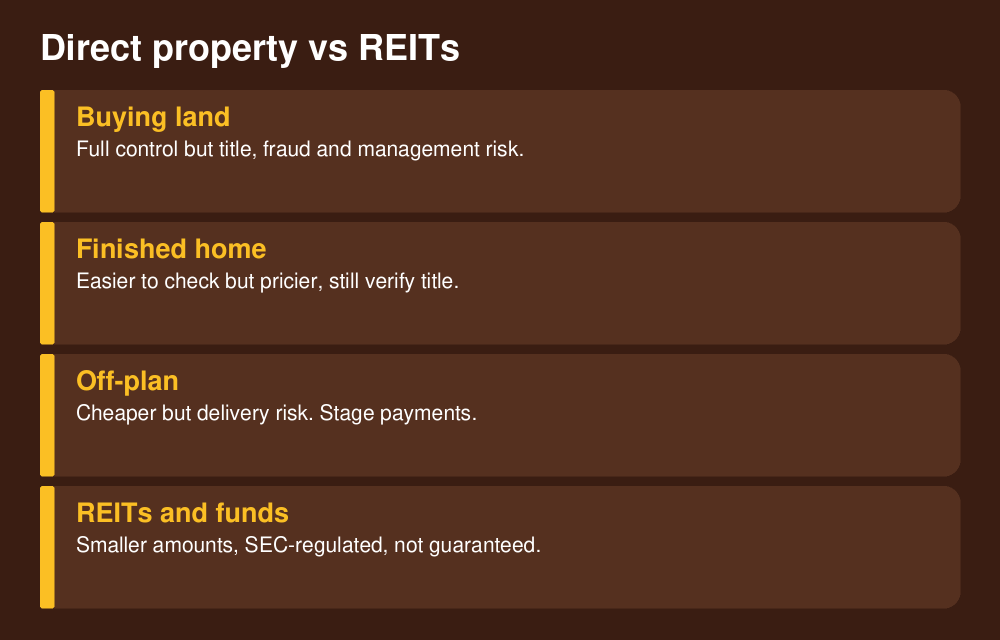
If you want less hassle, a finished property in an established estate with verified title may be safer than raw land. For an idea of pricing and what to check, read our guide to a 3-bedroom bungalow for sale in Mowe, Ajah and Lekki. A real estate regulator exists in Lagos State, so ask whether a developer or agent is registered, and verify that independently rather than relying on their word.
Safer alternatives to buying directly
Real estate investment trusts (REITs)
Nigerian REITs pooled and managed by SEC-registered managers let you invest smaller amounts without handling titles yourself. Returns come from rent and valuation changes and are not guaranteed. Check the fund’s holdings, fees, liquidity and whether it accepts non-resident investors.
Real estate funds and fractional platforms
Some platforms offer fractional ownership. Treat them like any investment product: confirm SEC registration or the regulatory basis, read the legal structure and ask how you can exit. If a platform cannot clearly explain who legally owns the asset, walk away.
Build with a reputable developer
Off-plan purchases can be cheaper but carry delivery risk. Check the developer’s completed projects, visit them, verify the title of the land the project sits on, and use a staged payment plan linked to construction milestones.
Red flags
- Pressure to pay quickly because “another buyer is coming”.
- Prices far below the surrounding market.
- Refusal to let your lawyer search the registry.
- Seller offers only a photocopy or a “receipt” instead of title documents.
- Payment requested into a personal account.
- Land that sits inside a government acquisition, flood zone or right of way.
- Different people claiming ownership of the same plot.
- Power of attorney documents you cannot verify.
Taxes and legal issues
Property income, sales and capital gains may be taxed in Nigeria, and if you live in the UK you may also need to report rental income or gains on a Self Assessment return, with relief available under the UK-Nigeria double tax treaty. Nigeria updated its tax laws recently, so ask a Nigerian tax professional and a UK accountant for current rates. Plan your will and inheritance arrangements too, because unclear ownership leaves families in court for years.
FAQ
Can a Nigerian abroad buy property in Nigeria?
Yes. Nigerians abroad can buy property in Nigeria, usually using a lawyer, a verified representative and proper payment channels.
What is the safest way to buy land from abroad?
Use your own independent lawyer, verify the title at the land registry, confirm the survey, check the seller’s authority, pay into corporate or lawyer-held accounts in stages, and perfect the title with governor’s consent and registration.
Is real estate in Nigeria a good investment?
It can be, but it carries title, liquidity, currency and management risk. Returns are not guaranteed. Compare it with other options, including regulated REITs and funds.
Can I use a power of attorney?
Many diaspora buyers do, but a power of attorney gives someone legal power over your affairs. Limit its scope, use a lawyer and consider the risk of misuse.
What is Governor’s Consent and why does it matter?
It is the government’s approval of a transfer of land held under a statutory right of occupancy. Without it, the transfer may not be valid.
Are Nigerian REITs safe?
REITs from SEC-registered managers are regulated, but they are still investments that can lose value and may be hard to sell quickly. Read the prospectus first.
How much money do I need?
Land and home prices vary widely by city and area, from modest plots to very high prices in prime Lagos. REIT units can start from small amounts. Always add legal, survey and government costs to the price.
Bottom line
You can invest in Nigerian real estate from abroad, but the winners are usually the buyers who go slowly, hire their own lawyer, verify before paying and refuse every shortcut. If that sounds like too much work, regulated REITs may suit you better. This article is general information, not legal or financial advice, and I am not a licensed adviser. Consult a qualified Nigerian property lawyer and a financial professional before committing.







Ade Adeniyi here. If you take one thing from this guide, let it be this: hire your own lawyer and never pay before the title is verified. Have you bought property in Nigeria from abroad, or are you thinking about it? Share your experience or questions below. General information only, not legal advice.