


Last updated: 15 October 2026 · By Naijatipsland Editorial Team · Editorial policy
For many Nigerian families, the UK is still a top choice for a degree, but the bill has become harder to predict. Tuition fees differ by thousands of pounds between universities, visa money rules have just risen again, and the rules on dependants and post-study work have tightened. This guide lists the lowest international tuition fees we could verify for 2026/27, explains what a year in the UK really costs, and sets out the rule changes that matter before you apply.
Tuition figures below come from university fee pages as compiled by education sites in 2026. Fees change each year and vary by course, so always get a written fee quote for your course and intake before you pay a deposit.
The short answer
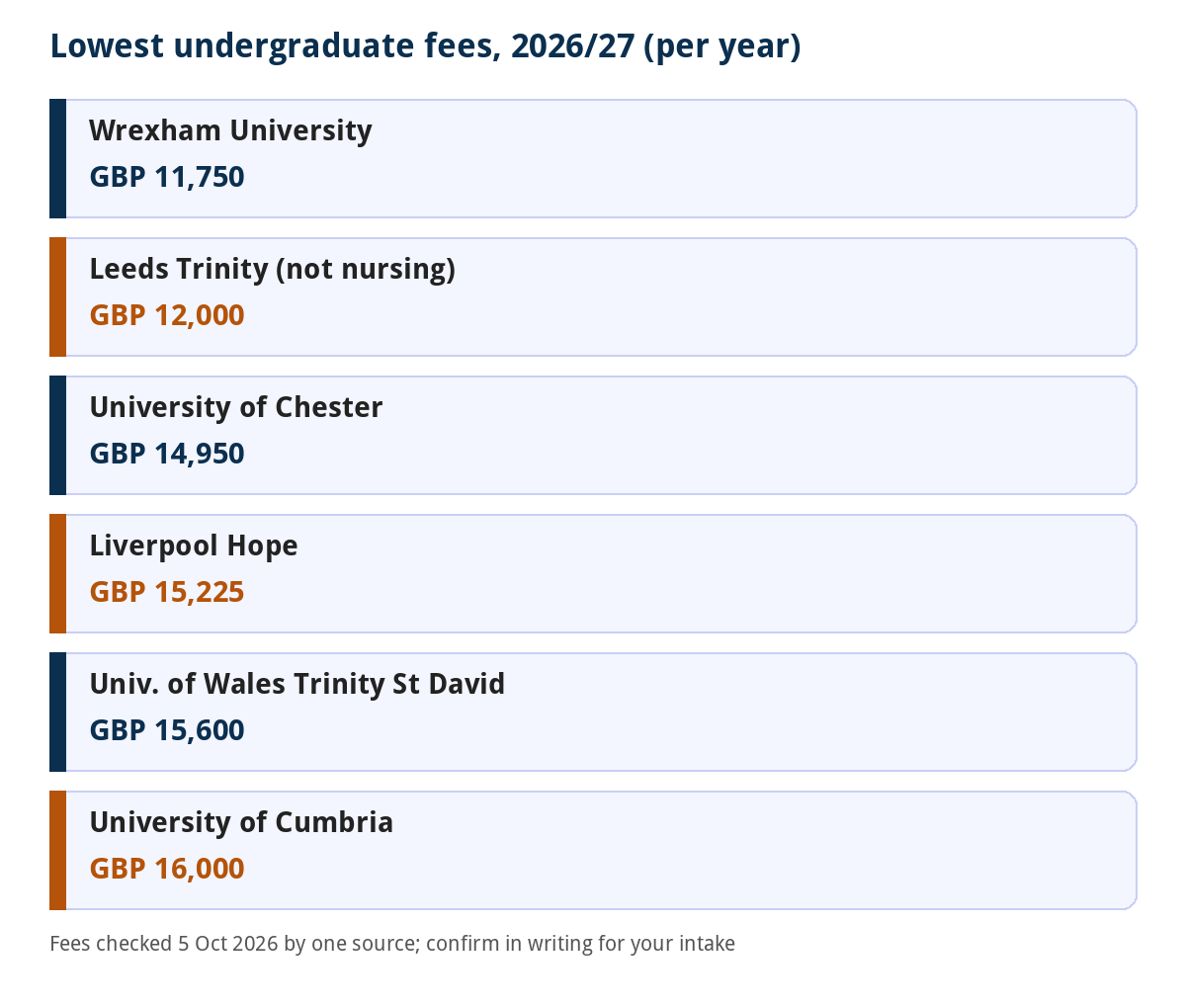
- The cheapest undergraduate fees we found for 2026/27 start around £11,750 a year (Wrexham University) and £12,000 (Leeds Trinity University, excluding nursing).
- Lower-cost postgraduate options start around £12,000 to £16,000, depending on the university and the course.
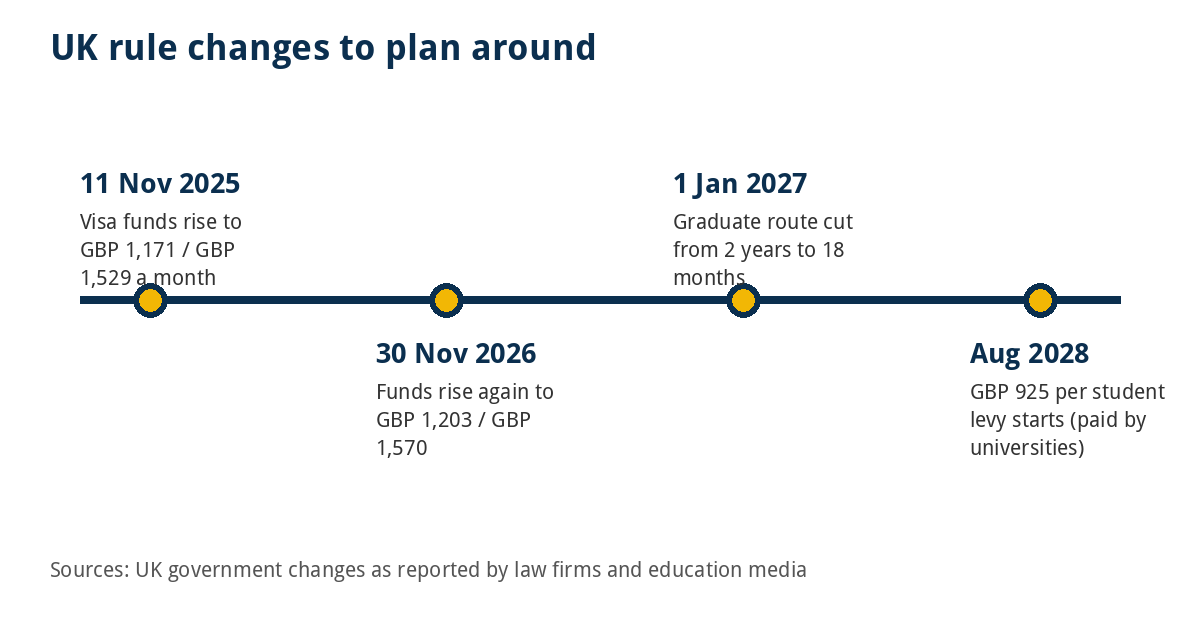
- Tuition is only part of the cost. From 30 November 2026, a student visa applicant must show £1,203 a month outside London or £1,570 a month in London, for up to nine months.
- The Graduate route will drop from two years to 18 months for applications made on or after 1 January 2027.
- “Cheapest” is not always “best value”. Check the course, the location, the university’s visa record and your job prospects.
Cheapest UK universities for international students, 2026/27
Undergraduate
A fee review published in October 2026 (sources checked 5 October) put these universities lowest for international undergraduates, before scholarships:
- Wrexham University: £11,750. The university states that tuition stays the same through the degree, though 2027 entry needs confirmation.
- Leeds Trinity University (Leeds): £12,000, excluding nursing. Nursing is £14,500, with a £2,000 first-year deduction for eligible applicants.
- University of Chester: £14,950. A foundation route costs £11,250 in year one.
- Liverpool Hope University: £15,225. Its Law page listed £16,000 for 2027/28, so check your own course.
- University of Wales Trinity Saint David: £15,600 for full-time BA, BEng and BSc.
- University of Suffolk: £15,900 to £18,870 depending on location (Ipswich or its London centre).
- University of Cumbria (Carlisle): £16,000 for standard BA, BSc and LLB degrees. Social work and some health courses cost £17,800.
Postgraduate
A second 2026 comparison listed the lowest postgraduate fees at Leeds Trinity (£12,000), Bedfordshire in Luton (£13,750), Staffordshire in Stoke-on-Trent (£14,000), Chester (£15,500) and Cumbria (£16,000), with Teesside, Greater Manchester (Bolton), Leeds Beckett and Coventry slightly higher. That comparison disagreed with the first on a few figures, for example Chester’s undergraduate fee, which is a reminder to check each university’s own fee page.
London universities are usually far more expensive. The same comparison listed London Metropolitan at £19,500, and London living costs are also higher.
What a year in the UK really costs

Tuition
Use the fee for your exact course and start date. Some universities increase fees each year, and some guarantee a fixed fee for the whole degree. Ask in writing which applies.
Living costs
One 2026 estimate put average student living costs at about £1,330 a month overall, with cheaper cities such as Stoke-on-Trent, Middlesbrough, Carlisle and Bolton at roughly £700 to £950 a month, Leeds and Coventry at about £850 to £1,100, and London far higher. Treat these as rough guides and build your own budget from the university’s accommodation fees and local rents.
Visa money you must show
This is where many applications fail. A law firm summary of the change confirms the following:
- Before 30 November 2026: £1,529 a month in London and £1,171 a month elsewhere, up to nine months.
- For applications made on or after 30 November 2026: £1,570 a month in London (maximum £14,130) and £1,203 a month outside London (maximum £10,827).
- The date you apply decides which amount applies, not the date of your CAS or course start.
- You must normally hold the full amount continuously for 28 days, and the evidence must end within 31 days of your application. A shortfall, even for one day, can restart the period.
- Any tuition still owing, shown on your CAS, must be shown on top of the maintenance money.
- Money in a parent’s account needs proof of the relationship and written consent.
- “London” means where more than half your course is taught, not where you live.
Example: for a course outside London, you would need the unpaid tuition balance plus £10,827 if you apply on or after 30 November 2026. If you apply before that date, the lower figure applies, but the 28-day holding rule still does.
Other costs
Budget also for the visa application fee, the immigration health surcharge, flights, accommodation deposits, a winter wardrobe and local travel. The amounts change, so check each on the official UK government website rather than on an agent’s page.
Rules that affect Nigerian applicants
Dependants
Since January 2024, most taught postgraduate students cannot bring dependants. Research students (MRes and PhD) remain exempt, although the Home Office was reported to be reviewing that exemption. TechEconomy, citing ApplyBoard’s analysis of 2024/25 data, reported Nigerian postgraduate enrolments in UK universities fell 39% in a year, the steepest drop of any major student group, because Nigeria was one of two countries where dependant visas had outnumbered student visas.
Post-study work
The UK government confirmed that the Graduate route for bachelor’s and master’s graduates will be 18 months for applications made on or after 1 January 2027, instead of two years. PhD graduates keep three years. Do not plan on two years of post-study work if you will apply after that date.
The international student levy
A levy of £925 per international student is due to start in the 2028/29 academic year, according to Wonkhe and the UK budget announcement. Universities pay it, not students, above an exempt number of 220 students. It could still affect how universities set fees and scholarships.
University sponsor status
A university must hold a valid student sponsor licence for your visa to work. One of the fee reviews excluded a university from its table because of visa sponsor restrictions. Check the sponsor register and the university’s current status before you pay any deposit.
How to choose between cheap and good value
- Start with the course. A cheaper university with a weaker course for your career is not a saving.
- Compare total cost. Add tuition, 12 months of rent and food, and visa-related costs. A £12,000 course in an expensive city can cost more than a £14,000 course in a cheap one.
- Ask about scholarships and fee deductions. Examples reported in 2026 include awards of up to about £3,000 at Bedfordshire and Leeds Trinity and up to £6,000 for some postgraduates at Leeds Beckett, and the £2,000 first-year nursing deduction at Leeds Trinity. Terms change.
- Look at employability and rankings carefully. A university’s graduate employment record and its link with employers matter more than its price tag.
- Check the length and structure. One-year master’s degrees cost less than two-year routes, but check whether the course suits your career plans.
Scholarships to check
- Chevening: funds a one-year master’s in the UK, including tuition, a monthly living allowance and airfare. Applications for the 2027/28 cohort opened on 4 August 2026 and closed on 6 October 2026, so the next cycle is your target. Requirements reported include two years of work experience and a commitment to return to Nigeria for at least two years.
- University awards: many universities offer partial merit awards for international students. Ask admissions what applies to your course.
- Commonwealth Master’s scholarships: listed among options in one 2026 comparison. Confirm eligibility and dates on the official site.
Scams and mistakes to avoid
- Fake offer letters and CAS numbers. Confirm any CAS with the university’s international office directly.
- Paying tuition to personal accounts. Pay only to the university’s official account shown on its website.
- Agents who guarantee a visa. No one can guarantee a UK visa. Ask any agent for their written fees and which universities pay them.
- Parking money at the last minute. Large deposits that appear shortly before you apply, or sit in your account for less than 28 days, can sink an application.
- Using out-of-date visa funds figures. Check the government’s current amount for your application date.
Frequently asked questions
What is the cheapest university in the UK for Nigerian students?
For undergraduate courses in 2026/27, the lowest verified international fees were at Wrexham University (£11,750) and Leeds Trinity (£12,000, excluding nursing). Fees vary by course, so confirm yours.
How much money do I need to show for a UK student visa?
For applications on or after 30 November 2026, £1,203 a month outside London and £1,570 a month in London for up to nine months, plus any unpaid tuition. The money must normally be held for 28 days.
Can I bring my family on a master’s course?
Most taught postgraduate students cannot bring dependants. Research degrees remain exempt, but check current rules.
How long can I work after my degree?
For applications on or after 1 January 2027, the Graduate route is 18 months for bachelor’s and master’s graduates and three years for PhD graduates.
Is Chevening still open?
The 2027/28 round closed on 6 October 2026. Watch the official Chevening site for the next cycle.
Does the new levy raise my tuition?
The £925 levy is charged to universities from 2028/29, not to students directly. Whether universities pass the cost on is not yet clear.
Also compare the cost of studying in Canada before you decide.
Bottom line
Start from the course, not the cheapest price. Compare total first-year cost, get fees in writing, check the university’s sponsor status, plan for the higher visa funds and the shorter Graduate route, and apply for scholarships early. Do not pay agents or personal accounts for “guaranteed” admissions.
Sources
- ScholarMake: Cheapest UK universities, 7 verified options for 2026/27
- Yocket: Cheapest universities in the UK for international students (2026)
- OTS Solicitors: Student visa maintenance funds increase from 30 November 2026
- The PIE News: Shorter Graduate route from January 2027
- TechEconomy: Nigerian postgraduate enrolments plummet 39% following visa restrictions
- Wonkhe: International fee levy confirmed
- Legit.ng: Chevening scholarship applications for Nigerians



