Last updated: 16 October 2026 · By Naijatipsland Editorial Team · Editorial policy
If you are a Nigerian planning a US trip in 2026, the first thing to know is that the interview is no longer the only hurdle. Since 1 January 2026, the United States has suspended new visitor (B1/B2), student (F and M) and exchange (J) visas for Nigerian nationals who were outside the US without a valid visa on that date. Immigrant visas are also affected. This guide explains what is suspended, who can still apply, what the interview involves, what it costs, and why people get refused (the 214(b) refusal).
The facts below come from news reports, the State Department fee page and immigration-law and visa-advice sites dated 2025 to 2026. The US Embassy page for Nigeria still carries old COVID-era wording, so we did not rely on it for current rules. Where sources disagree we say so. Always confirm on the US Embassy and State Department sites before you pay anyone.
The short answer
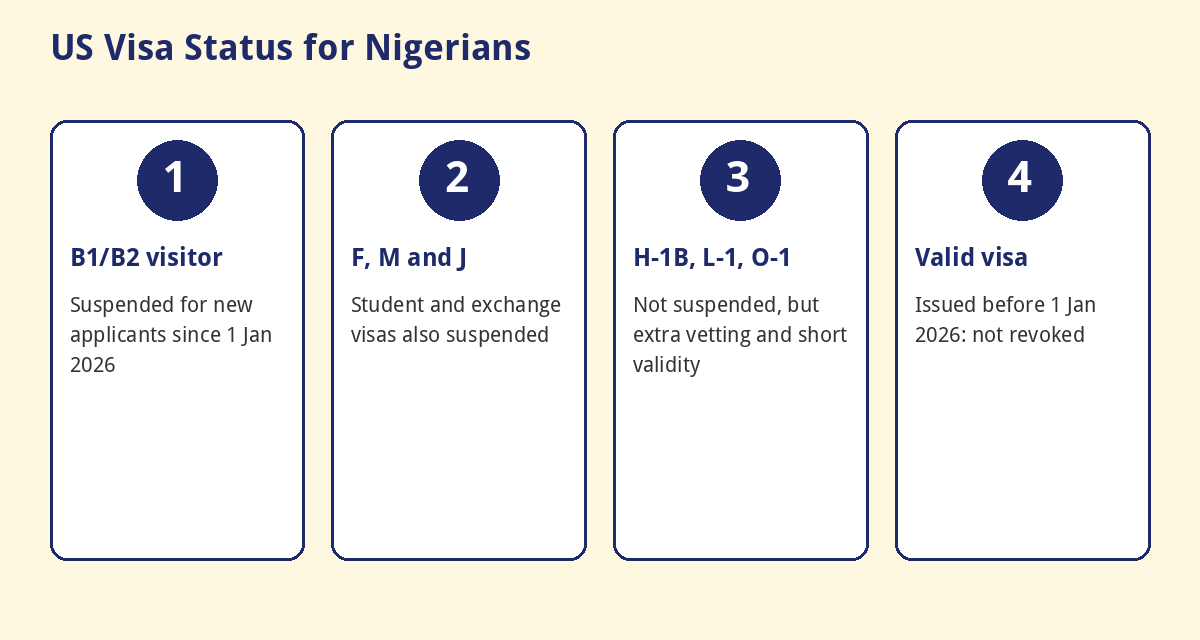
- Under Presidential Proclamation 10998, new B1/B2, F, M and J visas for Nigerians are suspended from 1 January 2026. Visas issued before that date were not revoked.
- Applicants can still pay, book and attend interviews, but may be found ineligible. Exceptions are narrow: for example permanent residents, dual nationals using a passport from an unaffected country, and some case-by-case national interest exceptions.
- Petition-based work visas such as H-1B, L-1 and O-1 are reported as not suspended, but come with extra vetting.
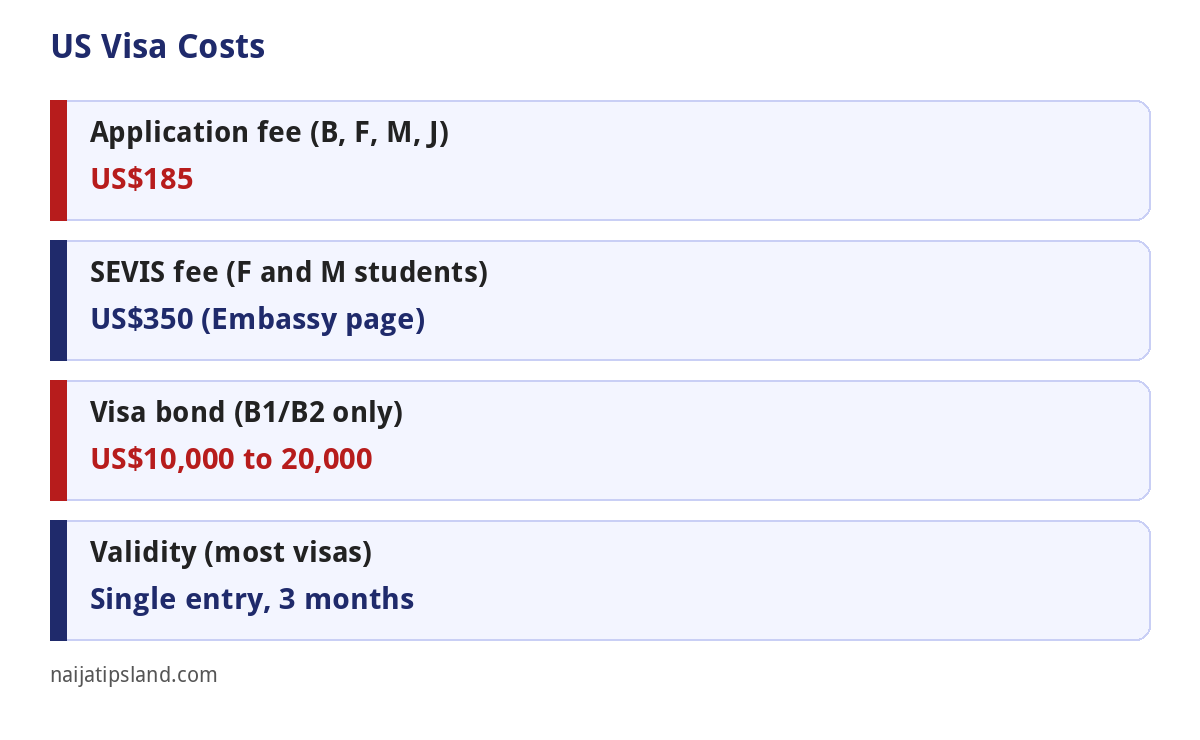
- Most non-immigrant visas issued to Nigerians since 8 July 2025 are single entry with three months’ validity.
- Visa bonds of US$10,000, US$15,000 or US$20,000 for B1/B2 applicants became a permanent programme from 3 August 2026, and Nigeria is on the list.
What is suspended and what is not
The suspension covers people outside the US who did not hold a valid visa on 1 January 2026. According to reports, it applies to:
- Visitor visas (B1 business, B2 tourism and combined B1/B2).
- Student visas (F for academic study, M for vocational study) and J exchange visas.
- Immigrant visas, including family and green card routes, with limited exemptions.
What is not covered: lawful permanent residents, people who already held a valid visa on 1 January 2026, dual nationals travelling on a passport from an unaffected country, and the other listed exceptions. Nigerian students already in the US on valid F-1 or J-1 visas were told by the US mission that they were not affected. The US mission also said on 30 March 2026 that the restrictions are not permanent and are subject to review, so check the latest position before you plan.
One reported separate pause on immigrant visas for 75 countries was voided by a court on 21 August 2026, but one report says that did not change the Nigeria proclamation. Because this is moving, treat any article, including this one, as a snapshot and check the official pages.
Where do you apply now?
The US mission still lists services in Nigeria. Reports say routine visa processing moved to the Lagos consulate on 1 August 2026, with the Abuja embassy handling diplomatic and official visas. An April 2026 report said both cities were still processing at that time, so confirm your location when you book. Walk-ins are not admitted, and you cannot enter the building without a scheduled appointment.
How to book the interview
- Complete the DS-160 form online. Your answers must match what you will say at the interview, and the DS-160 barcode number must match the one on your appointment profile.
- Pay the application fee using the method on the US appointment site. The Embassy page says you can book within a few hours of paying at a bank branch, or after 3pm on the next banking day if you pay online. One guide advises allowing a full business day after a naira deposit.
- Book your interview with your payment code and passport number. Fees are non-refundable and cannot be transferred, and the receipt is valid for one year.
- Print your confirmation and arrive on time. Phones and other electronics are not allowed inside, and there is no storage, so leave them at home.
Reports say nearly all applicants now need an in-person interview, including children and older adults, and that interview waivers are not currently available in Nigeria except in extreme cases. If you had planned on a waiver, ask the mission directly.
What it costs
The State Department fee page lists a US$185 application fee for B, F, M and J visas. The US Embassy page lists US$190 for most petition-based visas such as work and religious visas, and a US$350 SEVIS fee for F and M students, though that page is old, so confirm the current amounts. The naira price depends on the exchange rate on the day you pay. At a rate of N1,350 to the dollar, US$185 is N249,750.
There is also talk of a separate visa integrity fee under a 2025 US law. We could not confirm that it is being collected from Nigerian applicants, so do not pay any such fee unless the official site asks for it.
If a consular officer decides you qualify for a B1/B2 visa but wants extra assurance you will leave, they can order a bond of US$10,000, US$15,000 or US$20,000, with US$15,000 expected to be the usual figure. It is paid electronically before the visa is issued, and it is refunded if you leave on time and follow the terms of your visa. A bond does not guarantee approval.
What the interview is like
Interviews are short, often only a few minutes, and the officer may decide in the first few questions. You are not allowed to bring a lawyer into the interview. Be calm, give direct answers and keep to the facts on your form.
Questions to expect
- Purpose: Why are you going, how long will you stay, where will you stay, who are you visiting and what is their status?
- Ties to Nigeria: What is your job, how long have you worked there, what do you earn, do you own property, do you have a spouse or children, and why will you return?
- Money: Who is paying, what is your income, and what are the trip costs?
- History: Have you travelled before, ever been refused a visa, or ever overstayed?
- Students: Why this school and course, who is funding you, and what will you do after graduating?
Documents to bring
- Passport valid for at least six months, DS-160 confirmation, appointment confirmation and fee receipt.
- Employer letter with salary and approved leave, or business registration papers.
- Three to six months of bank statements, and proof of property or family ties if relevant.
- Invitation letter and itinerary for visits, or the I-20 and admission letter for students.
Keep your file lean. Extra papers that do not fit your story can hurt, and every document should agree with your DS-160. Officers are also reported to look at applicants’ online presence, so make sure your public social media profiles do not contradict what you say.

Why Nigerians are refused: section 214(b)
The most common refusal for temporary visas is under section 214(b) of US immigration law. It means the officer was not convinced you qualify for the visa or that you will go home afterwards. The law presumes a visitor or student may want to stay, and you must show strong ties to Nigeria.
- Weak ties: no clear job, family, property or business to return to.
- An unclear purpose: vague answers like just tourism, or answers that differ from the DS-160.
- Not enough funds: a bank balance that does not fit the trip or the sponsor’s story.
- Inconsistency: documents that do not match each other or what you say.
- Past violations: earlier refusals, overstays or work in the US without permission.
A 214(b) refusal is not permanent and does not need a waiver. There is no appeal, and you can reapply, but you pay the fee again. Reapplying with the same facts usually gives the same result, so wait until something has really changed, such as a new job, a longer work history or better documents. Do not use fake documents. Fraud can lead to a lifetime ban.
Beware of visa scams
- Nobody can guarantee an appointment or approval, and nobody inside the mission sells visas.
- Pay fees only through the official US appointment site and the payment methods it lists.
- Do not buy fake bank statements, forged letters or invitation letters from agents.
Studying elsewhere is also an option while the US student suspension lasts. See our guide to Cheapest UK Universities for Nigerian Students (2026/27): Fees, Real Costs and Visa Rules.
Frequently asked questions
Can Nigerians still get a US tourist visa in 2026?
New B1/B2 visas for Nigerians outside the US are suspended from 1 January 2026, except for narrow exceptions. You can still apply and be interviewed, but may be found ineligible. Visas issued earlier remain valid.
Can I study in the US from Nigeria?
New F and M student visas are also suspended. Students already in the US on valid visas were told they are not affected.
How much is the US visa fee?
The State Department lists US$185 for B, F, M and J visas. It is not refunded if you are refused.
Do I need a visa bond?
Only if a consular officer orders one for a B1/B2 visa, at US$10,000, US$15,000 or US$20,000.
Can I reapply after a refusal?
Yes, but pay the fee again and show clear changes since your last interview.
Bottom line
Check whether your visa type is suspended before you pay. If you are eligible to apply, keep your story simple, your documents consistent and your ties to Nigeria clear. Rules have changed several times in a year, so confirm the latest on the official US mission and State Department websites.
Sources
- US State Department: visa fees
- US Embassy Nigeria: important visa information
- Premium Times: US announces date for suspension of visa issuance
- Guardian Nigeria: Are Nigerians allowed to travel to the USA?
- Nairametrics: visa bond permanent rule
- Nairametrics: students with valid F1, J1 visas unaffected
- Peoples Gazette: visa validity cut to three months
- VisaVerge: Nigeria US visa update 2026
- Oscarmini: US visa application in Nigeria
- Lighthouse: overcoming a 214(b) rejection
- WorkVisa.guide: B1/B2 interview questions 2026