

Last updated: 8 November 2026 · By Naijatipsland Editorial Team · Editorial policy
A VPN (virtual private network) is one of the most searched-for tools by Nigerians who use public Wi-Fi, work remotely, travel, or want more privacy online. But the market is full of exaggerated claims, fake “free” apps and pricing that changes by the month. This guide explains what a VPN does, whether VPNs are legal in Nigeria, which services reviewers recommend for Nigerian users in 2026, what they cost, and the mistakes to avoid. Checked 8 November 2026. Prices and features come from third-party review sites and the providers’ own offers, change often, and are not endorsements. Confirm the price on the provider’s official site before you pay.
The short answer
- Legal? We found no Nigerian law that bans VPN use, and reviewers say there is no VPN registration scheme. Using a VPN to commit fraud or other crimes remains illegal, as it would be without one. This is general information, not legal advice.
- Best overall picks in 2026 reviews: Surfshark and NordVPN appear most often for Nigerian users, with Proton VPN as a privacy-focused alternative and a limited free plan.
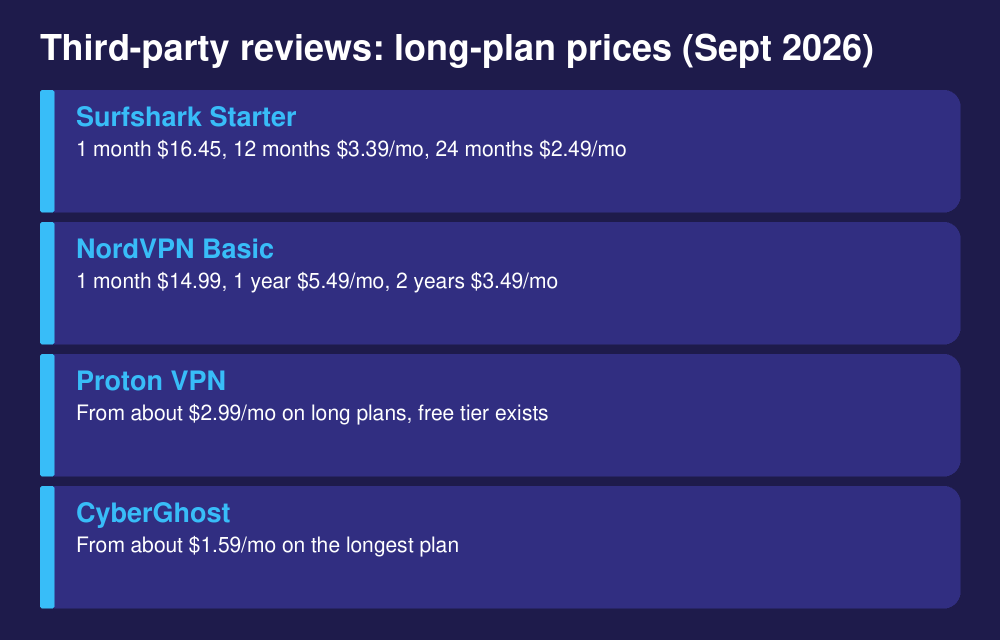
- Typical price: from about US$2.49 to US$3.49 a month on two-year plans, but US$14.99 to US$16.45 on a single month, according to September 2026 listings.
- Biggest tip: use the 30-day money-back guarantee to test the VPN on your own network (MTN, Airtel, Glo or home fibre) before you commit long term.
- Avoid: unknown free VPN apps, cracked or “mod” versions, and any VPN sold through WhatsApp or Telegram.
What a VPN does (and does not do)
A VPN creates an encrypted connection between your device and the VPN company’s server. Websites see the server’s address instead of yours, and people on the same public Wi-Fi network cannot easily read your traffic. That is useful in cafes, airports, hotels and offices.
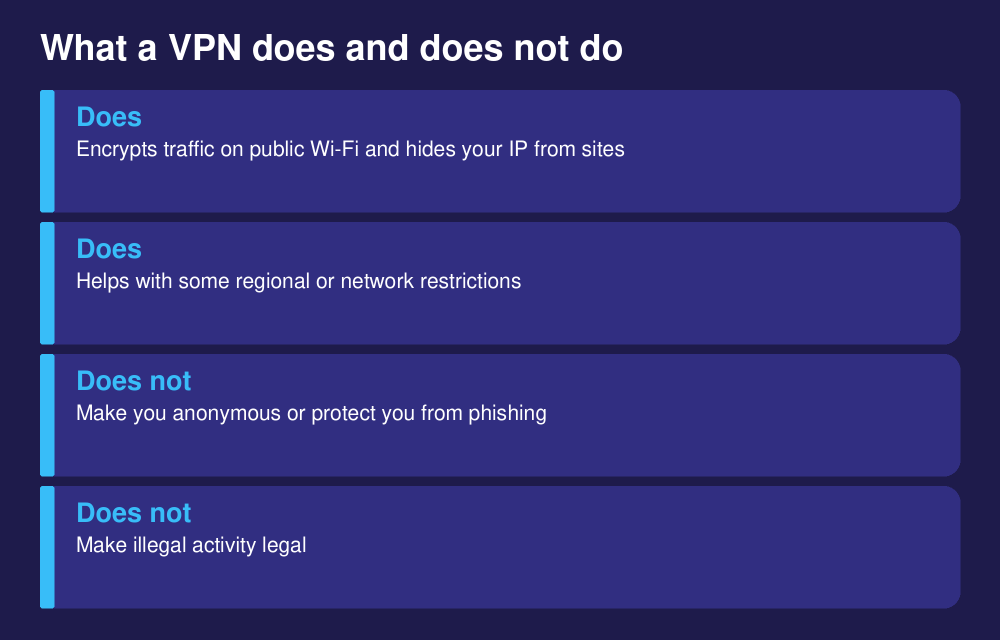
What it does not do is make you anonymous or invulnerable. The VPN company can see more of your activity than your internet provider does, so you are moving trust from one company to another. A VPN will not stop phishing, malware, fake bank alerts or scam calls, and it will not protect an account that uses a weak password. For the habits that block most attacks, read our guide to online safety tips for Nigerians.
Are VPNs legal in Nigeria?
Several 2025 and 2026 reviews report that VPNs are not banned in Nigeria. One review says it “could find no law that bans or restricts” them and that there is no VPN registration scheme. Another outlet describing Nigerian law lists the Nigeria Data Protection Act, the Cybercrimes (Prohibition, Prevention, etc.) Act and Nigerian Communications Commission guidelines as the relevant frameworks, without any VPN-specific rule. The 2021 suspension of Twitter in Nigeria pushed many people to try VPNs, and as far as these sources show, no law against VPN use followed.
The practical position is this: using a VPN for privacy or security is widely treated as lawful, while using one to commit fraud, hacking, harassment or any other offence is still a crime. Rules can change, and we have not seen an official regulator statement on VPNs, so check the NCC and the Nigeria Data Protection Commission for updates. If your work or employer has rules about VPNs, follow them too. Read more about your rights in our guide to data privacy in Nigeria under the NDPA 2023.
Best VPNs for Nigeria in 2026
No review can test every network and phone, so use this as a shortlist rather than a ranking. The notes come from third-party reviews of Nigerian use, and the prices are published prices, which usually go up when a long plan renews.
Surfshark
One review (Cybernews) ranks Surfshark first and reports a Lagos server, with plans from about US$2.49 a month. Another (Nomadwise) lists a Starter plan at US$16.45 for one month, US$3.39 a month on 12 months (US$50.85 upfront) and US$2.49 a month on 24 months (US$67.23 upfront), with unlimited simultaneous connections, a kill switch, auto-connect and a 30-day money-back guarantee. Reported strengths are value for households and long stays. Server locations change, so check the app list before you pay.
NordVPN
Reviews put NordVPN near the top for speed and features such as threat protection, obfuscated servers and double VPN. Reported plans (Basic, September 2026) are US$14.99 for one month, US$5.49 a month on a one-year plan (US$65.88 upfront) and US$3.49 a month on a two-year plan (US$94.23 upfront), covering up to 10 devices with a 30-day refund. One review says it has no Nigerian server, so you would connect to a nearby country instead.
Proton VPN
Proton VPN is favoured by privacy-minded users for open-source apps and Swiss jurisdiction, and it has a limited free tier. One review lists it from about US$2.99 a month on long plans and reports servers in Nigeria; another describes the free tier as limited with fewer locations. Check the current free-plan limits on Proton’s own site.
Others you will see recommended
CyberGhost (reported from about US$1.59 a month on its longest plan, with a Lagos server in one review), IPVanish and ExpressVPN also appear in comparisons. Treat very low advertised prices carefully, because they usually apply only to the longest plan paid upfront.
How much does a VPN cost in naira?
Most VPNs charge in US dollars or euros, so the naira price depends on the exchange rate and on whether your bank card allows foreign payments. That is why a plan that looks cheap can cost more than expected at checkout. Check that your card is enabled for international payments before you start, and pay only on the provider’s official website or the official app store. Avoid paying a stranger on WhatsApp for “cheap VPN accounts”: shared or resold accounts are often stolen or short-lived. The naira cost of a plan is simply the dollar price at the rate your bank applies on the day.
How to choose a VPN: five checks
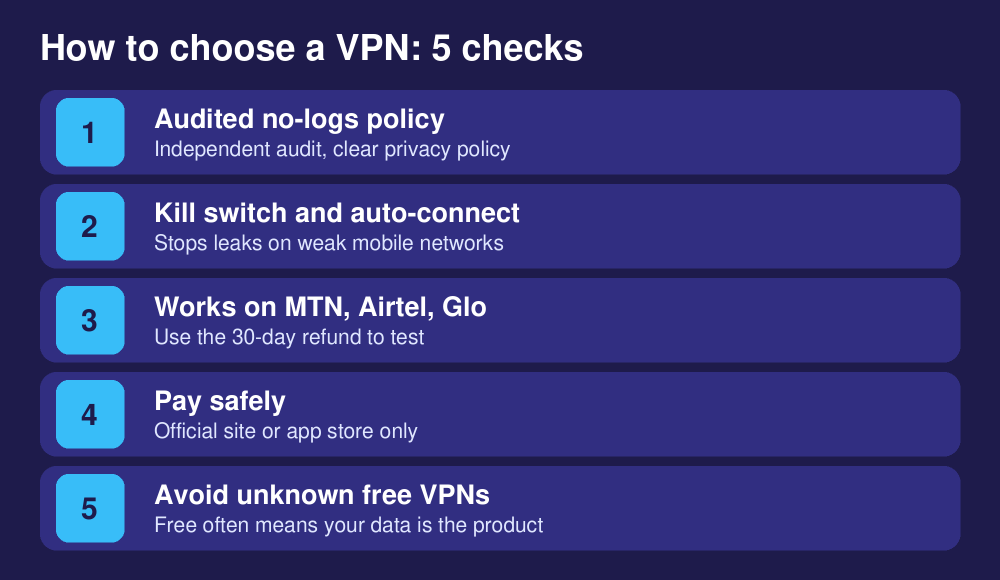
- Independent audit and a clear privacy policy. Look for an audited no-logs policy and a company that explains where it is based and what it records.
- Kill switch and auto-connect. Mobile networks drop often, and a kill switch stops your traffic leaking when the VPN disconnects.
- Works on your network. Test on MTN, Airtel, Glo or home fibre during peak hours. Use the 30-day money-back period, and see our comparison of the fastest network in Nigeria.
- Low data and battery use. Encryption uses some data and battery. If you are on a small bundle, see our guide to stopping background data.
- Honest marketing. Be wary of any VPN that promises to make you untraceable or guarantees access to blocked sites. Reviewers note that no provider can guarantee a way past state-level filtering.
Free VPNs: the risks
Running a VPN network costs money, so a free service has to earn it somehow. Some free apps show intrusive ads, throttle speeds heavily, sell usage data, or in the worst cases contain malware. Free plans from established, audited providers (Proton VPN’s free tier is one often cited) are different from random apps with thousands of downloads. If you cannot identify the company behind a VPN, do not install it, and never install a VPN from a link in a message. If you have been targeted by a fake app or lost money, see how to report cybercrime in Nigeria.
Common uses for Nigerians
- Public Wi-Fi security at cafes, airports and events.
- Remote work and freelancing when a client asks for a secure connection (see make money online in Nigeria).
- Travel to keep access to your usual apps and banking.
- Privacy from your internet provider on browsing history, within the limits above.
A VPN does not replace good security habits such as two-factor authentication, updated phones and cautious clicking. See also online privacy protection and how to learn cybersecurity from scratch.
Setting up a VPN safely
- Install the app from the official website, Google Play or the Apple App Store.
- Turn on the kill switch and auto-connect for untrusted networks.
- Choose the nearest server first for the best speed.
- Keep the app and your phone updated.
- Test streaming, banking apps and your usual sites; some banks may flag logins from unusual locations, so be ready to verify.
FAQ
Is it legal to use a VPN in Nigeria?
We found no law banning VPN use, and reviewers report no VPN registration. Using one to commit a crime is still illegal. This is not legal advice.
What is the best VPN for Nigeria?
Reviews most often recommend Surfshark and NordVPN, with Proton VPN for privacy. The best one for you is the one that works well on your network, so use the money-back period to test.
Is there a good free VPN?
Proton VPN has a limited free plan from an established company. Avoid unknown free apps.
Will a VPN make me anonymous?
No. It hides your IP address from websites and encrypts traffic on the network, but the VPN company, your accounts and your device can still identify you.
Will a VPN slow my internet?
Usually a little. Speeds depend on the server, your network and time of day.
Can I pay for a VPN with a Nigerian card?
Many providers accept international debit or credit cards if your bank allows foreign payments. Pay on the official site only.
Does a VPN protect me from scams?
No. It does not stop phishing, fake alerts or scam calls. See our guide to common WhatsApp scams.
Can a VPN unblock websites that are blocked in Nigeria?
It may help with some restrictions, but no provider can guarantee it, and you remain responsible for what you do online.
Bottom line
A reputable paid VPN is a reasonable tool for public Wi-Fi safety and privacy, and VPN use is not banned in Nigeria as far as we can tell. Shortlist one or two audited providers, test them on your own network using the refund window, pay only on the official site, and combine the VPN with strong passwords and two-factor authentication.
This guide is general information, not legal or security advice. Prices, features and rules change; confirm them with the provider and the relevant Nigerian regulator before you decide.
Sources
- Cybernews: Best VPNs for Nigeria 2026
- Nomadwise: Best VPN for Nigeria 2026 (plans and prices, September 2026)
- Innovation Village: What are VPNs and will they undermine online safety rules in Nigeria (10 August 2025)
- Guardian Nigeria: Best VPN services for Nigeria, testing and analysis
Third-party prices are published list prices and change often.
Join the discussion
Have you tried this, or do you have a question we did not answer? 1 reader has already shared their view. Naijatipsland members help each other with real, first-hand experience.





Ade Adeniyi here. Do you use a VPN on your phone or laptop in Nigeria, and which network (MTN, Airtel, Glo or home fibre) works best for you? Tell us what has worked, but please do not share account details or payment information. Remember to test any VPN with the money-back period before committing.