

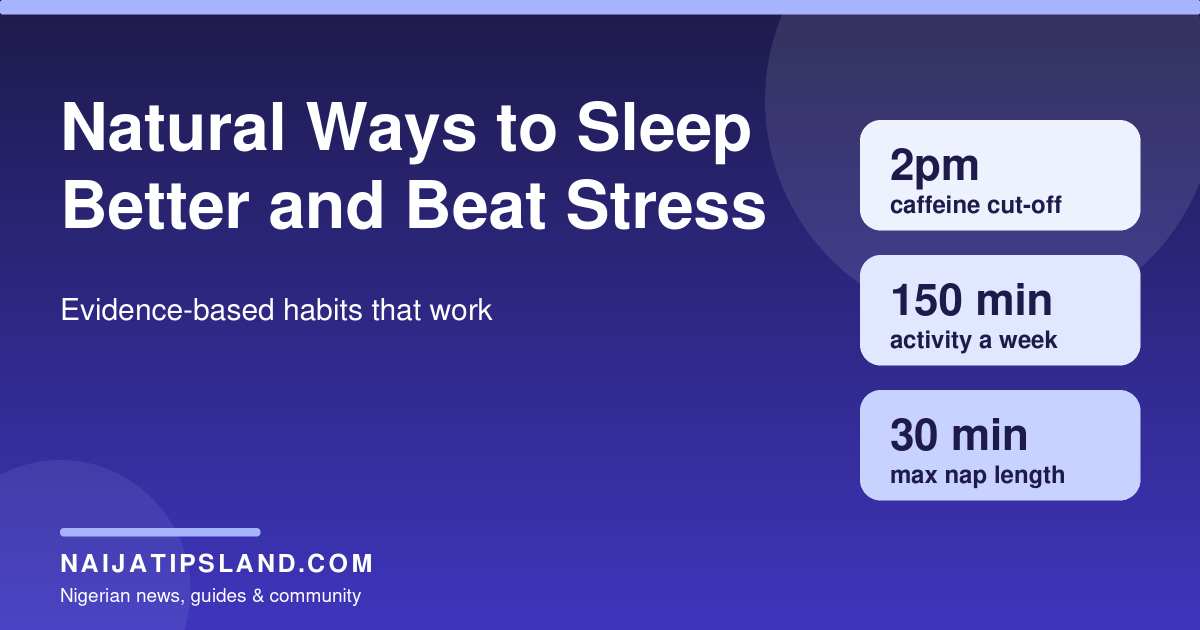
Last updated: 13 November 2026 · By Naijatipsland Editorial Team · Editorial policy
Good sleep and manageable stress rarely come from one trick. They come from a handful of ordinary habits done consistently: a regular sleep schedule, daylight and movement, less caffeine late in the day, a calmer wind-down, and ways to deal with the worries that keep your mind running. This guide pulls together practical, low-cost advice from NHS sleep-hygiene leaflets, NHS stress guidance and the World Health Organization, adapted for Nigerian homes where heat, noise, generators, long commutes and money worries are part of daily life.
About this guide: we read the Doncaster and Bassetlaw NHS sleep hygiene page, the NHS page on stress and the WHO physical activity fact sheet on 7 November 2026. This is general information and not medical advice. If sleep or stress problems are severe or long-lasting, please see a doctor.
Quick answer: what works best?
Keep a regular bedtime and wake-up time (including weekends), avoid caffeine after about 2pm, stop using screens before bed, make the bedroom cool, dark and quiet, be active during the day, and use breathing, talking and planning to deal with stress. Avoid relying on alcohol, cigarettes or other substances to cope, as they tend to make sleep and mood worse. If poor sleep or stress continues despite these steps, speak to a doctor.
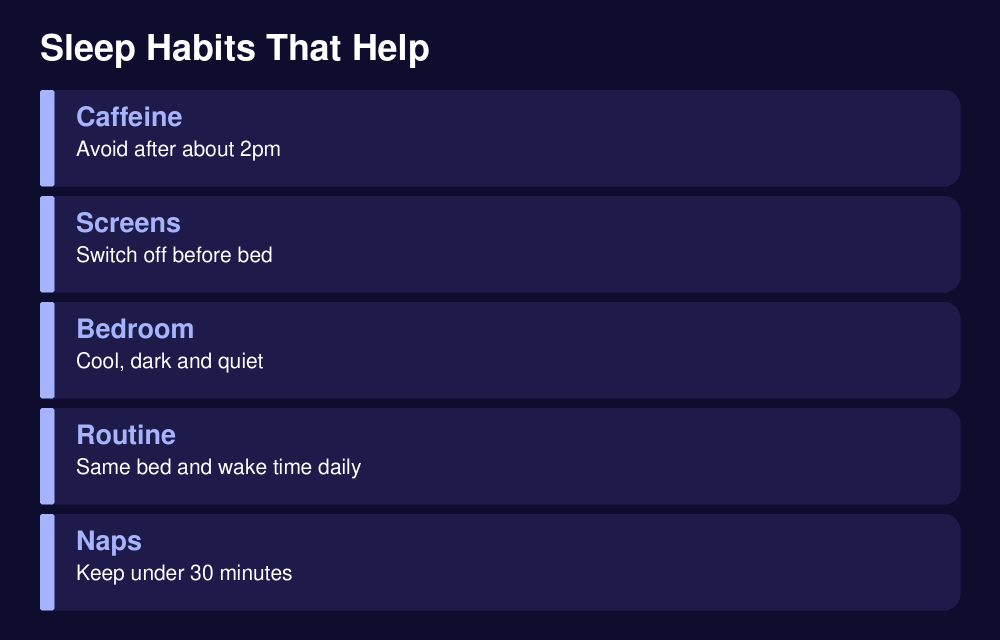
Sleep habits that help
| Habit | What to do |
|---|---|
| Caffeine | Avoid after about 2pm; it can stay in the body for up to six hours. This includes tea, coffee, energy drinks and chocolate |
| Alcohol and nicotine | Limit alcohol before bed (it can disturb sleep later in the night); avoid smoking before bed |
| Screens | Stop using phones, computers and TV before bed, or use a night filter |
| Bedroom | Cool, dark and quiet; use the bed for sleep |
| Routine | Same bed and wake time daily; relax before bed (warm bath 1 to 2 hours earlier, a milky drink, calm breathing) |
| Exercise | Be active in the day; avoid hard exercise within 3 hours of bed; gentle yoga is fine |
| Naps | Keep to under 30 minutes and not late in the day |
Practical fixes for Nigerian homes
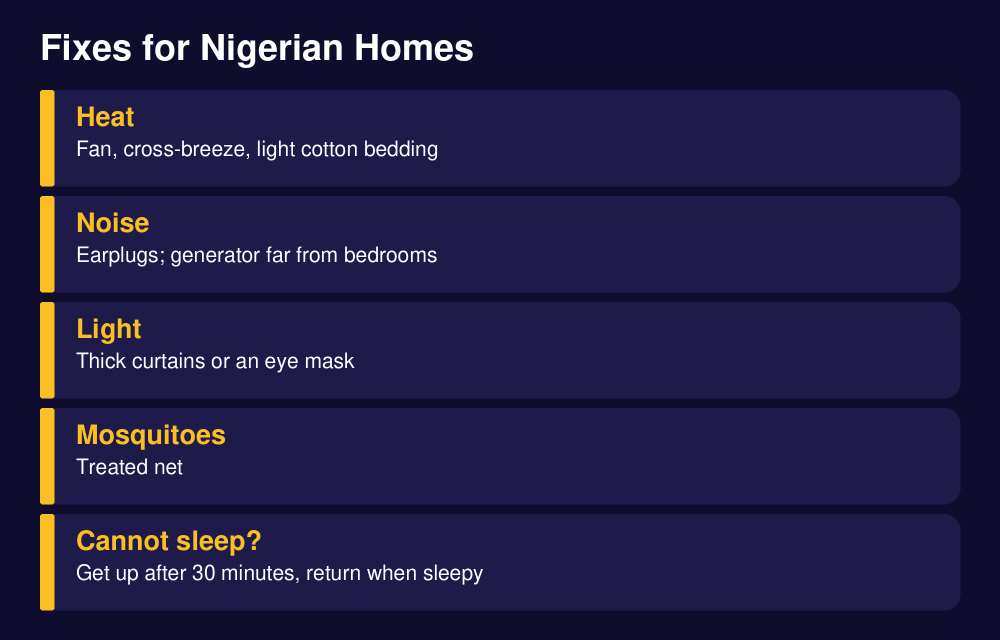
- Heat: sleep with windows open if secure, use a ceiling fan or a simple cross-breeze, light cotton bedding, and a cool shower before bed.
- Noise and generators: earplugs are cheap; place the generator as far from bedrooms as safely possible, and never run it indoors, because carbon monoxide can kill.
- Light: use thick curtains or an eye mask; keep phone chargers and bright LEDs out of sight.
- Mosquitoes: a treated net lets you sleep without disturbance and protects against malaria.
- Long commutes and shift work: protect a fixed sleep window as much as you can, and keep lights dim and screens away in the hour before it.
- If you cannot sleep after about 30 minutes: get up, sit somewhere quiet in dim light, then return to bed when sleepy. Hide the clock.
Move your body: activity helps sleep and mood
The WHO recommends at least 150 minutes of moderate-intensity physical activity each week for adults, and says any amount is better than none. It also notes that physical activity is associated with improved mental health and sleep and lower symptoms of depression and anxiety. You do not need a gym: brisk walking, dancing, skipping, football with friends, or carrying out chores at a good pace all count. Morning or afternoon activity is best for sleep; keep intense workouts away from bedtime.
Food and drink: small changes
- Do not go to bed hungry or after a very heavy, spicy or fried meal. A light dinner a couple of hours before bed works well for many people.
- Replace late-afternoon tea, coffee or energy drinks with water, zobo or a warm milky drink. See Nigerian foods that help control blood sugar for balanced meals.
- Be cautious about herbal sleep remedies and "natural" sleeping products. They are not all tested, and some interact with medicine; check with a pharmacist or doctor first and see natural remedies for common illnesses in Nigeria.
Stress: what the NHS recommends
The NHS describes stress as showing up in the body (headaches, muscle tension, stomach problems, a faster heartbeat), the mind (poor concentration, constant worry, feeling overwhelmed) and behaviour (irritability, changes in sleep or appetite, avoiding people, drinking or smoking more). Its self-help suggestions include:
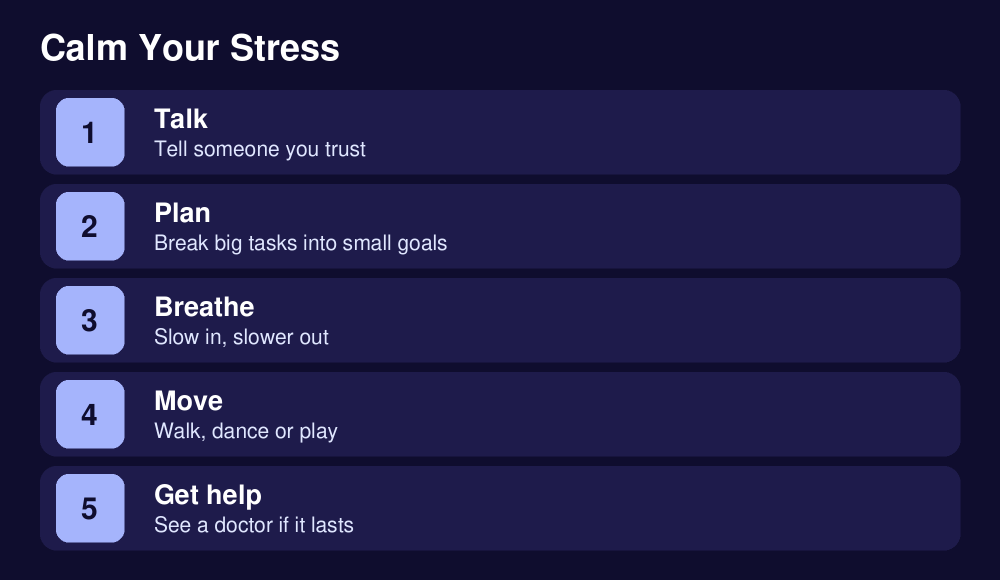
- Talk to someone you trust, such as a friend, family member or health professional.
- Break large tasks into small goals and focus on what you can influence, not what you cannot.
- Plan ahead for stressful days and use simple time-management methods.
- Try breathing exercises, regular exercise and time for yourself.
- Use peer support: people with similar experiences can help each other.
- Avoid alcohol, cigarettes, gambling and drugs as ways to cope.
A simple breathing routine: sit comfortably, breathe in slowly through the nose for about four seconds, breathe out gently for about six, and repeat for a few minutes. It will not fix a problem, but it can settle your body so you can think. If worries keep you awake, write tomorrow’s tasks and worries on paper before bed so your mind can let go.
Money, work and family stress in Nigeria
Many Nigerians sleep badly because of bills, rent, school fees and job pressure. Practical steps reduce the load: make a simple monthly budget, build a small emergency fund, and talk to family early about shared costs (see how to save money on a low salary). For work stress, see burnout among Nigerian professionals and how to manage stress working from home. Community and faith groups can also provide support; see mental health support resources for Nigerians.
How to fall asleep fast naturally: what to do tonight
If your main problem is lying awake for ages, these steps target the minutes before and after you get into bed. They draw on NHS Every Mind Matters advice, NICE-based guidance summarised by UK health writers, and recent reviews of relaxation methods. None of them is a guaranteed two-minute fix, and what works varies from person to person.
1. Start winding down an hour before bed
The NHS says your sleep routine starts before you get into bed, so build in time every evening to relax. Avoid phones, tablets and computers for at least an hour before bed because the blue light can keep you alert. Reading, soft music, a podcast or sleep meditation can help. If you often lie awake worrying, write a to-do list for tomorrow before bed so your mind can let go.
2. Make the room cool, dark and quiet
The NHS says it is generally easier to drop off when the room is quiet, dark and cool, and that a cool, ventilated room is usually better than a hot or stuffy one. In Nigerian heat, a fan, light bedding, a thin cotton sheet and a window screen for mosquitoes can help more than expensive gadgets. One UK summary of research puts the best temperature for most people at roughly 18 to 20 degrees Celsius, which may be hard to reach in Lagos, so aim for as cool and dark as you can manage. If generator noise or street noise is the problem, earplugs or steady white noise can help.
3. Try a warm shower or bath, then slow breathing
Reviews of trials have found that warming the body with a warm bath or shower one to two hours before bed can shorten the time it takes to fall asleep by roughly ten minutes on average. Once in bed, breathe slowly with a longer breath out than in, for example in for four counts and out for six to eight, and let your shoulders, jaw and hands go heavy. Slow breathing and progressive muscle relaxation, where you relax your body from the face down to the feet, are real parts of insomnia treatment even though the well-known “military method” has never been tested as a complete package. Treat it as a relaxation routine, not a promise.
4. If you cannot sleep, do not force it
The NHS advises that if you cannot sleep you should not try to force it. Get up, sit somewhere comfortable and do something relaxing, such as reading a paper book or listening to quiet music in low light, and only go back to bed when you feel sleepier. Turn clocks and your phone away so you are not counting the hours. Many people find that taking the pressure off helps sleep arrive.
5. Keep the day consistent
Get up at the same time every day, including weekends. Avoid caffeine, alcohol and nicotine for the last few hours before bed, avoid big meals late at night, and avoid energetic exercise in the 90 minutes before bed if it keeps you awake. Regular daytime exercise and daylight help sleep, and a long afternoon nap can make it harder to fall asleep at night.
6. What about supplements and sleeping tablets?
Evidence for supplements is modest. A summary of pooled trials found melatonin helped people fall asleep only about seven minutes sooner on average, and in the UK it is a prescription-only medicine. Magnesium shortened the time to fall asleep by around 17 minutes in a few small trials of older adults, with low-quality evidence. Check with a pharmacist or GP before taking anything, especially if you take other medicines. The NHS notes that GPs now rarely prescribe sleeping pills for insomnia.
7. When it keeps happening, ask about CBT-I
If poor sleep has lasted weeks or months, the treatment with the best evidence is cognitive behavioural therapy for insomnia (CBT-I), which NICE recommends. A review of 20 trials found it helped people fall asleep about 19 minutes faster and cut the time awake in the night by about 26 minutes, with benefits that seemed to last. In the UK you can ask your GP about CBT-I, often available as a digital programme. Regularly taking more than 30 minutes to fall asleep, or snoring loudly with pauses in breathing, is worth discussing with a doctor.
When to see a doctor
Speak to a doctor or qualified mental health professional if you are struggling to cope, your own efforts are not helping, poor sleep lasts for weeks, you snore loudly with pauses in breathing or wake gasping, you have low mood or panic, or you use alcohol or drugs to cope. In the UK, the NHS says you can see a GP or self-refer to NHS talking therapies if you are 18 or over, call 111 for urgent non-emergency help, and call 999 in an emergency. In Nigeria, go to a hospital or clinic, or call a trusted mental health service; if you or someone else is in immediate danger, call your local emergency number. If you are in the UK and need someone to talk to, Samaritans are on 116 123.
Related guide (updated 10 Nov 2026)
How to Improve Your Memory and Concentration covers sleep, exercise, study methods and when to see a doctor.
Related guide (updated 12 Nov 2026)
Best vitamins and foods for hair growth what the evidence says about biotin, iron and vitamin D, foods that help and when to see a doctor
Related guide (updated 13 November 2026)
How to Improve Gut Health Naturally explains what the evidence says about fibre, plant variety, fermented foods and probiotics, which Nigerian foods help, a four-week plan and when to see a doctor.
Frequently asked questions
How many hours of sleep do adults need?
Needs vary, but most adults need around seven to nine hours. Ask a doctor if you are always tired despite enough time in bed.
What is the best natural way to fall asleep faster?
A regular schedule, a cool dark room, no screens or caffeine late, and a relaxing routine (warm bath, quiet reading, breathing) are the most recommended steps.
Does exercise help sleep and stress?
Yes. The WHO says physical activity is associated with better sleep and mental health. Avoid hard exercise within 3 hours of bed.
Is it bad to nap in the afternoon?
Short naps under 30 minutes earlier in the day are usually fine. Long or late naps can disturb night-time sleep.
Do herbal teas and supplements help?
Evidence is mixed and products vary in quality. A warm non-caffeinated drink can be part of a calming routine, but check with a pharmacist or doctor before using supplements or herbs, especially with medicines.
Does alcohol help me sleep?
It may help you doze off but can disturb sleep later in the night and worsen mood, so it is not a good sleep aid.
How can I reduce stress quickly?
Slow breathing, a short walk, talking to someone you trust and writing down what is on your mind can all help in the moment. Longer-term, tackle the cause with a plan.
When is stress or poor sleep a medical problem?
When it lasts for weeks, affects daily life, or comes with low mood, panic or substance use. See a doctor.
How can I fall asleep in 10 minutes naturally?
There is no guaranteed method, but a calm routine helps most: no screens for an hour, a cool dark room, a warm shower earlier in the evening, slow breathing and progressive muscle relaxation. If you are still awake after about 20 minutes, get up and do something quiet until you feel sleepy.
Does the military sleep method work?
The claim that it works in two minutes comes from a book, not a clinical trial. Its ingredients, deep muscle relaxation and a calm mental image, do have evidence behind them, so it can be a reasonable wind-down routine.
Is melatonin available without a prescription in the UK?
No. In the UK melatonin is a prescription-only medicine, and trials show only a small effect on how fast people fall asleep. Ask a GP or pharmacist rather than buying it online.
Sources and notes (updated 13 November 2026 with the fall-asleep-fast section: NHS Every Mind Matters, How to fall asleep faster and sleep better; Wellgard, How to sleep better: what the evidence says, summarising NICE CKS and Cochrane-style trial reviews; HuffPost UK, Six science-backed ways to help you fall asleep faster, 27 March 2026): Doncaster and Bassetlaw Teaching Hospitals NHS Foundation Trust, Sleep hygiene (read 7 November 2026); NHS, Stress (read 7 November 2026); World Health Organization, Physical activity fact sheet (read 7 November 2026). The seven-to-nine-hour range is a general adult guideline. This article is general information, not medical advice.
Join the discussion
Have you tried this, or do you have a question we did not answer? Be the first to share your experience. Leave a comment below. Every comment is read by the editor before it appears.






Thank you for reading. Which of these habits will you try this week? Tell us in the comments. If poor sleep or stress is affecting your daily life, please speak to a doctor. Ade Adeniyi