


Personalized digital ads can boost brand recall by up to 80% in Nigeria, yet many local marketers still doubt their effectiveness. This misconception costs small businesses valuable growth opportunities in one of Africa’s fastest-growing digital markets. Understanding how advertising functions in digital media and applying proven strategies can transform your brand visibility and customer engagement across Nigerian online spaces.
Table of Contents
- Introduction To Digital Advertising And Its Role In Digital Media
- How Digital Ads Influence Brand Awareness And Customer Engagement
- Key Metrics And Frameworks To Measure Digital Advertising Success
- Common Misconceptions About Digital Advertising Among Nigerian Marketers
- Practical Steps And Strategies For Nigerian Small Businesses
- Conclusion And Future Outlook For Digital Advertising In Nigeria
- Enhance Your Digital Marketing With Naijatipsland Resources
Key takeaways
| Point | Details |
|——-|———||
| Brand visibility boost | Digital ads significantly improve brand awareness and customer engagement when targeted properly in Nigeria. |
| Data-driven success | Measuring CTR, conversion rates, and CAC with localized content maximizes ad effectiveness. |
| Common misconceptions | Many Nigerian marketers assume ads alone guarantee growth without optimization or cultural relevance. |
| Mobile-first strategy | Nigeria’s mobile-heavy internet usage demands mobile-optimized ad campaigns for best results. |
| Continuous improvement | Regular A/B testing and culturally relevant strategies are essential for sustained digital advertising success. |
Introduction to digital advertising and its role in digital media
Digital advertising refers to promotional content delivered through online channels to reach target audiences. Common formats include social media ads on platforms like Facebook and Instagram, search engine marketing on Google, display banners on websites, and video ads on YouTube. These formats allow precise targeting based on demographics, interests, and online behaviors.
Nigeria’s digital landscape has transformed dramatically over recent years. Internet penetration exceeded 65% in 2026, with over 140 million Nigerians online. Mobile devices account for roughly 80% of all internet access, making mobile-first advertising strategies essential. The role of social media in Nigeria has grown exponentially, creating new opportunities for brand-customer interactions.
Digital ads are critical for online brand presence because they provide measurable reach and engagement. Unlike traditional billboards or print media, digital campaigns allow real-time tracking and optimization. Research shows digital ads improve direct customer actions by 45% compared to offline advertising in Nigeria’s small business sector.
Major platforms dominating Nigerian digital advertising include:
- Facebook and Instagram for social engagement and visual storytelling
- Google Ads for search intent targeting and local business visibility
- WhatsApp Business for direct customer communication and promotional messaging
- YouTube for video content and brand storytelling
- Twitter (X) for real-time engagement and trending topic participation
These platforms collectively reach over 90% of Nigeria’s online population. Small businesses leveraging them strategically gain competitive advantages in crowded markets. The key lies in understanding platform-specific user behaviors and tailoring content accordingly.
How digital ads influence brand awareness and customer engagement
Targeted and localized advertising dramatically increases brand visibility in Nigerian markets. When ads reflect local languages, cultural references, and community values, they resonate more deeply with audiences. Digital advertising increases brand recall by up to 80% when personalization meets cultural relevance.
Mobile-first strategies dominate Nigerian digital advertising because smartphones are the primary internet access point. Ads optimized for smaller screens, faster loading times, and lower data consumption perform significantly better. Vertical video formats, snackable content under 15 seconds, and thumb-friendly call-to-action buttons maximize mobile engagement.
Digital ads encourage customer interaction through multiple touchpoints. Comments, shares, direct messages, and website visits create ongoing relationships beyond single transactions. This interactive nature builds brand loyalty over time. The social media impact in Nigeria demonstrates how consistent digital presence fosters community connections.
Traditional advertising methods like radio spots or newspaper ads offer limited targeting and no real-time feedback. Digital campaigns allow precise audience segmentation by age, location, interests, and online behaviors. You can show different ad variations to different groups simultaneously, testing what works best.
Key differences include:
- Cost efficiency: Digital ads require smaller budgets with measurable returns on investment
- Targeting precision: Reach specific demographics rather than broad, undefined audiences
- Performance tracking: Monitor clicks, conversions, and engagement in real time
- Content flexibility: Update or pause campaigns instantly based on performance data
- Interactive formats: Enable two-way communication rather than one-way messaging
Pro Tip: Incorporate local languages like Pidgin English, Yoruba, Igbo, or Hausa phrases into your ad copy. Include recognizable cultural symbols, local fashion styles, or community-specific imagery to increase emotional connection and engagement rates.
Key metrics and frameworks to measure digital advertising success
Measuring digital advertising success requires tracking specific performance indicators. Click-through rate (CTR) shows the percentage of people who click your ad after seeing it. Conversion rate measures how many clicks result in desired actions like purchases, sign-ups, or inquiries. Customer acquisition cost (CAC) calculates total ad spend divided by new customers gained.
The AIDA model organizes digital ad strategy through four progressive phases. Attention captures audience awareness through compelling visuals or headlines. Interest maintains engagement with relevant value propositions. Desire creates emotional connection to your product or service. Action prompts immediate response through clear calls-to-action.
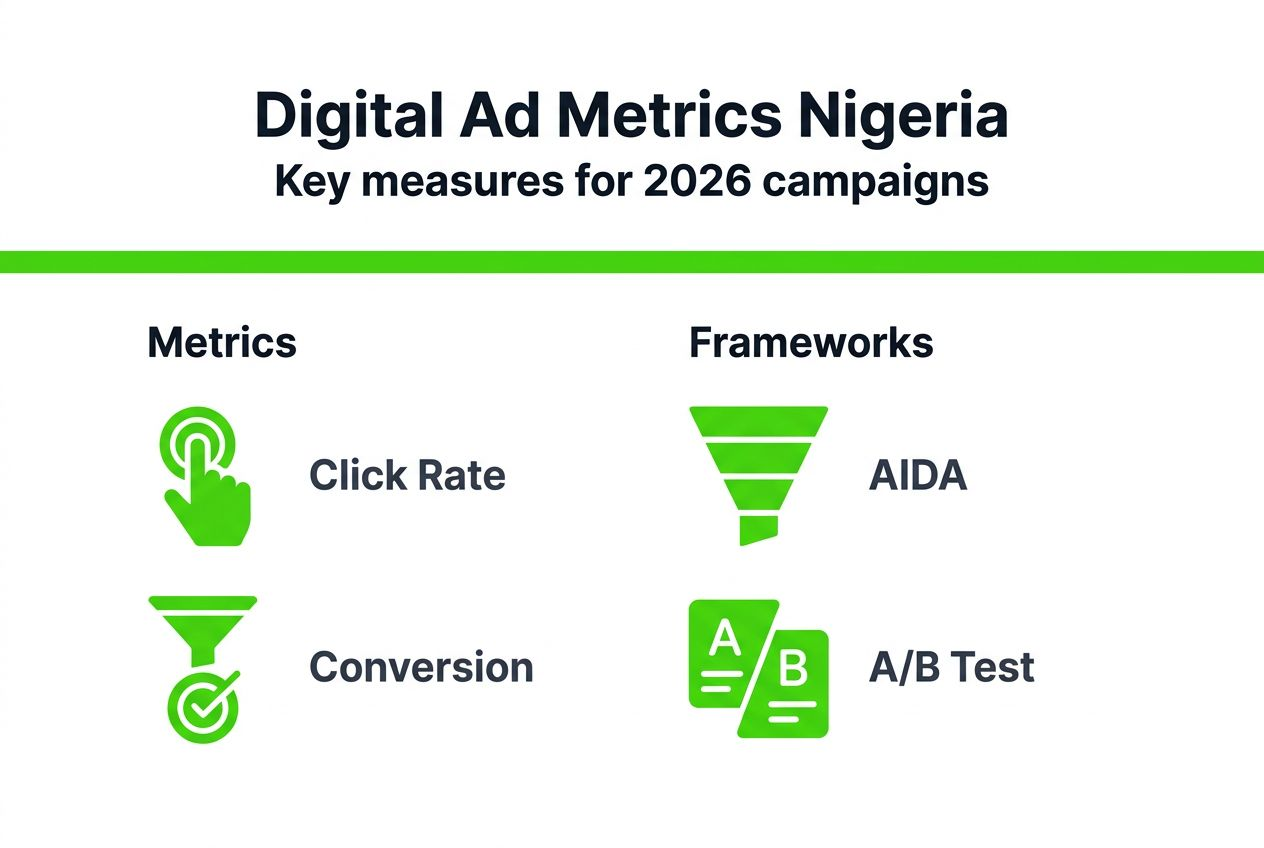
| Metric | Definition | Nigerian Market Benchmark |
|---|---|---|
| Click-Through Rate (CTR) | Percentage of ad viewers who click | 2.5% to 4.5% for social media ads |
| Conversion Rate | Percentage of clicks resulting in desired actions | 1.8% to 3.2% for e-commerce |
| Customer Acquisition Cost (CAC) | Total ad spend divided by new customers | ₦2,500 to ₦8,000 depending on industry |
| Cost Per Click (CPC) | Average amount paid per ad click | ₦50 to ₦250 for Facebook/Instagram |
| Return on Ad Spend (ROAS) | Revenue generated per naira spent on ads | 3:1 to 5:1 for optimized campaigns |
Follow these numbered steps to plan and measure effective campaigns:
- Define clear campaign objectives aligned with business goals like brand awareness or sales growth.
- Identify target audience demographics, interests, and online behaviors specific to Nigerian markets.
- Set measurable key performance indicators based on the metrics table above.
- Allocate budget across platforms where your target audience spends most time.
- Create multiple ad variations for A/B testing different headlines, images, and calls-to-action.
- Launch campaigns with tracking pixels installed on your website for conversion monitoring.
- Monitor performance daily during first week, then adjust frequency based on campaign length.
- Analyze which variations perform best and reallocate budget toward top performers.
- Document learnings and apply insights to future campaigns for continuous improvement.
Pro Tip: Use A/B testing to compare ad variations systematically. Test one element at a time like headline, image, or call-to-action button. Run tests for minimum seven days to gather statistically significant data, then scale winning variations while pausing underperformers to improve ROI continuously.
These frameworks work for Nigerian businesses across industries. Earning online Nigeria guide resources provide additional context for applying these metrics to specific business models and revenue strategies.
Common misconceptions about digital advertising among Nigerian marketers
Many Nigerian marketers believe simply running ads guarantees business growth. This misconception leads to disappointment when campaigns fail to deliver expected results. Data shows roughly 70% of unoptimized digital ad campaigns fail to meet objectives because they lack strategic planning, proper targeting, or cultural relevance.
Another prevalent myth suggests digital ads work uniformly across all markets without localization. Nigerian audiences respond differently than Western markets due to unique cultural values, economic conditions, and online behaviors. Generic international ad templates typically underperform compared to culturally adapted content.
Small businesses often assume A/B testing is unnecessary or too complex. Less than 20% of Nigerian SMEs perform systematic ad testing, leading to missed optimization opportunities. Without comparing variations, you cannot identify what resonates most with your specific audience.
Common misconceptions paired with corrections:
- Myth: Higher ad spend automatically equals better results. Reality: Strategic targeting and creative quality matter more than budget size.
- Myth: Digital ads only work for large companies with big budgets. Reality: Small businesses often achieve better ROI through hyper-local targeting and niche positioning.
- Myth: One successful campaign formula works indefinitely. Reality: Audience preferences and platform algorithms change constantly, requiring ongoing testing and adaptation.
- Myth: Complicated technical jargon is necessary for effective ads. Reality: Simple, conversational language in local dialects typically outperforms formal corporate speak.
- Myth: You need professional designers and videographers for every ad. Reality: Authentic user-generated content and smartphone videos often generate higher engagement than polished studio productions.
Data-driven decision making separates successful campaigns from failed attempts. Track performance metrics weekly, analyze patterns over time, and adjust strategies based on evidence rather than assumptions. Nigerian digital markets reward marketers who combine cultural intelligence with analytical rigor.
Exploring online business types Nigeria helps identify which advertising approaches align best with different business models and target audiences in local contexts.
Practical steps and strategies for Nigerian small businesses
Nigerian small businesses can launch effective digital advertising campaigns by following this systematic approach:
- Identify your target audience with specific demographics like age range, gender, location within Nigeria, income level, and primary interests.
- Research where your audience spends time online, whether Facebook groups, Instagram explore pages, or WhatsApp communities.
- Develop culturally relevant creative content using local languages, familiar imagery, and community-specific references that resonate emotionally.
- Select digital channels aligned with audience behaviors and campaign objectives, prioritizing mobile-optimized platforms.
- Set specific, measurable goals like generating 500 website visits, acquiring 50 new customers, or achieving ₦200,000 in sales.
- Create three to five ad variations testing different headlines, images, video lengths, or call-to-action phrases.
- Install tracking pixels on your website to monitor visitor actions and conversion events accurately.
- Launch campaigns with modest daily budgets starting around ₦1,000 to ₦3,000 for testing phases.
- Monitor performance metrics daily during the first week, identifying which variations generate best engagement and conversions.
- Scale winning ad variations by increasing budget allocation while pausing or modifying underperforming versions.
- Gather customer feedback through comments, direct messages, and post-purchase surveys to refine messaging.
- Document successful strategies and failed experiments to build institutional knowledge for future campaigns.
Social media platforms like Facebook and Instagram offer powerful targeting capabilities for Nigerian businesses. Facebook’s detailed targeting options allow you to reach people based on behaviors like online shopping frequency, mobile device usage, and interest in specific product categories. Instagram’s visual format works exceptionally well for fashion, food, beauty, and lifestyle brands.
Pro Tip: Monitor mobile user behaviors through Facebook Audience Insights and Google Analytics. Notice peak activity times when your target audience is most active online, then schedule ads to run during these windows. Tailor ad creative for vertical mobile viewing with text overlays readable on small screens without zooming.
A Nigerian fashion retailer in Lagos increased sales by 180% using localized Facebook ads featuring models wearing traditional Ankara prints mixed with contemporary styles. The ads targeted women aged 25 to 40 within Lagos, Abuja, and Port Harcourt interested in African fashion. By speaking directly to cultural pride and modern aesthetics, the campaign resonated deeply with its audience.

Research shows digital ads improve direct customer actions by 45% compared to traditional methods when properly optimized for local markets. Study Nigerian startup examples to see how successful companies leverage digital advertising in competitive industries.
For additional tactical guidance, explore resources on improving ad performance tips applicable to Nigerian market conditions and budget constraints.
Conclusion and future outlook for digital advertising in Nigeria
Digital advertising transforms brand visibility and customer engagement when Nigerian businesses apply strategic optimization. Proper targeting, cultural relevance, and continuous testing create measurable results that traditional advertising cannot match. The key lies in understanding your specific audience and tailoring content to their preferences and online behaviors.
Mobile internet adoption continues accelerating across Nigeria, with projections indicating 75% penetration by 2027. This growth expands digital advertising opportunities for small businesses in secondary cities and rural areas previously difficult to reach cost effectively. As connectivity improves, more Nigerians join online marketplaces as both consumers and entrepreneurs.
Emerging technologies like artificial intelligence-powered ad targeting and programmatic buying platforms will make sophisticated advertising accessible to smaller budgets. These tools automate optimization processes that currently require manual analysis, leveling the playing field between large corporations and agile startups.
Nigerian SMEs should embrace continuous learning about platform algorithm updates, audience preference shifts, and new ad formats. Success requires balancing data-driven decisions with cultural intelligence. Localization remains critical as generic international approaches consistently underperform against culturally adapted campaigns.
“Digital advertising is not about having the biggest budget but about understanding your audience deeply and speaking their language authentically. Nigerian businesses that master this combination will dominate their markets in the coming years.”
The Nigeria digital economy growth trajectory suggests digital advertising will become increasingly central to business success across all industries and regions.
Enhance your digital marketing with Naijatipsland resources
Ready to apply these digital advertising insights to your Nigerian business? Naijatipsland offers practical resources designed specifically for local marketers and entrepreneurs. Our community-focused platform helps you build engagement strategies that resonate with Nigerian audiences.
Learn effective techniques for starting online discussions forums that complement your advertising campaigns by creating organic brand communities. Discover how community engagement benefits extend beyond business metrics to support mental health and social connection among Nigerian users.
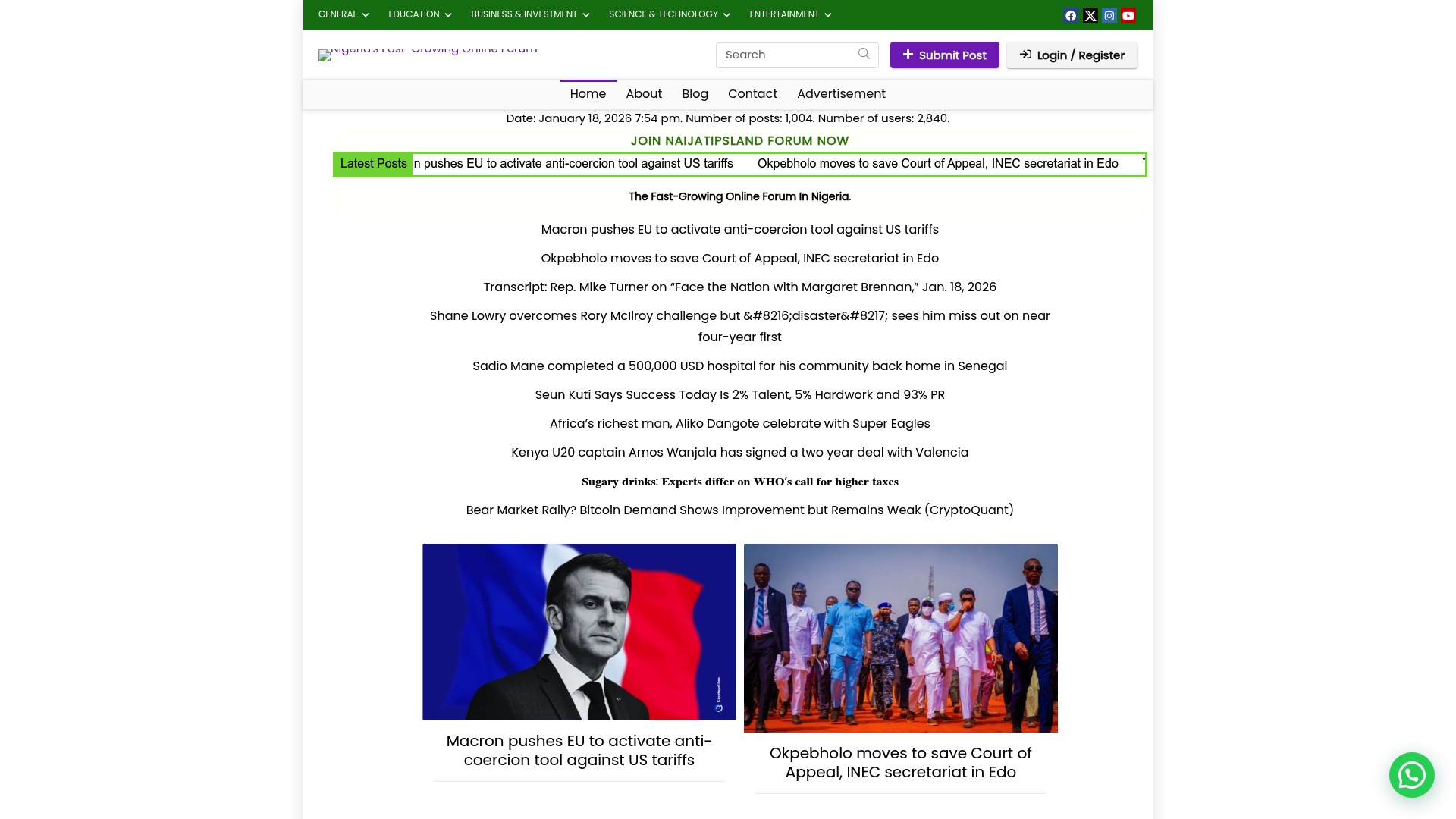
Whether you’re launching your first digital ad campaign or refining existing strategies, our beginner’s guide to online discussions Nigeria provides foundational knowledge for building authentic online presence. Join thousands of Nigerian digital marketers leveraging our resources to grow their brands and connect with customers more effectively.
FAQ
What types of digital ads work best for Nigerian small businesses?
Social media ads on Facebook and Instagram deliver strongest results due to high user engagement rates. Mobile-optimized display ads and WhatsApp Business messaging also perform well given Nigeria’s mobile-first internet usage patterns. Localized content featuring familiar cultural references significantly enhances campaign impact and conversion rates.
How can Nigerian businesses measure the success of their digital advertising?
Track key metrics including click-through rate (CTR), conversion rate, and customer acquisition cost (CAC) using platform analytics tools. Use the AIDA framework to evaluate campaign performance across attention, interest, desire, and action phases. Install website tracking pixels to monitor visitor behaviors and attribute conversions accurately to specific ad campaigns.
What common mistakes should Nigerian marketers avoid with digital ads?
Avoid assuming ads alone guarantee growth without continuous optimization and testing. Don’t neglect cultural localization or mobile user behavior patterns specific to Nigerian audiences. Failing to conduct regular A/B testing prevents identifying which ad variations resonate most effectively, leaving significant performance improvements undiscovered.
Why is cultural relevance important in Nigerian digital advertising?
Culturally relevant ads resonate emotionally with local audiences by reflecting their languages, traditions, and shared values. This authenticity increases trust and encourages interaction compared to generic international content. Ads incorporating Pidgin English, local fashion styles, or community-specific imagery consistently outperform culturally neutral alternatives in Nigerian markets.