

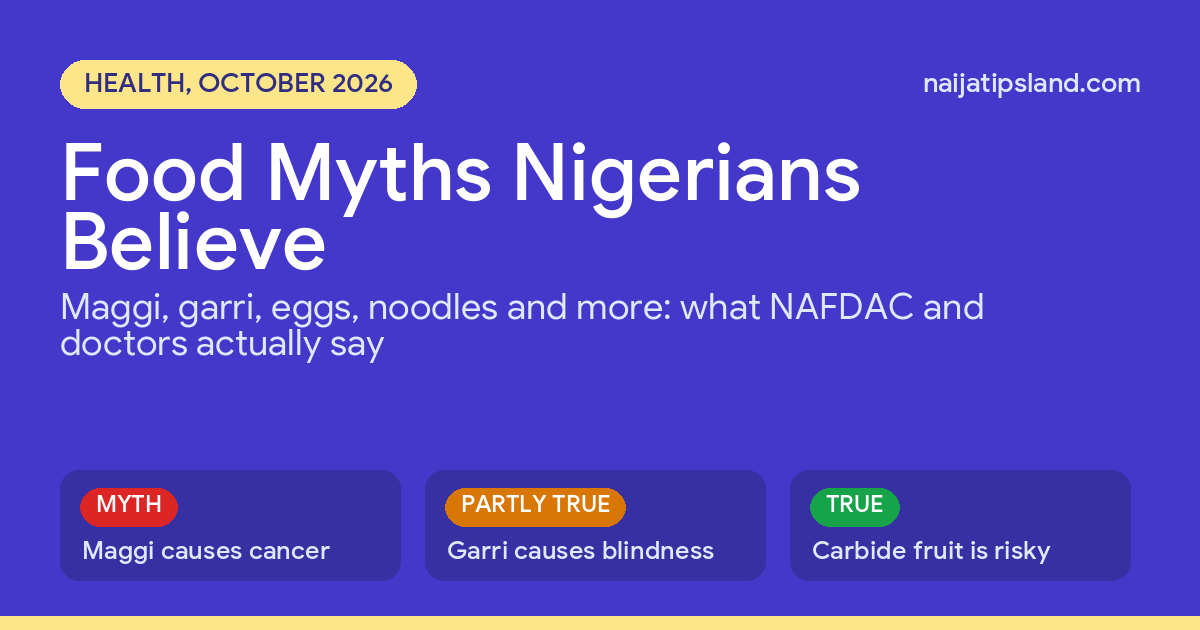
Does Maggi cause cancer? Will drinking garri make you blind? Do eggs turn children into thieves? Nigerian WhatsApp groups and family conversations are full of food warnings, and some voice notes have been forwarded so often that many people now treat them as fact. Some of these claims are false, some are half-true, and a few point to real dangers that deserve more attention than they get.
This guide looks at the most common food myths in Nigeria and what NAFDAC, the World Health Organization (WHO) and published medical research actually say. It also covers the real food-safety risks in Nigeria that are often overlooked while people worry about the myths.
Last updated: 21 October 2026. This article is general information based on official statements and published research (see Sources). It is not medical advice. If you have a health condition or concerns about your diet, speak to a doctor, pharmacist or registered dietitian.
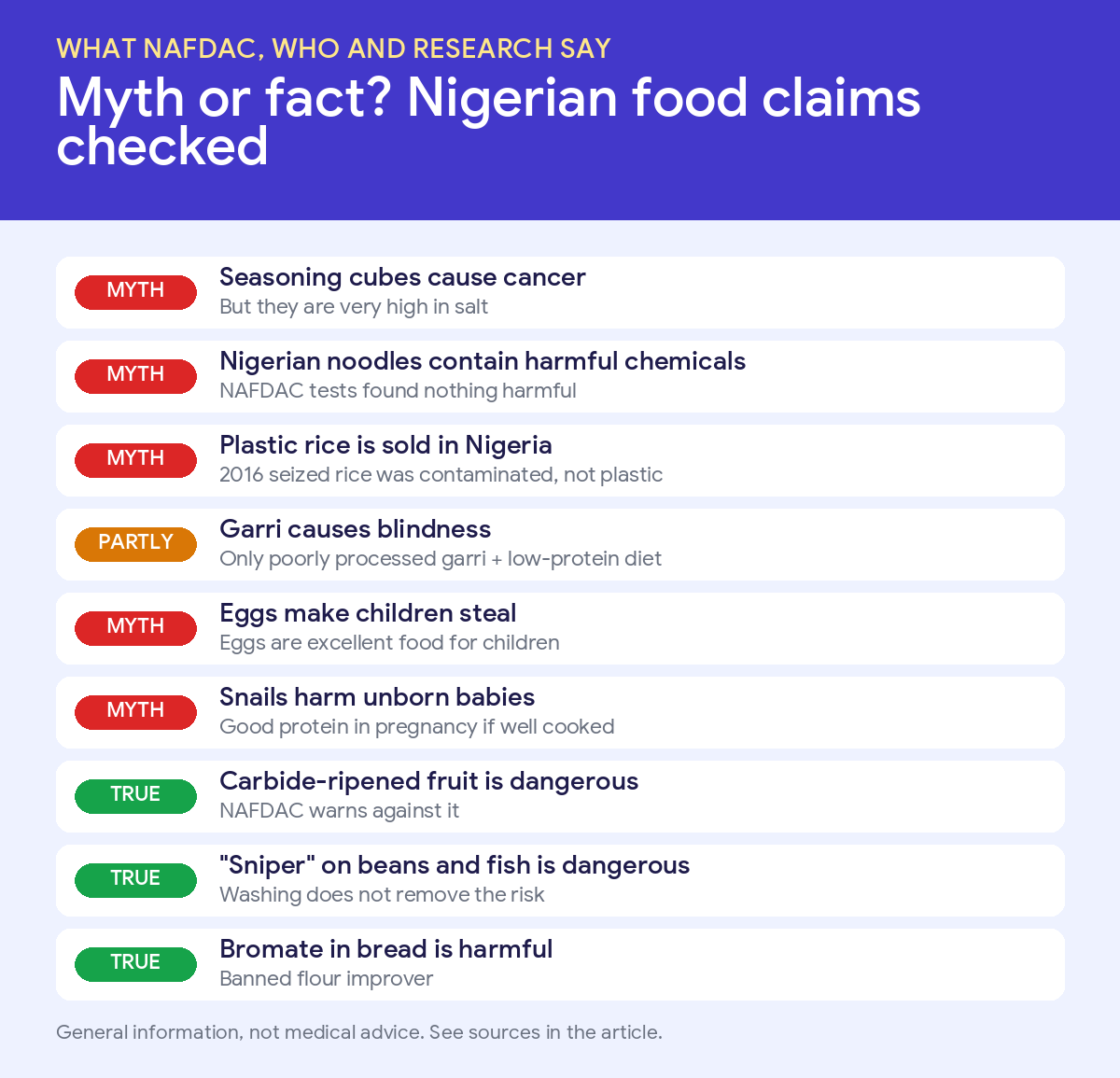
Myth or fact at a glance
| Claim | Verdict |
|---|---|
| Maggi and other seasoning cubes cause cancer | Myth, but they are very high in salt |
| Nigerian instant noodles contain dangerous chemicals | Myth, according to NAFDAC tests |
| NAFDAC has banned tinned tomatoes and Maggi | False |
| “Plastic rice” is being sold in Nigeria | Myth, but contaminated rice was seized |
| Drinking garri causes blindness | Partly true, only in specific circumstances |
| Eggs make children steal | Myth |
| Snails make babies drool or sluggish | Myth |
| Fruit ripened with carbide is dangerous | True |
| Beans and fish preserved with “Sniper” are dangerous | True |
| Bread made with potassium bromate is harmful | True; the additive is banned |
Myths and half-truths
1. “Maggi and seasoning cubes cause cancer”
Verdict: myth, but watch the salt.
Viral voice notes regularly claim that seasoning cubes cause cancer or that NAFDAC has banned them. In July 2025, NAFDAC described a viral audio making such claims as “completely false and misleading”, and said there was no ban on Maggi cubes or tinned tomatoes. In 2023, after concerns abroad about ethylene oxide in noodle seasoning, NAFDAC said that ethylene oxide or its derivative was not found in any instant noodles or seasoning products made in Nigeria.
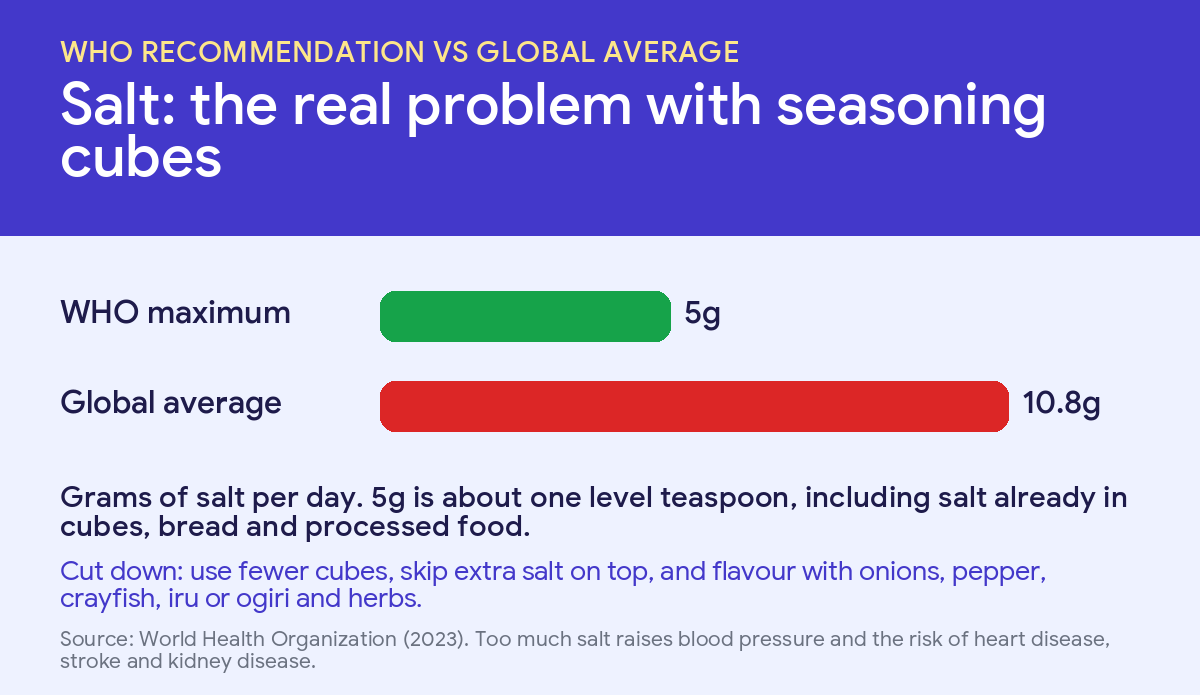
The real issue with seasoning cubes is salt. Cubes are very high in sodium, and many Nigerian dishes use several cubes plus added salt. The WHO recommends less than 5 grams of salt a day (about one teaspoon), but the global average is about 10.8 grams. Too much salt raises blood pressure and the risk of heart disease, stroke and kidney disease, and high blood pressure is common in Nigeria. Use fewer cubes, avoid adding extra salt on top, and use natural flavours such as onions, pepper, crayfish, locust beans (iru or ogiri) and herbs.
2. “Instant noodles contain harmful chemicals”
Verdict: myth, according to NAFDAC’s tests.
After a viral claim about noodles in 2025, NAFDAC said it had inspected a noodle factory, taken samples of four variants and tested them in its laboratory. It found no trace of the preservative named in the audio, and said mycotoxin and heavy-metal levels were within internationally acceptable limits. Noodles are not dangerous, but they are high in refined starch, salt and fat and low in protein and fibre, so they shouldn’t replace balanced meals, especially for children. Add eggs, vegetables or fish to make them more nutritious.
3. “Plastic rice is being sold in Nigeria”
Verdict: myth, but contaminated rice was found.
In December 2016, Customs seized 102 bags of rice in Lagos that were claimed to be “plastic rice”. NAFDAC’s laboratory tests found the rice was not plastic, but it was contaminated with microorganisms above permissible limits and unfit to eat. The lesson is not that plastic rice exists, but that smuggled or badly stored food can be unsafe. Buy rice in sealed, NAFDAC-registered bags from trusted sellers where possible.
4. “Drinking garri causes blindness”
Verdict: partly true, in specific circumstances.
Garri is made from cassava, which naturally contains compounds that release cyanide. Proper processing (peeling, grating, fermenting, pressing and frying) removes most of it. Doctors explain that problems arise when poorly processed garri is eaten in large amounts by people with a diet low in protein and vitamin B12. In that combination, leftover cyanide can contribute to nerve damage, including damage to the optic nerve. Experts also link poorly processed cassava to goitre and nerve problems that affect walking.
Well-processed garri eaten as part of a balanced diet is not a cause of blindness. To stay safe, buy garri from reliable sources, eat it with protein such as beans, fish, groundnuts, eggs or milk, and don’t make it the main food every day. Its high starch content is also a concern for people with diabetes.
5. “Eggs make children steal” and other child-feeding taboos
Verdict: myth.
A 2016 study of mothers in Enugu State, published in the Journal of Ethnobiology and Ethnomedicine, found that about 36.5% avoided certain foods during pregnancy or when feeding children under two. Eggs were the food most often withheld from young children, because of the belief that eggs make children steal. There is no scientific basis for this. Eggs are an affordable source of high-quality protein, vitamins and minerals, and are excellent for growing children.
6. “Snails make babies drool, and grasscutter makes labour difficult”
Verdict: myth.
The same study found that snails were the food most often avoided in pregnancy, because of beliefs that they make the baby sluggish or cause excess saliva. Grasscutter meat was avoided because of beliefs that it makes labour long and difficult. The researchers noted these are good sources of protein and that the claimed harms have no scientific support. Pregnant women need more protein, iron and other nutrients, so avoiding these foods can do more harm than good. Make sure all meat and snails are well cooked.
7. “Cold water after a meal causes cancer or heart attacks”
Verdict: myth.
Messages claiming that cold water “solidifies” oil in your food and causes cancer or heart attacks have circulated for years. There is no scientific evidence for this. Your body warms what you drink, and the stomach does not turn oil into solid fat that blocks arteries. Drinking water with or after meals is fine, and staying hydrated is important in Nigeria’s heat.
8. “Microwaved food causes cancer”
Verdict: myth.
Microwave ovens heat food using radio waves, which make water molecules vibrate. They do not make food radioactive. Used as directed, microwaving is a safe way to cook and reheat food. The main safety tips are to use microwave-safe containers rather than ordinary plastic, and to heat food evenly until it is steaming hot.
Real food-safety risks in Nigeria
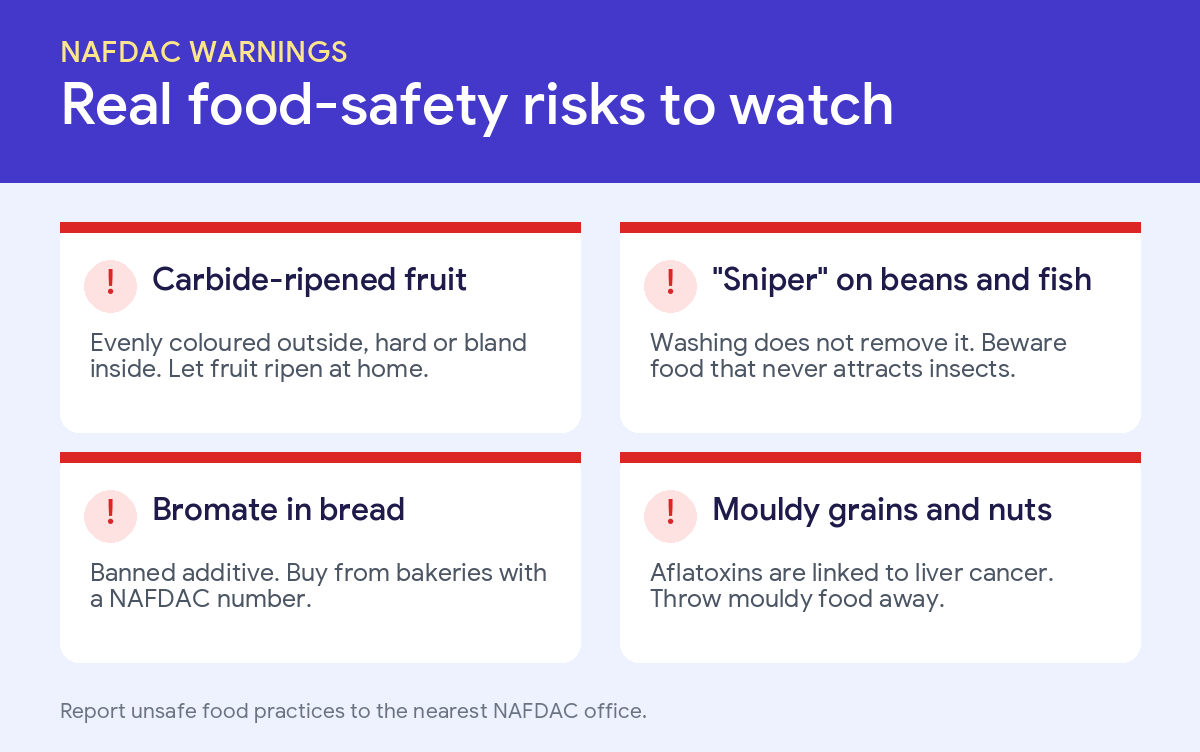
While people worry about seasoning cubes, several genuine dangers get less attention. NAFDAC has warned about all of these.
Fruit ripened with calcium carbide
Some sellers use calcium carbide, a chemical meant for welding, to ripen mangoes, bananas, pawpaw and other fruit quickly. NAFDAC has warned that it is hazardous to health and has linked it to serious illness, including kidney damage and cancer. Carbide-ripened fruit often looks evenly coloured on the outside but tastes bland or feels hard inside, and may go bad quickly. Buy fruit that ripens naturally, wash it well, and if you are unsure, let fruit ripen at home.
Beans, stockfish and crayfish preserved with “Sniper”
Some traders use dichlorvos insecticide (sold as “Sniper”) to keep weevils out of beans or flies away from fish. NAFDAC has warned that eating food contaminated with dichlorvos can cause dizziness, vomiting, breathing problems, convulsions and even death, and that long-term exposure may affect fertility and has been linked to cancer. It says washing the food does not remove the risk. Since 2019, NAFDAC has banned the sale of dichlorvos in small containers of 100ml or less. Be suspicious of beans or fish that never seem to attract insects or spoil, and report traders who use these chemicals to NAFDAC.
Bread made with potassium bromate
Potassium bromate is a banned flour improver that some bakers still use to make bread rise and look fluffy. NAFDAC has described it as a known cancer-causing agent that can also cause kidney problems, and has seized large quantities in Lagos. Buy bread from registered bakeries with a NAFDAC number on the packaging.
Other risks
- Aflatoxins: moulds on poorly stored grains, groundnuts and maize can produce toxins linked to liver cancer. Don’t eat mouldy or discoloured grains and nuts.
- Fake and unregistered products: check for a NAFDAC registration number on packaged foods and drinks.
- Bleached or re-used palm oil: avoid oil that has been reused many times for frying.
- Food hygiene: diarrhoea and typhoid from contaminated food and water remain common. Wash hands, cook food thoroughly and store leftovers safely.
How to check a health claim before you forward it
- Check the source. Is it from NAFDAC, the Federal Ministry of Health, the NCDC, the WHO or a named doctor, or just an anonymous voice note?
- Search NAFDAC’s website and verified social media accounts for any ban or warning before believing it.
- Be wary of messages that create panic, use capital letters, or tell you to “forward to everyone”.
- Look for fact-checks from Nigerian fact-checking organisations and major newspapers.
- Ask a health professional if you are unsure, especially about pregnancy, children’s feeding or a medical condition.
False health claims are a close cousin of online scams. See our guide on how to avoid internet scams in Nigeria.
Eating well on a budget
Many of the healthiest Nigerian foods are also affordable: beans, eggs, groundnuts, ugwu and other leafy vegetables, fish, crayfish, local fruits and whole grains. With food prices high, see our guide to food prices in Nigeria this Christmas for what staples currently cost.
Related guide (updated 7 November 2026)
Traditional Nigerian foods and their health benefits (what the evidence says)
Frequently asked questions
Does Maggi cause cancer?
There is no evidence that seasoning cubes sold in Nigeria cause cancer, and NAFDAC has dismissed viral claims about them. But they are very high in salt, which raises blood pressure, so use them sparingly.
Is it safe to drink garri?
Well-processed garri is safe as part of a balanced diet. Poorly processed garri eaten in large amounts, especially with little protein, can be harmful. Eat it with protein-rich foods and buy from reliable sources.
Can pregnant women eat snails and eggs?
Yes. There is no scientific evidence that snails or eggs harm the baby. They are good protein sources. Make sure they are well cooked, and follow your antenatal clinic’s advice.
How can I tell if fruit was ripened with carbide?
It is hard to be sure, but carbide-ripened fruit is often evenly coloured outside, hard or bland inside, and spoils quickly. Buying from trusted sellers and letting fruit ripen at home are the safest options.
How do I report unsafe food in Nigeria?
Report to the nearest NAFDAC office or through NAFDAC’s official contact channels and social media accounts.
Sources
- Premium Times: NAFDAC debunks viral claims on noodles, tinned tomatoes and Maggi cubes (July 2025)
- WHO: massive efforts needed to reduce salt intake and protect lives
- Africanews: “plastic rice” is rather contaminated rice, says NAFDAC (December 2016)
- Tribune: poorly processed garri can cause blindness and other diseases, experts say
- Ekwochi et al. (2016): Food taboos and myths in South Eastern Nigeria, Journal of Ethnobiology and Ethnomedicine
- Premium Times: NAFDAC warns against calcium carbide for ripening fruits (February 2025)
- Peoples Gazette: NAFDAC warns against using Sniper for food preservation (June 2024)
- Peoples Gazette: NAFDAC warns bakers against potassium bromate (December 2022)
Join the discussion
Have you tried this, or do you have a question we did not answer? 4 readers have already shared their views. Naijatipsland members help each other with real, first-hand experience.









The garri point is more nuanced than most people think. Problems come mainly from poorly processed cassava eaten with little protein, not from well-made garri in a balanced diet. Which food myth did you grow up hearing?
In one Enugu study, eggs were the food most often kept from young children, because of the belief that they make children steal. Do older relatives in your family still hold any of these beliefs?
The guide says the claim that Maggi and other seasoning cubes cause cancer is a myth, though they are very high in salt. Which food myth were you told growing up?
NAFDAC testing found the claim about dangerous chemicals in Nigerian instant noodles to be a myth, according to the guide. Which food claim would you like fact-checked next?