
How to Get a Job in Canada From Nigeria (2026): LMIA, Job Bank and Scams


Last updated: 31 October 2026 · By Naijatipsland Editorial Team · Editorial policy
Checked 31 October 2026. Yes, a Nigerian can get a job in Canada while still living in Nigeria, but it is harder than social media makes it look. The usual route is a real job offer from a Canadian employer, usually backed by a Labour Market Impact Assessment (LMIA), followed by an employer-specific work permit that you apply for from outside Canada. This guide explains where to search, what employers must and must not charge you, which rules have tightened in 2026, and how to spot the fake job offers that cost Nigerians millions every year.
How Getting a Canadian Job From Abroad Actually Works
Canada has two broad types of work permit. An employer-specific work permit needs a job offer and ties you to one employer. An open work permit needs no job offer, but it is only available to certain groups, such as some spouses of workers and students, and most Nigerians applying from home will not qualify. For a worker applying from Nigeria, the employer-specific permit is the realistic route. Most of these jobs need the employer to prove no Canadian or permanent resident was available, which is what an LMIA does (some roles are exempt, for example under the Global Talent Stream and certain international agreements).
If your real goal is to settle in Canada permanently, a job offer is only one path. Compare it with permanent residence through Express Entry, which can be done without a job offer, and see the study permit route if you are considering school first.
Where to Look for Real Job Offers
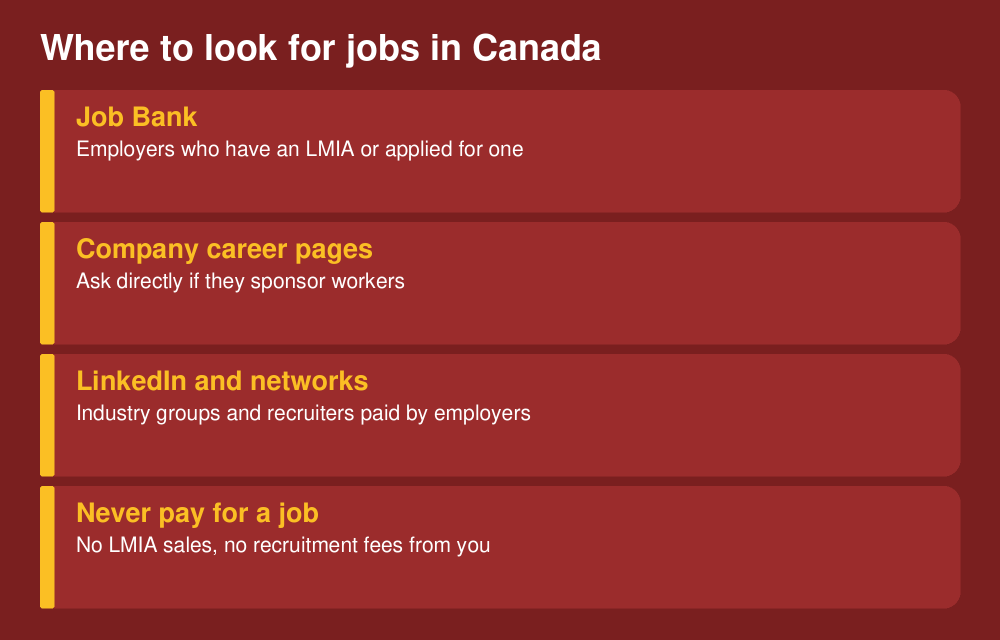
Job Bank (the government site)
Canada’s official Job Bank temporary foreign worker search lists jobs from employers who have already obtained, or applied for, an LMIA. At the time of checking it showed roughly six thousand postings. The page also explains your rights: a foreign worker may change employers, and it is illegal for an employer to punish or deport you for looking for another job.
Company career pages and LinkedIn
Many employers advertise on their own websites. Ask early whether they sponsor workers from abroad. If a company has never hired internationally, getting an LMIA is a cost and effort they may not want.
Recruiters
Legitimate recruiters are paid by employers, not by you. Treat any recruiter who asks for money in advance as a red flag (more below).
Which Jobs Are Easiest to Get From Abroad?
Roles with genuine shortages tend to be easier to sponsor: skilled trades, healthcare, some technology roles and certain agriculture and food-processing jobs. The Global Talent Stream is designed for employers hiring certain highly skilled tech roles and can be faster; one third-party guide describes processing of around ten business days for eligible cases, but treat that as a best case, not a promise. The Canadian government also publishes the list of occupations used in the programme.
The 2026 rule change to know about
Since 2026 the government has refused to process many low-wage LMIA applications for worksites in census metropolitan areas where the unemployment rate is 6 percent or higher. The list of areas and the rates are updated each quarter, and the current window on the official page runs from 9 October 2026 to 7 January 2027. If your job is low-wage and based in a large city, this can stop the application before it starts. Higher-wage roles and some sectors are treated differently, so check the current Refusal to process page on Canada.ca before you accept an offer.
Step-by-Step: From Search to Work Permit
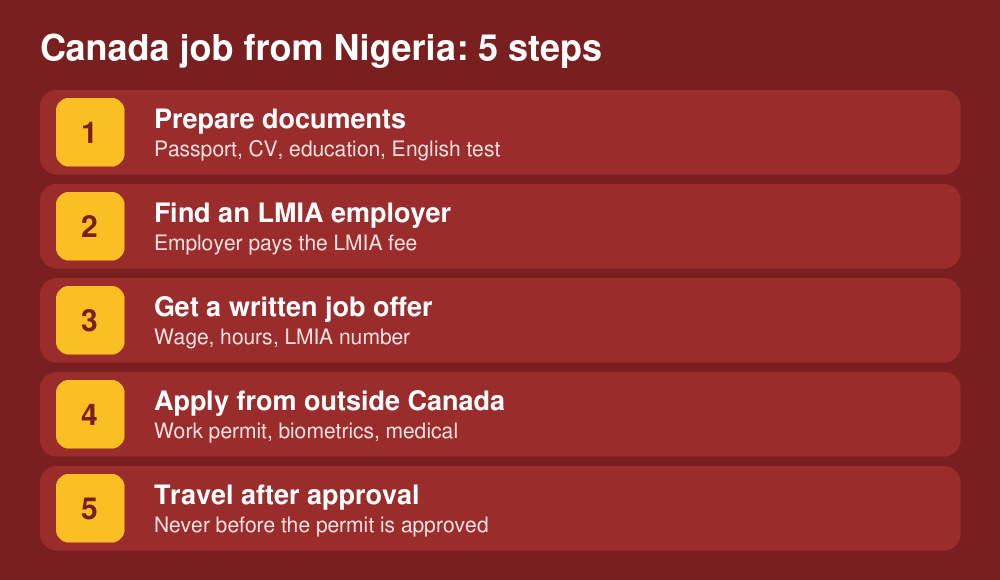
1. Get your documents in order
You will need a valid passport, a CV in Canadian format (no photo, no age or marital status), proof of education and work history, and an English test result where the job requires one. Understand the rules for your profession, because regulated jobs such as nursing and engineering need Canadian licensing.
2. Find an employer with an LMIA
Search Job Bank and employer sites. Ask directly: is the position supported by an LMIA, and who pays? The employer pays the government fee for the LMIA (about C$1,000), and it is illegal to charge the worker for it.
3. Receive a written job offer
A genuine offer names the employer, the job title, wage, hours, location and the LMIA number or exemption. Check the employer is not on the government list of non-compliant employers.
4. Apply for the work permit from outside Canada
Apply through the IRCC portal using the offer and LMIA details, and follow the instructions for biometrics and medical checks. Processing times vary, so use the IRCC processing times tool instead of a blog figure.
5. Prepare to travel
Do not book non-refundable flights before approval. On arrival, the officer checks your passport, permit and offer, and then you can apply for a Social Insurance Number. For moving money, see our guide to cheap transfer apps (the principles are the same from Canada), and our look at the cost of living in the UK shows how to build a realistic monthly budget before you move.

Scams: How Fake Canadian Job Offers Work
Fake offers are one of the biggest immigration scams affecting Nigerians. CBC has reported cases in Alberta where foreign workers paid thirty thousand dollars or more in illegal fees for a job that did not exist or did not match the promise. The scheme often involves a recruiter, a consultant and an employer working together.
- Anyone selling an LMIA is breaking the rules. The employer must pay for it.
- Recruitment fees from workers are prohibited in the temporary foreign worker rules; employers must make sure nobody recruiting for them charges workers.
- Be wary of offers that arrive on WhatsApp, with no interview, or that promise a guaranteed visa.
- Verify the employer’s business, phone number and website independently, and check the non-compliant employers list.
- Never pay anyone to promise a job. If you were cheated, the government has a way to report abusive or fraudulent employers.
How Much Money Should You Have Ready?
Even with a job offer, plan for your own costs: the work permit fee, biometrics, medicals, flights, first-month rent and a deposit, and winter clothing. Do not borrow heavily on the strength of an offer you have not verified.
Writing a Canadian-Style CV and Applying Well
Canadian employers expect a one- or two-page CV with no photograph, no date of birth and no marital status. Lead with a short summary, then list recent jobs with measurable results, then education and licences. Tailor each application to the job advert, using the same key words the employer uses, because many firms screen CVs with software first. Include a line that you require sponsorship only when the employer asks, or state clearly that you are applying from outside Canada so nobody is surprised later. A short, polite cover letter that mentions the specific role, one or two results and your earliest start date helps you stand out.
Be prepared for video interviews across time zones. Test your internet connection, power supply and background, and keep a backup option such as a mobile hotspot. If an employer offers you a role after one short chat on a messaging app and asks for money, stop. Real hiring involves an interview, a written offer and a clear contract.
After You Arrive: Rights and the Path to Permanent Residence
A temporary foreign worker in Canada has rights under federal and provincial labour law, including safe working conditions and being paid what the contract says. The government publishes guidance on worker rights and how to report an abusive employer. Keep copies of your contract, pay slips and work permit.
Many workers use their Canadian experience to move toward permanent residence later, for example through Express Entry or a provincial nominee programme, where skilled work experience in Canada can earn extra points. Read our guide to getting Canada permanent residence to see how the points and costs work, and keep records of all your Canadian work for future applications.
Finally, plan your arrival: arrange temporary housing for the first weeks, open a bank account, get your Social Insurance Number and learn the local rules for taxes and health insurance. Provincial health coverage can have a waiting period in some provinces, so ask your employer about private cover until it starts.
Related guide (updated 31 October 2026)
Moving with your family? Compare the best countries for Nigerian families to relocate.
Frequently Asked Questions
Can I get a job in Canada from Nigeria without an agent?
Yes. Many workers apply directly through Job Bank and employer websites. You do not need to pay an agent to find a job.
Does an employer have to pay for the LMIA?
Yes. It is the employer’s cost and cannot be passed to you.
Can I bring my family?
Some workers can, depending on the job’s skill level and the permit. Check the rules for spouses and dependent children before you accept the job. See also our guide to the best countries to move to for work and the easiest work visas.
Is the Canadian job offer a guarantee of a visa?
No. Immigration officers still decide each work permit application.
Can I switch employers later?
Yes, with the correct permit conditions. You may need to update your work permit first.
This guide is general information, not legal or immigration advice. Rules and processing practices change, so confirm every step on the official Government of Canada pages.









Fake Canadian job offers are one of the costliest scams hitting Nigerians, and the rule is simple: the employer pays for the LMIA, never you. Has anyone you know been asked to pay for a Canadian job, and how did you spot it?