Last updated: 29 October 2026 · By Naijatipsland Editorial Team · Editorial policy
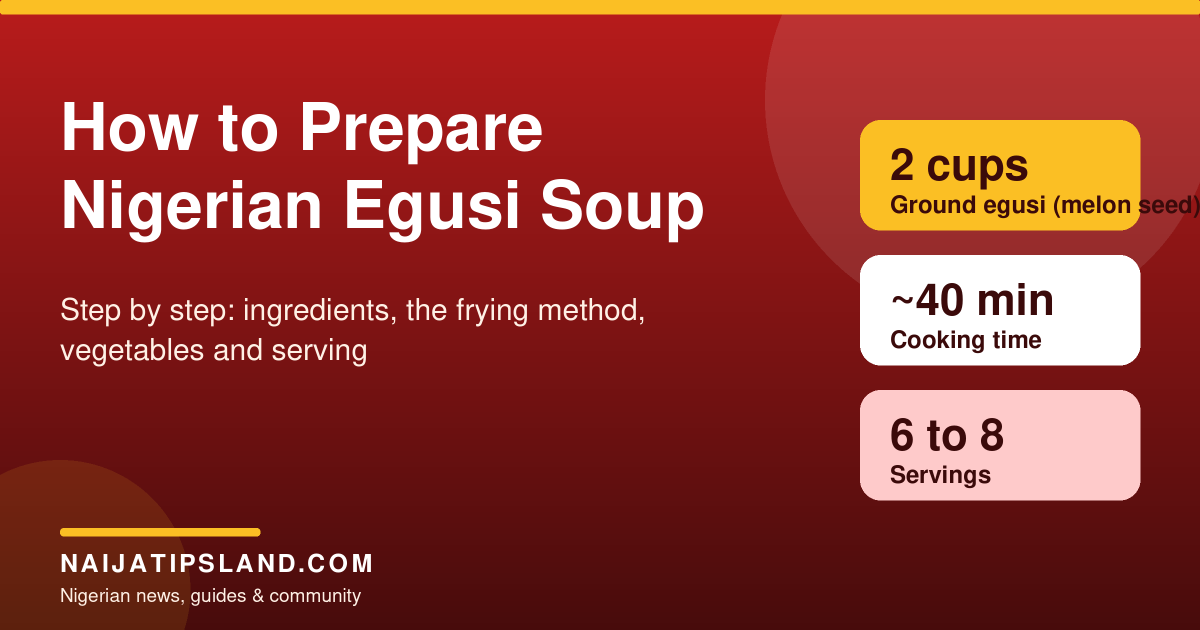
Egusi soup is one of the most loved soups in Nigeria. It is thick, rich and filling, made from ground melon seeds cooked in palm oil with peppers, meat or fish and leafy vegetables. Yoruba cooks call it efo elegusi and Igbo cooks call it ofe egusi, and the methods differ a little from kitchen to kitchen. This guide gives one dependable method, explains the main variations, and covers common mistakes so your pot comes out well the first time. Checked 29 October 2026.
What is egusi?
Egusi is the seed of certain melons, dried, shelled and ground to a coarse powder. It is not the same thing as pumpkin seed, although people sometimes mix them up. Ground egusi thickens the soup and gives it a nutty flavour. You can buy it already shelled and ground in Nigerian markets and most African food shops abroad, or grind whole shelled seeds at home in a dry blender.
Ingredients (serves 6 to 8)
Quantities are a starting point. Adjust to your pot and your taste.
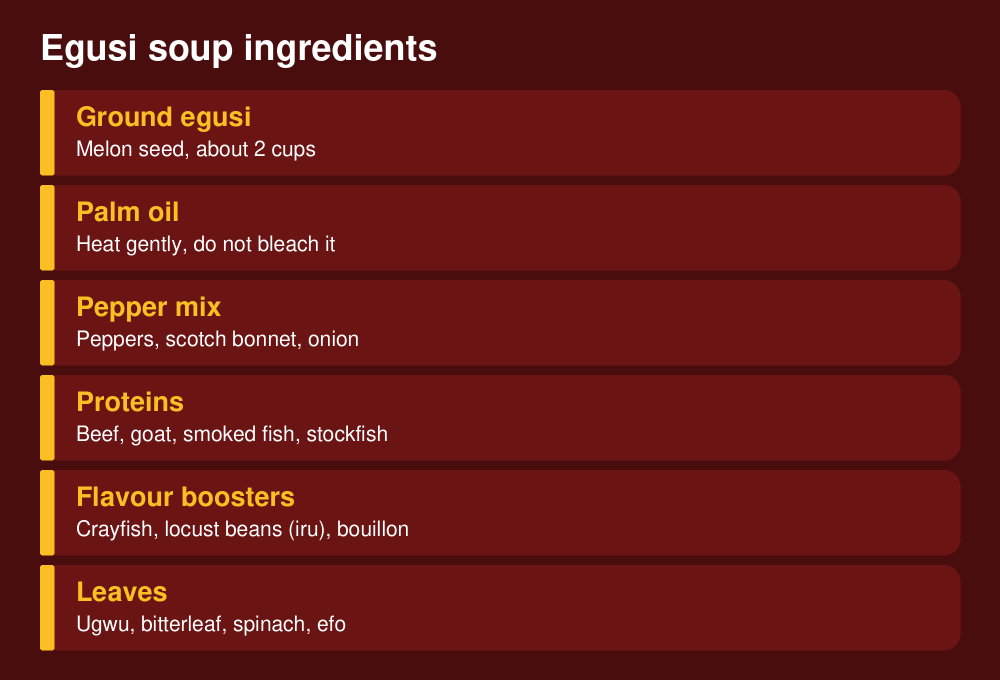
- Egusi: about 2 cups, ground.
- Palm oil: roughly half to one cup. Many cooks start with less and add more if needed.
- Pepper mix: blended red bell peppers, scotch bonnet and one large onion, with a little chopped onion kept aside.
- Proteins: a mix of beef, goat meat, smoked turkey, smoked or dried fish, stockfish, or shaki (tripe). You do not need all of them.
- Flavour boosters: ground crayfish, dried prawns, locust beans (iru or ogiri), stock cubes and salt.
- Leafy vegetables: ugwu (fluted pumpkin leaves), bitterleaf (washed well), spinach, efo or waterleaf.
Palm oil is considered essential for the authentic taste. Other oils will give a different result.
Step-by-step method (frying method)
The frying method is popular because it produces the lumpy, rich texture many people want.
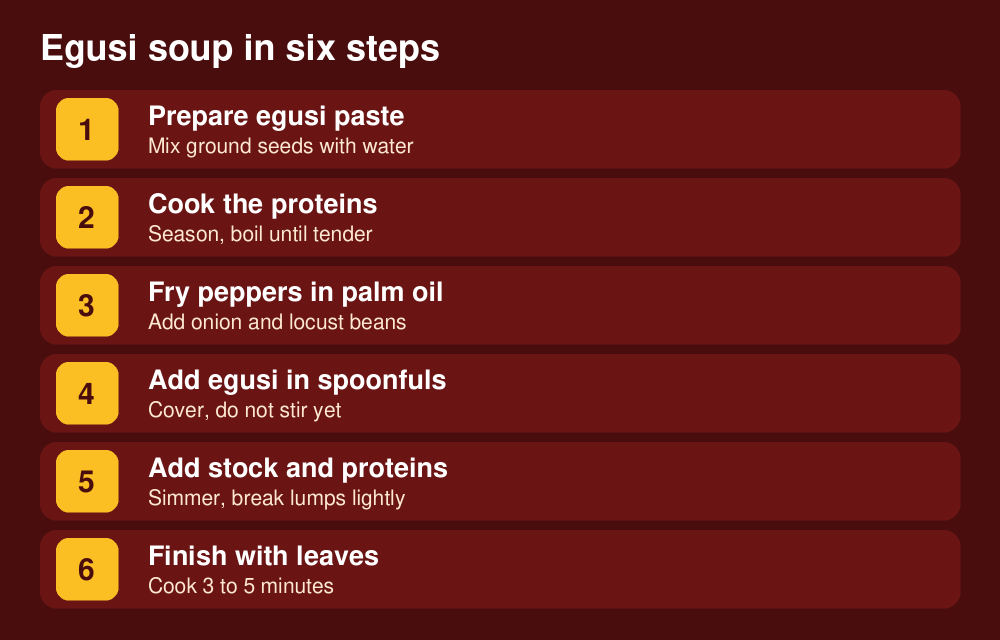
- Prepare the egusi paste. Put the ground egusi in a bowl and stir in about a cup of water until you have a thick paste. Set aside.
- Cook the proteins. Season meat with onion, stock cubes and salt and boil it in a little water until tender. Keep the stock. Wash stockfish in hot water to remove grit, and remove bones from smoked fish.
- Heat the palm oil. Warm it in a large pot on medium heat for a couple of minutes. Do not let it bleach (go pale and smoke) because this changes the taste.
- Fry the base. Add the chopped onion and cook until soft, then add the pepper mix and locust beans. Let it simmer for about five minutes so the raw taste cooks out.
- Add the egusi. Drop the paste into the pot in small spoonfuls. Reduce the heat, cover the pot and leave it for about 10 minutes without stirring. This lets the lumps form.
- Stir gently and add stock. Lift the lid and stir lightly, breaking big lumps with the back of a spoon only if you want smaller ones. Add the cooked meat, stock, crayfish and any fish. Add water a little at a time until the texture is right, then simmer for about 10 minutes, stirring now and then to prevent sticking.
- Add the leaves. Stir in the washed, chopped vegetables, taste and adjust the salt, and cook for 3 to 5 minutes. Switch off the heat and let it rest for a few minutes before serving.
Total time is around 50 minutes to an hour once the meat is cooked, and longer if you are cooking tough cuts or stockfish from scratch.
Three common ways to cook egusi
- Frying method: the egusi paste is added to hot palm oil and fried first, as above. Rich, lumpy and the most common home method.
- Boiling method: the pepper, oil and stock are brought to a boil first, then the egusi paste is dropped in and cooked. Slightly lighter, and good if you want to use less oil.
- Egusi Ijebu (without vegetables): a Yoruba version cooked without leafy greens, relying on egusi, peppers and proteins alone.
Which vegetables work best?
Ugwu gives a mild, soft finish. Bitterleaf brings a distinct bitterness that many people love, but it must be washed thoroughly to reduce the bitterness. Spinach is a convenient substitute, especially abroad, and efo, waterleaf or scent leaf also work. Add leaves late so they stay green and keep their texture.
Tips for better egusi soup
- Do not stir the egusi too early if you want lumps.
- Keep the heat moderate. High heat burns the egusi and the bottom of the pot.
- Season gradually because smoked fish, stockfish, crayfish and stock cubes are already salty.
- If the soup is too thick, add hot stock or water a little at a time. If it is too thin, simmer uncovered.
- Use a mix of proteins for deeper flavour, but wash and cook each properly.
- If you avoid crayfish, you can leave it out. The flavour will be a little less pronounced.
What to eat with egusi soup
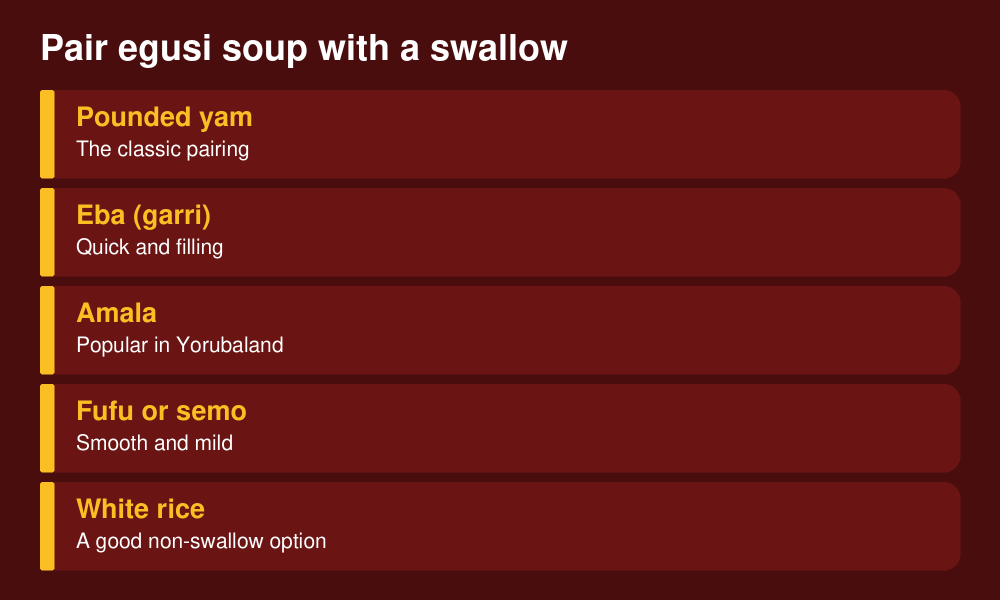
Egusi pairs with almost any swallow: pounded yam (the classic), eba, amala, fufu, semo or wheat meal. It is also good with plain white rice or boiled yam. Serve while hot, and add extra stock or a little hot water when you reheat it.
Is egusi soup healthy?
Egusi seeds provide protein and healthy fats, and the leafy vegetables add fibre, vitamins and minerals. But the soup can also be calorie-dense because of the palm oil, the meat and the large swallow portion it is usually eaten with. If you are watching your weight, blood sugar or blood pressure, use a little less oil, load up the leaves, choose leaner proteins, go easy on salt and stock cubes, and keep your swallow portion small. Our guide on Nigerian food culture, diabetes and hypertension explains why this matters, and our plan to lose belly fat with Nigerian foods shows how to adapt soups like this one. Anyone with a seed allergy should avoid egusi, and people with a medical condition should follow their doctor or dietitian’s advice.
Storing and reheating
Let the soup cool, then refrigerate in a covered container within a couple of hours and eat within about three days, or freeze in portions for longer. Reheat until piping hot all the way through, and do not reheat more than once. Soup left at room temperature for long periods can grow bacteria.
Frequently asked questions
Can I use vegetable oil instead of palm oil?
You can, but the flavour and colour will differ from traditional egusi soup. Most Nigerian cooks use palm oil.
Why is my egusi soup not lumpy?
Usually the paste was stirred too early or was too thin. Add it in spoonfuls, cover and leave it undisturbed first.
Why is my soup bitter?
Burnt egusi, overheated palm oil or insufficiently washed bitterleaf can all cause bitterness.
Can I make it without meat?
Yes. Use smoked fish, mushrooms, boiled eggs or extra vegetables, and add more seasoning for flavour.
Related Nigerian recipes
Cooking for a party? See our step-by-step party jollof rice recipe and the party jollof budget and cost per plate.
Bottom line
Good egusi soup comes down to gentle heat, patience with the paste and balanced seasoning. Fry the egusi in good palm oil, let the lumps form before stirring, add your proteins and leaves, and serve it with your favourite swallow. Once you have the method, you can adapt it to your taste, budget and health needs.