

Last updated: 7 November 2026 · By Naijatipsland Editorial Team · Editorial policy
Snacks are one of the easiest food businesses to start from a home kitchen in Nigeria: the products are cheap to make, people buy them daily, and you can test demand with a few packs before spending serious money. The catch is that margins are thin, oil and flour prices move, and shops will ask for NAFDAC registration once you want to sell beyond friends and WhatsApp. This guide ranks the best Nigerian snacks to make and sell from home, shows how to cost a batch, explains packaging and pricing, and sets out what the regulator expects.
About the figures: naira prices below are indicative ranges from Nigerian business sites we read on 7 November 2026 (mainly NaijaSabi, published 24 September 2026), not quotes. Ingredient and gas prices differ by city and week, so cost your own batch before you price. Some sources give no figures at all, and we say so rather than guess.
Quick answer: which home snacks sell best?
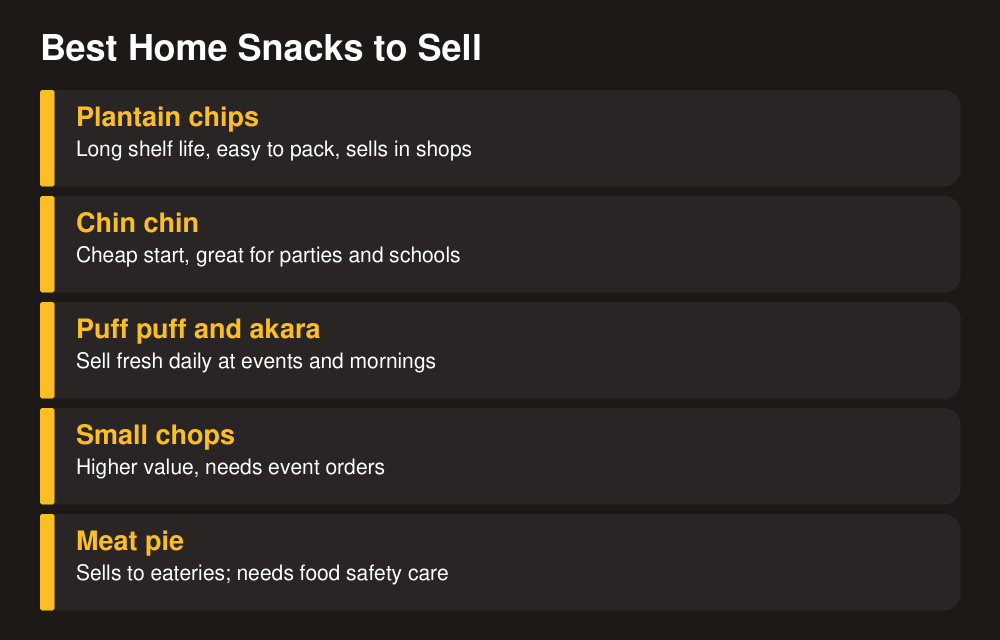
Plantain chips, chin chin, puff puff, small chops, meat pie, akara and moi moi are the snacks most often recommended for home sellers. Plantain chips and chin chin suit beginners best because they keep for weeks, travel well and can be sold in small packs. Fresh snacks such as puff puff, akara and moi moi sell fast but must be made daily and sold hot or the same day, so they suit a street-side or office-delivery model. Pick one or two products, get them consistently right, and add more only when orders justify it.
The best Nigerian snacks to make and sell from home
| Snack | Shelf life | Where it sells | Main risk |
|---|---|---|---|
| Plantain chips | Weeks if sealed and dry (sources suggest about 4 to 8) | Shops, supermarkets, offices, schools, online | Oil cost; chips go soft if packed warm |
| Chin chin | Weeks in an airtight pack | Parties, schools, supermarkets, gifts | Hard or oily batches; crowded market |
| Puff puff | Same day | Events, roadside, office orders | Needs fresh frying; see our eggless puff puff recipe |
| Small chops | Hours (fresh) or frozen | Weddings, birthdays, naming ceremonies | Event-driven; needs reliable delivery |
| Meat pie and sausage rolls | 1 to 2 days | Eateries, shops, schools | Meat handling and food safety |
| Akara and moi moi | Same day | Mornings, junctions, offices | Daily labour; location matters |
| Coconut candy and kuli-kuli | Weeks | School kiosks, markets | Low price per pack, so volume needed |
Nigerian Finder’s list of best-selling snacks, which we read for this guide, makes the same point from the selling side: sell akara and moi moi where people gather in the morning, supply caterers for small chops, and make plantain chips and chin chin in small, well-packaged portions for shops and schools. It does not give prices or profit figures, so treat it as a guide to demand, not to margins.
Start with plantain chips: a realistic cost example
NaijaSabi’s 2026 guide to starting a plantain chips business is the most detailed costing we found. Its numbers are a useful template, even if your local prices differ.
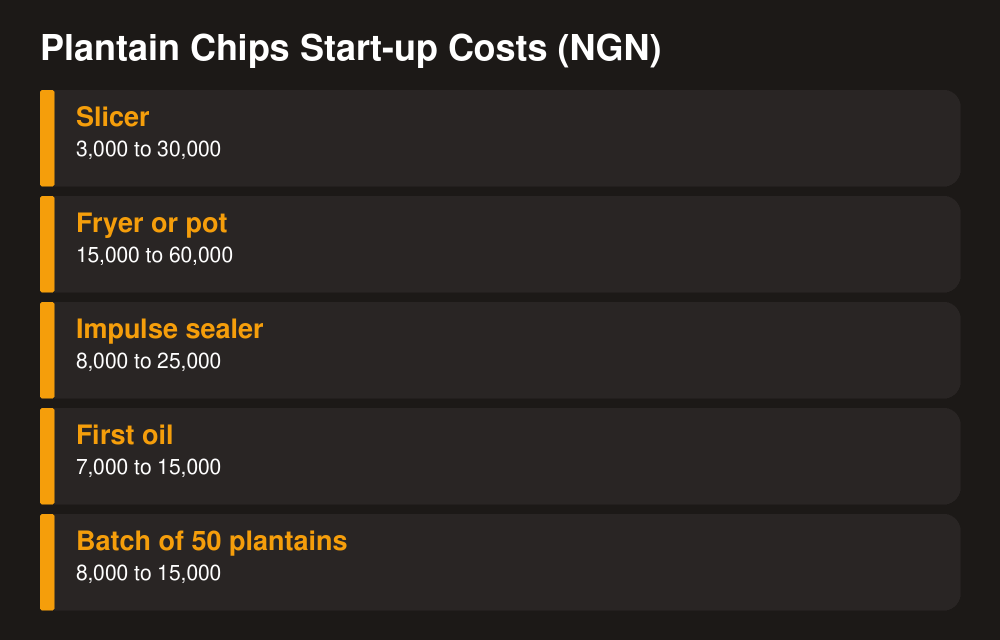
| Item | Indicative cost (naira) |
|---|---|
| Mandoline slicer | 3,000 to 30,000 |
| Deep fryer or large pot | 15,000 to 60,000 |
| Cooling racks and strainer | 3,000 to 8,000 |
| Impulse sealer | 8,000 to 25,000 |
| Gas cooker (if you do not own one) | 20,000 to 60,000 |
| First cooking oil | 7,000 to 15,000 |
| Typical start-up total quoted | 30,000 to 80,000 at home; 40,000 to 120,000 for a fuller setup |
For a batch, the same source puts 50 unripe plantain fingers at roughly 8,000 to 15,000 naira (its meta description says 10,000 to 20,000, so expect variation), plus 2,000 to 5,000 for salt and spices and 2,000 to 5,000 for packaging. A batch is said to yield about 4 to 5 kg of chips, sold at about 3,000 to 6,000 naira per kg, which is 12,000 to 30,000 naira gross per batch. Retail packs are quoted at 500 to 2,000 naira in supermarkets and 1,500 to 5,000 naira for premium artisan packs.
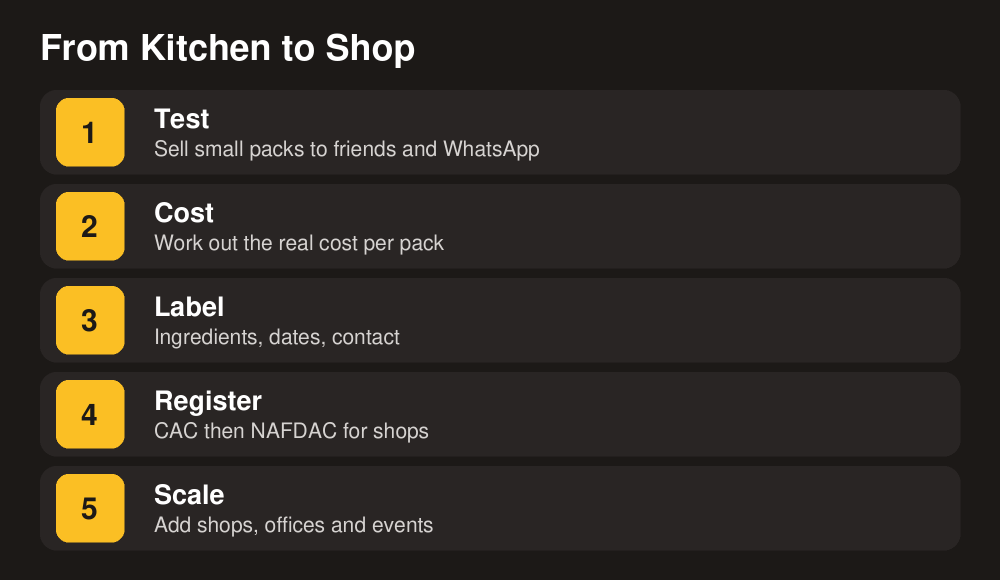
Do the sums yourself. The source gives gross revenue only. It does not subtract oil, gas, packaging, transport or your time. Here is a simple method to work out real profit:
- Add every cost for one batch: plantain, a share of the oil (it can be reused a few times if filtered), gas, spices, bags and labels.
- Divide by the number of packs you actually sell, including a few for waste and samples.
- Compare your cost per pack with what similar packs sell for locally, then set a price that leaves a margin you can live with.
How to make crunchy plantain chips (the short method)
- Use fully unripe, green plantain. Peel and drop the pieces into salted cold water.
- Slice thinly, about 1.5 to 2 mm, with a mandoline. Pat the slices dry; wet slices spit and fry unevenly.
- Fry in small batches in oil at about 170 to 180 degrees Celsius for 3 to 5 minutes until golden and crisp.
- Drain, season lightly, then cool completely (20 to 30 minutes) before packing. Warm chips packed in a sealed bag go soft.
- Seal in foil or thick polythene, and label with the product name, date and contact.
Chin chin: a cheaper way in
One chin chin business guide we read says you can start small with about 20,000 naira, and suggests 100,000 naira and above for a larger operation, claiming around a 50 per cent return on investment. That page carries no date or itemised costs, so treat the claim as a rough, unverified claim and test it with one small batch. Its practical advice is sound: use thick packaging to keep air out, choose a short, memorable brand name, buy flour and sugar in bulk, and consider baking instead of frying to cut oil costs. For a home recipe, see the chin chin section in our guide to Nigerian recipes foreigners love.
Small chops: higher value, more work
Small chops (puff puff, samosa, spring rolls, mini sausage rolls, fish rolls and the like) sell in boxes for events. Insight.ng’s guide says pricing should follow your cost of preparation, the variety, the pack size (mini, mid or maxi) and the delivery fee, and suggests offering first-time customers a discount. It gives no naira figures, so build your price from your own costs and local quotes. You will need reliable equipment and a plan for delivery, so start with small orders from people you know.
NAFDAC: what a home seller needs to know
NAFDAC’s guidelines for cottage and kitchen-scale food industries say food products must be registered with the agency and premises inspected before manufacturing. They describe a production area of at least 12 by 12 feet (a purpose-built structure or a standard kitchen), insect-proof screens, easy-to-clean food-grade equipment, written cleaning and production procedures, annual food handler tests and fumigation certificates. Labels must be in English and show ingredients, net weight, address, batch number, production and expiry dates and the NAFDAC number, and nutritional claims are not allowed. The guideline lists a production inspection fee of 10,000 naira and a laboratory analysis fee of 20,000 naira, plus 5 per cent VAT, but fees change, so confirm current charges with NAFDAC before you budget.
In practice, many sellers start with friends, offices and online orders and register once they want shelves in shops or supermarkets, which generally ask for a NAFDAC number and a registered business. If you plan to grow, register early: see our NAFDAC registration guide for small food businesses and how to register a business name with CAC. Registration is also the safer route for customers, because unregistered food has no regulator checking its hygiene.
Packaging, pricing and selling
- Start with two or three products. Quality and consistency beat variety.
- Pack small. Low-priced sachets and small tubs sell to students and office workers; family packs suit gifts.
- Label properly. Name, ingredients, allergens (peanuts, gluten, fish), date made and best-before date, plus a phone or WhatsApp number.
- Sell on WhatsApp and Instagram first. Post short videos of frying and packing; see how to grow an Instagram page in Nigeria organically.
- Take pre-orders. Fresh snacks should be made to order so you do not waste ingredients.
- Track every cost. Keep a simple notebook or spreadsheet of purchases, sales and leftovers.
- Keep personal and business money apart. Open a separate account if you can, and see how to save money on a low salary in Nigeria for budgeting habits.
Mistakes that kill small snack businesses
- Pricing from what you think customers will pay, not from your real cost per pack.
- Reusing oil until it smells burnt, which hurts flavour and quality.
- Packing before the snack has cooled, causing softness.
- Ignoring hygiene: hair covering, clean hands, clean containers and no sick staff.
- Selling on credit without a record of who owes you.
- Putting all your money into equipment before you have repeat customers.
For wider ideas and the legal basics, see profitable businesses Nigerians can start from home, starting a food delivery business and our Start a Business in Nigeria hub.
Frequently asked questions
What is the best snack to sell from home in Nigeria?
Plantain chips and chin chin are the easiest to begin with because they last for weeks, pack well and need only basic equipment. Fresh snacks such as puff puff and akara sell fast but need daily production.
How much money do I need to start a snack business?
Sources we read put a small home start between roughly 20,000 and 80,000 naira, and a fuller setup at 100,000 to 250,000 naira. These are indicative, so cost your own list of equipment and ingredients.
Do I need NAFDAC registration to sell snacks?
For supermarkets, shops and any packaged product with a label, yes. NAFDAC’s guidelines require registration and premises inspection. Some people start with informal sales first, but you should register as you grow.
How long do plantain chips and chin chin last?
Sources suggest about 4 to 8 weeks for sealed plantain chips. Chin chin keeps for weeks in an airtight pack. Always check smell and taste, and mark a best-before date you can stand behind.
Is baking cheaper than frying?
It can be, because you use less oil, but results and texture differ. Test small batches before you change a recipe you sell.
Where do I sell my snacks?
Start with WhatsApp, Instagram, offices, schools and church or community events, then approach shops and supermarkets once you have a label and NAFDAC number.
Can I run this business on top of a job?
Yes. Many people sell shelf-stable snacks at weekends or by pre-order while keeping their job, which limits risk.
How do I price a pack?
Add up the full cost of a batch, divide by the packs you sell, then add a margin and check the price against similar products near you.
Sources and notes: NaijaSabi, plantain chips business guide (24 September 2026); Nigerian Finder, best-selling snacks in Nigeria; a chin chin business guide on My9jaFoodsHub (undated); Insight.ng, small chops business guide (undated); NAFDAC, Guidelines for Establishment of Cottage and Kitchen Scale Food Industries (all read 7 November 2026). Prices are indicative and change often. This is general information, not business, legal or tax advice; confirm NAFDAC and CAC requirements with the agencies.
Join the discussion
Have you tried this, or do you have a question we did not answer? 2 readers have already shared their views. Naijatipsland members help each other with real, first-hand experience.









Thank you for reading. If you are starting a snack business, please cost one small batch first and tell us in the comments which snack you are trying. Ade Adeniyi
Thank you for reading. If you are starting a snack business, please cost one small batch first and tell us in the comments which snack you are trying. Ade Adeniyi