


Last updated: 1 November 2026 · By Naijatipsland Editorial Team · Editorial policy
Checked 1 November 2026. Diabetes is spreading fast in Nigeria. Official figures put the number of Nigerians living with diabetes at over 3 million, but endocrinologists who have pooled local studies estimate the real figure is closer to 11 million adults, with around 40% not diagnosed in time. Many people only find out after complications such as eye damage, kidney disease, foot ulcers or a stroke.
Food is at the centre of blood sugar control. Every meal you eat either sends your glucose up in a sharp spike or lets it rise slowly and steadily. This guide explains which Nigerian foods help control blood sugar levels, which ones to limit, how much to eat, and what a blood-sugar-friendly day of Nigerian meals looks like. It is written for people with type 2 diabetes or prediabetes, and for anyone who wants to lower their risk.
Important: if you take diabetes medicine, especially insulin or tablets such as glibenclamide or gliclazide, changing what you eat can make your sugar drop too low (hypoglycaemia). Talk to your doctor before making big changes, and never stop your medication on your own.
How food affects your blood sugar
Carbohydrates (starch and sugar) break down into glucose in your blood. Foods differ in how quickly they do this, which is measured by the glycaemic index (GI):
- Low GI (55 or less): sugar rises slowly. Most vegetables, beans and lentils, whole grains, many fruits.
- Medium GI (56 to 69): moderate rise.
- High GI (70 or more): sugar rises quickly. White bread, most swallows eaten on their own, white rice, sugary drinks.
Two things matter just as much as GI: how much you eat (a big wrap of a medium-GI food can still flood your blood with sugar) and what you eat it with. Fibre, protein and fat slow digestion, so a starch eaten with vegetables and fish raises blood sugar less than the same starch eaten alone.
What Nigerian research shows about our swallows
Nigerian researchers have measured the GI of the foods we actually eat. A University of Ibadan study by Abimbola Ogundele tested common meals “as eaten” by young adults in South-West Nigeria, and a 2022 study by Eyinla, Sanusi and Maziya-Dixon tested amala and pounded yam made from different white yam varieties. The findings are clear:
- Swallows on their own are very high GI. Eba alone scored 99 and amala alone 97. Pounded yam scored between 92 and 104 depending on the yam variety.
- Soup makes a big difference. Eba with egusi soup scored 74 and amala with efo riro 75, more than 20 points lower than the swallow alone. Leafy, protein-rich soups slow the sugar down.
- Even “healthy” combinations can be high. Beans porridge scored 85 in that study, partly because of how it was cooked and eaten with other starches. Beans are still a good food, but portion and preparation count.
The lesson isn’t that you can never eat swallow. It is to eat a smaller wrap, always with a vegetable-rich soup and protein, and to choose lower-GI options more often.

Nigerian foods that help control blood sugar
1. Leafy and non-starchy vegetables
Ugu, waterleaf, efo tete, bitterleaf, ewedu, okra, garden eggs and their leaves, cabbage, carrots, cucumber, tomatoes, green peppers and onions are low in calories and high in fibre. They should make up half your plate. Okra and ewedu are “draw” soups rich in soluble fibre, which slows sugar absorption.
2. Beans and other legumes
Beans, moi moi, akara (shallow-fried), bambara nuts (okpa) and soya beans provide protein and fibre that keep you full and slow digestion. Eat them in sensible portions and avoid adding lots of sugar, palm oil or extra starch to the pot.
3. Unripe plantain
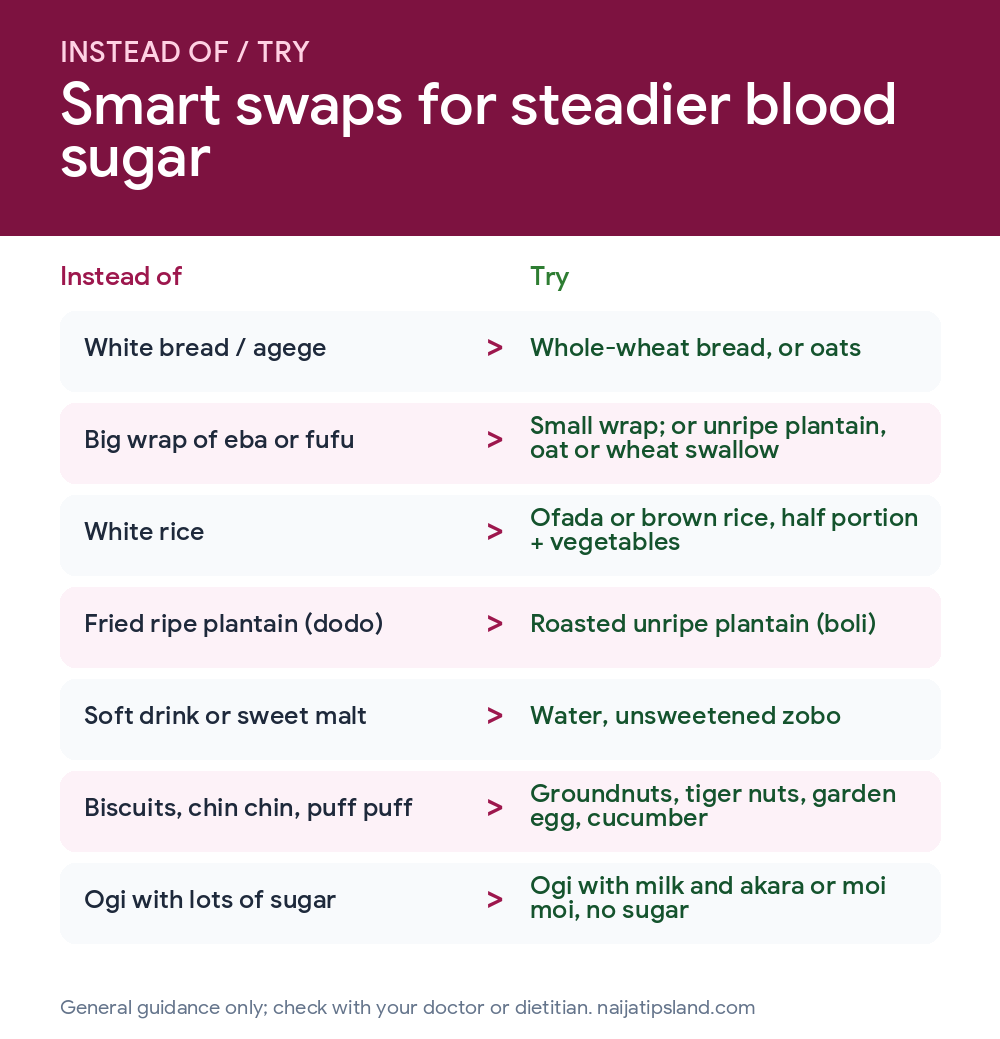
Green (unripe) plantain contains more resistant starch than ripe plantain, so it raises blood sugar more slowly. Roasted (boli), boiled or cooked into porridge, it is one of the most diabetes-friendly Nigerian staples. Unripe plantain flour also makes a good swallow. The riper and sweeter the plantain, the faster it raises sugar, so keep dodo for occasional treats.
4. Whole grains instead of refined ones
Swap white bread and polished white rice for ofada or brown rice, oats, millet (gero), guinea corn (sorghum), acha (fonio) and whole-wheat bread. Acha is a traditional northern grain that is light, high in fibre and increasingly available in markets and supermarkets. Even with whole grains, keep the portion to about a quarter of your plate.
5. Protein foods
Fish (titus, sardines, tilapia, catfish), chicken without the skin, eggs, turkey and lean beef help balance a meal and don’t raise blood sugar directly. Grilled, boiled or in pepper soup is better than deep-fried.
6. Healthy fats and snacks
Avocado, unsalted groundnuts, tiger nuts (in small handfuls), cashews and egusi seeds contain healthy fats and fibre. They make good snacks instead of biscuits, chin chin or puff puff, but they are high in calories, so keep portions small.
7. Fruit, in the right amounts
Whole fruit is fine for most people with diabetes when eaten in moderate portions: an orange, a guava, a small slice of pawpaw or watermelon, a few slices of pineapple, an apple or a handful of agbalumo (African star apple) in season. Avoid fruit juice and “juice drinks”, which deliver the sugar without the fibre. Very sweet fruit such as ripe mango and ripe banana are best eaten in small portions.
Foods to limit or avoid
- Sugary drinks: soft drinks, malt drinks, energy drinks, sweetened yoghurt drinks and packaged juices. They are the fastest way to spike blood sugar.
- Sugar in tea, pap and cereals. Sweeten with a little milk or cinnamon instead, and wean yourself off sugar gradually.
- White bread, agege bread and pastries such as meat pie, doughnuts and buns.
- Large portions of swallow and white rice, especially without vegetables.
- Fried snacks: puff puff, chin chin, plantain chips, buns.
- “Diabetic” herbal mixtures and teas sold with cure claims. There is no cure in a bottle; some products can drop sugar dangerously alongside medicine or damage the liver. Our guide to natural remedies in Nigeria explains what the evidence says.
Portions: the Nigerian diabetes plate
The simplest way to control blood sugar without counting every gram is the plate method, which diabetes educators use worldwide. Use a standard dinner plate (about 23 cm across):
- Half the plate: non-starchy vegetables, or a soup that is mostly vegetables.
- A quarter: protein (fish, chicken, eggs, beans, moi moi).
- A quarter: starch (a small wrap of swallow, ofada rice, unripe plantain, yam or sweet potato).
- Drink: water or unsweetened zobo.
For swallow, a practical guide is a wrap roughly the size of your clenched fist, rather than the large mounds many of us grew up with.

A sample day of blood-sugar-friendly Nigerian meals
| Meal | Option A | Option B |
|---|---|---|
| Breakfast | Oats cooked with milk, no sugar, plus a boiled egg | Moi moi with a small cup of ogi (no sugar) and a few slices of cucumber |
| Mid-morning | An orange or a guava | A small handful of unsalted groundnuts |
| Lunch | Unripe plantain porridge with ugu and fish | Half portion of ofada rice, vegetable stew, grilled chicken and coleslaw (light dressing) |
| Afternoon | Garden eggs with a little groundnut paste | Tiger nuts and a glass of water |
| Dinner | Okra or vegetable soup with fish and a fist-sized wrap of oat or wheat swallow | Pepper soup with fish or chicken, and boiled sweet potato |
Space meals evenly through the day rather than skipping breakfast and eating one huge dinner. Late, heavy meals often show up as high morning readings. For a wider weekly plan that also works for high blood pressure, see our Nigerian diet for high blood pressure, and for budget shopping, our affordable healthy meal plan for Nigerian families.
Cooking tips that lower the sugar impact
- Cook starches less soft. Overcooked, mushy yam, rice and pasta raise blood sugar faster than firmer ones.
- Cool and reheat rice or yam when convenient. Cooling increases resistant starch slightly.
- Add vegetables to everything: extra ugu in stew, cabbage and carrots in jollof, spinach in beans.
- Eat vegetables and protein first, then the starch. Studies suggest this order can reduce the after-meal sugar spike.
- Go easy on oil and salt. Many people with diabetes also have high blood pressure and raised cholesterol.
Beyond food: other habits that matter
- Walk after meals. A 10 to 15 minute walk after lunch and dinner helps your muscles use up glucose. Our guide to staying fit without a gym has a simple weekly plan.
- Lose weight around the waist if you are overweight. Losing 5% to 10% of body weight improves blood sugar control. See how to lose belly fat with Nigerian foods.
- Sleep well and manage stress, both of which affect blood sugar.
- Don’t smoke, and keep alcohol to a minimum; alcohol can cause low sugar in people on medication.
Know your numbers and monitor
A simple blood test tells you where you stand. Common thresholds used by doctors are:
| Test | Normal | Prediabetes | Diabetes |
|---|---|---|---|
| Fasting blood sugar | Below 100 mg/dL (5.6 mmol/L) | 100 to 125 mg/dL (5.6 to 6.9 mmol/L) | 126 mg/dL (7.0 mmol/L) or above, on two tests |
| HbA1c (3-month average) | Below 5.7% | 5.7% to 6.4% | 6.5% or above |
If you are over 40, overweight, have a family history of diabetes or have high blood pressure, ask for a check at least once a year. Many pharmacies and primary health centres offer quick fasting blood sugar tests. If you already have diabetes, a home glucometer from a known brand, bought from a registered pharmacy, lets you see how different Nigerian meals affect you. Test before a meal and two hours after, and note which foods cause the biggest rise. Remember that test strips are the ongoing cost, so budget for them.
Regular check-ups and medicines are cheaper with cover. Compare plans in our guide to affordable health insurance in Nigeria. For the cultural side of the problem, read how Nigerian food culture affects diabetes and hypertension, and check which popular beliefs are wrong in our Nigerian food myths article.
Warning signs: when to see a doctor
- Passing urine often, especially at night, and being very thirsty
- Unexplained weight loss or constant tiredness
- Blurred vision, slow-healing wounds, tingling or numbness in the feet
- Repeated infections such as boils, thrush or urinary infections
Get emergency help if someone with diabetes becomes confused, very drowsy, sweaty and shaky (possible low sugar), or is vomiting with deep, fast breathing (possible very high sugar).
Frequently asked questions
Can a diabetic eat eba, amala or pounded yam?
Yes, in small portions and always with a vegetable-rich soup and protein. On their own these swallows are very high GI. Oat, wheat or unripe plantain swallow are better everyday choices.
Is ofada rice better than white rice for diabetes?
Ofada and brown rice keep more of the bran, so they contain more fibre than polished white rice. Portion size still matters: aim for about a quarter of your plate.
Is unripe plantain good for diabetes?
Unripe plantain is one of the better Nigerian starches for blood sugar because it contains more resistant starch than ripe plantain. Boiled, roasted or in porridge is best; frying adds oil and calories.
Can bitter leaf or other herbs cure diabetes?
No herb has been shown to cure diabetes. Bitter leaf is a healthy vegetable, but it doesn’t replace medicine. Combining herbal mixtures with diabetes drugs can cause dangerously low sugar, so tell your doctor about anything you take.
Can type 2 diabetes be reversed with diet?
Some people, especially soon after diagnosis, bring their blood sugar back into the normal range through weight loss and diet changes. Doctors call this remission, not cure, because the condition can return. It should always be done with medical supervision.
Is honey better than sugar for diabetics?
No. Honey raises blood sugar much like table sugar. Use any sweetener sparingly.
Disclaimer: this article is general health information based on published Nigerian nutrition research and standard diabetes guidance available on 1 November 2026. It is not medical advice and doesn’t replace a consultation with a doctor, diabetes educator or registered dietitian. If you have diabetes, especially if you use insulin or sugar-lowering tablets, get personal advice before changing your diet.









Editor’s note: the Ibadan research surprised me. Eba on its own scored 99, but with egusi soup it dropped to 74. So the soup really does matter, and so does the size of the wrap. If you’re on diabetes medication, please check with your doctor before you cut your carbs sharply.