
Best Nigerian Foods to Cook Abroad With Local Ingredients (2026): Substitutes and Easy Recipes for Beginners

Last updated: 7 November 2026 · By Naijatipsland Editorial Team · Editorial policy
Cooking Nigerian food abroad is easier than it was ten years ago, but it is still not the same as walking into Mile 12 or your local market. Palm oil is in a bottle, ugu is spinach, and the stockfish costs more than you remember. The good news is that most everyday Nigerian dishes need only a handful of ingredients, and nearly all of them can be found at an African or Caribbean grocer, an Asian supermarket or a mainstream chain. This guide shows which Nigerian foods are easiest to cook abroad with local ingredients, what to swap when you cannot find the real thing, and five beginner recipes you can cook this week.
About this guide: the substitution notes draw on published diaspora cooking guides from MealCondo and Niyis African Supermarket, read on 7 November 2026. Substitutes change the taste, and the "high" and "medium" match ratings are those authors’ own judgements, not laboratory tests. The recipes are our own beginner versions: quantities are approximate, so taste and adjust as you cook.
Quick answer: which Nigerian foods are easiest to cook abroad?
Start with dishes built on ingredients you can buy anywhere: a tomato and pepper stew, jollof rice, fried plantain, moi moi made with beans, and pepper soup. Next try egusi soup, using ground melon seeds from an African grocer or ground pumpkin seeds as a backup. Leave ofada stew, ponmo dishes and bitter-leaf soup until you have a reliable African shop nearby, because their key ingredients have weaker substitutes.
Where to buy Nigerian ingredients abroad
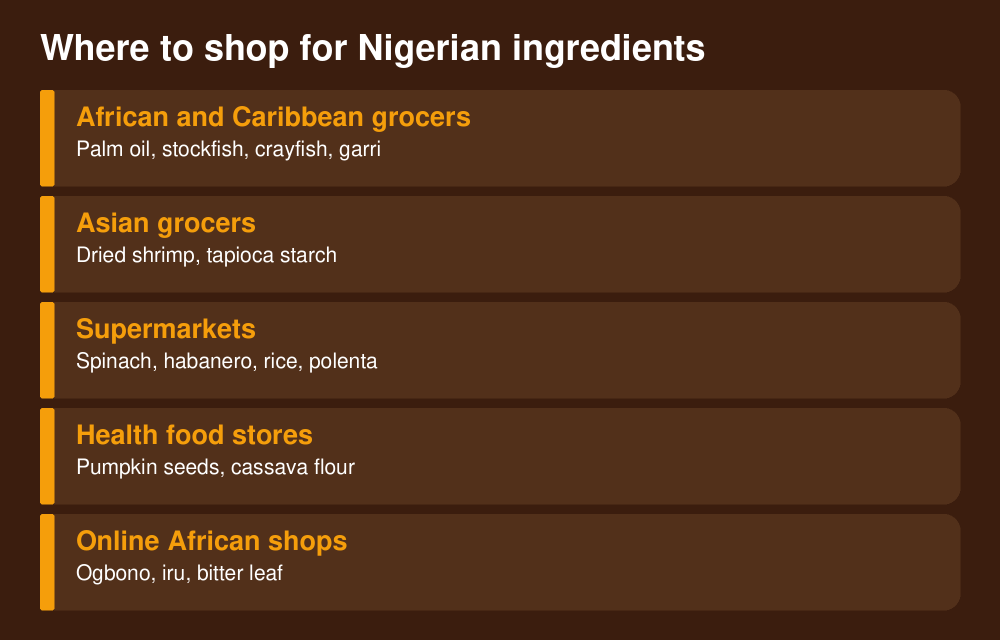
Different stores cover different parts of your list. According to the shopping guides we read:
- African and Caribbean grocers are the best source of palm oil, ground crayfish, stockfish, cassava and yam flour, garri, locust beans (iru) and ponmo.
- Asian grocers stock dried shrimp, dried seafood, tapioca starch and fermented shrimp paste, all useful stand-ins.
- Mainstream supermarkets cover spinach, kale, habanero or scotch bonnet peppers, rice, cornmeal, polenta and allspice.
- Health food stores sell ground pumpkin seeds, cassava flour, tapioca starch and dried hibiscus.
- Online African supermarkets ship the harder items. In the UK, Niyis African Supermarket lists ground crayfish, ogbono, stockfish, palm oil and dried bitter leaf. At the time of reading it quoted about 10 working days to process orders because of a warehouse move, free delivery on orders of £120 or more, and free click and collect at its Reading branch. Check current terms before you order.
Nigerian ingredient substitutes that work abroad
| If the recipe needs | Use this abroad | How close it is |
|---|---|---|
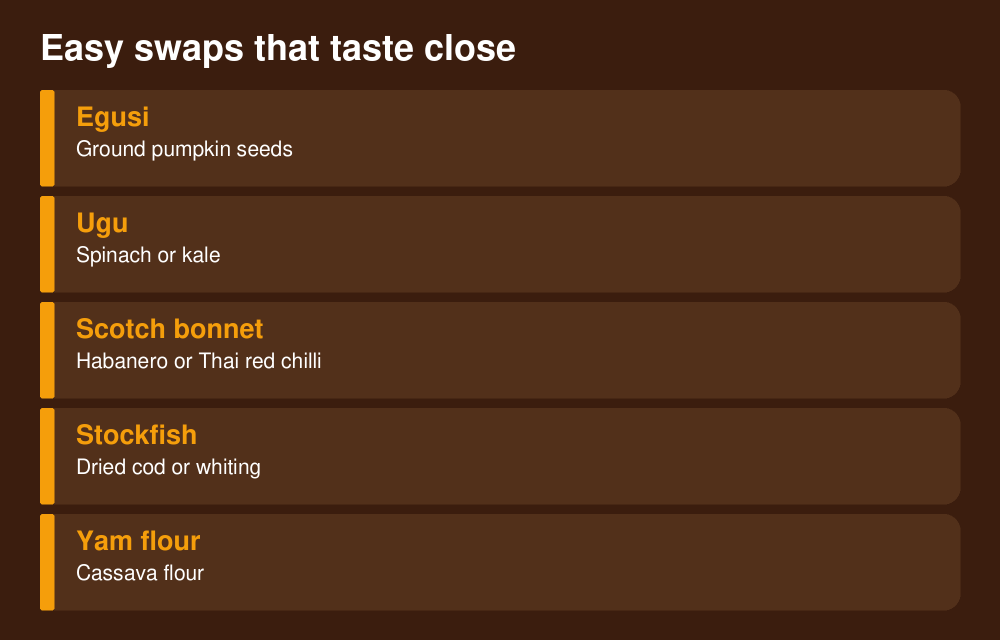
| Egusi (melon seeds) | Ground pumpkin seeds; sunflower seeds or almonds as backups | High with pumpkin seeds |
| Crayfish | Dried shrimp; smoked fish or a little anchovy paste | Medium |
| Palm oil | Refined palm oil; coconut oil or ghee in a pinch | High with refined palm oil |
| Stockfish | Dried cod or whiting | High |
| Ugu (fluted pumpkin leaves) | Spinach or kale | Medium |
| Scotch bonnet | Habanero or Thai red chillies | High |
| Ponmo (cow skin) | Tripe from a butcher | Medium |
| Yam flour (elubo) | Cassava flour | High |
| Garri | Cornmeal or polenta | Medium |
| Iru (locust beans) | Fermented shrimp paste; miso or soy sauce as weaker options | Low to medium |
| Bitter leaf | Endive, mustard or dandelion greens | Low |
| Pepper soup spice (uda, etc.) | Allspice or grains of paradise, plus black pepper and cardamom | Medium |
Two tips from experience: grind whole crayfish at home rather than buying pre-ground if you can, and always taste before adding salt, because dried fish, crayfish and stock cubes all carry salt already.
Easy Nigerian recipes for beginners living abroad
1. Basic Nigerian tomato and pepper stew (the base for many meals)
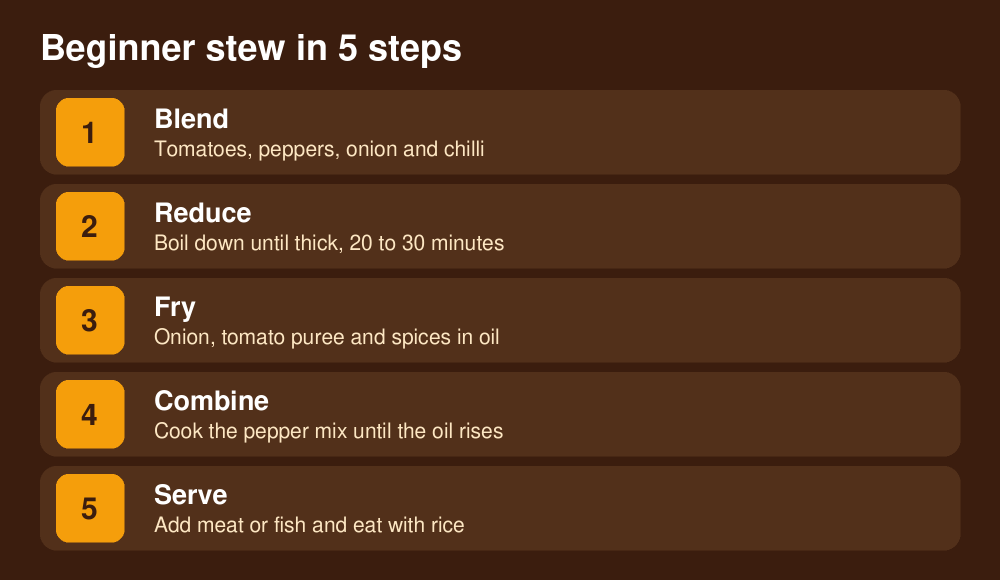
You need: 4 ripe plum tomatoes or one 400 g tin of tomatoes, 2 red peppers (tatashe style bell peppers), 1 onion, 1 scotch bonnet or habanero (to taste), 100 ml vegetable oil, 1 tablespoon tomato puree, 1 teaspoon curry powder, 1 teaspoon thyme, 2 stock cubes, salt, and your choice of chicken or beef stock.
- Blend the tomatoes, peppers, half the onion and the chilli until smooth.
- Pour the blend into a pan and boil on medium heat until most of the water has gone and it thickens. This can take 20 to 30 minutes, and the reduction is what removes the raw, sour taste.
- In a second pot, heat the oil, fry the remaining sliced onion for two minutes, then add the tomato puree and stir for a minute.
- Add the reduced pepper mix, curry, thyme and stock cubes. Fry for 10 to 15 minutes, stirring often, until the oil rises to the surface and the colour deepens.
- Add cooked chicken or beef with a ladle of its stock, simmer for ten minutes, then adjust salt. Serve with white rice, boiled yam or fried plantain.
2. Egusi soup with spinach
You need: 250 g ground egusi (or ground pumpkin seeds), 100 ml palm oil, 1 onion, 2 tablespoons ground crayfish (or dried shrimp), 500 g spinach or kale, cooked beef or fish, 500 ml stock, scotch bonnet or habanero, salt and seasoning.
- Mix the egusi with a little chopped onion and just enough water to form a thick paste.
- Heat the palm oil gently (do not smoke it), fry the remaining onion for a minute, then spoon in the egusi paste in small lumps. Fry on low heat for about ten minutes without stirring too much so curds form.
- Add stock a little at a time, then the pepper, crayfish and cooked meat or fish. Cover and simmer for 15 to 20 minutes.
- Stir in the washed, chopped spinach for the last five minutes. Taste and adjust. Serve with pounded yam, eba made from garri, or fufu.
If you are managing portion sizes or blood sugar, our guide to Nigerian foods that help control blood sugar levels covers egusi, vegetable soups and swallow portions.
3. Moi moi with ramekins or foil (no leaves needed)
You need: 2 cups peeled black-eyed beans (soak for 30 minutes, rub off the skins, rinse), 1 red pepper, 1 scotch bonnet, 1 small onion, 100 ml vegetable oil, 2 tablespoons ground crayfish, 1 stock cube, salt, 2 boiled eggs (optional), warm water.
- Blend the beans with the pepper, chilli and onion, adding a little water, until completely smooth.
- Mix in the oil, crayfish, stock cube and salt. Add warm water until the batter is thick but pourable.
- Pour into greased ramekins or foil containers, add a slice of boiled egg to each if you like, and cover tightly with foil.
- Steam in a pot with about two centimetres of boiling water, or in a covered tray in the oven set to medium with a tray of hot water below, for 40 to 50 minutes until firm in the centre.
4. Chicken pepper soup
You need: 1 kg chicken pieces, 1 onion, 2 tablespoons pepper soup spice (or allspice with black pepper and a pinch of cardamom), 1 scotch bonnet or habanero, ginger and garlic, scent leaf or fresh basil, 2 stock cubes, salt, 1.5 litres water.
- Season the chicken with onion, ginger, garlic, stock cubes and salt and leave for 20 minutes.
- Cover with water, add the pepper soup spice and chilli, and simmer for 30 to 40 minutes until tender.
- Add the basil in the last two minutes, taste, and serve hot in a mug or bowl.
5. Fried plantain (dodo)
Choose plantains that are mostly yellow with black spots. Peel, slice on the diagonal about one centimetre thick, sprinkle lightly with salt, and shallow-fry in medium-hot oil for two to three minutes a side until deep golden. Drain on kitchen paper. If you want a lighter version, brush the slices with oil and bake at 200°C for about 20 minutes, turning once. For more Nigerian cooking, try our authentic party jollof rice recipe and eggless puff puff.
Mistakes beginners make
- Skipping the reduction. Tomato sauce that is not cooked down tastes sour and watery.
- Burning palm oil. Heat it gently; if it smokes it turns bitter.
- Over-salting. Crayfish, dried fish and stock cubes are already salty.
- Using too much crayfish. It is concentrated, so start small, as the Niyis guide advises.
- Expecting identical flavour. Substitutes get you close, not identical. Keep one real ingredient, such as palm oil or a good pepper soup spice, and the dish will still taste like home.
Staying connected to home cooking is part of keeping culture alive abroad, as we explore in how diaspora couples keep their Nigerian culture alive.
Related guide (updated 7 November 2026)
Nigerian Food Recipes Foreigners Will Love (2026): Suya, Akara, Chin Chin and More
Related guide (updated 7 November 2026)
Traditional Nigerian foods and their health benefits (what the evidence says)
Frequently asked questions
What can I use instead of egusi?
Ground pumpkin seeds are the closest widely available option. Sunflower seeds or almonds work as backups, though the texture is slightly different.
Where can I buy palm oil abroad?
African and Caribbean grocers, some Asian supermarkets and online African stores stock it. Refined palm oil is a close match if you cannot find the red unrefined type.
What replaces ugu or bitter leaf?
Spinach or kale replaces ugu reasonably well. Bitter leaf has no close substitute; endive or mustard greens give a similar bitterness but a different taste.
Can I cook Nigerian food without crayfish?
Yes. Dried shrimp, smoked fish or a little anchovy paste can add a similar savoury seafood note.
What is the easiest Nigerian dish for a total beginner?
A tomato and pepper stew with rice and fried plantain. It needs only supermarket ingredients and teaches the reduction technique used in many other dishes.
Can I make moi moi without banana leaves?
Yes. Ramekins, foil containers or small heatproof dishes covered with foil work well when steamed.
How do I find an African shop near me?
Search a map app for African, Caribbean or Afro-Caribbean grocery, check Asian supermarkets for dried seafood and tapioca, and use online African supermarkets for hard-to-find items.
Is it cheaper to cook Nigerian food abroad than to buy takeaway?
Cooking in batches is usually cheaper per portion than takeaway, but specialty items such as stockfish and ground crayfish can be pricey, so compare shops and buy staples in bulk.
Sources and notes: MealCondo, Nigerian ingredient substitutes for diaspora cooks; Niyis African Supermarket, Nigerian soup ingredients UK guide (read 7 November 2026). Substitution ratings are the original authors’ judgements. Recipes are original beginner versions written for this site; adjust seasoning and cooking times to your equipment. Always cook chicken and beef thoroughly and follow food-safety guidance for allergies.
Join the discussion
Have you tried this, or do you have a question we did not answer? 2 readers have already shared their views. Naijatipsland members help each other with real, first-hand experience.









Ade Adeniyi here. Living abroad, I learnt that one real ingredient, usually good palm oil or a proper pepper soup spice, keeps a dish tasting like home even when the rest is swapped. What is the one ingredient you cannot find where you live? Tell me and I will suggest a substitute.
Ade Adeniyi here. Living abroad, I learnt that one real ingredient, usually good palm oil or a proper pepper soup spice, keeps a dish tasting like home even when the rest is swapped. What is the one ingredient you cannot find where you live? Tell me and I will suggest a substitute.