
How to Open a UK Bank Account as a New Arrival (2026): Documents, Proof of Address and the Best Banks for Nigerians

Last updated 28 November 2026. Bank requirements change often and each bank sets its own rules. Check the bank’s own website before you apply.
Most Nigerians who move to the UK hit the same wall in their first week. Your landlord wants rent paid from a UK account, your employer wants account details for payroll, and the bank wants proof of an address you have only just moved into. It feels like a loop with no way in.
There is a way in. App-based banks have made the first account much easier to get, and the law gives people who are legally resident a right to a basic account at the big banks. This guide explains what you need, which kind of account to open first, how to deal with proof of address and how to start building the credit history that matters later for phone contracts, car finance and mortgages.
If you are still planning the move, our first 30 days in the UK checklist shows where the bank account fits alongside your NI number, GP registration and eVisa.
What you need before you apply
Almost every UK bank checks three things: who you are, that you live in the UK, and where you live.
- Photo ID. Your Nigerian international passport is the safest choice. Make sure it is in date.
- Proof of immigration status. BRP cards are no longer issued, so banks now check your status digitally. Some will ask for an eVisa share code, which you get from the “View and prove your immigration status” service on GOV.UK. Share codes generally last 90 days.
- A UK address. App banks need an address to post your card to. High street banks usually want a document proving it.
- A UK phone number and an email address. A UK SIM makes the setup much smoother, especially for security codes.
Use exactly the same name everywhere. Starling, for example, says the names on your documents must match your ID in full and it can’t accept shortened names. If your passport says Oluwaseun and your tenancy says Seun, expect trouble.
Step 1: start with an app bank
For most new arrivals the quickest first account comes from an app bank such as Monzo or Starling. You download the app, scan your passport, record a short selfie video and wait for a decision, often the same day. Your card arrives by post a few days later.
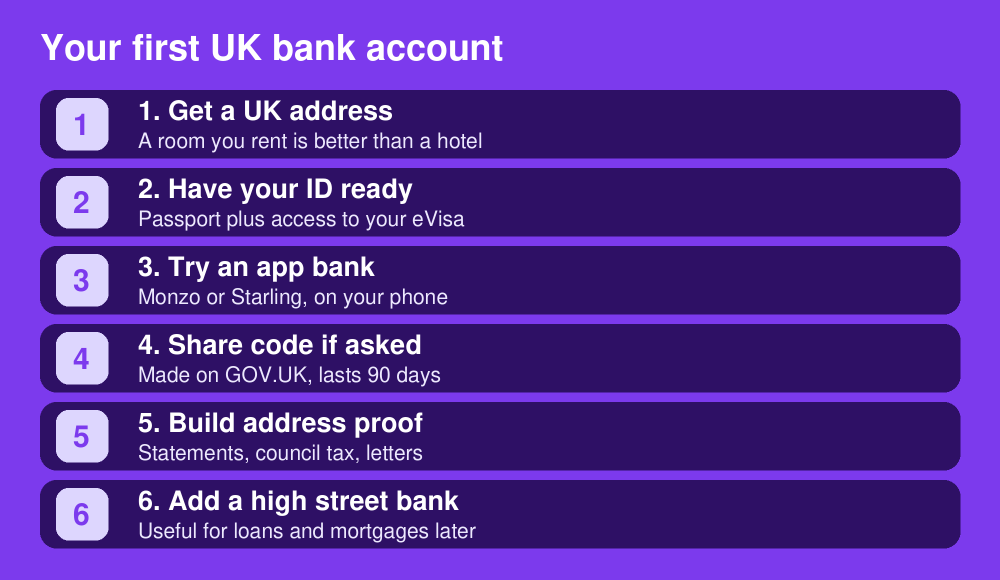
Here is what the two most popular ones say they need, based on their help pages:
- Monzo: you must be at least 16 and live in the UK full time with the right to reside. You apply with in-date photo ID and a selfie video, and Monzo says it takes about 10 minutes. It might ask you to prove your address.
- Starling: accepts a valid passport, including a non-UK passport with an accompanying share code. It may ask for an eVisa share code and proof of address. It doesn’t accept documents from e-money firms such as Revolut, Curve or Wise as proof of address.
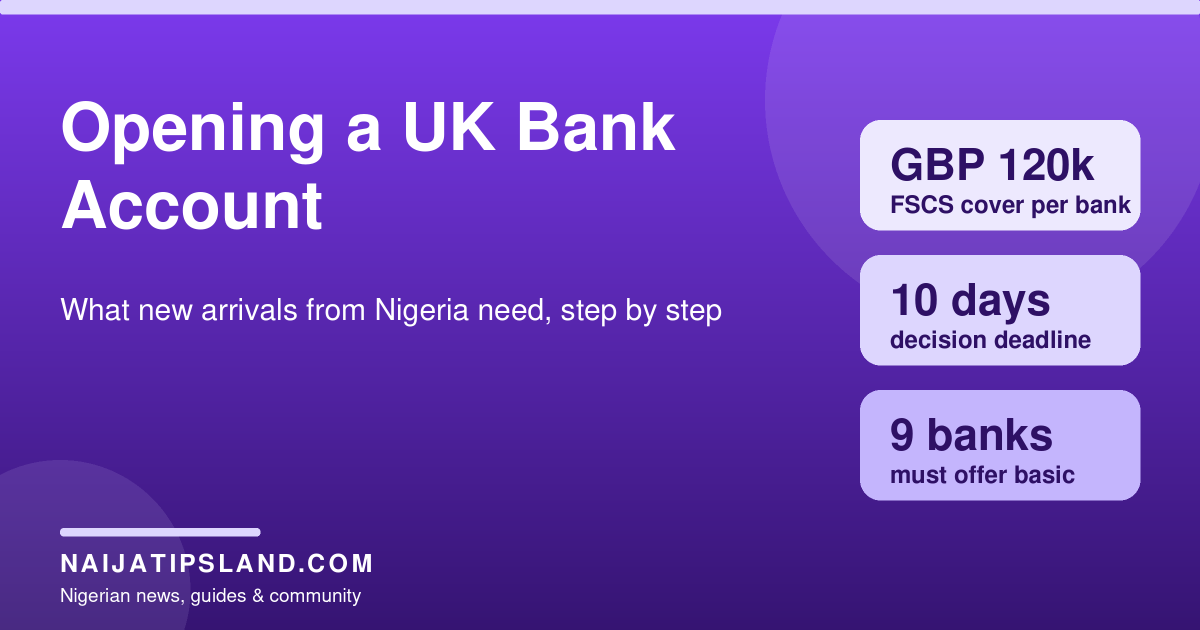
Both Monzo and Starling are UK-authorised banks, so your money is covered by the Financial Services Compensation Scheme (FSCS). The FSCS limit rose to £120,000 per person, per bank, on 1 December 2025.
What about Revolut and Wise?
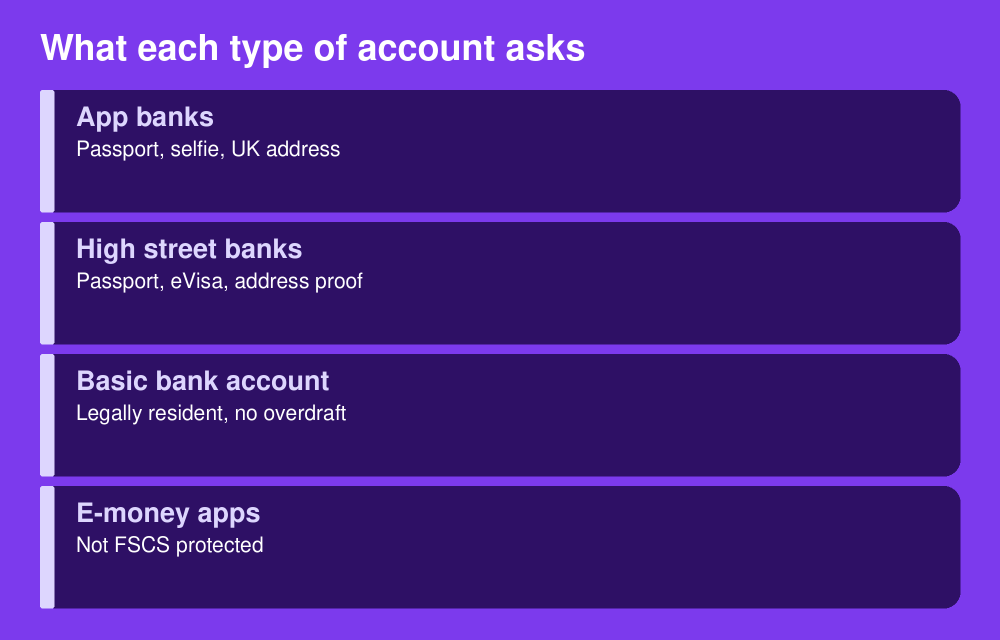
Many Nigerians already use Wise or Revolut for sending money. They are handy for moving money between pounds, naira and dollars, but check how your money is held before you keep large sums there. Money held with an e-money institution is safeguarded but isn’t covered by the FSCS in the same way as a bank deposit. Wise and Revolut statements are also refused as proof of address by some banks, Starling included. Use them as a second account, not your only one.
Step 2: sort out proof of address
This is where most people get stuck. High street banks like Barclays, HSBC, Lloyds, NatWest and Nationwide usually ask for a document showing your name and UK address, normally dated in the last three months.
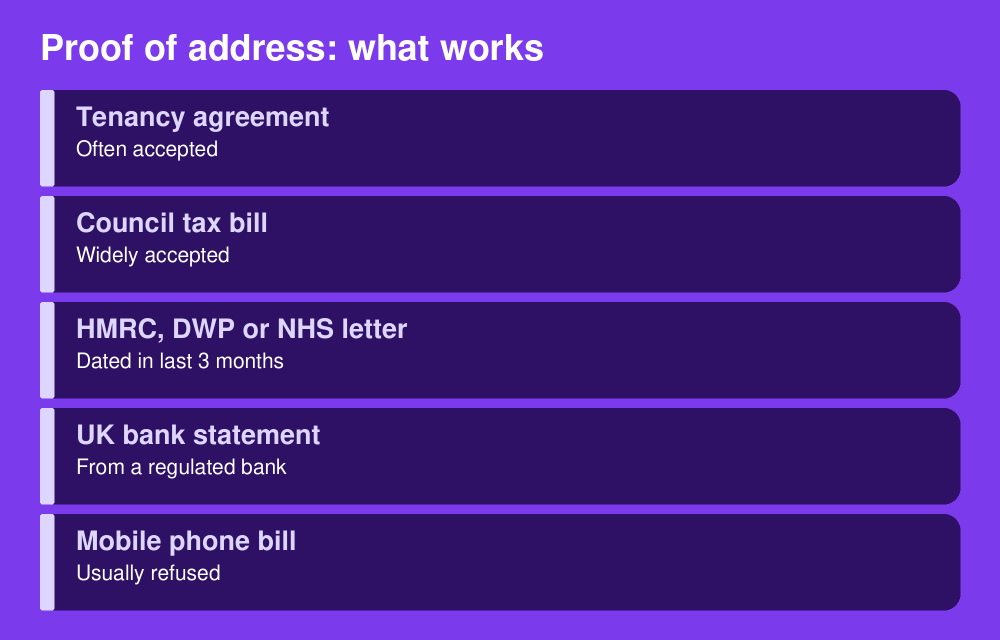
Documents that usually work:
- A signed tenancy agreement in your name
- A council tax bill (often accepted even if it is older than three months)
- A gas, electricity or water bill
- A letter from HMRC, the DWP or the NHS
- A statement from your UK bank account, once you have one
- For students, a university letter confirming your address, if the bank accepts it
Documents that usually don’t work: mobile phone bills, hotel or Airbnb bookings, and anything addressed to a friend you are staying with. Monzo lists an active UK tenancy agreement as acceptable, which helps if you have just signed for a room.
The trick is to use your first account to unlock the second. Once your app bank account has been open for a month, download a statement. Many high street banks accept a statement from a UK-regulated bank as proof of address. Our guide to renting in the UK as a new Nigerian arrival explains how to get a tenancy in your own name, which helps here too.
Step 3: know your right to a basic bank account
Few newcomers know this. Under the Payment Accounts Regulations 2015, the nine largest current account providers must offer a basic bank account to people who are legally resident in the UK and either have no other suitable UK account or can’t get the bank’s standard accounts. The designated firms are:
- Barclays UK
- The Co-operative Bank
- HSBC UK
- Lloyds Banking Group (including Halifax and Bank of Scotland)
- Nationwide Building Society (including Virgin Money)
- NatWest Group (including RBS and Ulster Bank)
- Santander UK
- TSB
A basic account has no fees for normal sterling banking and no overdraft. You get a debit card, direct debits, standing orders and online banking. The Financial Conduct Authority says these accounts use only soft credit checks, so a missing UK credit history isn’t a reason to refuse you. The bank must open or refuse the account within 10 business days of receiving your completed application.
The right isn’t absolute. A bank must still refuse if opening the account would break money laundering or immigration law, and it still has to verify your identity. If you are refused, ask for the reason in writing. If you think the refusal was wrong, complain to the bank and then to the Financial Ombudsman Service.
Step 4: add a high street account
An app bank is enough for daily life, but a high street current account becomes useful once you start thinking about loans, car finance or a mortgage. Some lenders like to see a longer relationship with a traditional bank.
When you apply, have your passport, eVisa share code, proof of address and, if you have one, a payslip or employment contract ready. Some banks run accounts aimed at people new to the UK that accept an employer letter or university letter instead of a utility bill. Ask before you book a branch appointment, because the products and rules change.
Start building your UK credit history early
Your Nigerian credit record doesn’t carry over. You start in the UK with a thin file, which makes phone contracts, credit cards and car finance harder in the first year. A few habits help:
- Register to vote if you can. Nigerians are Commonwealth citizens, and Commonwealth citizens living in the UK with leave to remain can usually register to vote. Lenders use the electoral register to confirm your address.
- Pay bills by direct debit from your UK account and never miss one.
- Keep the same address for as long as you can. Frequent moves make your file look unstable.
- Check your credit file for free with the main credit reference agencies once you have been in the UK a few months.
Sending money home from your new account
Once your account is open you will probably want to send money to family in Nigeria. Compare a few providers each time, because rates and fees change daily. Our guide to the cheapest money transfer apps for Nigerians in the UK compares the main options, and if a transfer gets stuck, read why UK to Nigeria transfers get delayed or frozen.
Mistakes that get new accounts closed
Banks close accounts they think are being misused, and new accounts are watched closely. Avoid these:
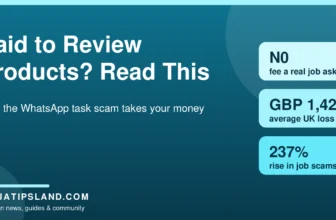
- Letting someone else use your account. If a “friend” or online contact asks you to receive money and pass it on, say no. That is money muling and it can get your account closed, your name flagged and you questioned by police. Our task scam guide explains how people are drawn into this.
- Lots of unexplained cash deposits or transfers from many strangers. If you sell goods or run a side business, open a business account for it.
- Giving false information on the application, such as a fake address or employer.
- Applying to many banks at once. Each refusal costs you time. Apply in order: app bank first, high street second.
Frequently asked questions
Can I open a UK bank account before I arrive from Nigeria?
Usually not. Most UK banks want you living in the UK. Some international banks offer expat accounts, but they often need large deposits. Most people open an app bank account in their first week instead.
Can I open a UK bank account without proof of address?
Often yes, with app banks such as Monzo or Starling, which may only ask for it in some cases. High street banks nearly always want it.
Do I need a National Insurance number to open a bank account?
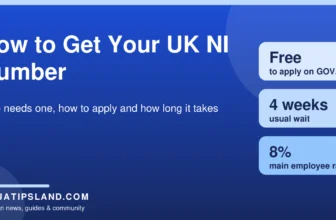
No. A bank account doesn’t need an NI number, though you will want one for work. Our guide on how to get a National Insurance number explains the steps.
Is my BRP still accepted?
BRPs are no longer issued and many banks now check status through your eVisa. Keep your eVisa up to date with your current passport and be ready to share a code.
Is my money safe in a UK bank?
Deposits with UK-authorised banks are protected by the FSCS up to £120,000 per person, per bank. E-money apps aren’t covered in the same way.
What if every bank refuses me?
Ask one of the nine designated banks for a basic bank account. If you are legally resident and have no other suitable account, they must consider you and give a decision within 10 business days.
Sources
- Legislation.gov.uk: The Payment Accounts Regulations 2015, Part 4
- FCA: Basic bank accounts, the problems we found
- FCA: UK payment accounts, access and closures
- Bank of England: What is the FSCS and the new deposit protection limit?
- UCL: Opening a bank account when you first arrive
- Neobanks EMEA: What Monzo, Starling and Revolut ask newcomers for
- GOV.UK: View and prove your immigration status
Join the discussion
Have you tried this, or do you have a question we did not answer? Be the first to share your experience. Leave a comment below. Every comment is read by the editor before it appears.




Editor note: which bank did you manage to open your first UK account with, and what did they ask for? Share your experience (no account numbers please) to help other new arrivals. – Ade